Fig Farm Practice Supporting Articles.
Professional guides to growing figs in Zone 7b
When to Treat — and When to Leave the Tree Alone
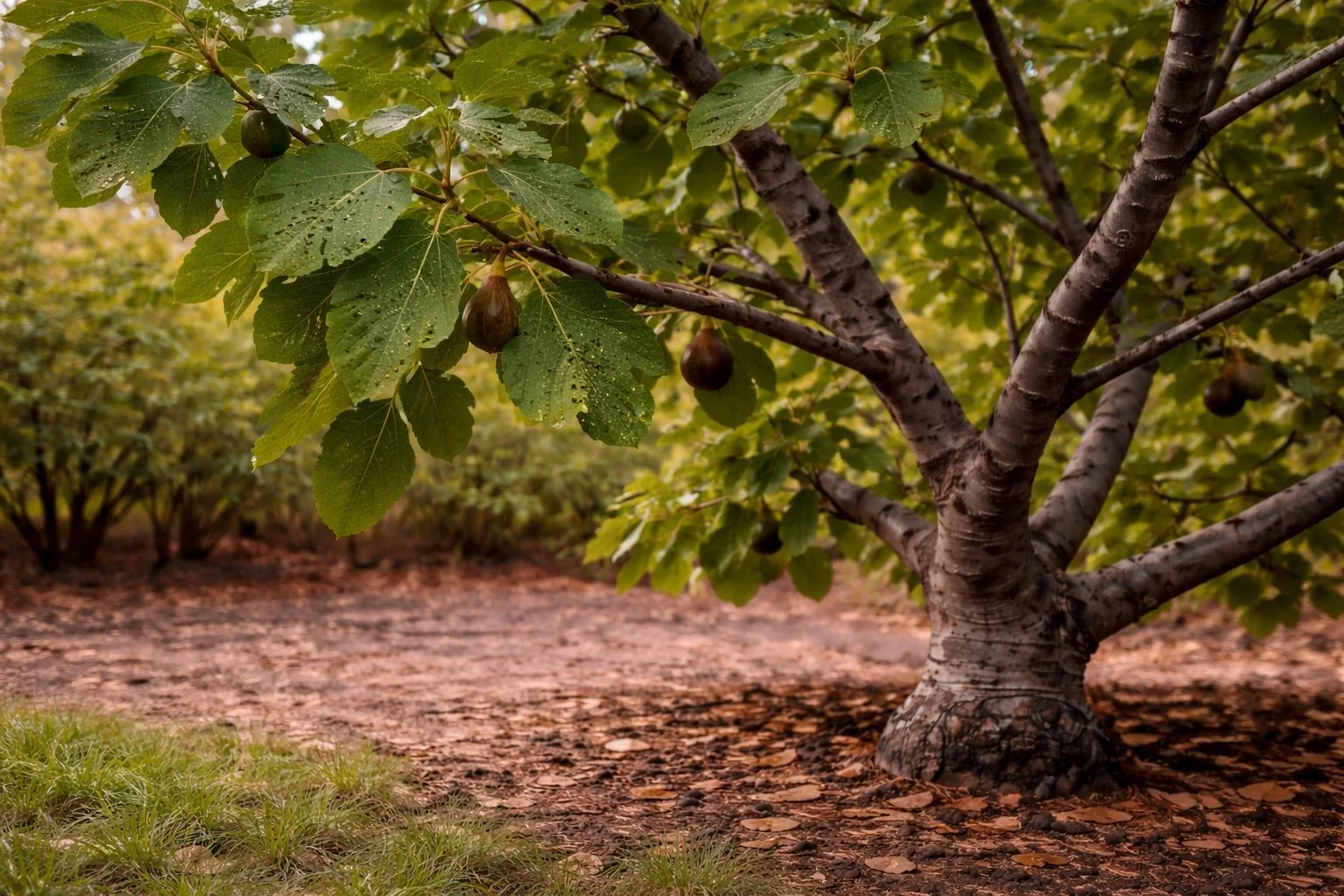
A fig tree displaying minor, natural pest damage on leaves, providing a realistic overview of common insect issues seen in backyard fig orchards.
Preventative Orchard Hygiene Practices
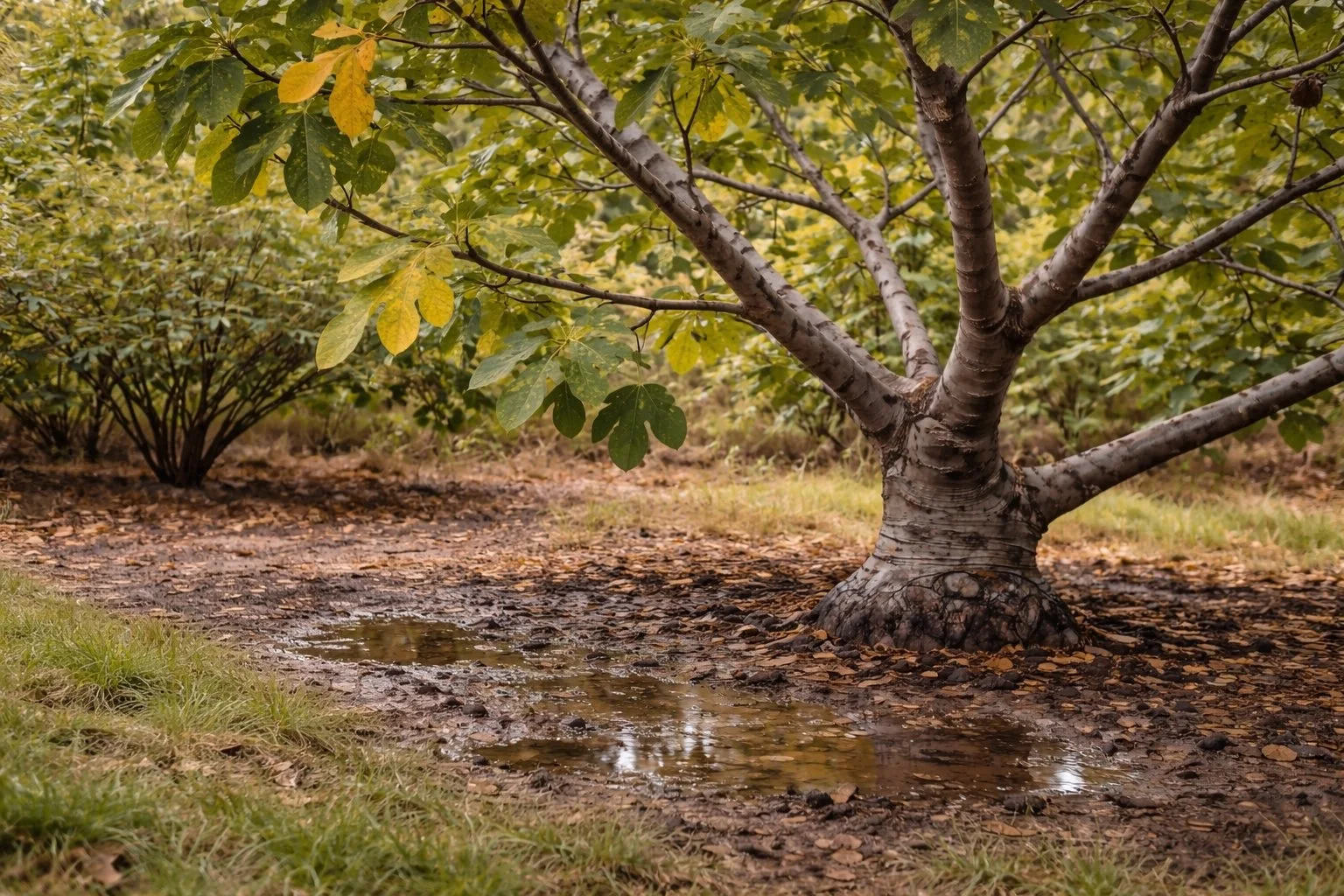
irrigation practices strongly influence disease pressure
Organic Pest Management for Fig Orchards
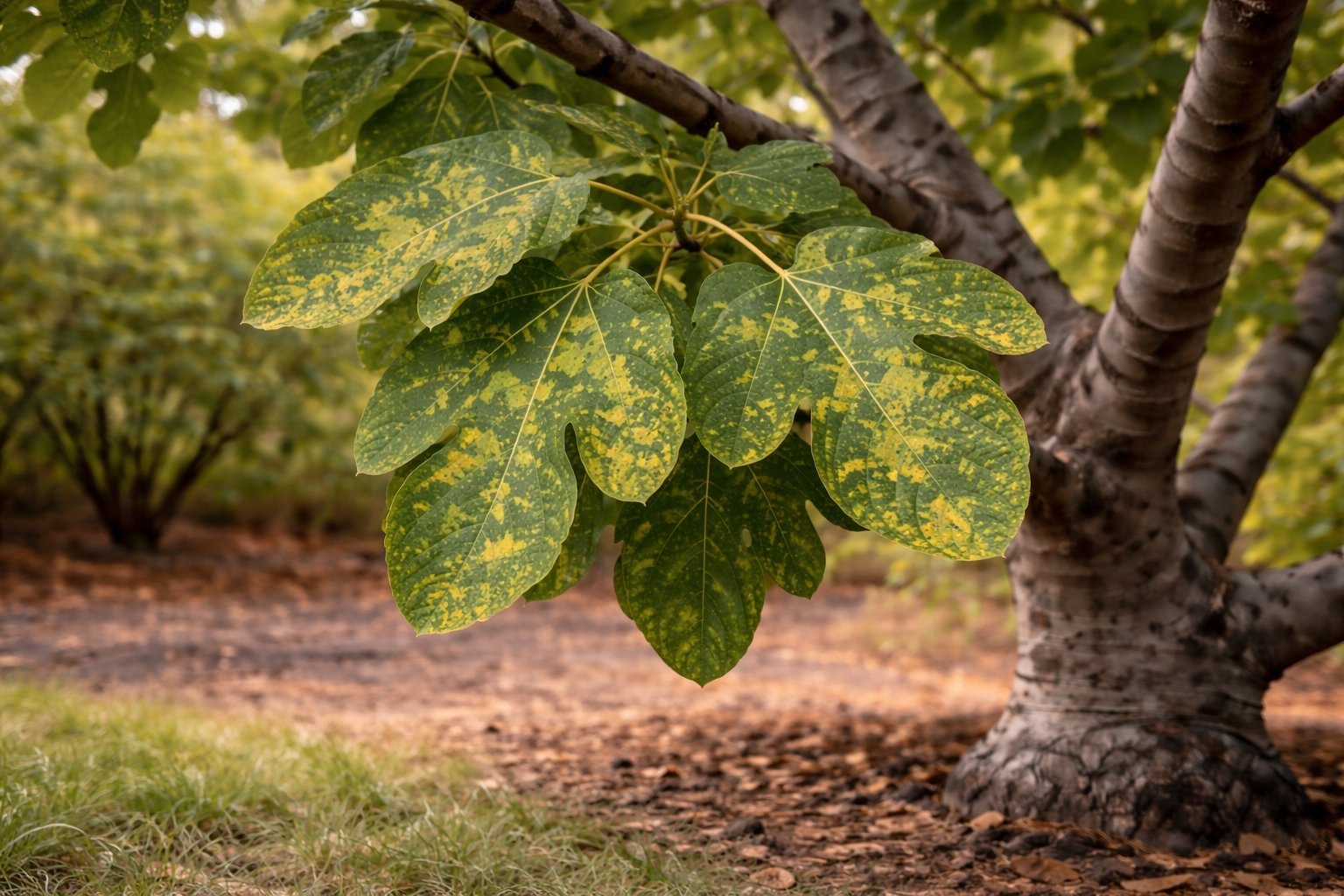
A close orchard photograph highlighting the mottled leaf patterns caused by fig mosaic virus, helping growers recognize this common viral condition in fig trees.
Fungal Issues vs Environmental Stress in Fig Trees
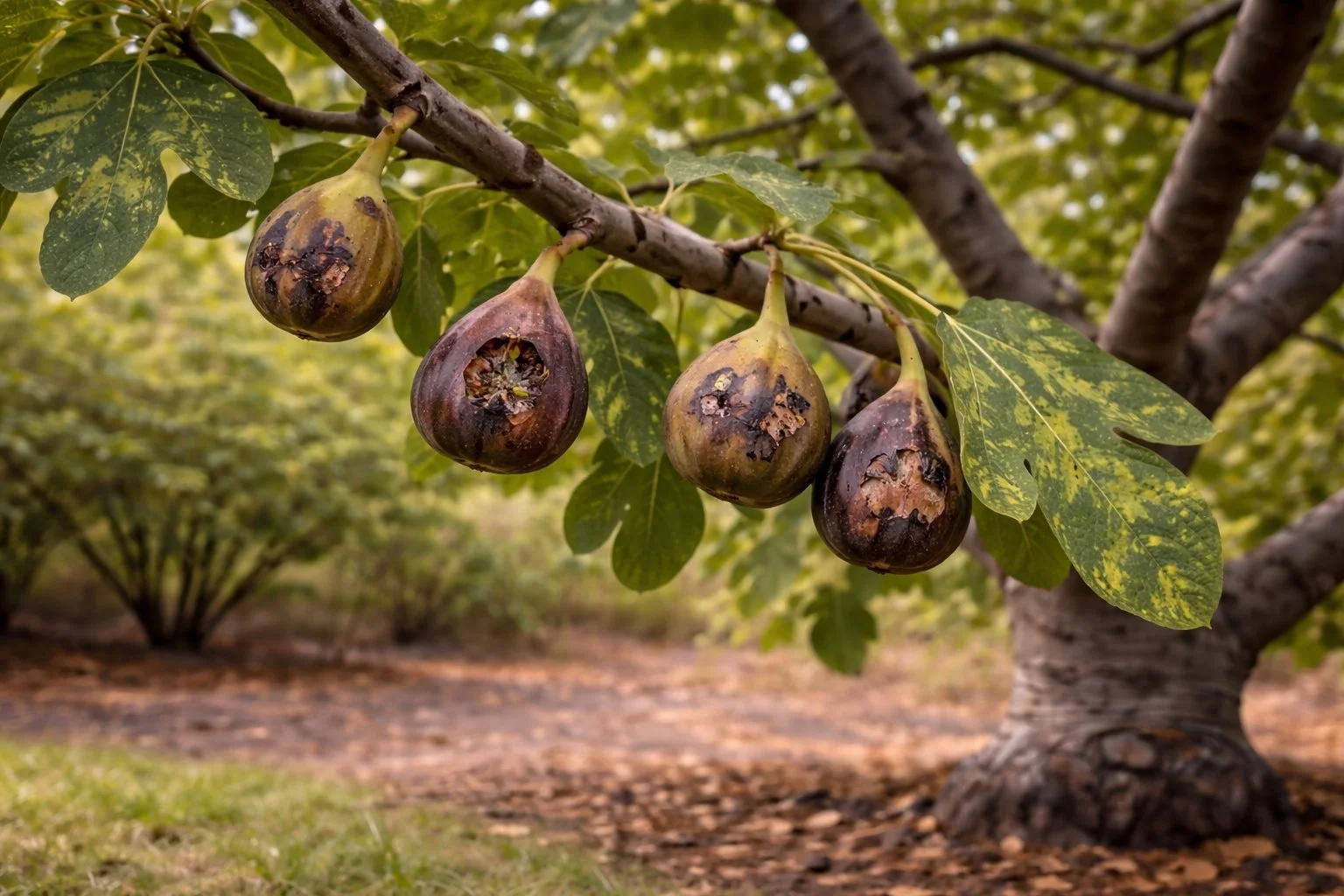
A fig tree with visible fungal fruit rot and anthracnose lesions, illustrating common moisture-related diseases that affect figs during warm, humid conditions.
Borers and Trunk Damage: What’s Serious and What’s Not
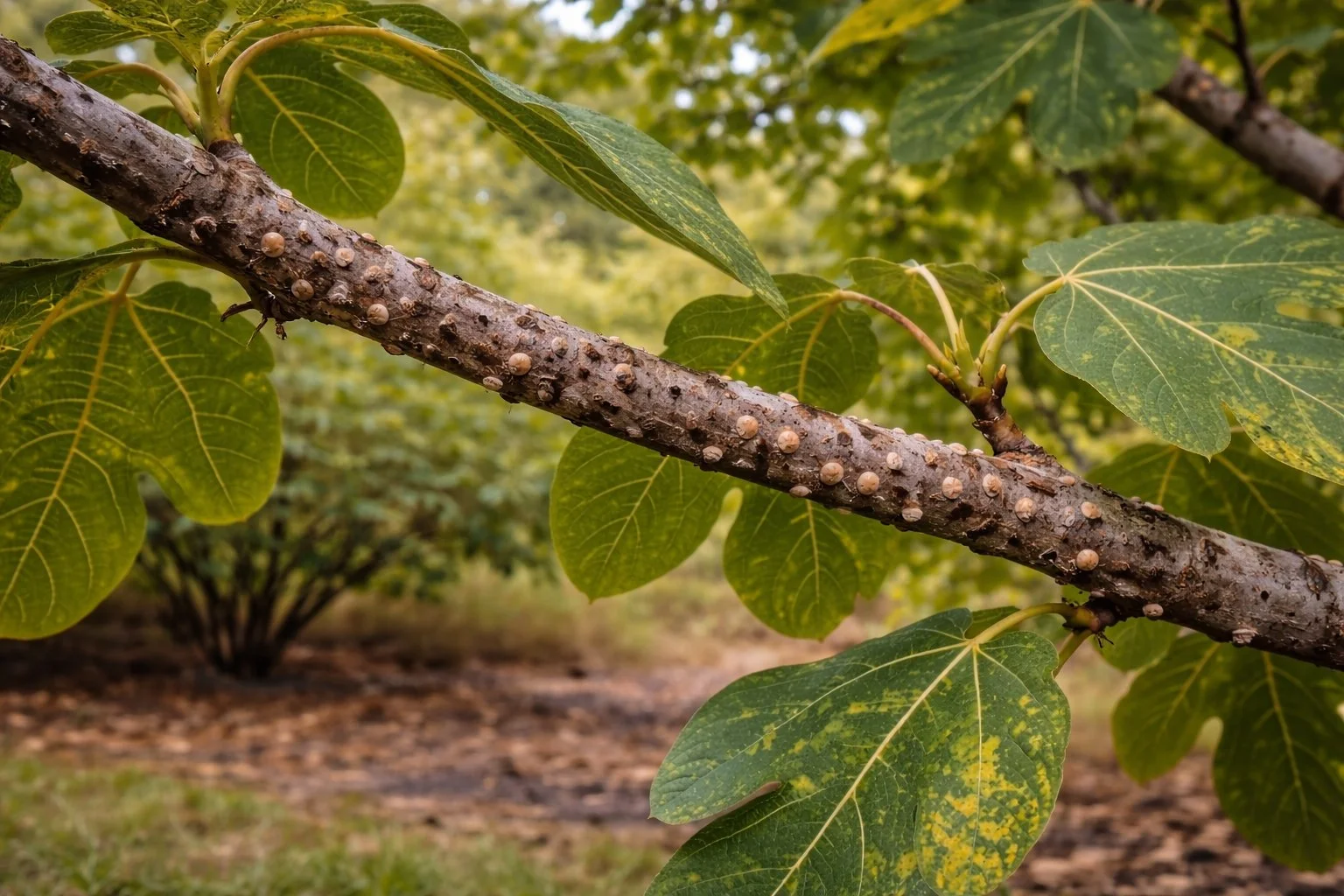
A close orchard photograph highlighting scale insects on a fig tree branch, illustrating a common sap-sucking pest that can weaken fig trees over time if left unmanaged.
Nematodes in Fig Trees: Signs and Solutions
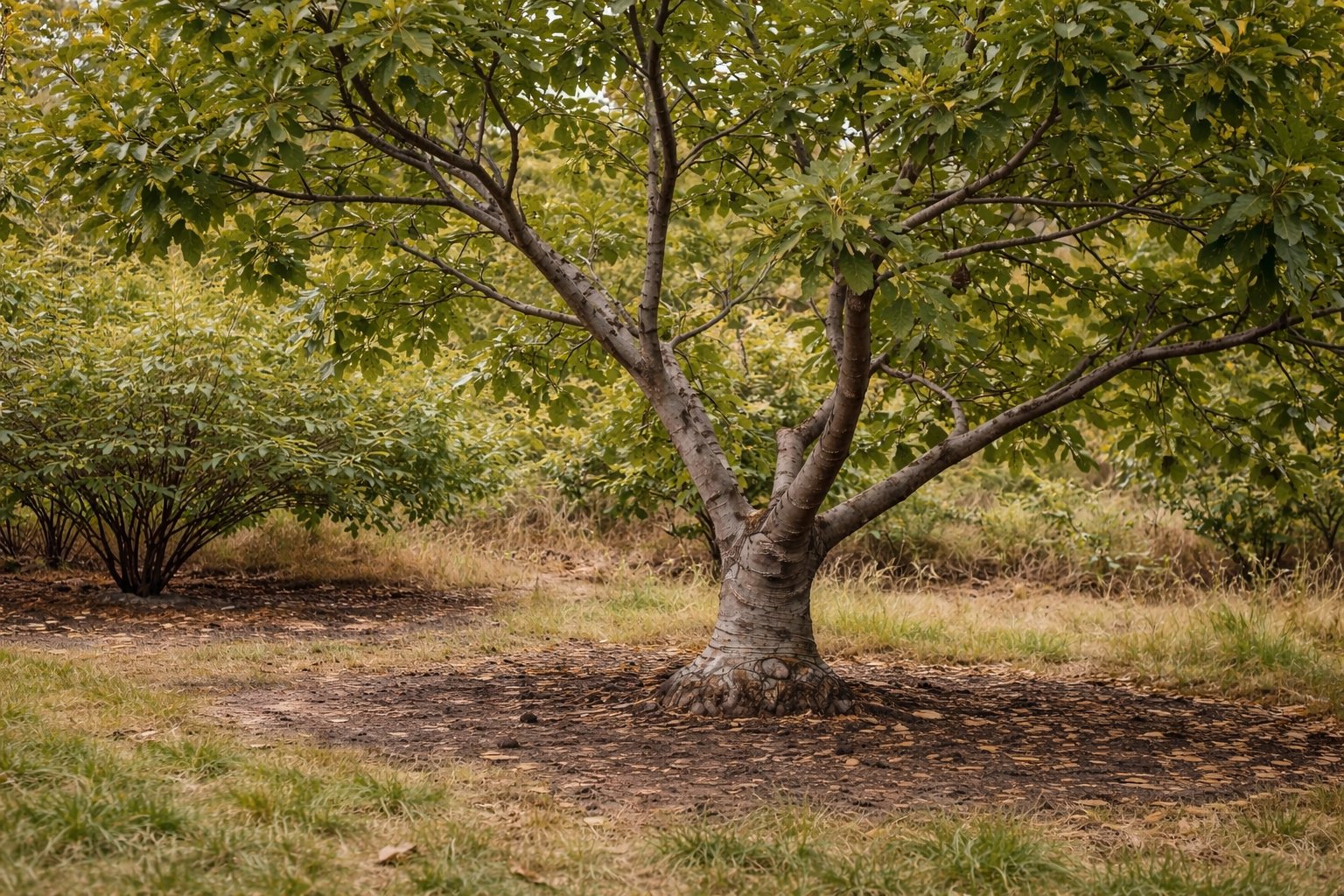
A fig tree showing subtle canopy decline and uneven growth patterns associated with nematode-related root stress, helping growers recognize underground causes of poor vigor.
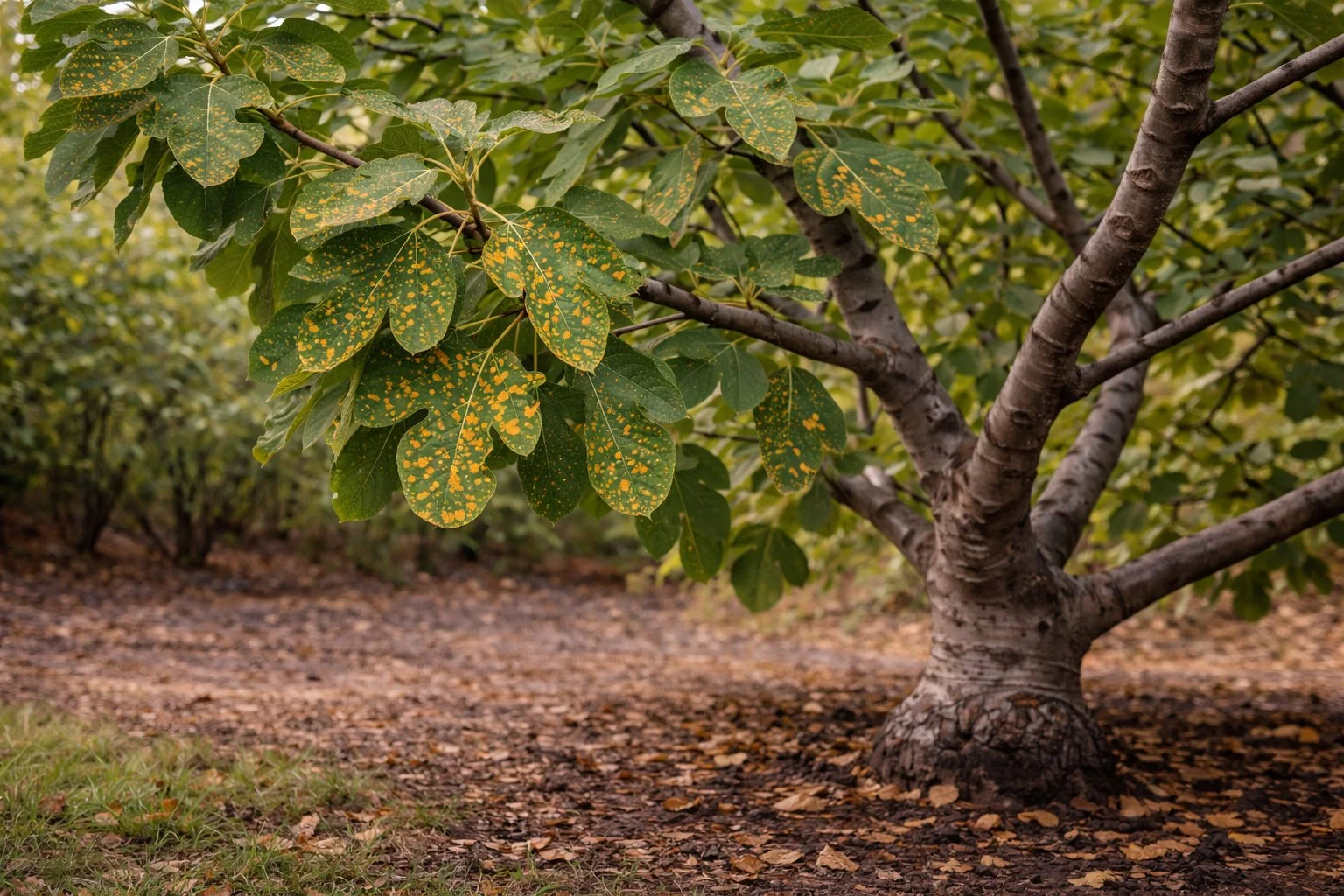
Fig Rust: Causes, Prevention, and Treatment
A fig tree displaying characteristic leaf spotting from fig rust, illustrating early disease symptoms commonly seen in humid growing conditions.
Common Fig Pests and When to Ignore Them
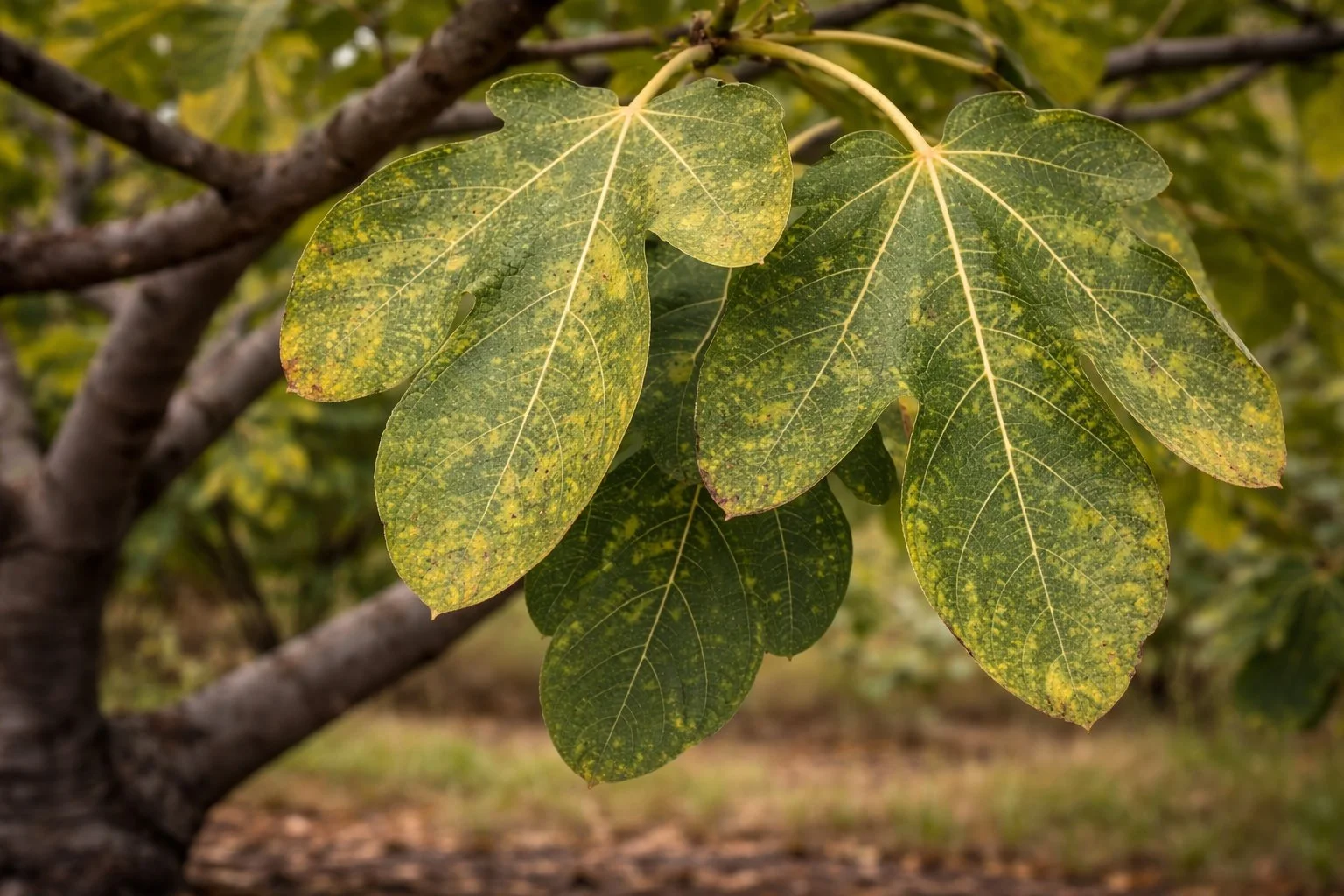
A close orchard photograph illustrating spider mite damage on fig leaves, characterized by stippling and discoloration that can reduce photosynthesis if left untreated.
Scaling from Backyard to Small Orchard
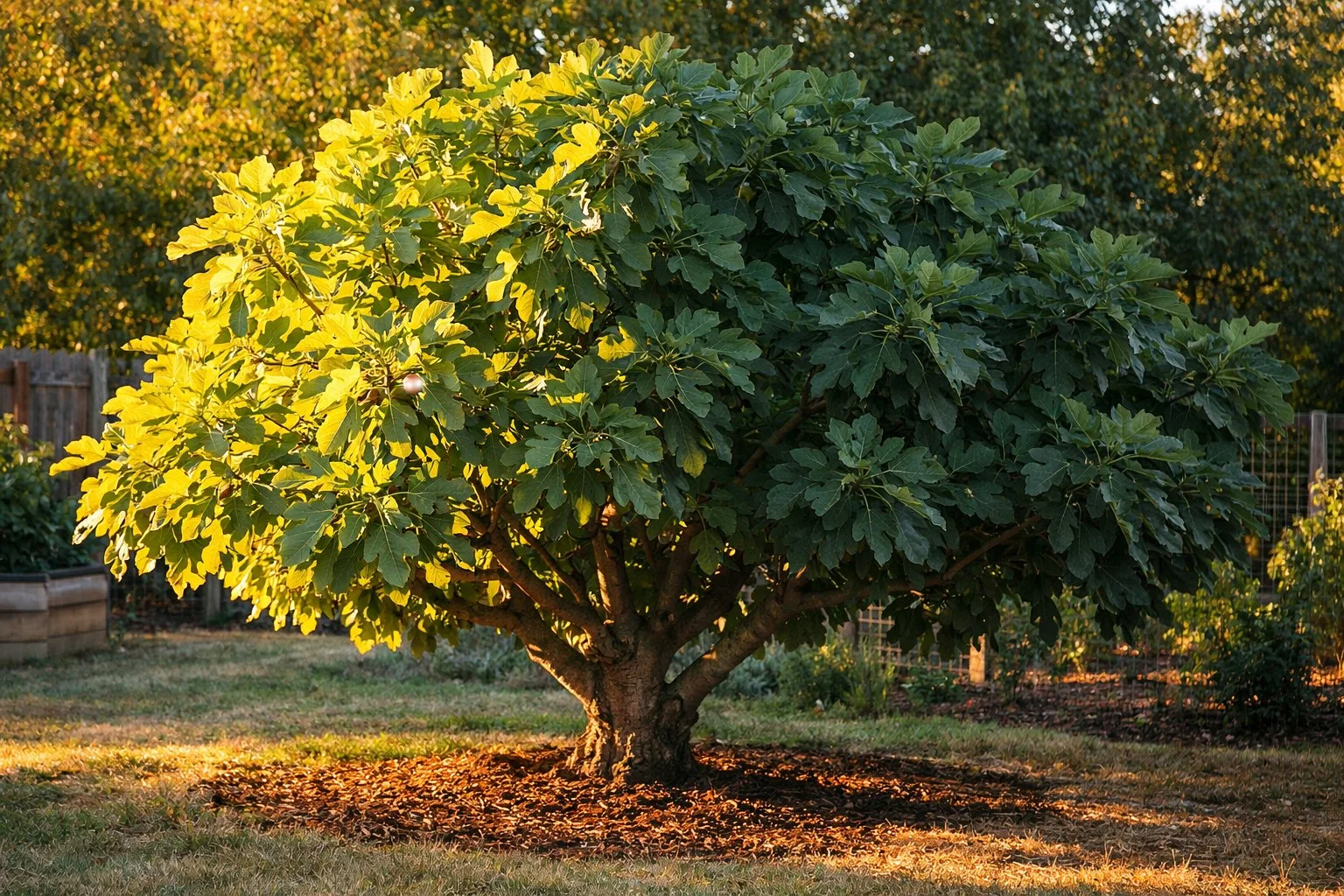
A mature fig tree grown with ample spacing, illustrating how allowing sufficient room supports full canopy development and long-term tree health.
Wind Protection and Fencing Considerations
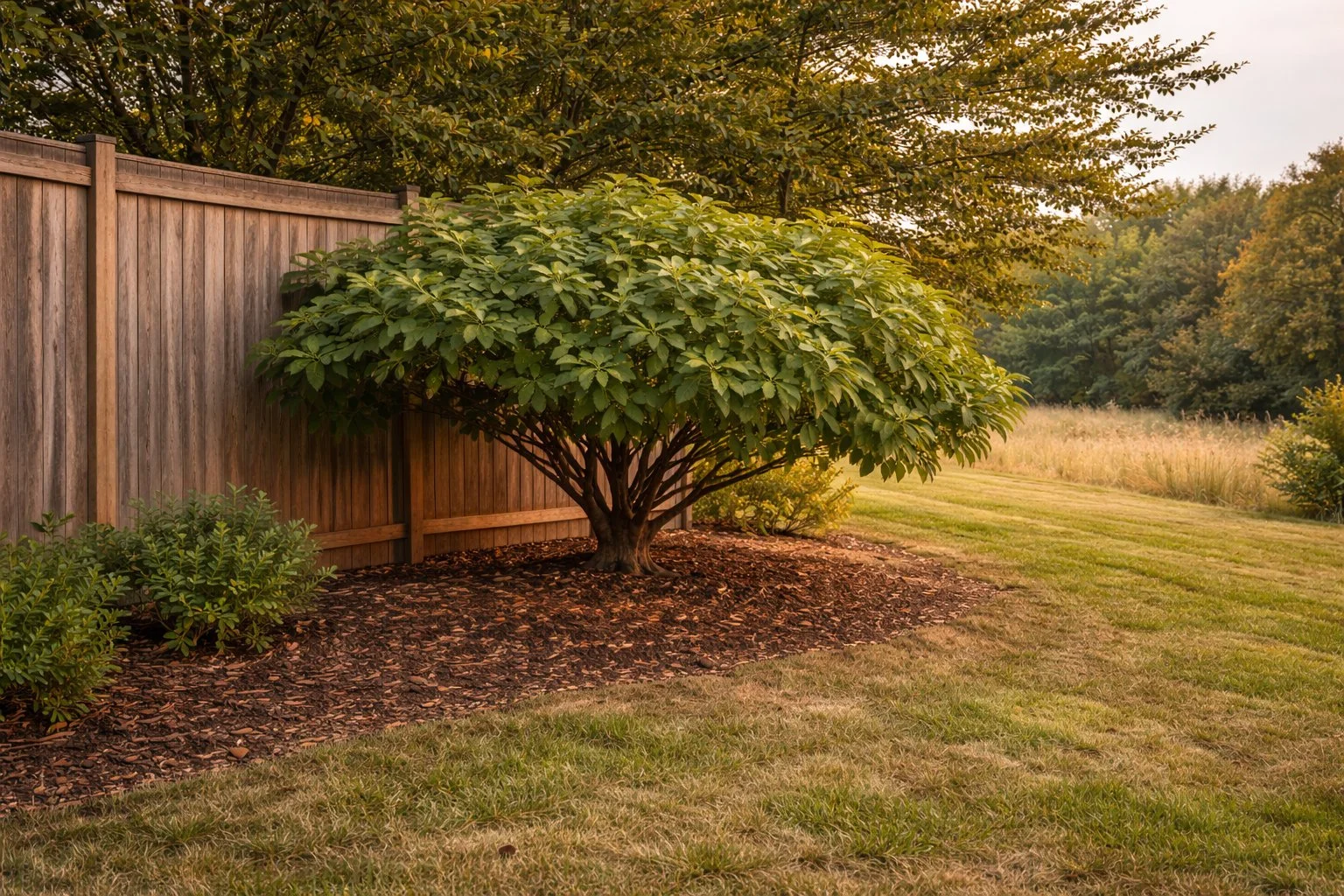
A fig tree sheltered by a fence used as a windbreak, illustrating how thoughtful fence placement can reduce wind stress and improve winter resilience in fig orchards.
Intercropping or Underplanting Figs
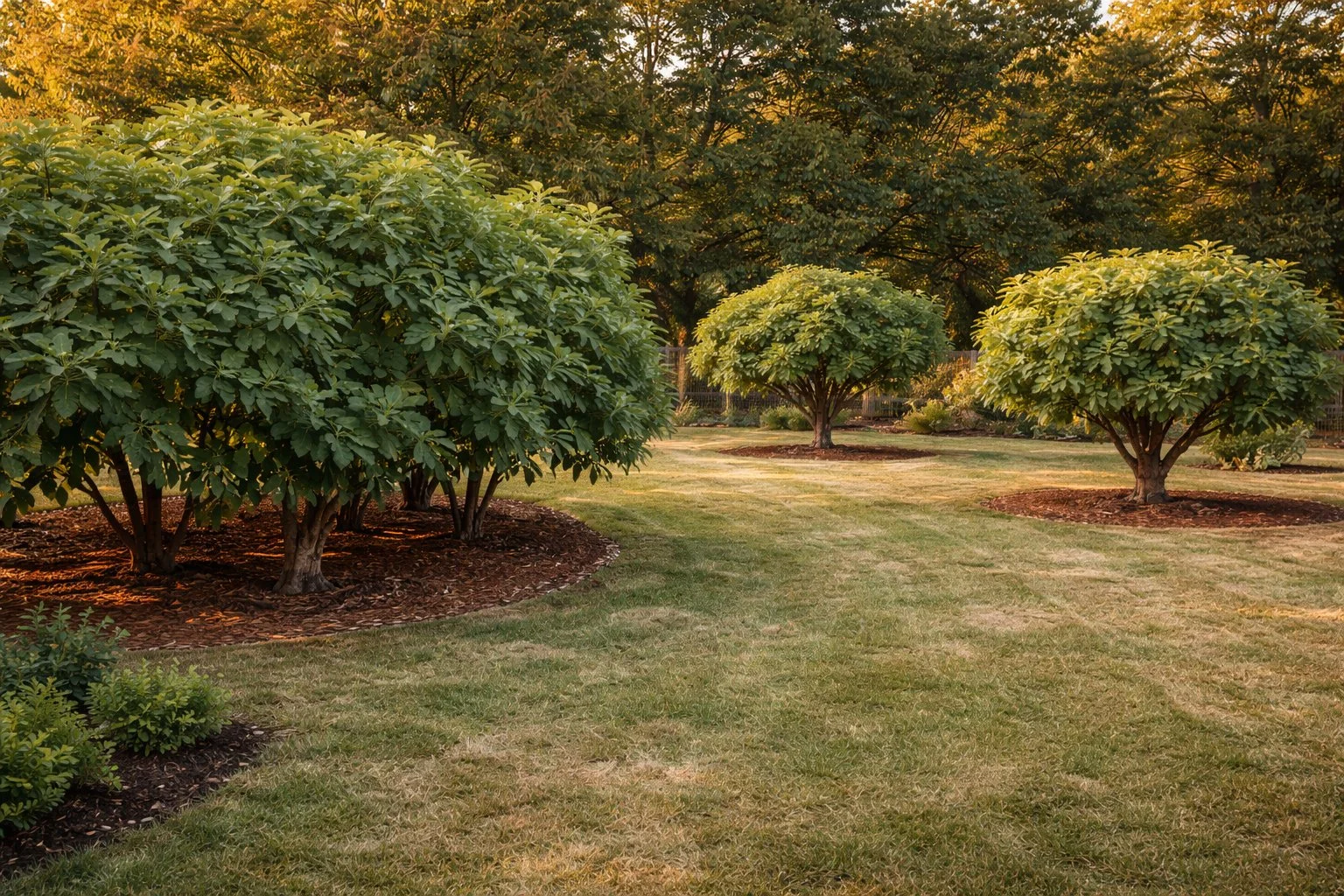
Backyard fig orchard showing closely spaced fig trees with overlapping canopies on one side and widely spaced individual fig trees on the other.
Designing for Equipment, Access, and Maintenance
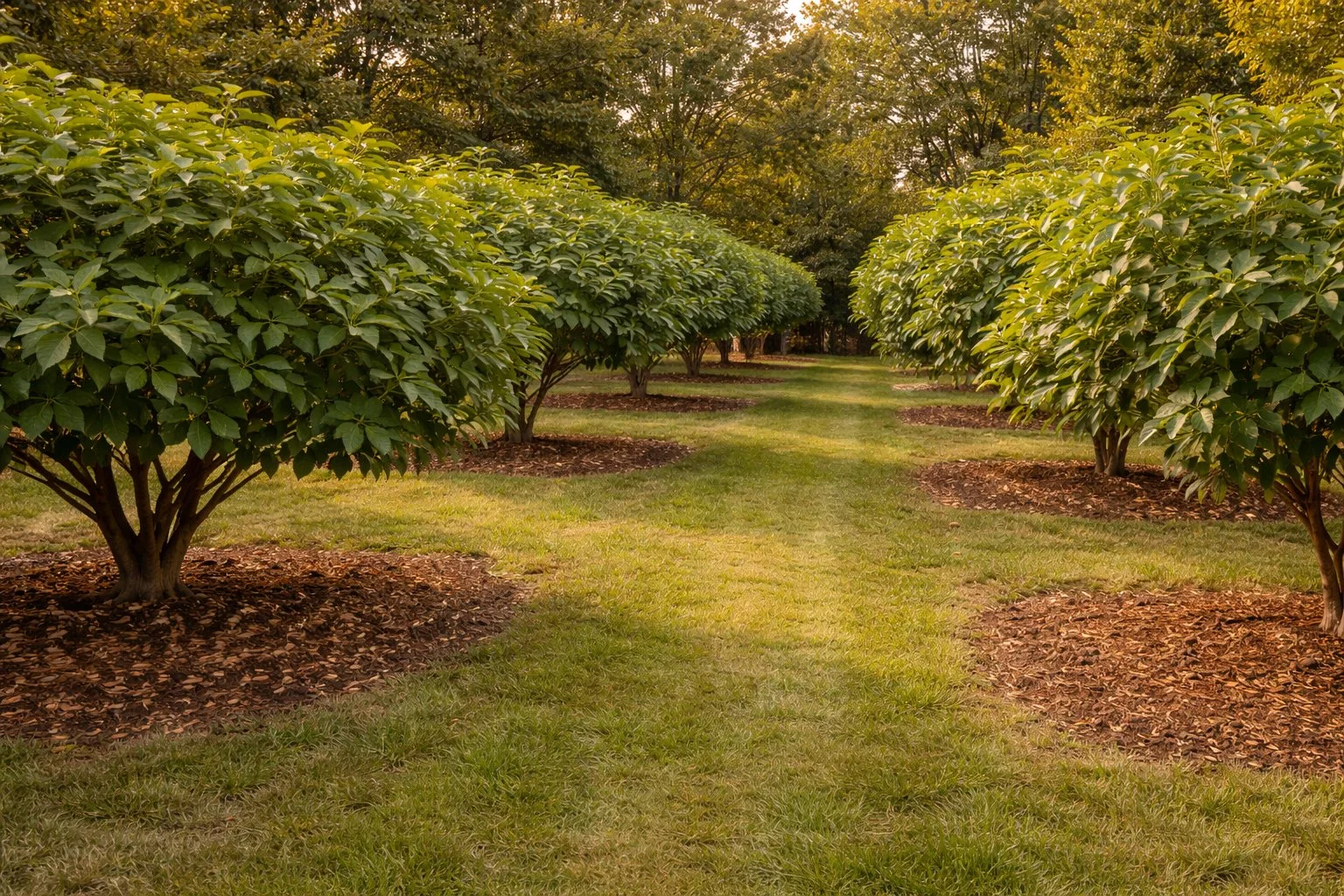
A working fig orchard designed with open access lanes, illustrating how thoughtful spacing and paths support efficient pruning, irrigation, protection, and long-term orchard management.
Soil Preparation Before Planting Figs
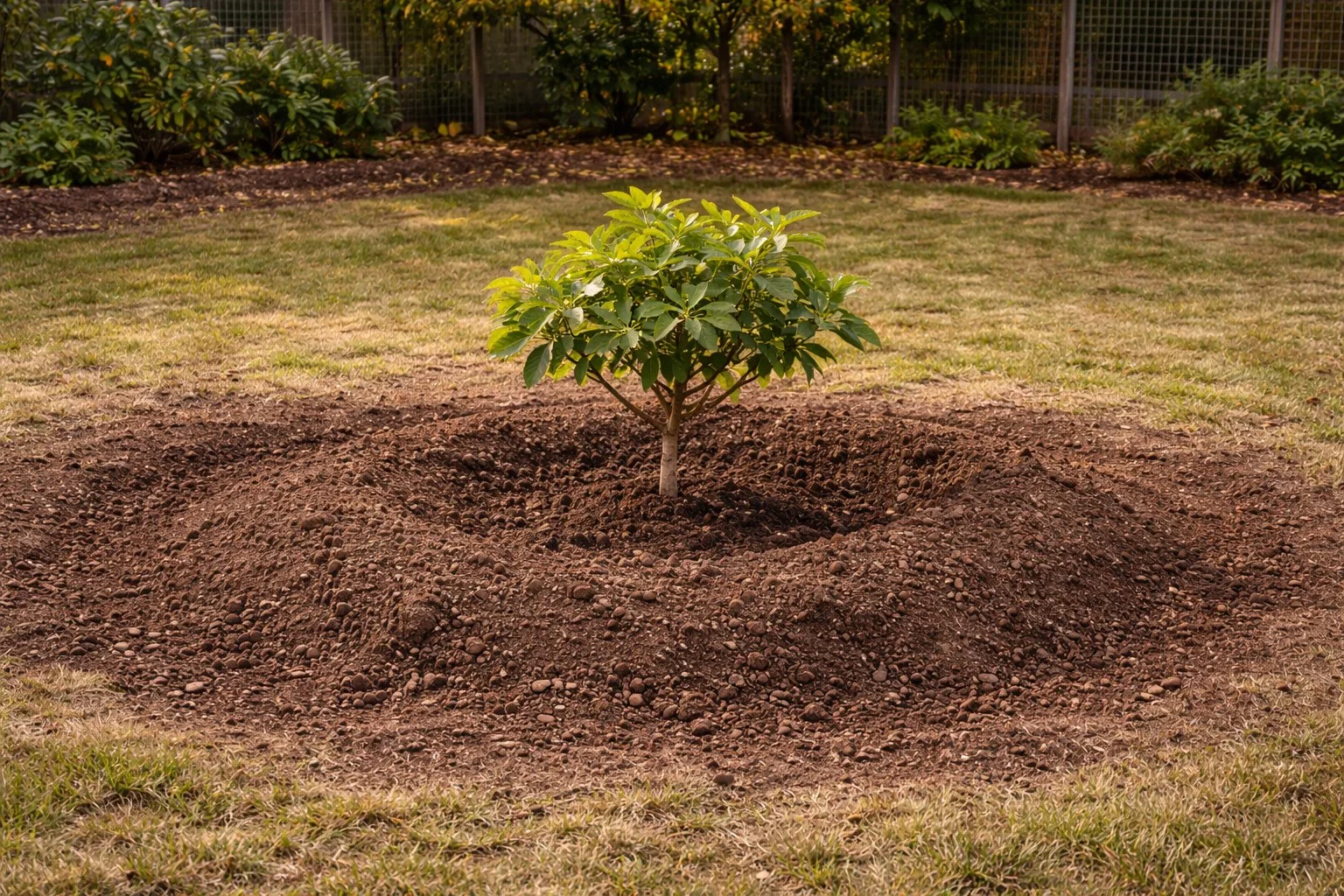
A newly planted fig tree set into properly prepared soil, illustrating how early soil structure and grading support long-term vigor, drainage, and orchard performance.
Row Orientation, Sun Exposure, and Airflow
A fig tree canopy photographed from below, illustrating how adequate spacing and pruning allow light and airflow to move through the branches, reducing disease pressure.
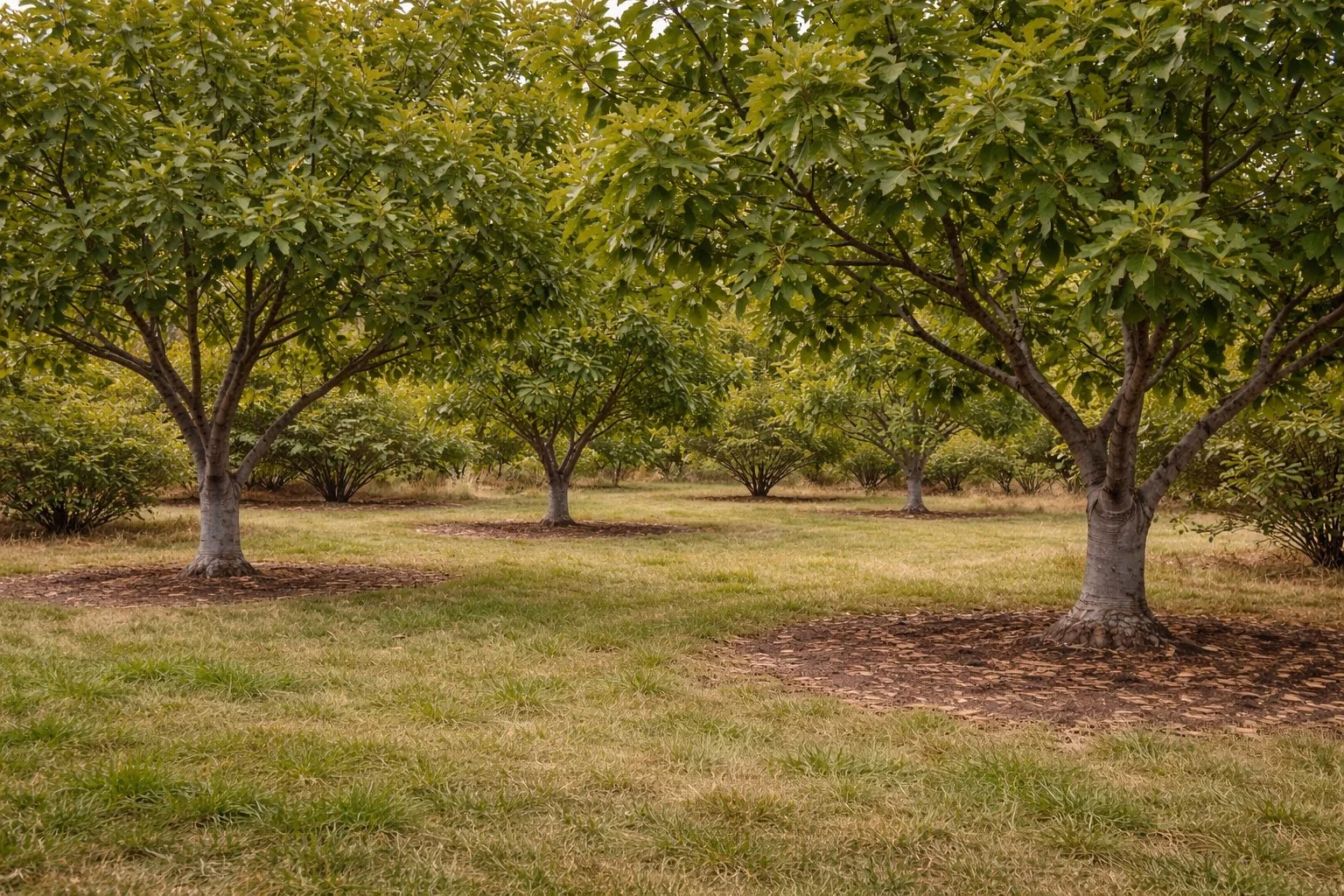
Fig Tree Spacing: Yield vs Manageability
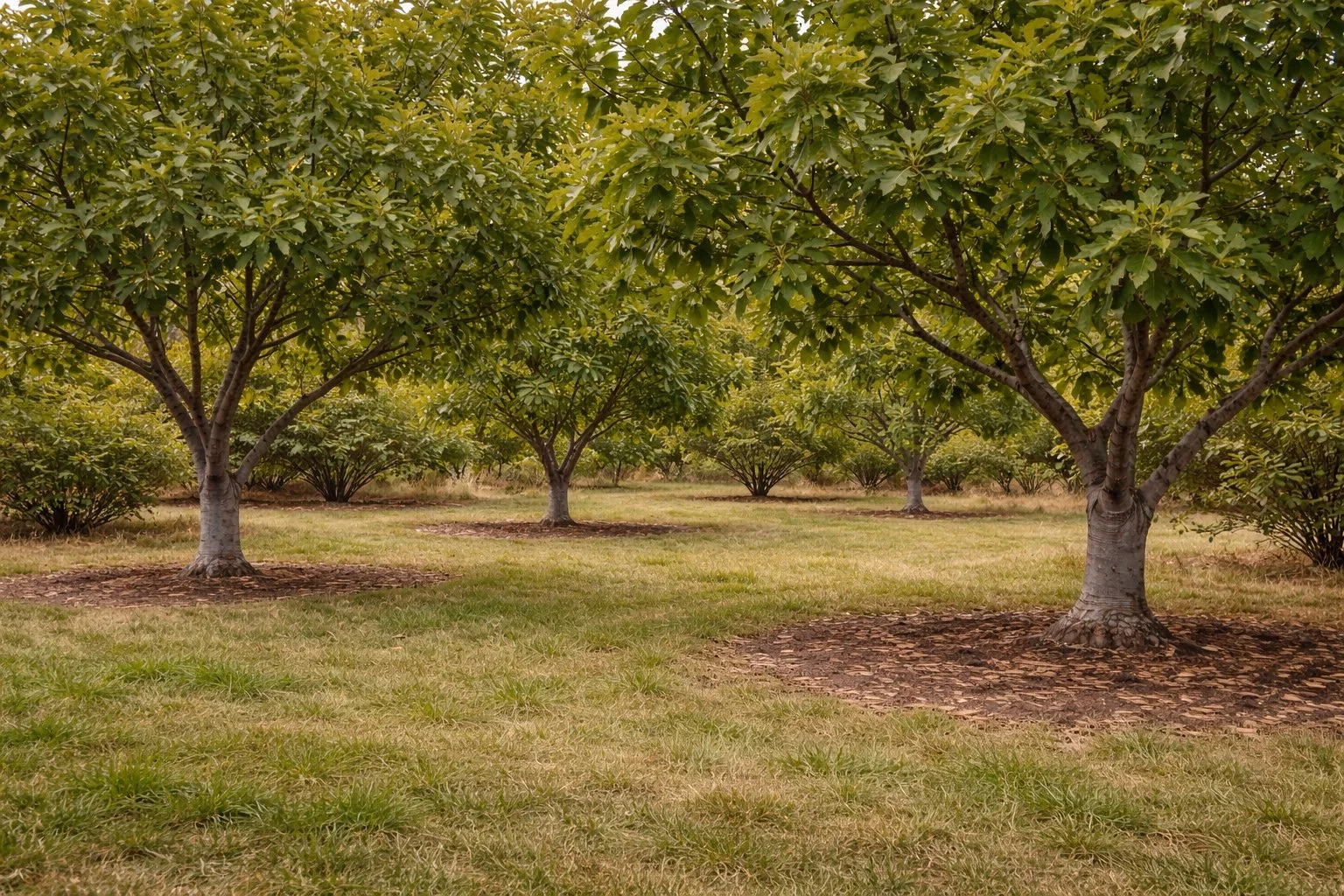
A home fig orchard demonstrating proper tree spacing, illustrating how adequate distance between fig trees supports airflow, sunlight penetration, and long-term orchard health.
Choosing the Right Site for a Fig Orchard
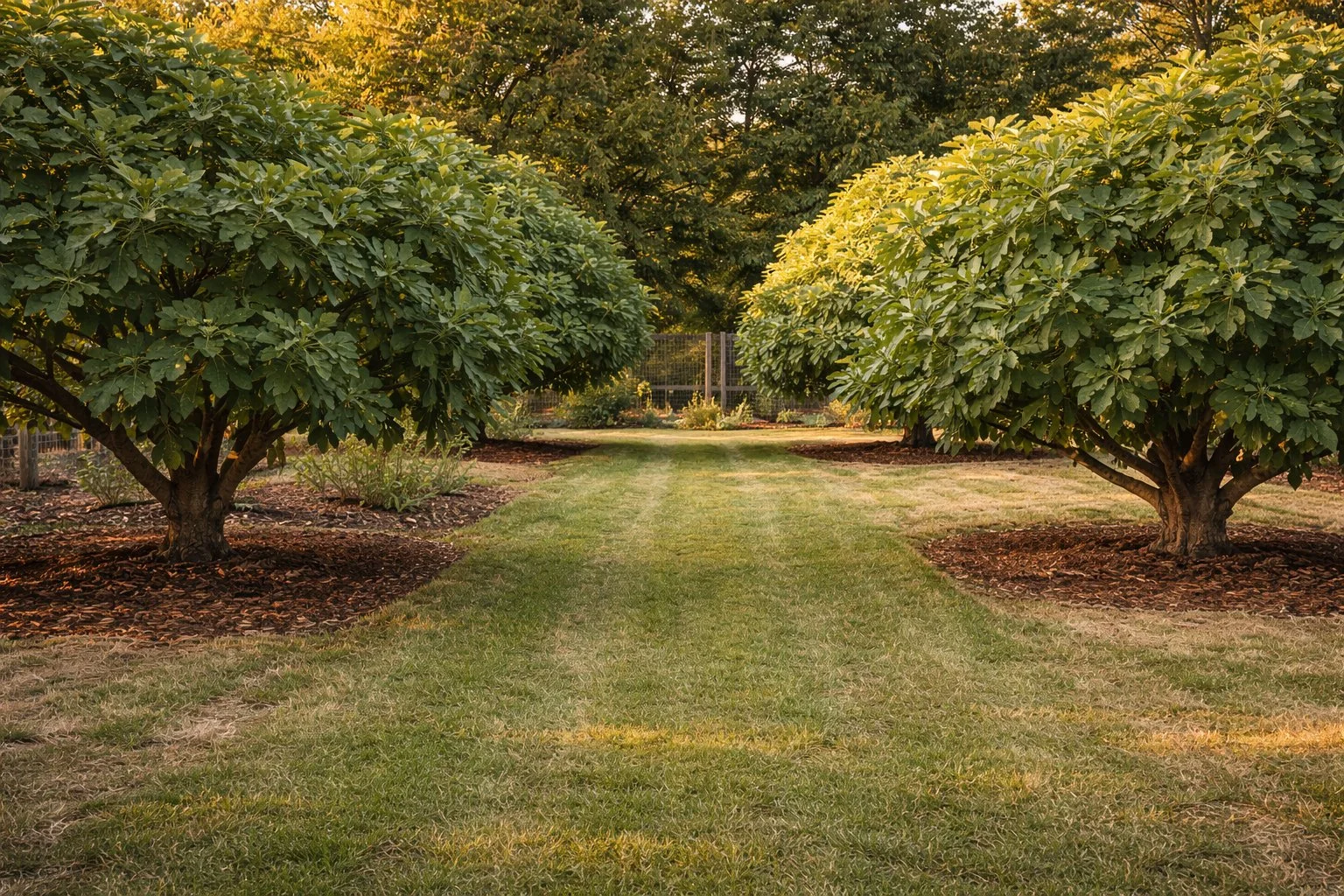
A fig orchard with open spacing between rows, illustrating how adequate access lanes support routine maintenance such as mowing, pruning, and long-term orchard care.
Common Harvesting Mistakes Beginners Make
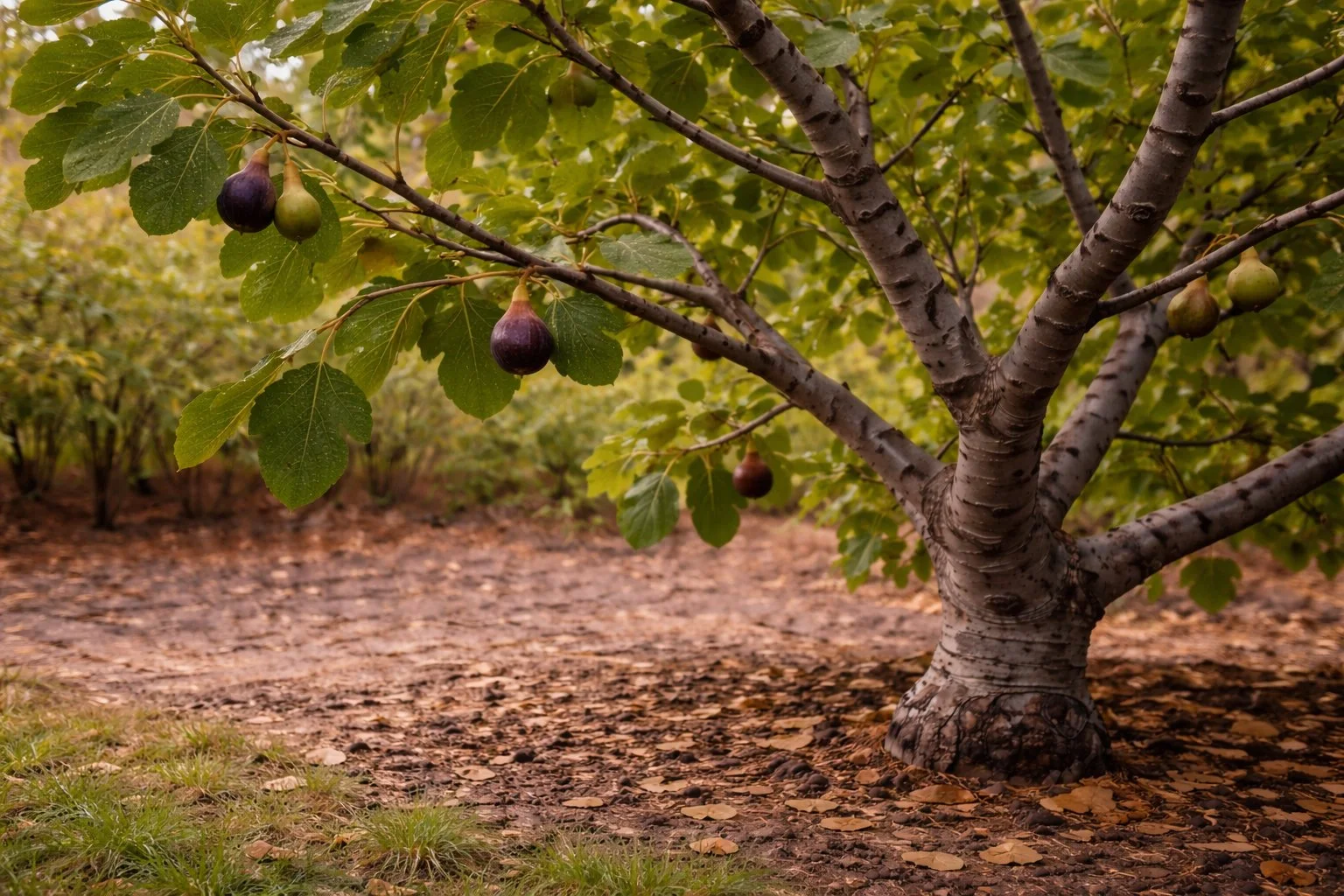
A late-season fig tree with minimal remaining fruit, illustrating the natural decline in harvest volume as the growing season comes to an end.
Short-Term Storage vs Immediate Use
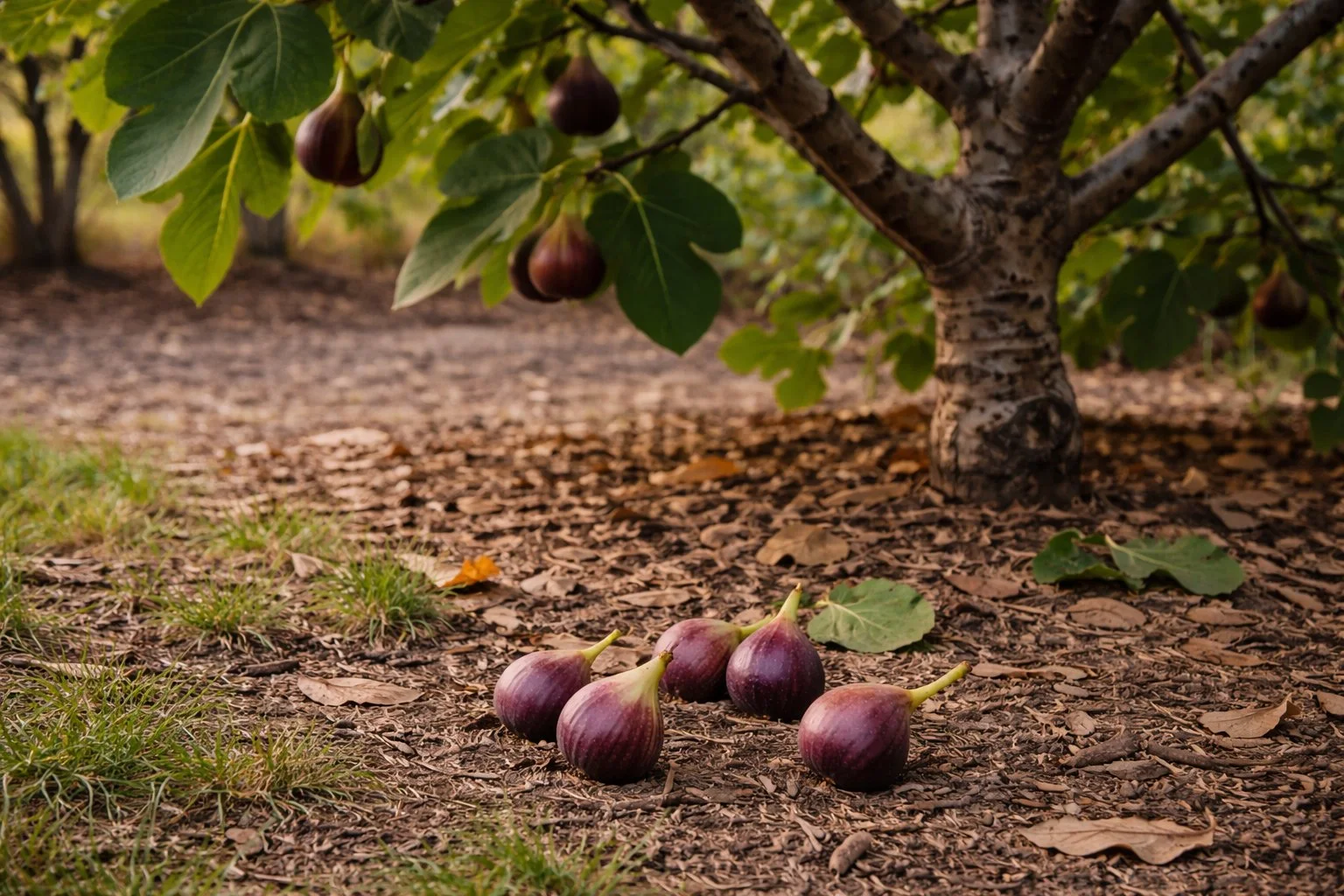
A realistic orchard photograph showing ripe figs beneath a fig tree after harvest, illustrating short-term handling considerations and the perishability of fresh figs.
Cleaning and Sanitizing Harvest Tools
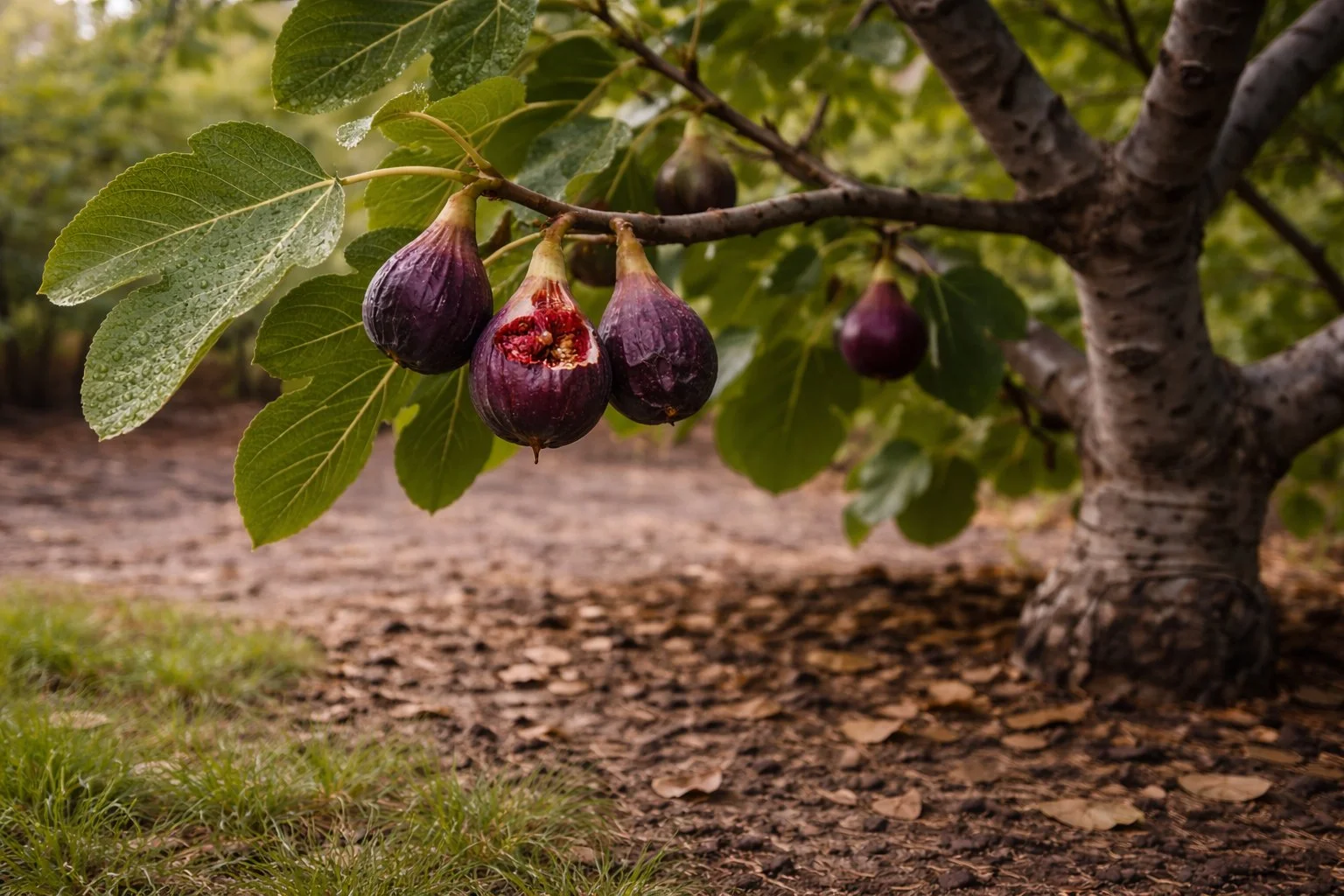
A realistic orchard image showing figs damaged by birds or insects while still on the tree, illustrating common late-season losses that occur near harvest time.
Harvesting from Container vs In-Ground Fig Trees
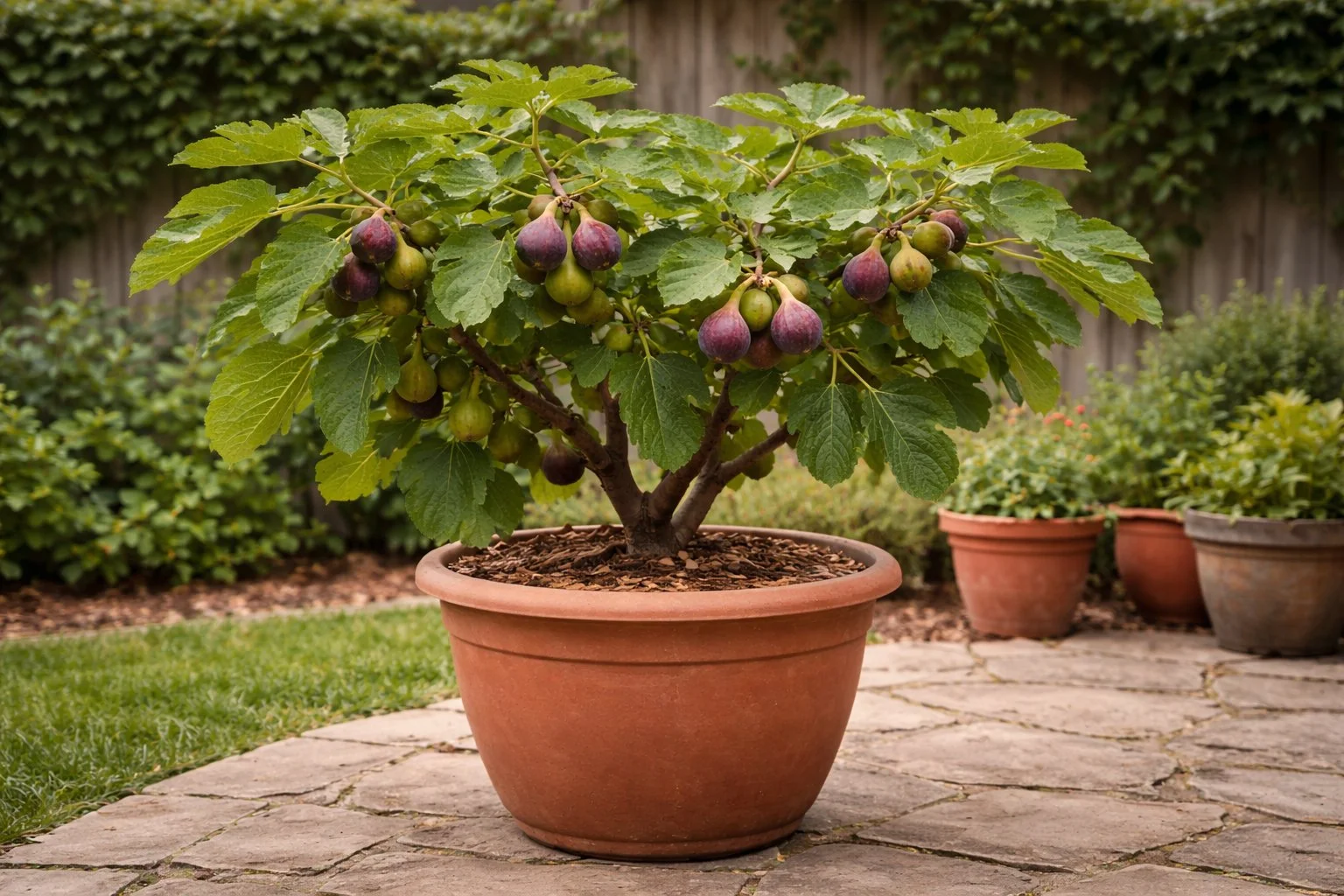
Mature fig tree with both ripe and underripe figs hanging naturally on different branches in a backyard.