Fig Farm Practice Supporting Articles.
Professional guides to growing figs in Zone 7b
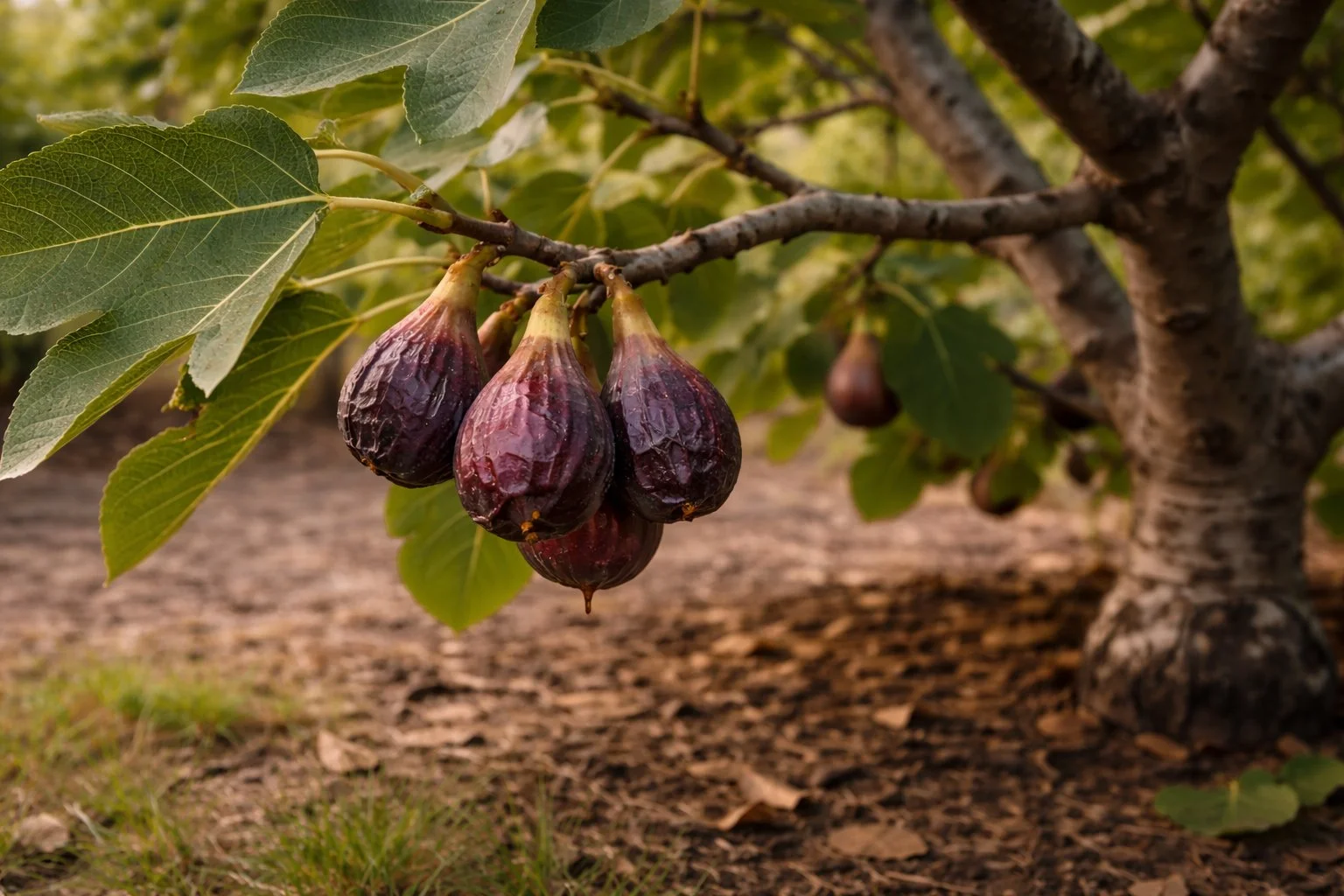
Preventing Spoilage and Souring on the Tree
A realistic orchard image showing overripe figs still on the tree, illustrating visual signs of spoilage and the short shelf life of fresh figs after peak ripeness.
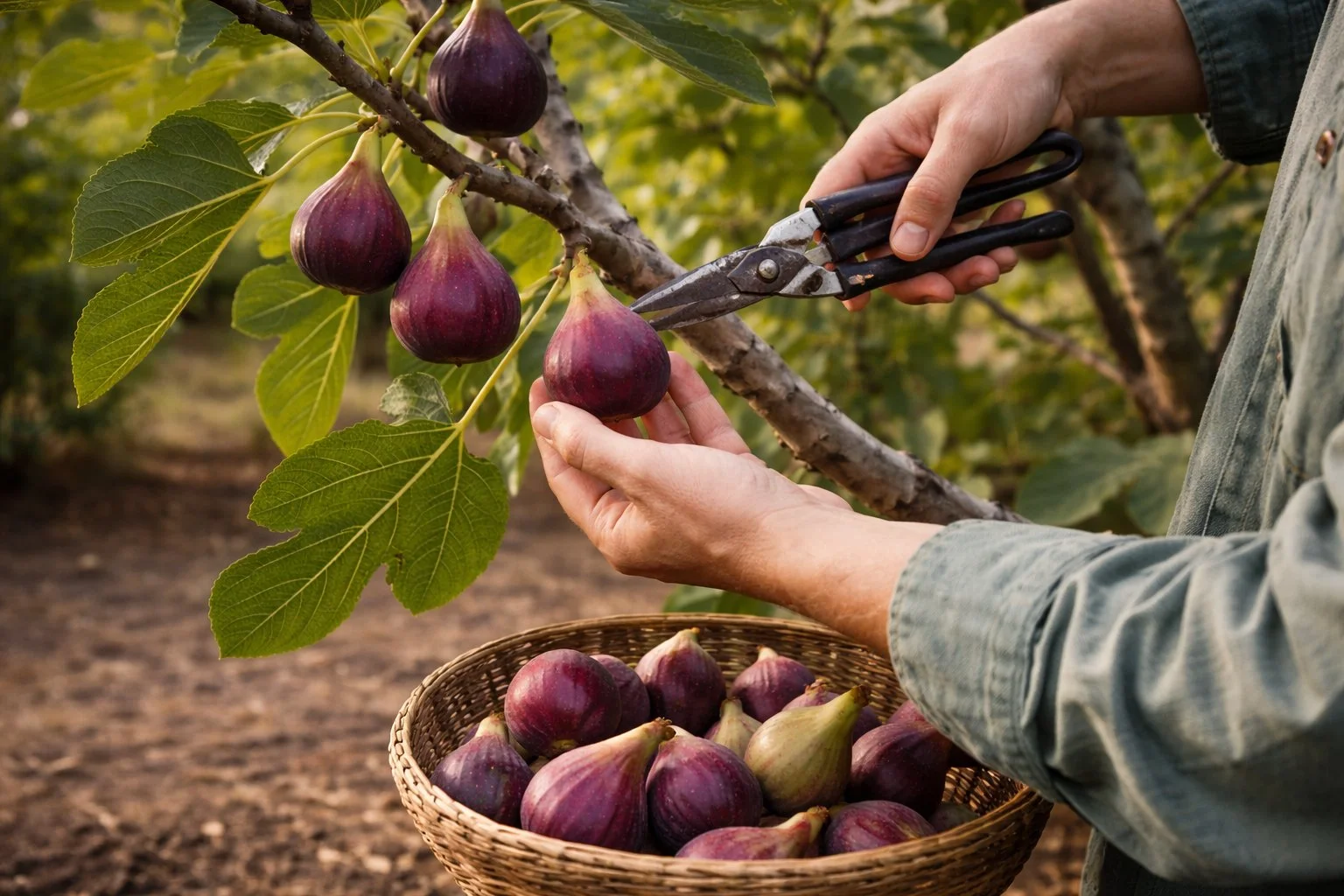
Handling and Storing Fresh Figs
A realistic orchard photograph showing ripe figs being harvested from the tree, supporting best practices for careful picking and post-harvest handling.
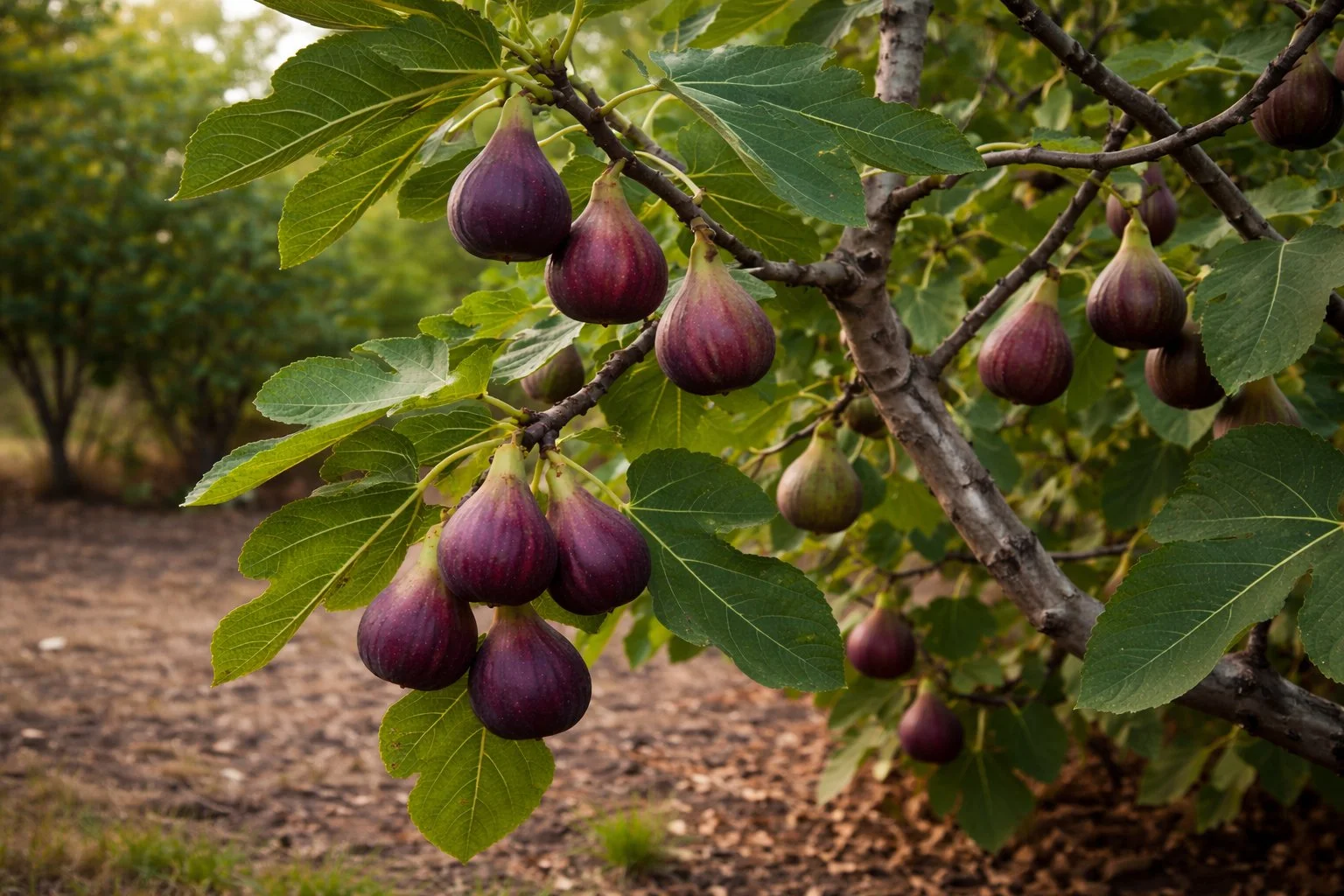
Harvest Timing for Best Flavor
A fig tree showing naturally ripened fruit still on the branch, illustrating visual cues used to determine proper harvest timing.
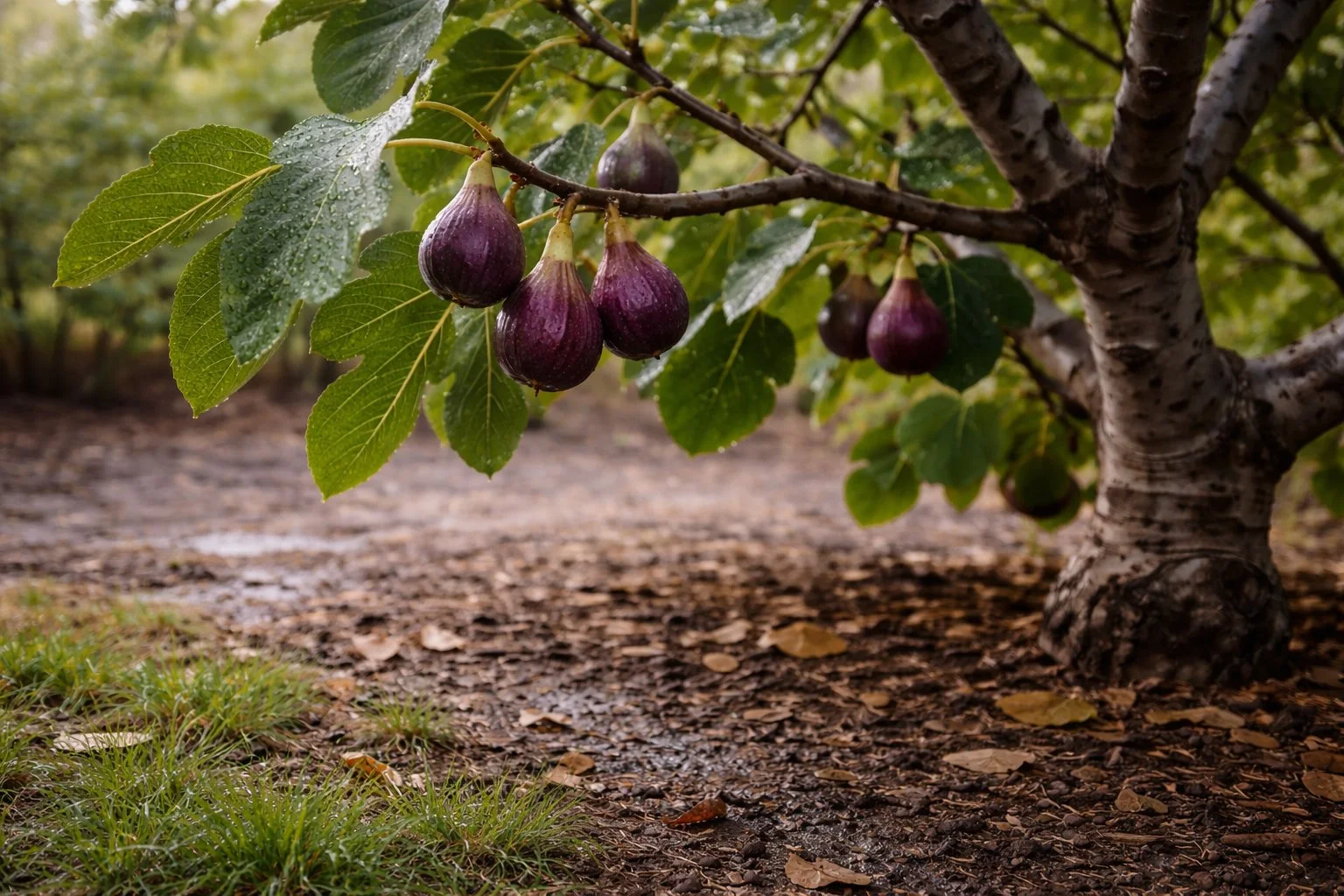
How to Tell When Figs Are Truly Ripe
A fig tree photographed immediately after rain, showing ripe fruit still on the branches and highlighting weather-related risks that affect harvest timing and fruit quality.
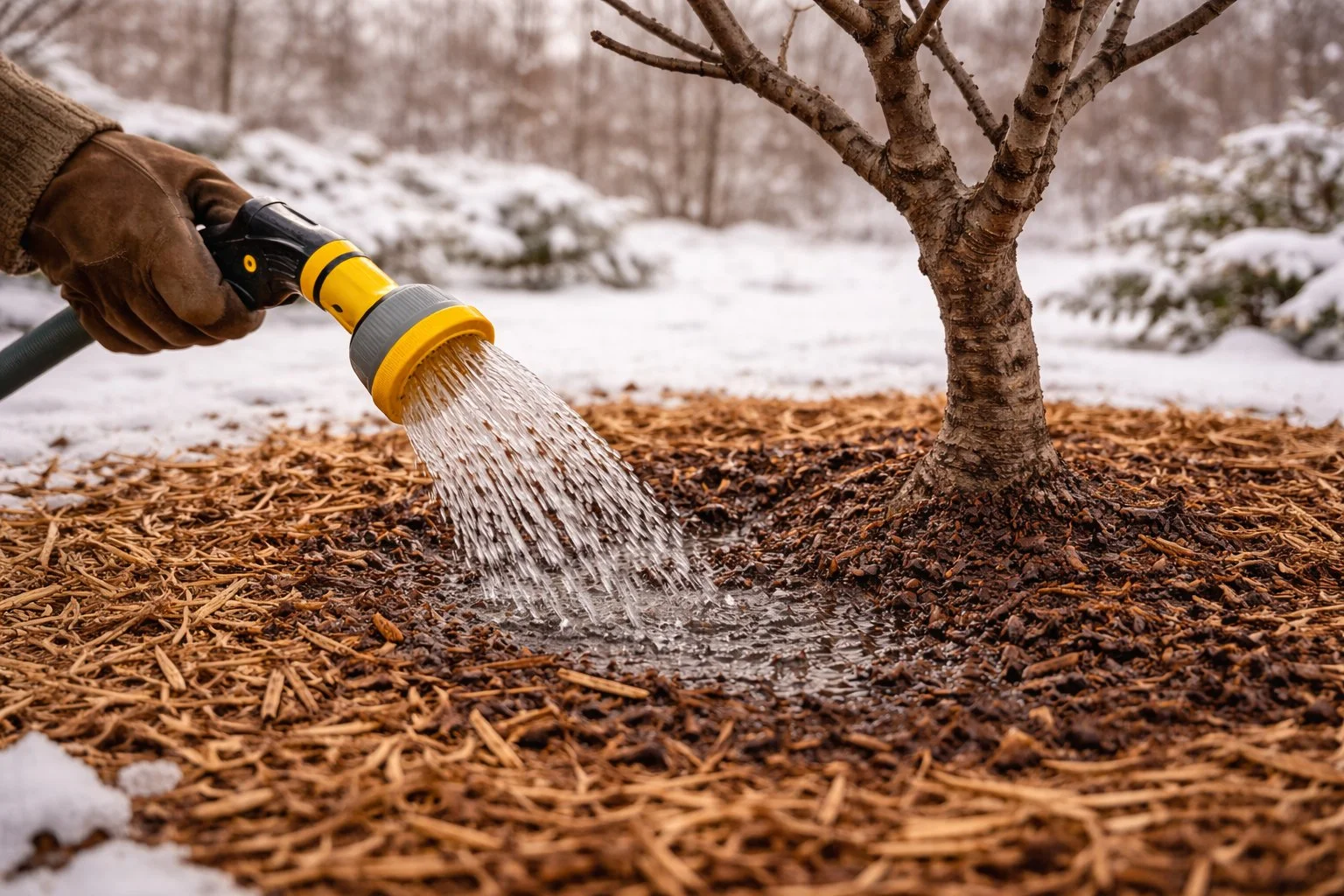
Winter Watering: When It Matters and When It Doesn’t for Fig Trees
Winter watering for fig trees is rarely needed and should be limited to specific dry conditions to protect roots without causing saturation.
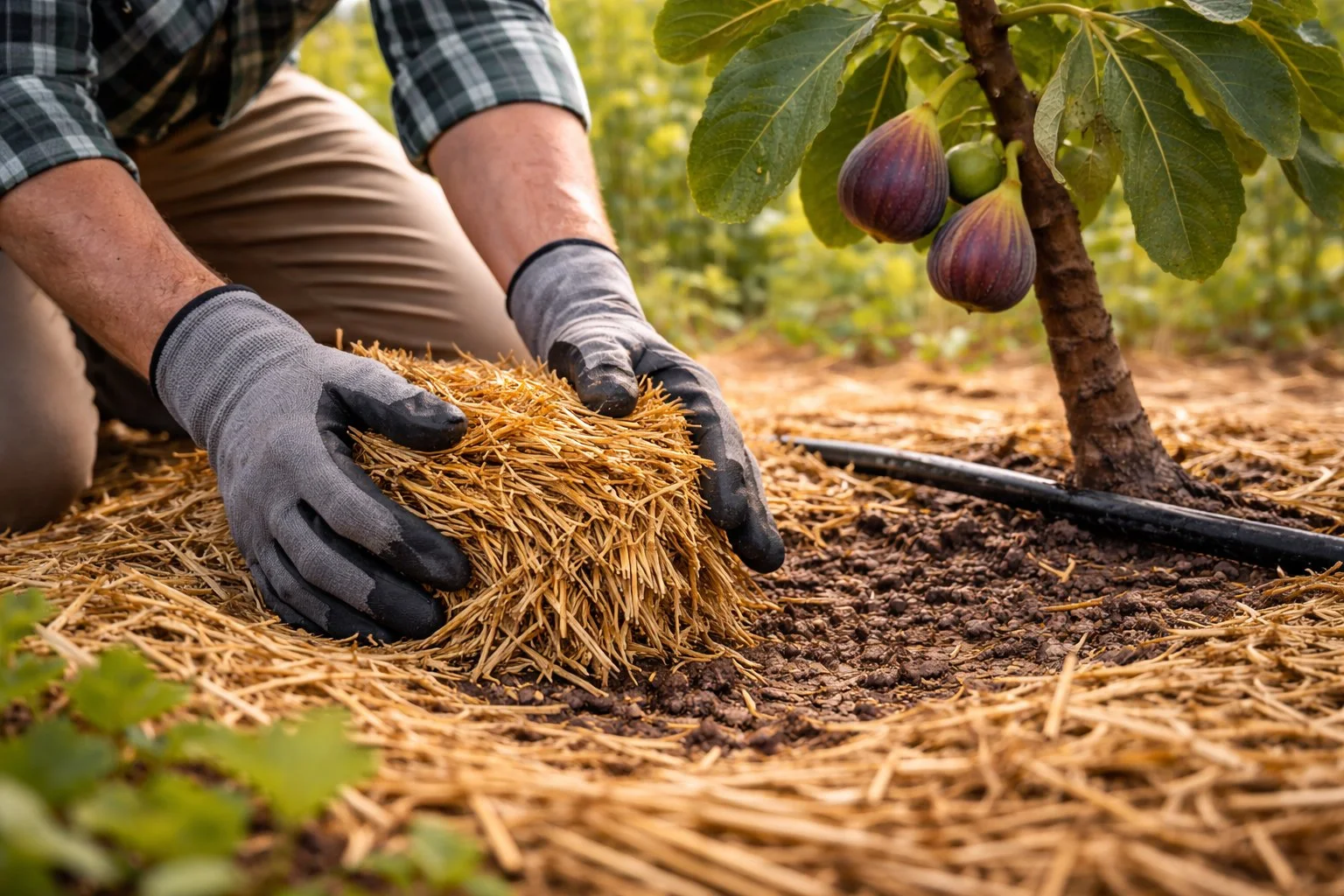
Mulching for Moisture Retention in Fig Orchards and Containers
Organic mulch around fig trees helps retain soil moisture, moderate temperature, and reduce water stress during the growing season.
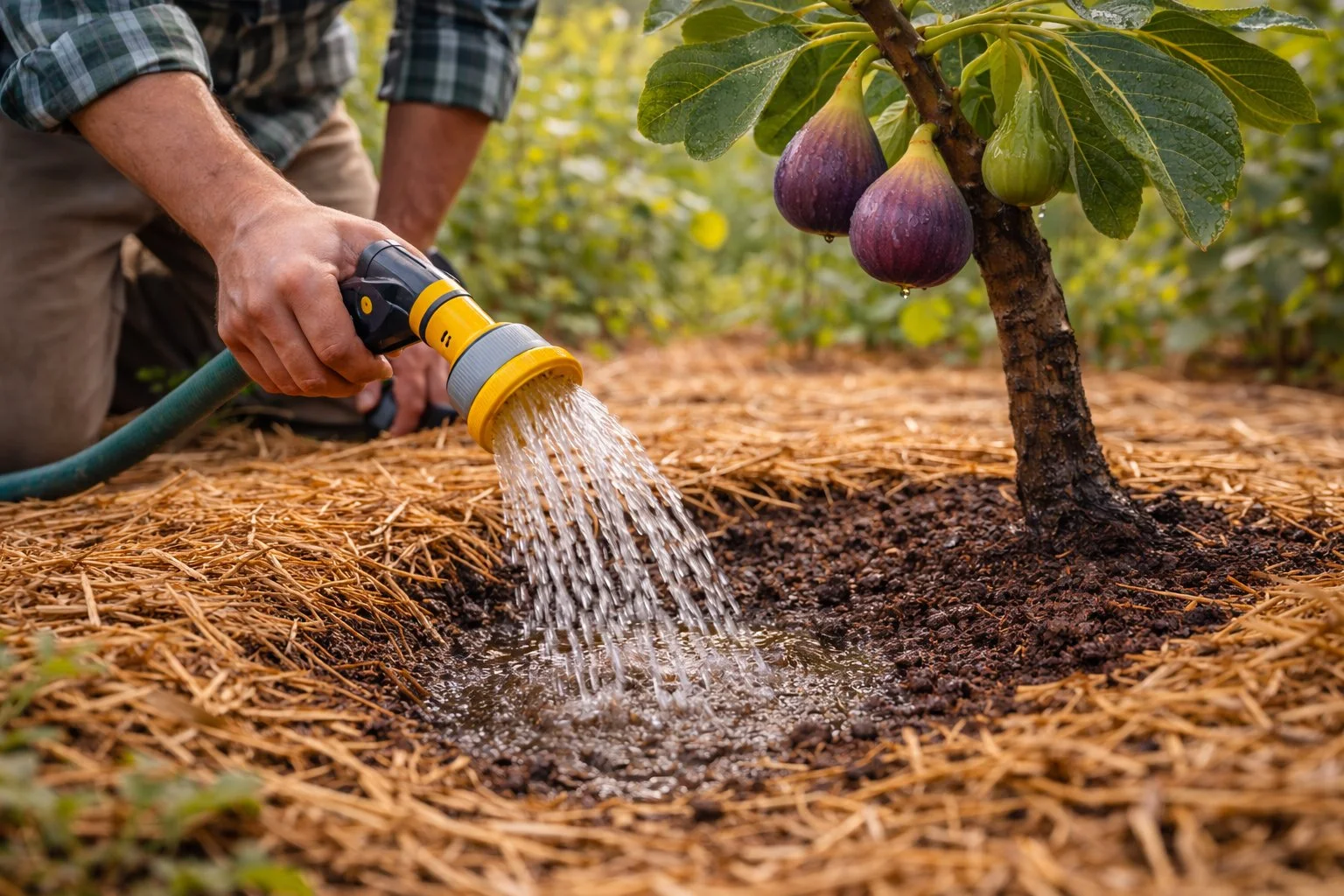
Drought Stress and Recovery in Fig Trees
Gradual, targeted watering after dry periods helps fig trees recover by restoring moisture to the root zone without causing saturation.
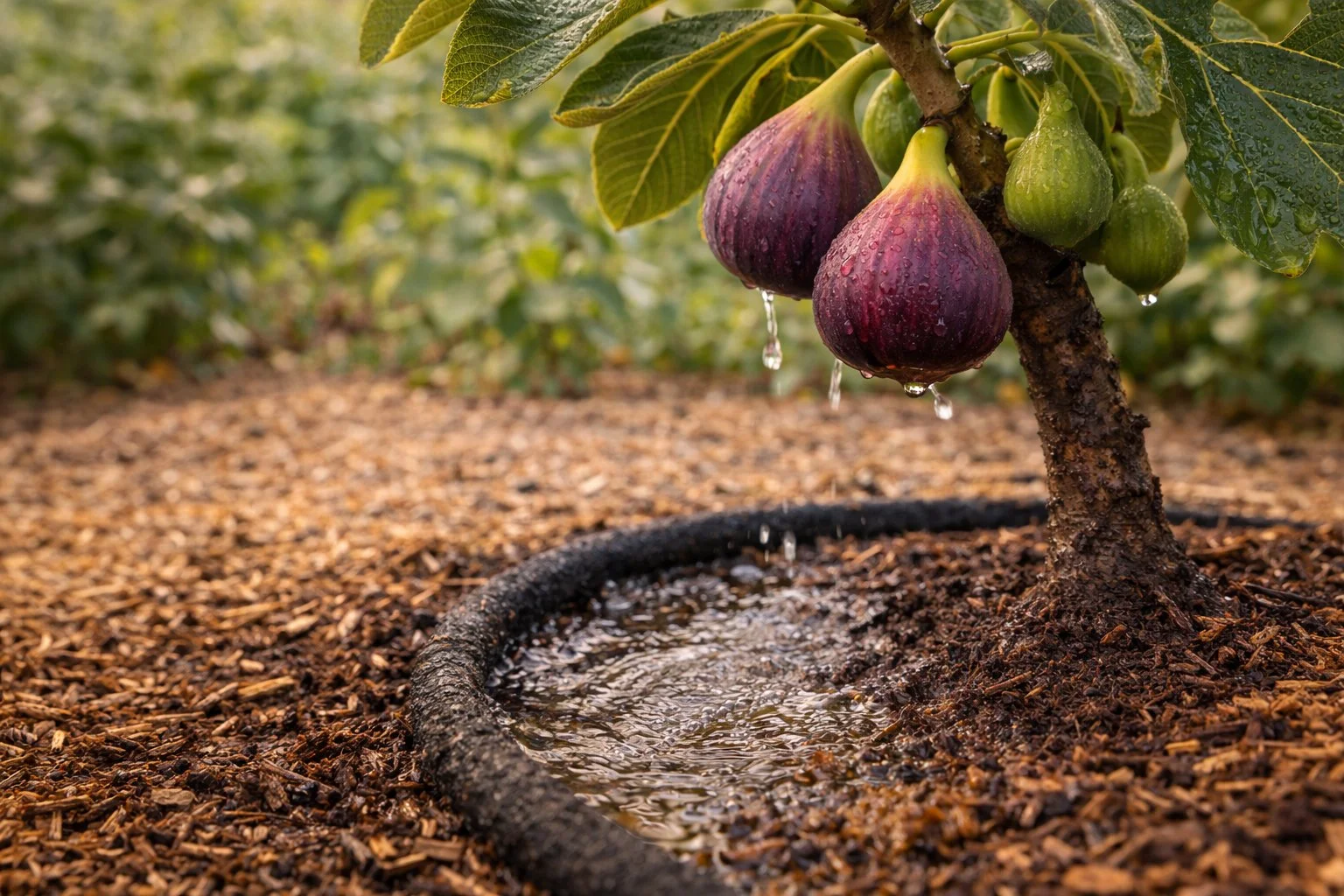
Preventing Fruit Drop and Splitting with Consistent Watering
Steady, even watering during ripening helps figs develop gradually, reducing the risk of fruit drop and skin splitting.
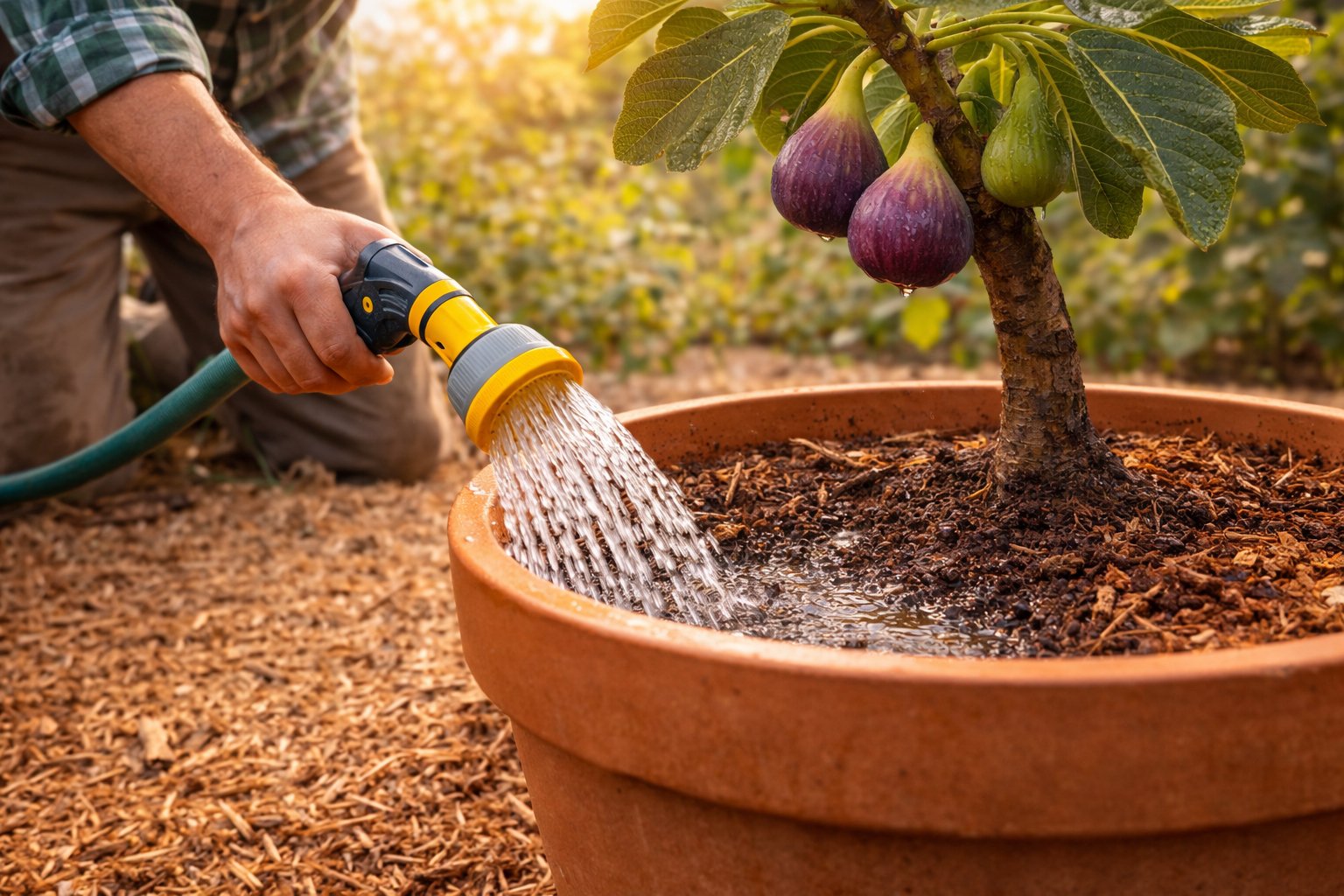
Watering Container Figs in Summer Heat
Container figs require frequent, thorough watering during summer heat to prevent rapid drying and heat-related stress.
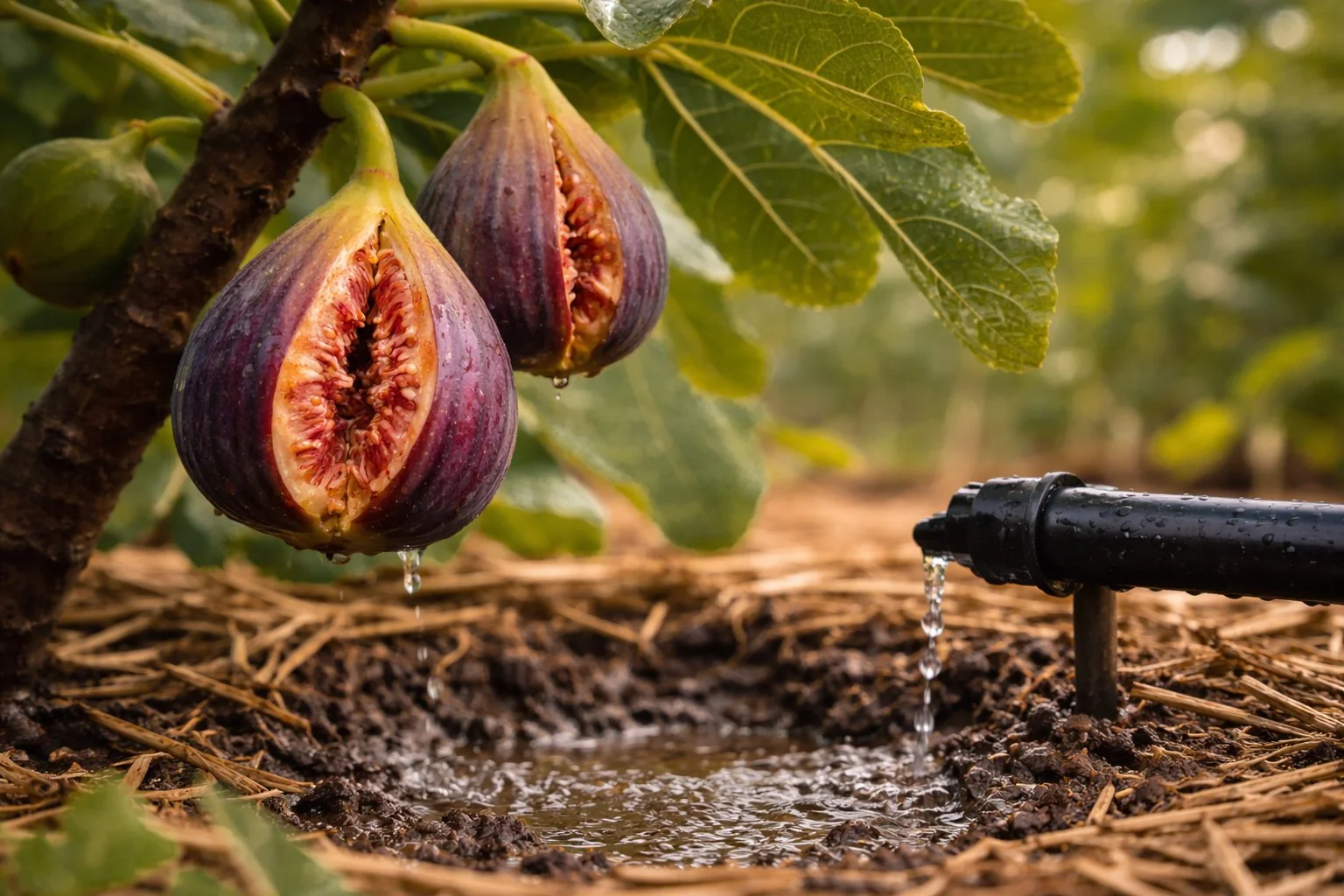
Drip Irrigation vs Hand Watering for Figs
Different watering methods influence how evenly moisture reaches fig roots, affecting fruit development and overall tree performance.
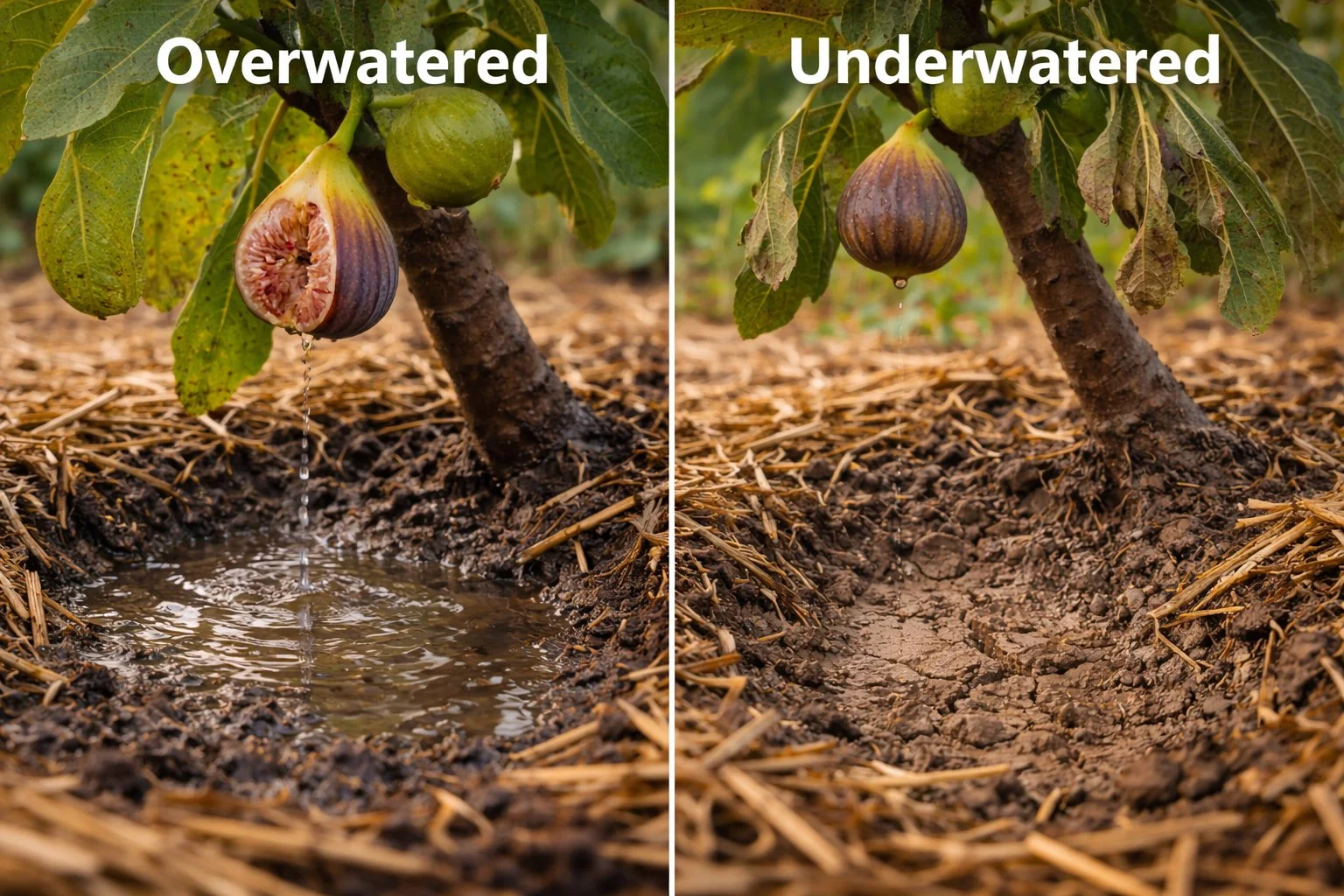
Overwatering vs Underwatering: How to Tell the Difference in Fig Trees
Fig trees respond differently to excess and insufficient water, with soil conditions and leaf behavior providing key clues for diagnosis.
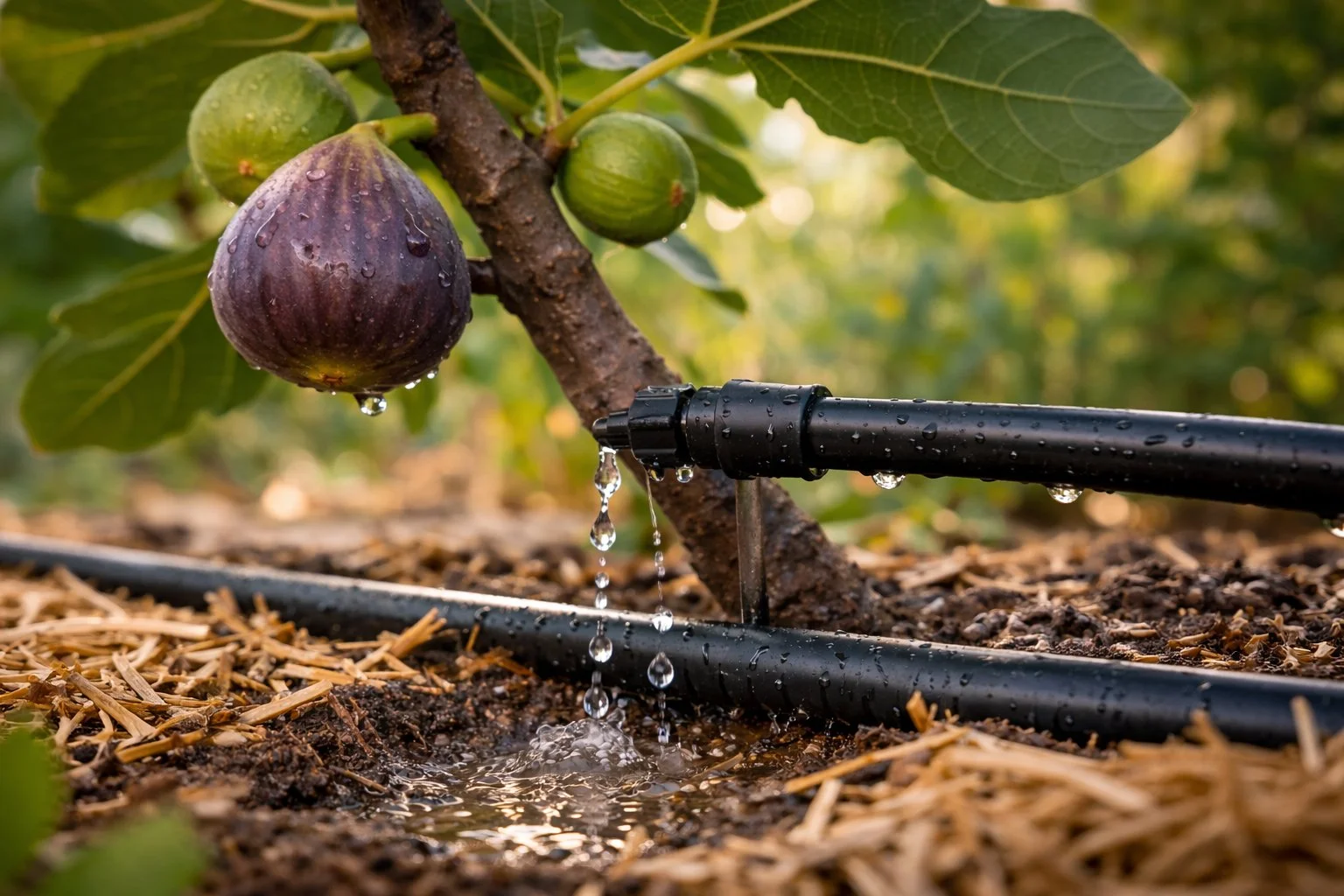
How Much Water Do Fig Trees Really Need?
Drip irrigation delivering water to the soil beneath a fig tree with developing fruit in a mulched orchard setting.
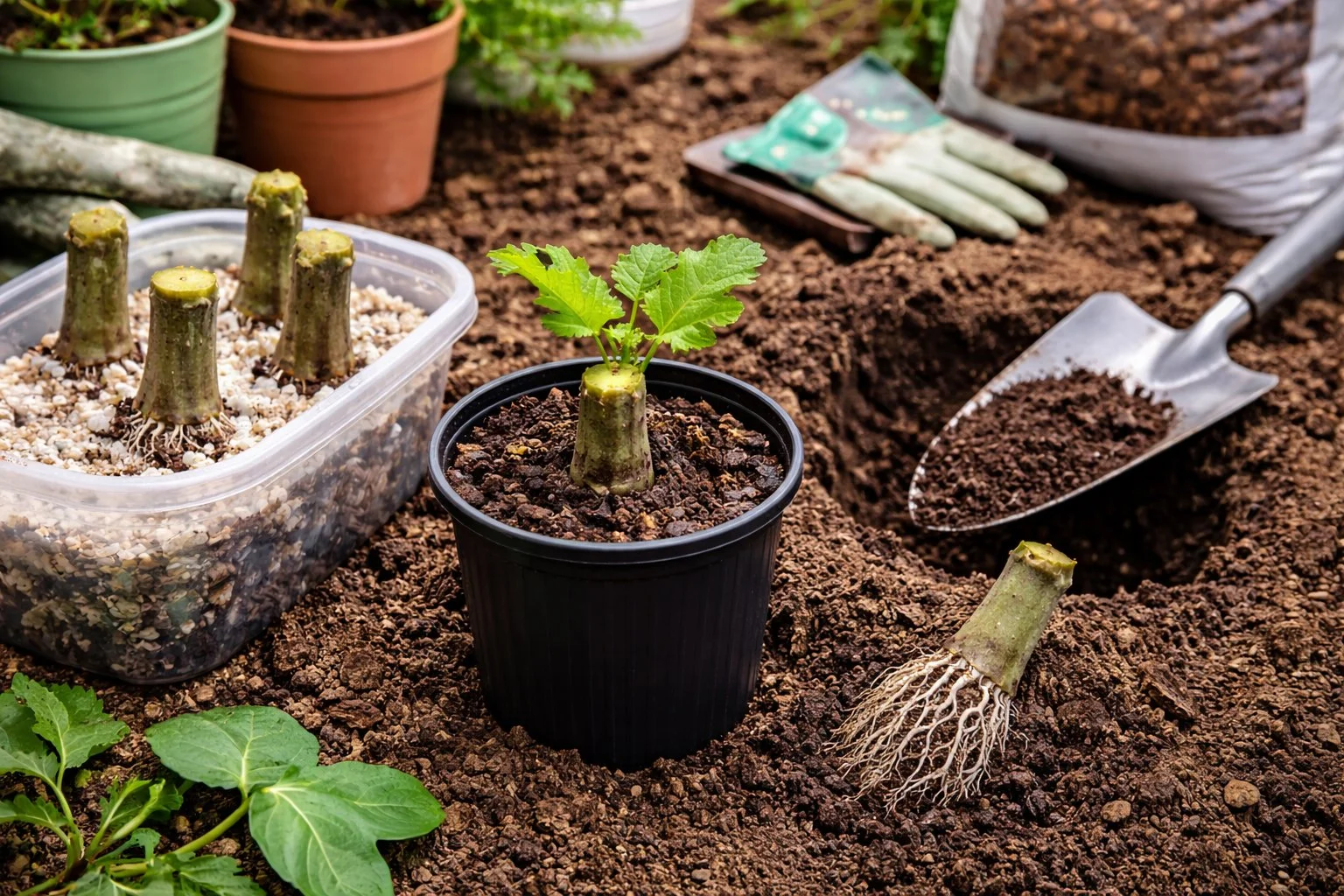
Transitioning Rooted Fig Cuttings to Pots or the Ground
Rooted fig cuttings are gradually transitioned from propagation media into pots or garden soil to allow roots to adjust before active growth resumes.
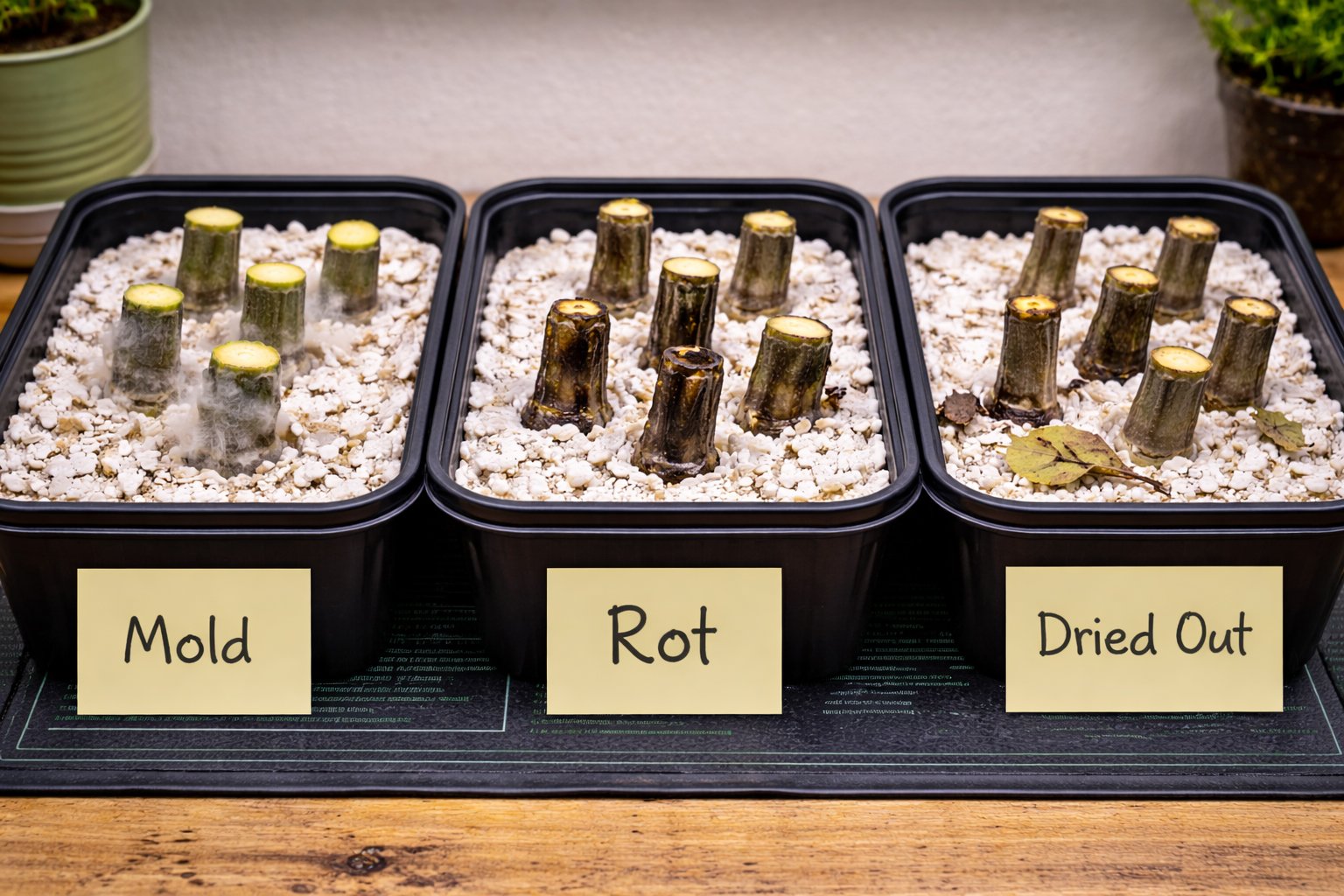
Common Fig Propagation Failures and How to Avoid Them
Propagation failures such as mold, rot, and drying are usually caused by excess moisture, poor airflow, or inconsistent humidity during rooting.
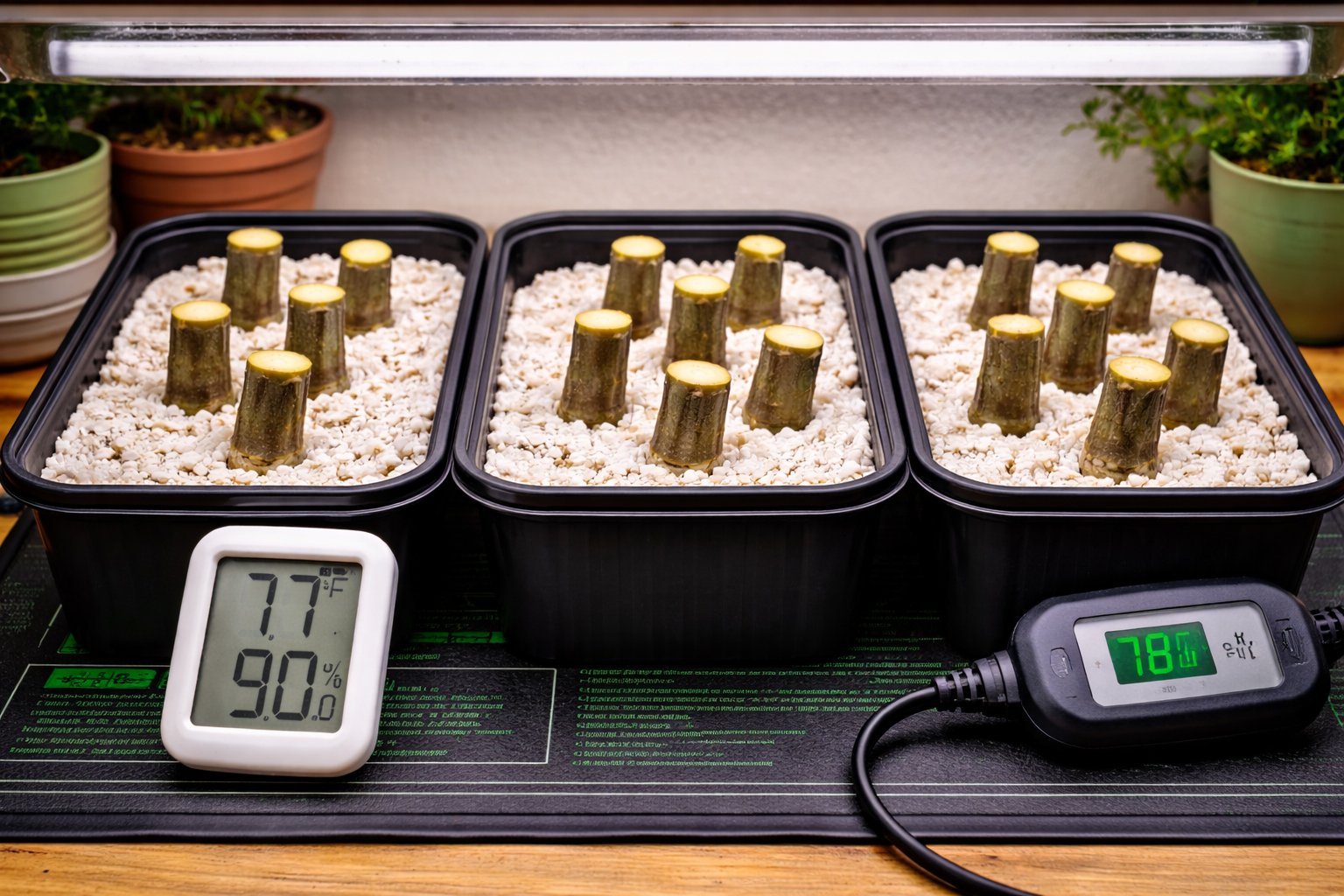
Heat Mats, Light, and Temperature for Rooting Success
Stable warmth from a heat mat combined with gentle indoor light helps fig cuttings root more consistently by supporting early root formation before top growth.
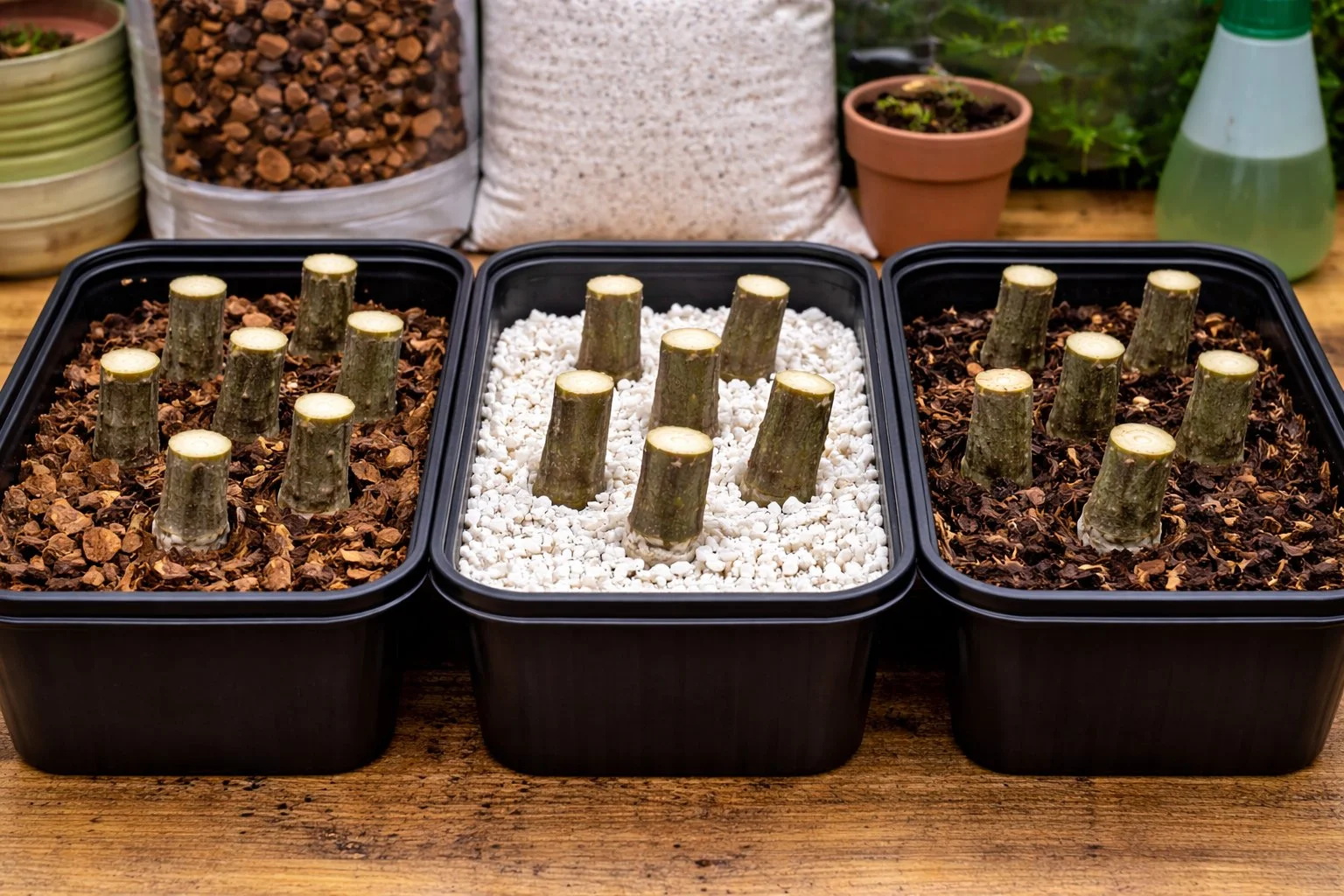
Rooting Media for Figs: Bark Mixes vs Perlite vs Soil
Different rooting media—including bark-based mixes, perlite, and soil—offer varying drainage and moisture characteristics that influence how fig cuttings form roots.
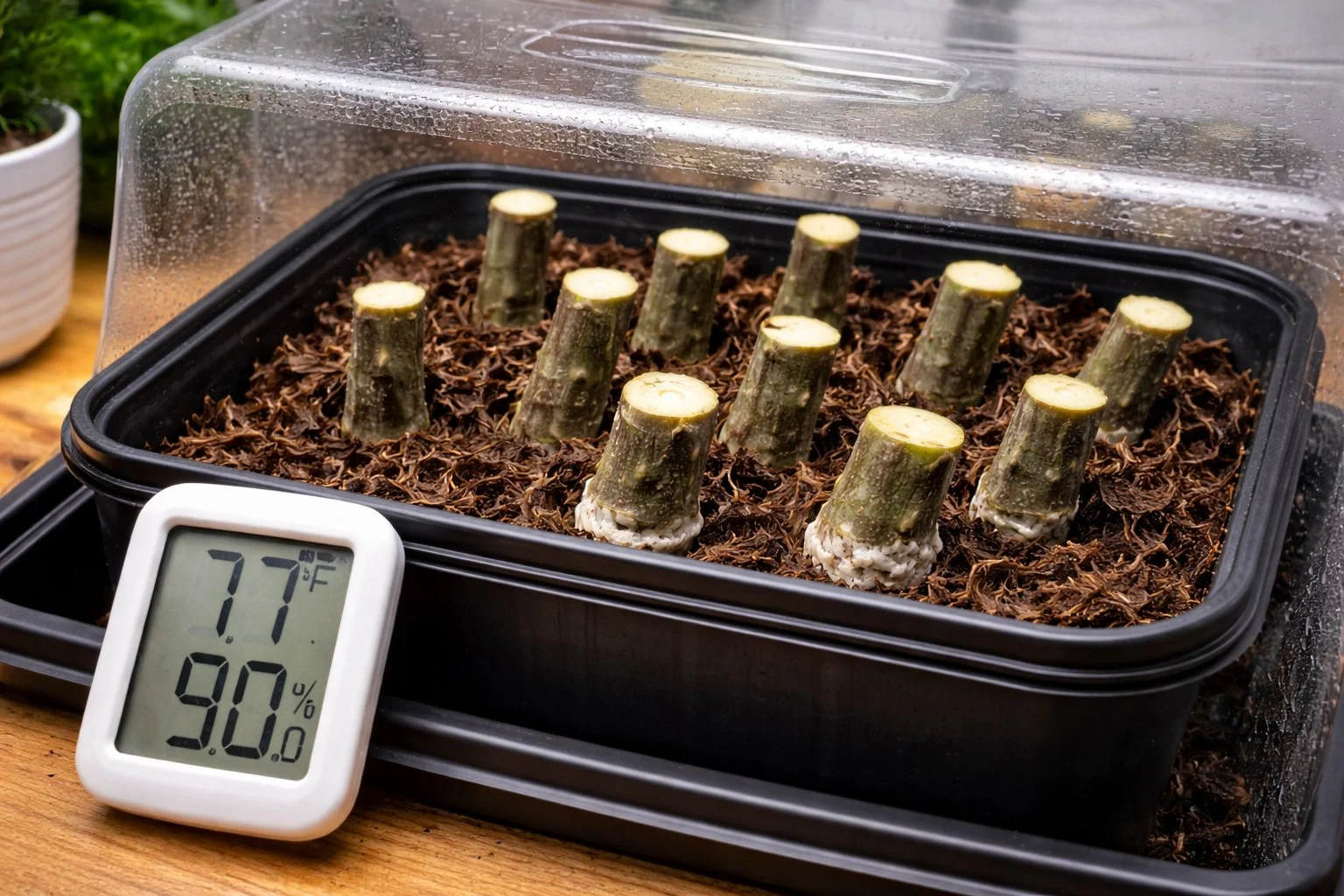
Callusing Fig Cuttings: Methods, Timing, and Mistakes
Fig cuttings can be callused indoors by placing them upright in a lightly moist medium and maintaining warm, stable conditions before rooting begins.
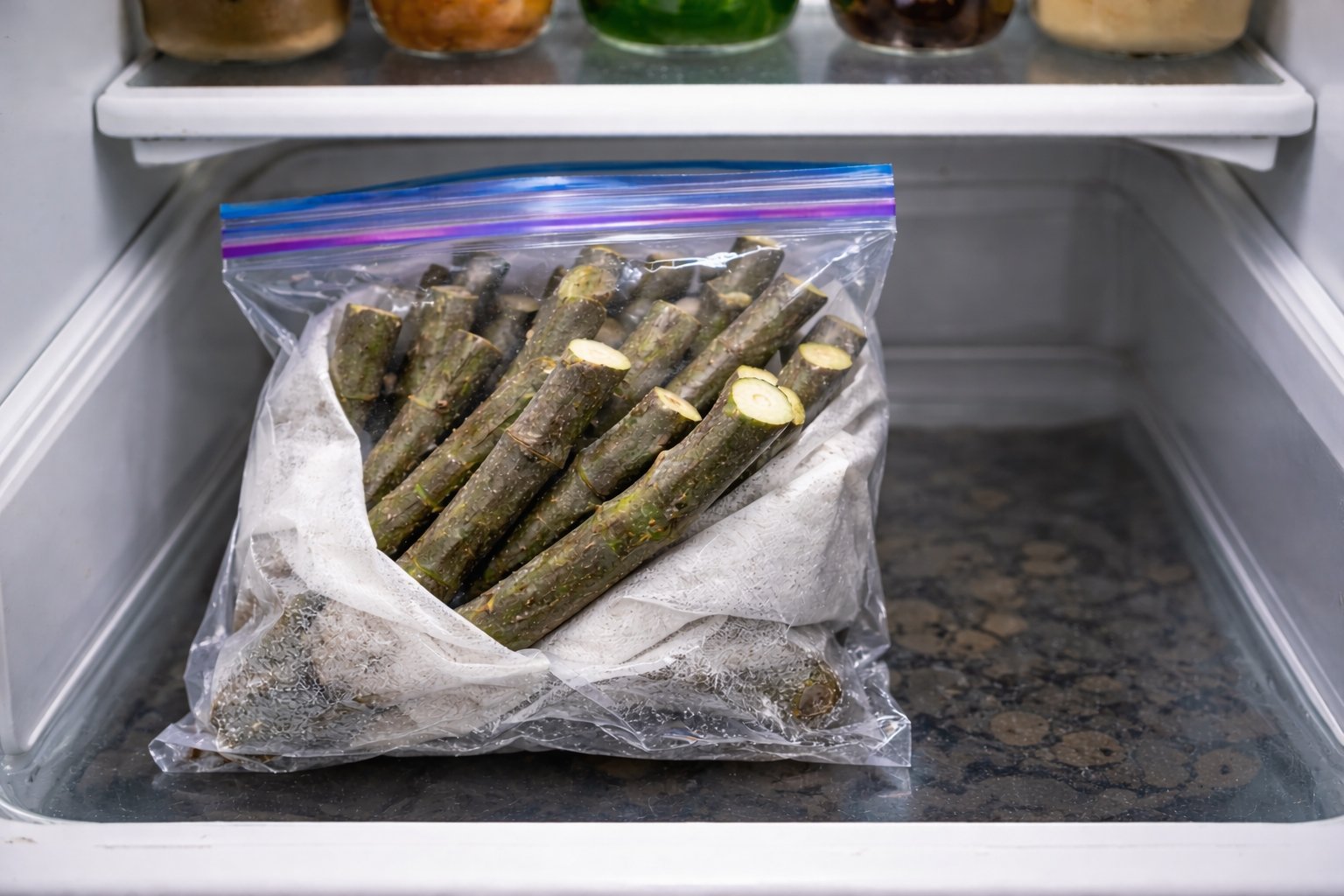
Storing Fig Cuttings Over Winter: Cold Storage vs Callus
Dormant fig cuttings can be safely stored over winter in a refrigerator using a sealed plastic bag and light moisture to prevent drying while maintaining dormancy.
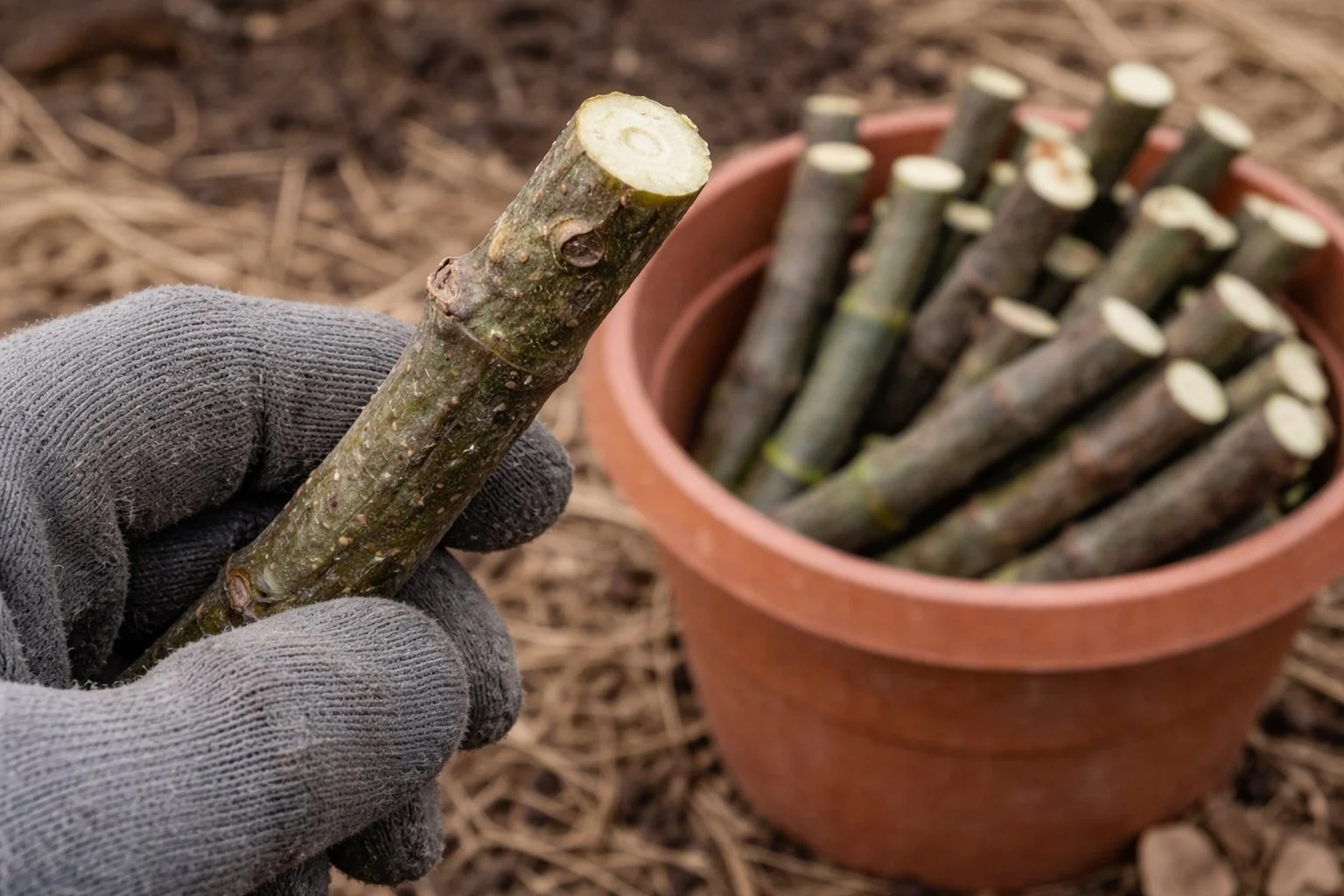
Selecting Healthy Wood: What Makes a Good Fig Cutting
A healthy fig cutting has firm bark, visible nodes, and clean white interior wood—key indicators of viable material for successful propagation.
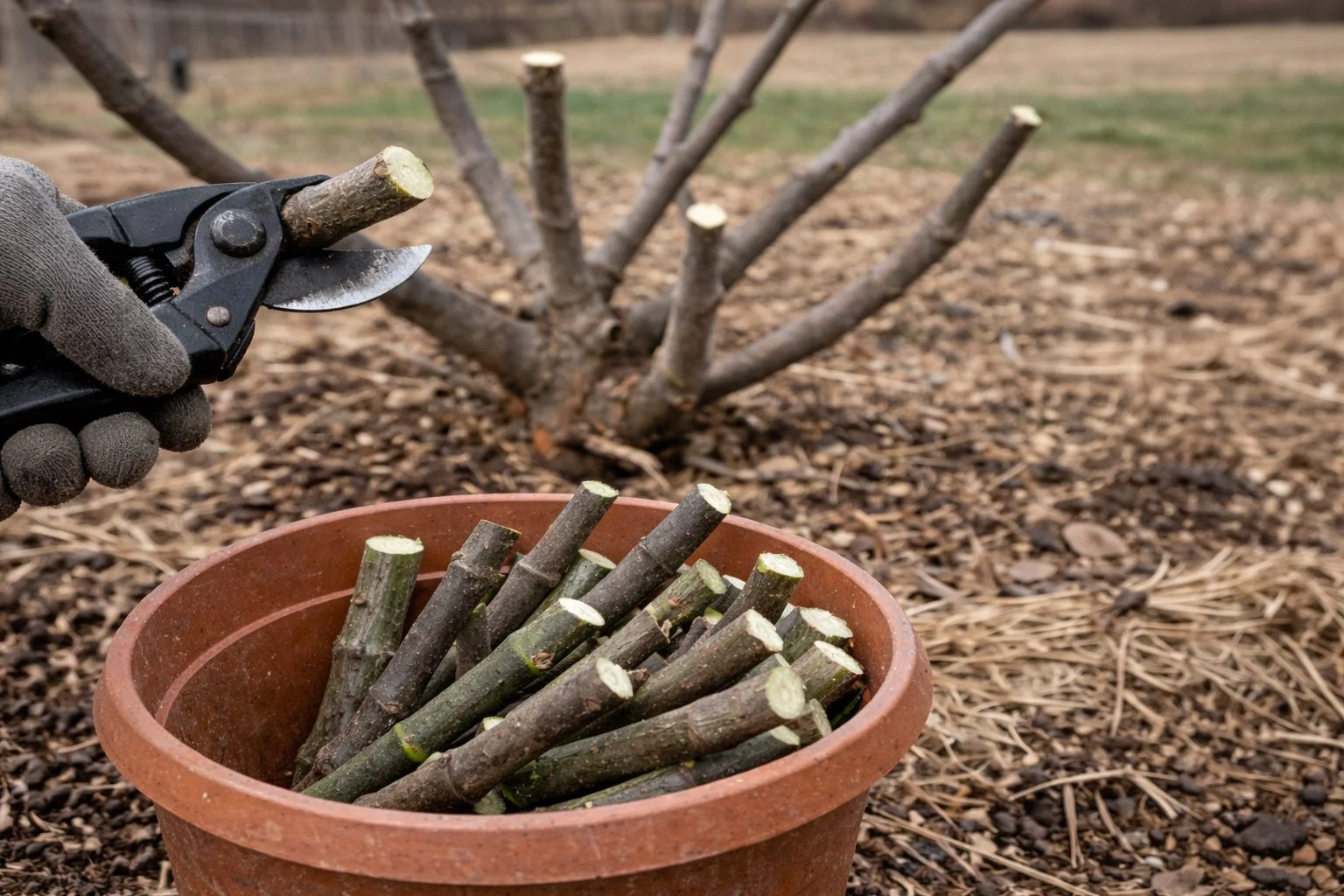
When to Take Fig Cuttings in Zone 7b
Dormant fig cuttings taken in late winter show clean, healthy wood ready for storage or propagation in Zone 7b conditions.