Organic Pest Management for Fig Orchards
Introduction
Organic pest management in fig orchards is often misunderstood as a collection of sprays or substitutes for conventional chemicals. In reality, successful organic management is not about replacing products but about changing priorities. Figs respond best to systems that emphasize balance, observation, and prevention rather than routine intervention. In Zone 7b, where figs grow vigorously yet experience humidity, heat, and seasonal stress, organic approaches align naturally with the biology of the tree.
This article explains organic pest management as a framework rather than a recipe. Its purpose is to help growers understand why restraint works, how orchard design influences pest pressure, and when minimal action supports fig health more effectively than aggressive control.
Why Organic Approaches Suit Fig Trees
Fig trees evolved under constant insect pressure and developed tolerance rather than fragility. They are not crops that require pristine foliage or zero pest presence to perform well. Organic management takes advantage of this resilience by prioritizing tree health and ecosystem balance over eradication.
In Zone 7b, many pest problems resolve on their own as weather patterns change or as trees mature. Organic management allows these natural corrections to occur without disruption.
Redefining “Pest” in the Fig Orchard
Organic pest management begins with redefining what constitutes a pest. Many insects present in fig orchards do not cause meaningful harm. Some feed briefly on leaves without affecting productivity, while others play important roles as predators or decomposers. Treating all insects as enemies destabilizes the orchard and increases long-term problems.
A true pest is one that causes sustained damage that interferes with tree health or fruit development. Organic management focuses on identifying that threshold rather than reacting to presence alone.
Orchard Design as Pest Management
The most effective organic pest control strategies are built into the orchard itself. Proper spacing, adequate airflow, and appropriate pruning reduce humidity and create conditions that discourage disease and pest buildup. Trees that dry quickly after rain are less hospitable to fungal pathogens and many insects.
In Zone 7b, orchard design often determines pest pressure more decisively than any treatment choice.
Soil Health as the Foundation
Healthy soil produces resilient trees. Organic matter improves structure, supports beneficial organisms, and moderates moisture extremes. Trees with strong root systems tolerate pest pressure far better than stressed trees growing in compacted or poorly drained soil.
Organic pest management begins below ground. When soil health improves, many above-ground problems diminish naturally.
The Role of Beneficial Insects
Beneficial insects are central to organic pest management. Predators and parasites often appear shortly after pest populations increase. Allowing time for this natural response prevents unnecessary intervention and supports long-term balance.
In fig orchards, beneficial insects frequently regulate aphids, mites, and other common pests without human involvement. Disrupting this process with broad treatments often prolongs problems rather than solving them.
Observation Over Action
Organic management prioritizes observation. Watching how pests behave, how trees respond, and how conditions change over time provides information that no product can replace. Many pest issues peak briefly and then decline as natural controls assert themselves.
In Zone 7b, where weather variability strongly influences pest behavior, observation helps distinguish temporary spikes from persistent problems.
Avoiding the Spray Mentality
One of the most damaging habits in pest management is the assumption that visible problems require immediate spraying. Even organic sprays can disrupt beneficial organisms and stress fig trees if used unnecessarily. Organic pest management does not mean spraying different products; it means spraying less often, or not at all.
Restraint preserves orchard stability and reduces long-term pest pressure.
When Organic Intervention May Be Appropriate
There are situations where organic intervention may be justified. Persistent pest pressure that threatens fruit production or tree health, especially on young or stressed trees, may warrant action. Even then, the goal should be targeted support rather than eradication.
Organic intervention works best when paired with improvements in growing conditions rather than used as a standalone solution.
Understanding Secondary Pest Outbreaks
Over-intervention often creates secondary pest outbreaks. Eliminating one organism can remove predators or competitors, allowing another pest to flourish. Organic systems are particularly sensitive to these imbalances because they rely on natural regulation.
Recognizing this dynamic reinforces the value of patience and measured response.
Seasonal Context in Zone 7b
Pest pressure in fig orchards fluctuates seasonally. Early summer growth attracts insects that prefer tender tissue, while late-season fruit attracts opportunistic feeders. Many of these pressures decline naturally as conditions shift.
Organic management accounts for seasonality and avoids treating temporary conditions as permanent threats.
Wildlife and Organic Management
Organic pest management does not apply to wildlife issues. Birds, squirrels, and deer are structural challenges rather than biological ones. Attempting to address wildlife pressure through sprays or repellents is ineffective and distracts from appropriate solutions such as exclusion and harvest timing.
Separating insect management from wildlife management clarifies decision-making.
Building Grower Confidence
Organic pest management requires confidence built through experience. The ability to wait, watch, and trust the tree develops over time. Each season reinforces the understanding that figs are capable of self-regulation when conditions support them.
This confidence reduces anxiety and leads to better orchard outcomes.
Long-Term Outcomes of Organic Systems
Over time, organically managed fig orchards tend to stabilize. Pest populations fluctuate but rarely explode. Trees grow steadily, fruit reliably, and recover quickly from stress. The orchard becomes more predictable, not less.
These outcomes are the result of consistency rather than constant correction.
Avoiding the Perfection Trap
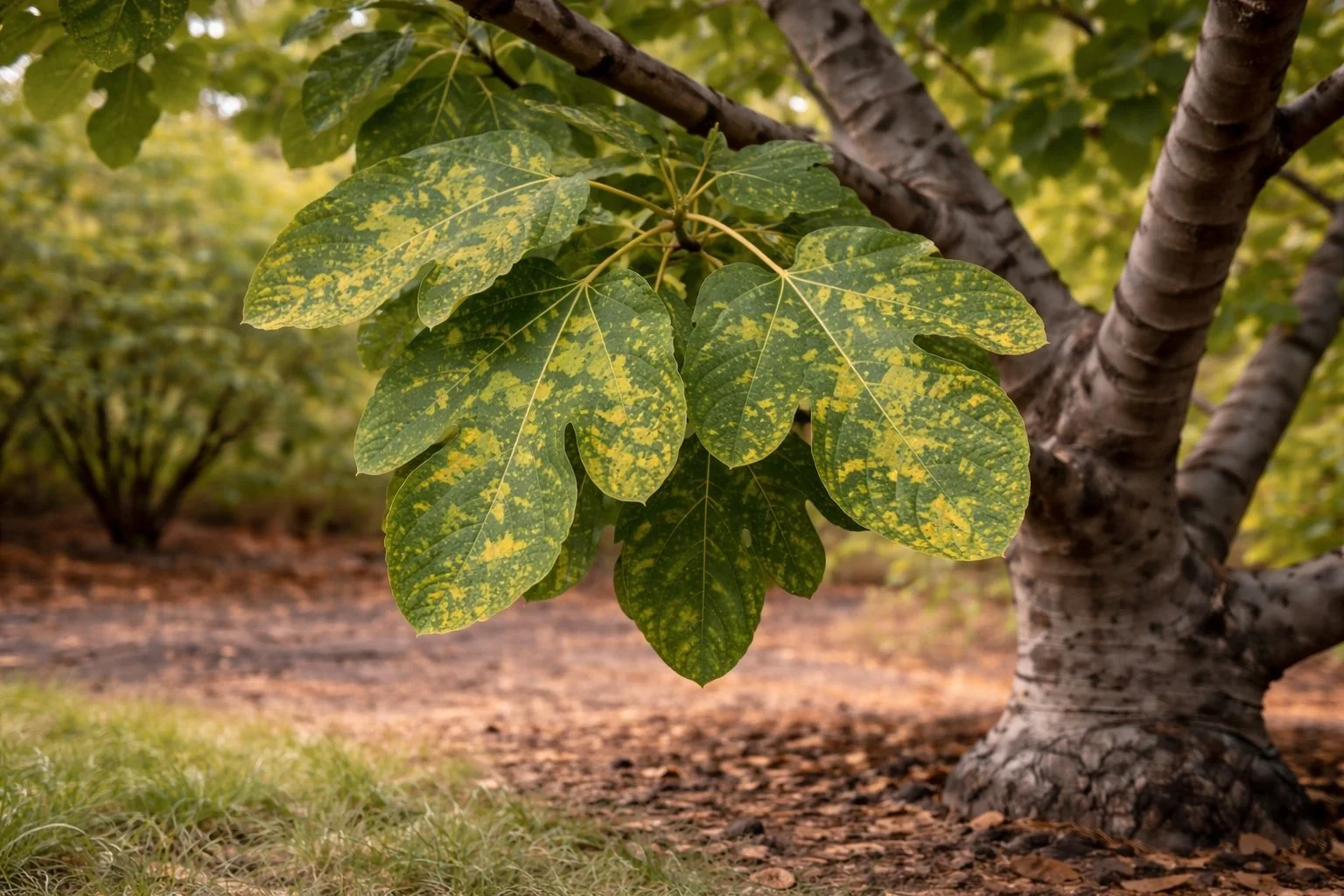
Organic pest management rejects the idea of perfect trees. Some leaf damage, some insect presence, and some fruit loss are normal and acceptable. Striving for perfection creates unnecessary work and undermines balance.
Healthy orchards are not flawless; they are functional.
The Takeaway
Organic pest management in fig orchards is a philosophy grounded in observation, restraint, and system design. In Zone 7b, figs thrive when growers focus on soil health, airflow, and overall vigor rather than reacting to every visible insect. Most pest issues resolve without intervention, and those that persist often point to underlying stress rather than the need for control. By prioritizing balance over action, growers create orchards that are resilient, productive, and far easier to manage over time.
This article is part of the complete guide to Pests & Diseases of Fig Trees in Zone 7b.
Related reading:
Common Fig Pests and When to Ignore Them
Preventative Orchard Hygiene Practices
When to Treat — and When to Leave the Tree Alone
