Preventative Orchard Hygiene Practices
Introduction
Preventative orchard hygiene is one of the least dramatic yet most powerful tools available to fig growers. It does not rely on treatments, products, or emergency responses. Instead, it consists of quiet, consistent practices that reduce pest and disease pressure before problems have a chance to establish. In Zone 7b, where humidity, warmth, and long growing seasons favor rapid biological activity, orchard hygiene often determines whether minor issues remain minor or escalate into recurring frustrations.
This article explains orchard hygiene as a long-term discipline rather than a checklist. Its purpose is to help growers understand why simple habits matter, how hygiene influences orchard balance, and why prevention consistently outperforms reaction in fig growing.
Hygiene as a System, Not a Task
Orchard hygiene is often misunderstood as a series of cleanup chores performed only when problems appear. In reality, it is a system that operates continuously in the background of orchard management. Hygiene shapes the environment in which pests, pathogens, and beneficial organisms interact. When hygiene is consistent, the orchard becomes less hospitable to problems and more supportive of natural balance.
In fig orchards, hygiene rarely eliminates pests or disease entirely, but it dramatically reduces their intensity and frequency.
Why Fig Orchards Respond Strongly to Hygiene
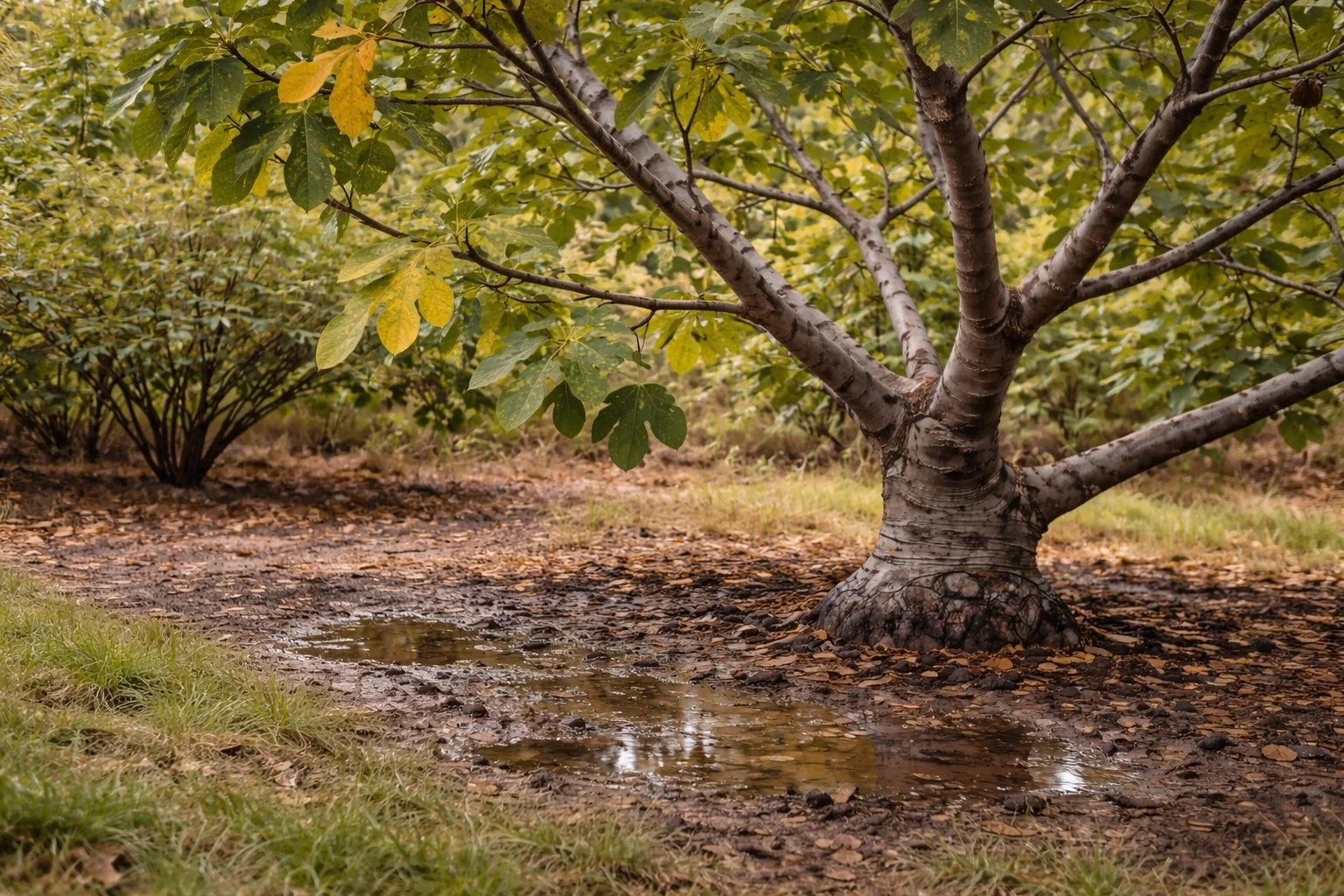
Fig trees are resilient, but they are not indifferent to their surroundings. Fallen fruit, decaying leaves, and neglected debris create reservoirs where pests and pathogens can persist. In Zone 7b, warm and moist conditions accelerate decomposition and microbial growth, making unmanaged material particularly influential.
Good hygiene interrupts these cycles. By limiting the places where organisms overwinter or multiply, growers reduce pressure across the entire orchard rather than addressing individual symptoms.
Fallen Fruit and Its Hidden Impact
Dropped or overripe figs are one of the most significant hygiene factors in fig orchards. As fruit breaks down, it attracts insects, supports microbial growth, and increases localized humidity. These conditions encourage pest buildup and contribute to fruit souring issues later in the season.
Prompt removal of fallen fruit reduces these pressures and prevents small problems from compounding. This practice alone often has a greater impact than any targeted treatment.
Leaf Litter and Seasonal Context
Leaf litter plays a nuanced role in orchard hygiene. During the growing season, accumulations of diseased or decaying leaves can harbor fungal spores and insects. In contrast, leaf litter during dormancy often poses little risk and may contribute to soil health.
Understanding seasonal context prevents overcorrection. Hygiene is about timing and balance rather than constant removal.
Tool Hygiene and Pathogen Movement
Tools are a common but overlooked pathway for spreading disease within orchards. Pruners, saws, and other implements can transfer pathogens from one tree to another if not kept clean. In fig orchards, where pruning and maintenance are frequent, tool hygiene quietly protects orchard health.
Consistent attention to tool cleanliness prevents problems that might otherwise appear mysterious or unavoidable.
Containers, Pots, and Movement
Container-grown figs introduce additional hygiene considerations. Pots, trays, and reused containers can harbor pests or pathogens if not managed carefully. Movement of containers between locations may also spread problems unintentionally.
Maintaining clean containers and monitoring movement patterns reduces cross-contamination and supports healthier growth, especially in mixed container and in-ground systems.
Irrigation Practices and Hygiene
Water management is closely tied to hygiene. Overhead irrigation increases leaf wetness and spreads pathogens through splashing. In Zone 7b, where humidity is already high, irrigation practices strongly influence disease pressure.
Consistent, well-managed irrigation supports hygiene by minimizing prolonged wet conditions and reducing stress that attracts pests.
Pruning Debris and Orchard Cleanliness
Pruning generates debris that, if left unmanaged, can become a reservoir for pests or disease. Decaying wood and leaves provide shelter and breeding sites for insects. Removing or managing pruning debris as part of routine maintenance supports overall orchard hygiene.
This practice also improves access and airflow, reinforcing other preventative benefits.
Weeds, Ground Cover, and Hygiene Balance
Ground cover influences hygiene in subtle ways. Dense, unmanaged weeds near fig trunks can trap moisture, harbor insects, and complicate inspection. At the same time, completely bare soil may increase stress and erosion.
Balanced ground management supports hygiene by maintaining airflow, visibility, and soil health simultaneously.
Wildlife and Sanitation
Wildlife pressure intersects with hygiene. Animals drawn to fallen fruit or dense cover increase pest movement and damage. By maintaining clean orchard floors and minimizing attractants, growers reduce wildlife visitation and secondary problems.
Sanitation supports both pest management and fruit quality.
The Cumulative Effect of Small Habits
Preventative hygiene works through accumulation. No single practice eliminates pests or disease, but together they shift orchard conditions in favor of stability. Over time, growers notice fewer recurring problems, less need for intervention, and more predictable outcomes.
This cumulative effect is particularly valuable in Zone 7b, where environmental pressure is constant.
Hygiene and Emotional Management
Orchard hygiene also influences the grower’s experience. Clean, orderly orchards are easier to inspect and understand. Problems are identified earlier and addressed calmly. Anxiety decreases as patterns become familiar and manageable.
Hygiene supports clarity as much as it supports tree health.
When Hygiene Is Enough
In many cases, good hygiene alone prevents problems from escalating. Minor pest presence fades, fungal symptoms stabilize, and fruit quality improves. Recognizing when hygiene is sufficient prevents unnecessary escalation and reinforces confidence in simple practices.
Long-Term Orchard Stability
Over multiple seasons, orchards with strong hygiene practices tend to stabilize biologically. Pest populations fluctuate within tolerable ranges, disease outbreaks become less severe, and trees recover quickly from stress. Hygiene contributes to resilience rather than perfection.
This stability is the true goal of orchard management.
The Takeaway
Preventative orchard hygiene is one of the most effective and least intrusive tools available to fig growers in Zone 7b. By consistently managing fallen fruit, debris, tools, irrigation, and ground cover, growers reduce pest and disease pressure before it becomes problematic. These quiet habits create orchards that are easier to manage, more resilient, and far less dependent on reactive intervention. In fig growing, cleanliness is not about control but about balance.
This article is part of the complete guide to Pests & Diseases of Fig Trees in Zone 7b.
Related reading:
Organic Pest Management for Fig Orchards
Fungal Issues vs Environmental Stress in Fig Trees
When to Treat — and When to Leave the Tree Alone
