Handling and Storing Fresh Figs
Introduction
Fresh figs are among the most delicate fruits a grower will ever handle. Their thin skin, high sugar content, and soft interior make them uniquely vulnerable to bruising, leakage, and rapid spoilage. Even perfectly harvested figs can lose quality quickly if handled carelessly in the minutes and hours after picking. Understanding how to handle and store figs properly preserves flavor, texture, and shelf life—whether the fruit is destined for immediate eating, short-term storage, or local distribution.
Why Figs Require Special Handling
Unlike firm orchard fruits, figs lack protective structure. Pressure that would be harmless to apples or peaches can permanently damage a fig. Once the skin is compromised, moisture and sugars escape, inviting microbial activity and accelerating breakdown. Because figs continue internal softening after harvest, gentle handling is not optional—it is foundational to quality preservation.
The First Minutes After Harvest Matter Most
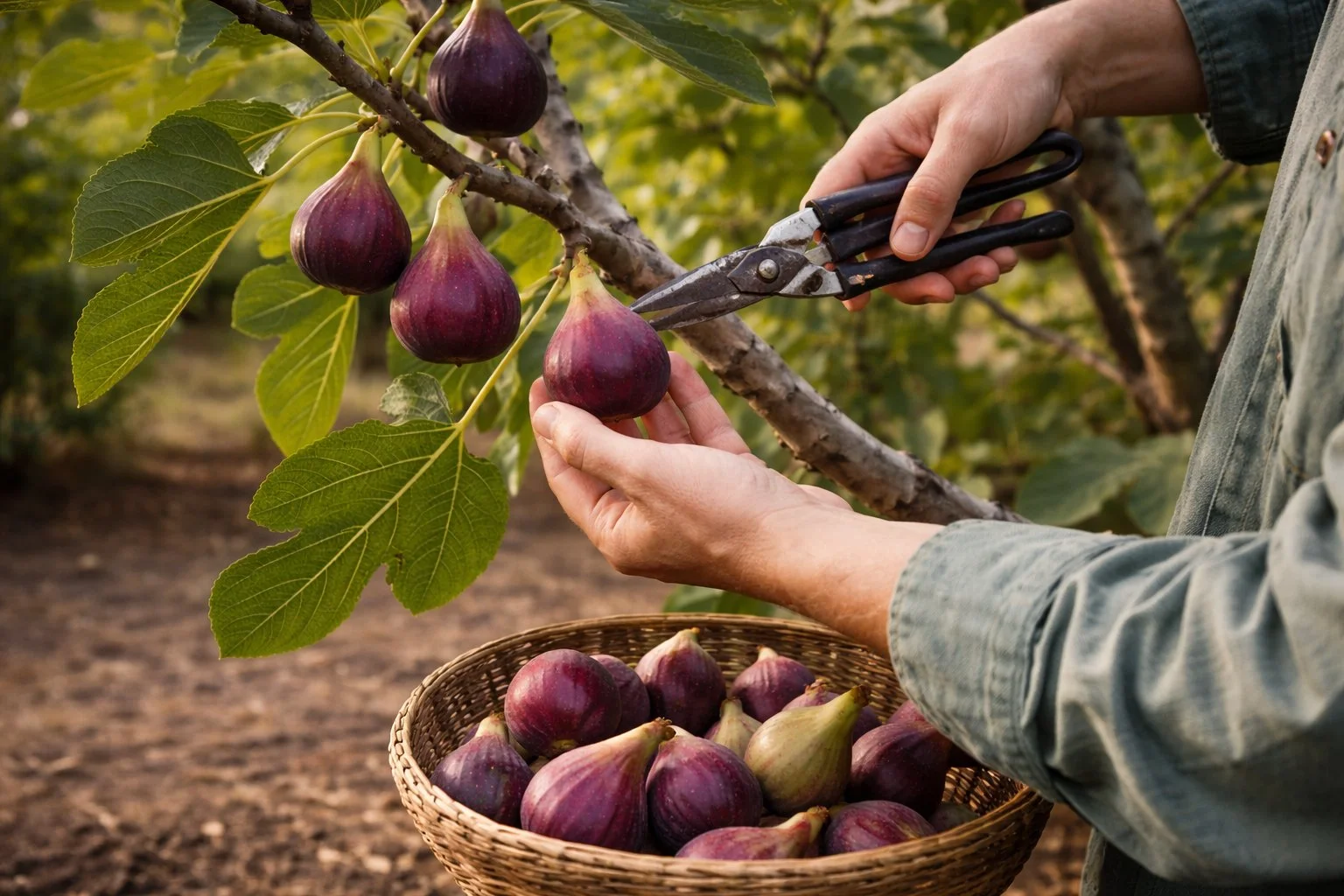
Quality loss begins immediately after picking. Heat, compression, and moisture accelerate deterioration. The goal during harvest is to minimize all three. Figs should be placed directly into shallow containers, arranged in a single layer whenever possible, and kept out of direct sun. Deep buckets, stacking, or leaving harvested fruit exposed in the field dramatically shortens shelf life.
To Wash or Not to Wash
Washing figs is rarely recommended unless necessary. Moisture trapped on the skin promotes mold and surface breakdown. If washing is required, it should be done gently, with clean water, and the fruit should be dried thoroughly before storage. For most fresh-market or home use, it is better to leave figs unwashed until just before consumption.
Cooling: The Most Important Storage Step
Rapid cooling is the single most effective way to preserve fig quality. Lowering fruit temperature slows softening, sugar breakdown, and microbial growth. Ideally, figs should be cooled within 30 minutes of harvest. Even modest cooling—moving fruit into shade or an air-conditioned space—significantly improves shelf life compared to leaving figs in warm conditions.
Ideal Storage Conditions
Figs store best at temperatures between 32–36°F with high humidity (90–95%). Under these conditions, fully ripe figs may last three to five days, while slightly firmer fruit may last up to a week. Storage life varies by cultivar and harvest maturity, but cooler temperatures consistently preserve flavor and texture longer than room temperature storage.
Single-Layer Storage Protects Quality
Compression is a major cause of post-harvest loss. Storing figs in a single layer prevents bruising and leakage. If multiple layers are unavoidable, cushioning and rigid containers reduce pressure damage. Containers should allow airflow while preventing condensation, which accelerates spoilage.
Room Temperature Storage: Short and Intentional
Figs held at room temperature are best consumed within 24–48 hours. While flavor may intensify briefly, structural breakdown occurs quickly. Room temperature storage should be used intentionally for immediate consumption, not as a default holding strategy.
Sorting and Separating by Ripeness
Mixing figs of different ripeness accelerates loss. Overripe fruit releases moisture and sugars that affect neighboring figs. Sorting figs by ripeness and condition allows better control over storage decisions and reduces spoilage across the batch.
Transporting Fresh Figs
Transport introduces vibration and pressure that can damage fruit. Shallow, rigid containers minimize movement. Padding and careful stacking protect fruit during short trips. For local distribution, transport time should be minimized, and refrigeration used whenever possible.
Knowing When Storage Isn’t Worth It
Some figs are best enjoyed immediately. Fruit that is extremely soft, split, or leaking should not be stored, even briefly. Redirecting these figs to immediate consumption or processing preserves value and prevents losses elsewhere.
The Takeaway
Handling and storage determine whether a perfectly ripe fig reaches the table at its best—or declines before it can be enjoyed. Gentle handling, rapid cooling, single-layer storage, and thoughtful sorting protect flavor and extend usability. When figs are treated with the care they require, their extraordinary freshness and sweetness are preserved from tree to plate.
This article is part of the complete guide to Harvesting & Post-Harvest Care for Fig Trees.
Related reading:
Harvest Timing for Best Flavor
Short-Term Storage vs Immediate Use
Cleaning and Sanitizing Harvest Tools
