Pruning Container-Grown Fig Trees
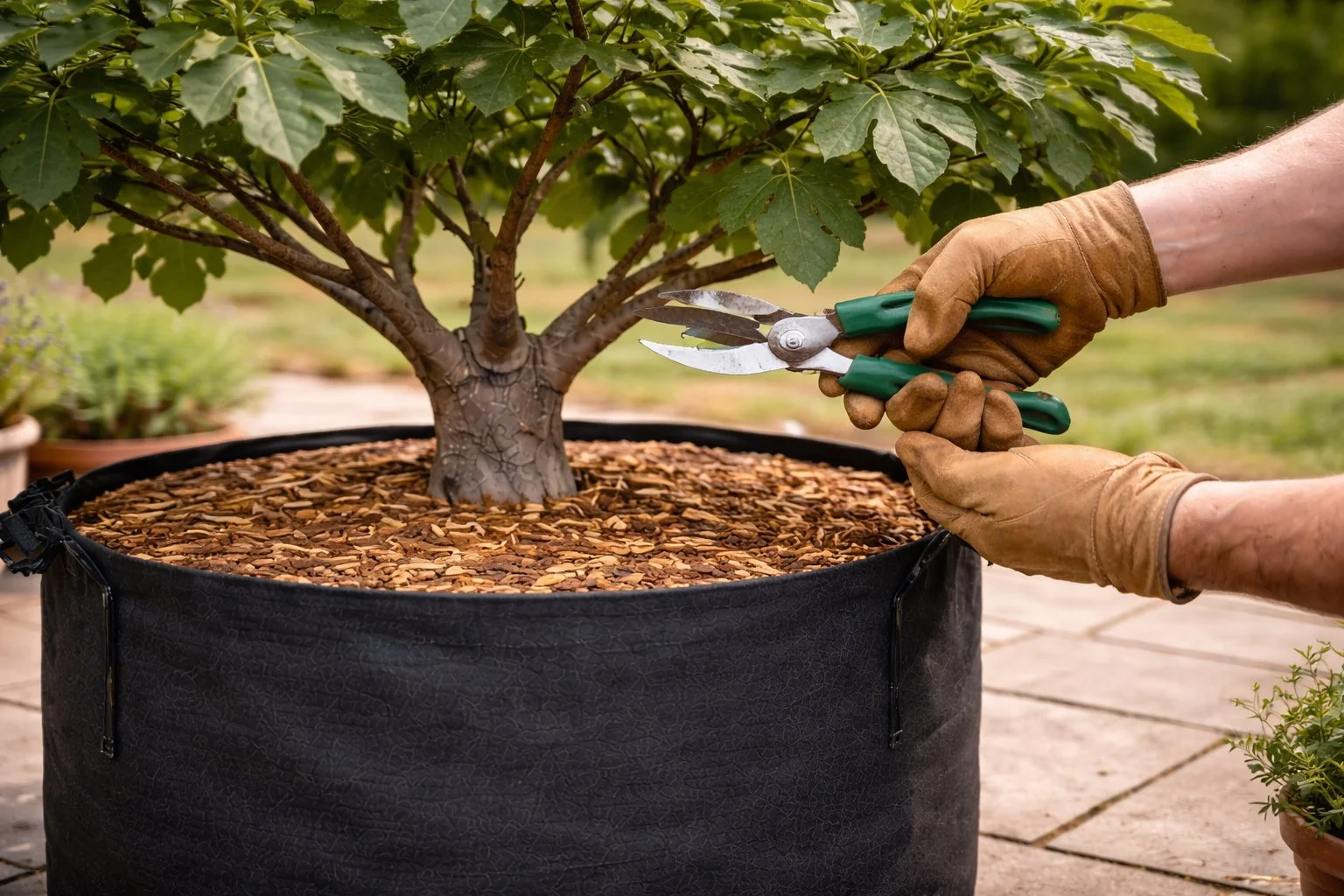
Pruning container-grown fig trees is less about restraint and more about intention. Unlike in-ground figs, which can lean on soil volume and natural buffering to absorb mistakes, container figs respond immediately to every cut. Root space is finite, water availability fluctuates more rapidly, and growth must remain proportional to the vessel that supports it. For this reason, pruning becomes the primary tool that keeps a container fig productive, stable, and long-lived.
Container figs tend to express vigor early and often. Warm container walls stimulate root activity sooner in spring, which translates into rapid shoot growth above the soil line. Without pruning, this early surge quickly leads to tall, narrow growth that destabilizes the pot and concentrates fruiting wood out of reach. Effective pruning redirects that energy outward rather than upward, encouraging a compact canopy that balances fruit production with structural integrity.
The foundation of container pruning begins with clear height and width boundaries. Establishing these limits early allows the tree to mature calmly within them. Major structural pruning is best done in late winter or early spring, just before growth resumes. At this stage, the grower sets the framework—selecting primary branches, removing excess trunks if necessary, and reducing height to a manageable level. Container figs respond well to this timing, pushing new growth exactly where structure allows.
During the growing season, pruning shifts from construction to maintenance. Summer growth reveals imbalances quickly, making it easier to identify shoots that threaten stability or shade fruiting wood. Removing overly vigorous vertical shoots, thinning congested areas, and managing water sprouts keeps the canopy open and proportional. These adjustments are best made incrementally, allowing the tree to respond without stress or sudden loss of leaf area.
Root volume and canopy size must remain in balance. When a container fig becomes root-bound, even perfect pruning above ground cannot compensate indefinitely. In these cases, pruning works best when paired with root maintenance—either up-potting or root pruning—to restore equilibrium. A fig whose roots and canopy are in harmony grows calmly, fruits consistently, and resists stress far better than one pushed beyond its limits.
Winter considerations play a significant role in how container figs are pruned. Trees kept compact are easier to move, insulate, or shelter during cold weather. Lower frameworks preserve fruiting wood and reduce exposure to freeze damage. Pruning decisions made during the growing season should always anticipate winter realities, especially in Zone 7b where container roots are vulnerable to cold injury.
Container figs also benefit from gentler pruning intensity compared to in-ground trees. Because resources are limited, removing too much wood can delay recovery and reduce fruiting potential. Each cut should serve a clear purpose—improving light penetration, reinforcing structure, or maintaining balance. When pruning becomes habitual rather than reactive, container figs settle into a stable growth rhythm that requires less correction over time.
Over years of attentive pruning, container figs develop a refined character. They remain compact without becoming cramped, productive without becoming exhausted. Their growth becomes predictable, their fruiting reliable, and their response to care increasingly cooperative. This is the reward of thoughtful pruning: a tree that performs gracefully within constraints and proves that containers are not a limitation, but a highly effective growing system when managed with clarity and care.
For a complete, season-by-season approach to shaping healthy, productive fig trees, see Pruning & Training for Structure and Yield.
