Intercropping or Underplanting Figs
Introduction
Intercropping and underplanting are often viewed as shortcuts to productivity—ways to “use the space” between fig trees more efficiently. When done thoughtfully, they can indeed improve soil health, reduce weed pressure, and enhance overall orchard resilience. When done carelessly, however, underplanting introduces competition, complicates maintenance, and undermines fig tree performance over time.
In Zone 7b, where figs already contend with humid summers, variable rainfall, and winter cold stress, underplanting decisions must be conservative, intentional, and aligned with long-term orchard goals. This article explains when intercropping supports fig trees, when it works against them, and how to evaluate underplanting as a system choice rather than a decorative or opportunistic one.
Understanding the Fig Root System
Successful underplanting begins with understanding how fig trees use the soil. Figs develop wide, shallow, laterally spreading root systems. While some deeper anchoring roots exist, the majority of water and nutrient uptake occurs within the top layers of soil, often extending well beyond the drip line.
This shallow architecture makes figs highly responsive to surface conditions—and highly sensitive to competition. Any plant introduced into this zone competes directly with the fig tree for moisture, nutrients, and oxygen. Intercropping must therefore be designed to complement this root pattern rather than challenge it.
The Primary Risks of Underplanting
The most common failures in fig underplanting come from good intentions paired with poor plant selection. Aggressive ground covers, deep-rooted perennials, or fast-growing annuals can outcompete fig roots, especially during dry periods. This competition often manifests subtly: reduced vigor, smaller fruit, inconsistent ripening, or increased winter damage.
Another risk is management complexity. Each additional plant species introduces new pruning, mowing, irrigation, and seasonal considerations. Without discipline, underplanting turns orchard rows into maintenance bottlenecks.
When Underplanting Can Be Beneficial
Underplanting works best when it serves a clear purpose. In fig orchards, the most legitimate goals are:
Weed suppression
Soil temperature moderation
Soil structure improvement
Erosion control
Beneficial insect habitat
Underplanting should never be done simply to “fill space.” If a companion plant does not actively support orchard function, it likely detracts from it.
Mulch as the Foundation Underplant
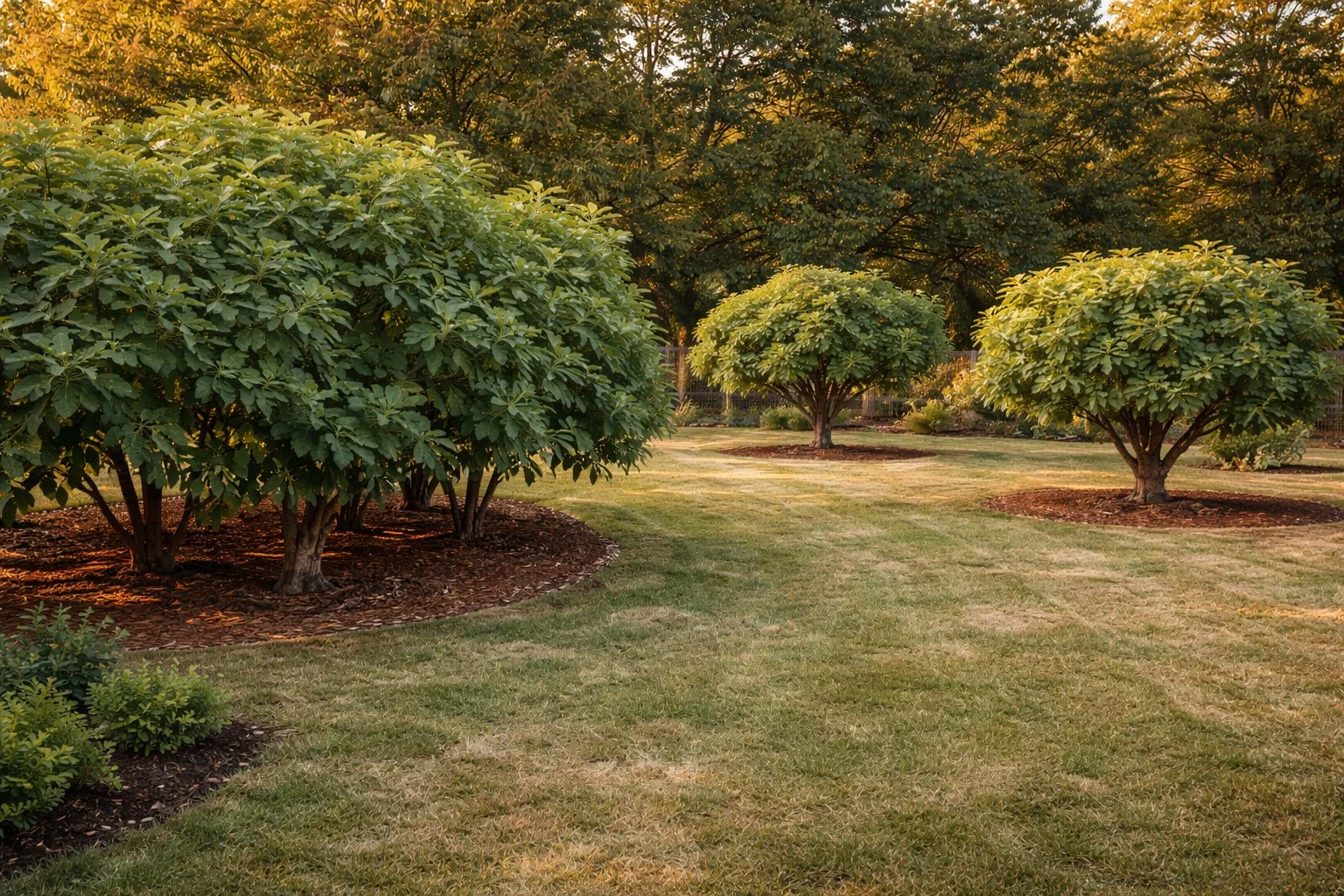
Before introducing living plants, mulch should be considered the primary underplanting strategy. Organic mulches—wood chips, leaf litter, shredded bark—suppress weeds, retain moisture, improve soil structure, and feed soil biology without competing for resources.
In Zone 7b, mulch also moderates soil temperature, reducing summer heat stress and buffering winter cold. Many orchards achieve their best results by relying heavily on mulch and treating living underplants as optional enhancements rather than necessities.
Ground Covers That Can Work
When living ground covers are used, they should be low-growing, shallow-rooted, and easily controlled. Ideal candidates remain compact, tolerate foot traffic, and do not climb or sprawl into tree canopies or access lanes.
Ground covers should be viewed as functional carpets, not ornamental layers. Anything requiring frequent trimming or irrigation adjustments likely adds more labor than value.
Nitrogen-Fixing Plants: A Measured Approach
Nitrogen-fixing plants are often promoted as universally beneficial, but figs respond poorly to excessive nitrogen. Over-vigorous vegetative growth reduces fruit quality, delays ripening, and increases winter injury risk.
If nitrogen-fixing plants are used at all, they should be low-growing, sparse, and actively managed. Their role should be supplemental, not dominant. In many cases, organic mulch provides a safer and more predictable nutrient contribution.
Annual Intercropping in Young Orchards
Young fig orchards often have wide spacing that invites temporary intercropping. Short-season annuals—such as shallow-rooted vegetables or herbs—can be grown between trees during the establishment phase. This practice can improve land use efficiency without long-term competition.
However, annual intercropping must be viewed as transitional. As fig trees mature and root systems expand, these crops should be phased out to prevent stress and management conflict.
Protecting the Trunk Zone
The area immediately surrounding the fig trunk should remain clear of competing plants. This zone is essential for mulching, irrigation access, trunk inspection, and winter protection installation. Dense planting near trunks complicates wrapping, encourages rodent habitat, and increases bark damage risk during winter.
A clean trunk zone simplifies nearly every orchard task.
Wildlife and Rodent Considerations
Dense ground cover near fig trees can harbor rodents, particularly during winter. In Zone 7b, voles and mice seek shelter under vegetation and may damage bark during cold months. Underplanting choices must account for seasonal wildlife behavior, not just summer appearance.
Maintaining visibility around trunks and avoiding thick winter cover reduces this risk.
Intercropping and Orchard Access
Any underplanting must respect access paths. Plants that encroach into walkways or equipment lanes quickly become liabilities. Orchard design should prioritize movement, not aesthetics. Companion plants should remain within defined zones and never spill into working areas.
If underplanting interferes with access, it has failed as a design choice.
Maintenance Load and Long-Term Reality
Every underplanted species adds management demands. Pruning, mowing, irrigation adjustments, and seasonal cleanup all increase with plant diversity. Growers should evaluate underplanting not by its first-year appearance, but by its fifth-year workload.
Simplicity consistently outperforms complexity in fig orchards.
Evaluating Success Over Time
Successful underplanting supports fig trees without drawing attention to itself. If a grower frequently thinks about managing the underplants, they are likely competing rather than helping. The best systems fade into the background, quietly improving soil and reducing weeds.
Observation over multiple seasons is essential before expanding any intercropping strategy.
The Takeaway
Intercropping with figs can enhance orchard health when approached conservatively and intentionally. By prioritizing mulch, choosing compatible plants, protecting the trunk zone, and maintaining access, growers create systems that support fig trees rather than compete with them. In fig orchards, restraint is a strength.
This article is part of the complete guide to Fig Orchard Design & Spacing.
Related reading:
Soil Preparation Before Planting Figs
Designing for Equipment, Access, and Maintenance
Scaling from Backyard to Small Orchard
