Designing for Equipment, Access, and Maintenance
Introduction
An orchard that produces well but is difficult to work in eventually becomes a burden. Equipment access, work paths, and maintenance zones determine how efficiently growers can prune, mulch, irrigate, protect, and harvest fig trees year after year. In Zone 7b, where seasonal tasks include winter protection and frequent summer maintenance, thoughtful access design reduces labor, prevents damage, and keeps orchard work sustainable over the long term.
This article focuses on designing orchards as working systems, not static plantings.
Why Access Is a Core Design Feature
Access is often treated as an afterthought, yet it influences nearly every orchard task. Narrow rows, tight turns, or poorly placed trees force growers to work around obstacles, increasing time, fatigue, and accidental damage. Good access design allows routine work to flow naturally, reducing stress on both trees and people.
An orchard that is easy to move through is easier to care for consistently.
Row Width and Equipment Compatibility
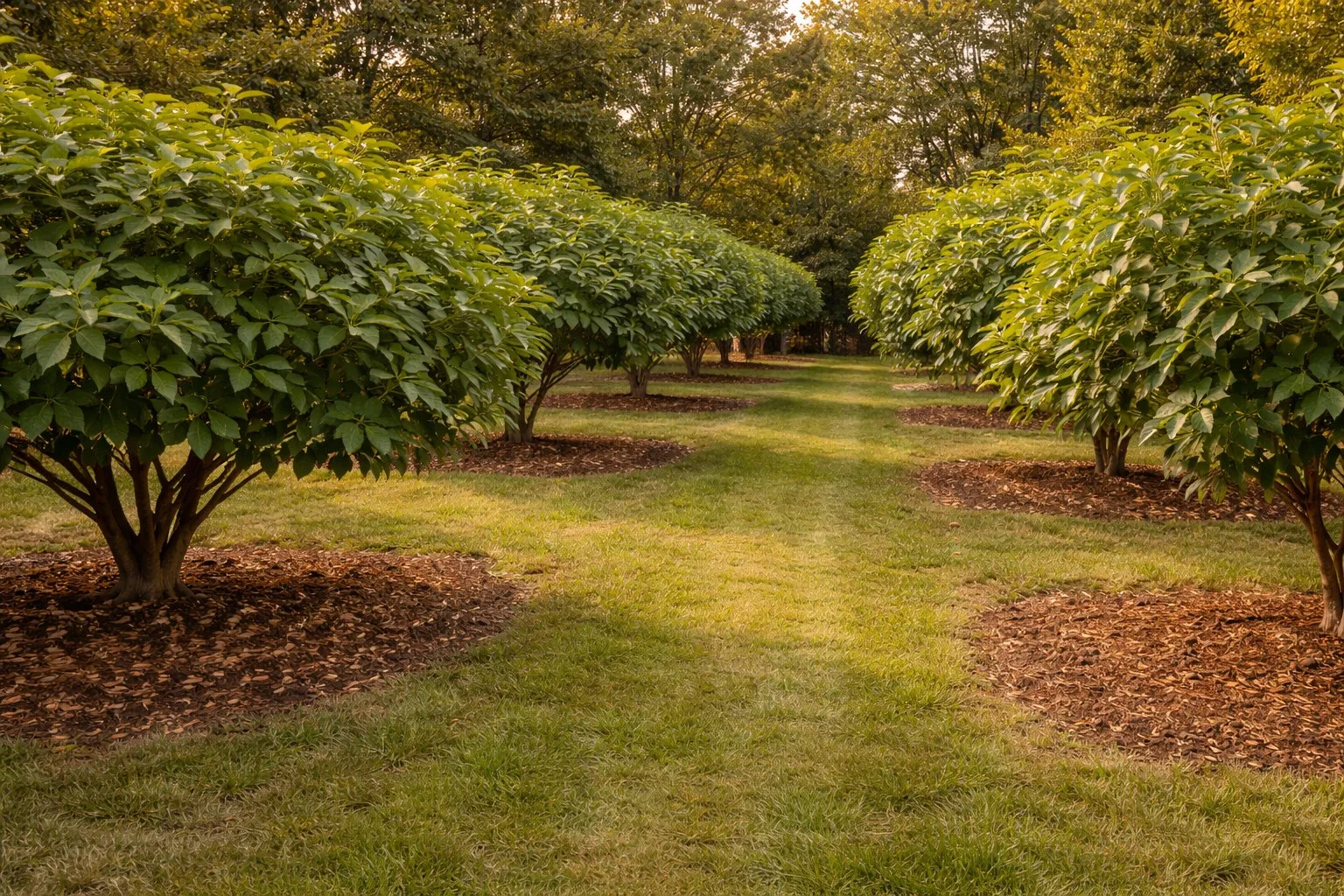
Row width should be based on the largest equipment you plan to use—not the smallest. Even small orchards benefit from space for mowers, carts, wheelbarrows, or small tractors. In Zone 7b fig orchards, row spacing of 10–12 feet typically accommodates maintenance equipment while preserving airflow and winter protection compatibility.
Designing rows too narrowly limits future options and complicates expansion.
Turning Space and Headlands
Headlands—the open areas at the ends of rows—are essential for turning equipment, staging materials, and maneuvering during pruning and harvest. Without adequate headlands, equipment damages trees and soil compaction increases at row ends.
Headlands should be wide enough to turn comfortably and to temporarily store mulch, tools, or harvested fruit during work sessions.
Designing Work Paths for Foot Traffic
Not all orchard work involves machinery. Many tasks—harvesting, inspection, pruning adjustments—are done on foot. Clear, stable walking paths reduce compaction near tree trunks and prevent accidental damage to roots and irrigation lines.
Mulched or grassed paths also improve safety during wet conditions.
Integrating Irrigation and Maintenance Access
Irrigation systems must be accessible for inspection, repair, and seasonal adjustment. Main lines, emitters, and valves should be positioned where they can be reached without stepping over trees or compressing root zones. Designing irrigation alongside access paths simplifies maintenance and reduces accidental damage.
Maintenance Zones Around Trees
Each fig tree requires space for pruning, mulching, and winter protection installation. Crowding trees or placing them too close to fences, slopes, or structures restricts movement and increases breakage. Design should allow growers to circle each tree comfortably with tools in hand.
Maintenance zones are especially important when installing wraps, cages, or low tunnels.
Planning for Seasonal Workflows
Orchard access must support seasonal rhythms. Winter work requires space for insulation materials and frame installation. Spring work involves pruning and irrigation checks. Summer demands frequent harvesting and mowing. Fall includes cleanup and preparation for cold weather.
Designing with these workflows in mind prevents bottlenecks and repeated rework.
Preventing Soil Compaction Through Design
Repeated traffic in poorly designed orchards compacts soil and restricts root growth. Defined paths concentrate traffic where compaction is acceptable, preserving soil structure in root zones. Access design protects soil health as much as it protects convenience.
Scaling Equipment Needs Over Time
Equipment needs often grow as orchards mature. What begins as hand maintenance may later include carts, powered mowers, or small tractors. Designing access for future needs avoids costly redesign and tree removal.
The Takeaway
Good orchard access design saves time, energy, and trees. By planning row widths, headlands, work paths, and maintenance zones with real workflows in mind, growers create fig orchards that remain productive and manageable through every season. An orchard that is easy to work in is one that thrives long-term.
This article is part of the complete guide to Fig Orchard Design & Spacing.
Related reading:
Fig Tree Spacing: Yield vs Manageability
Soil Preparation Before Planting Figs
Scaling from Backyard to Small Orchard
