Fig Orchard Design & Tree Spacing in Zone 7b (How Far Apart to Plant Figs)
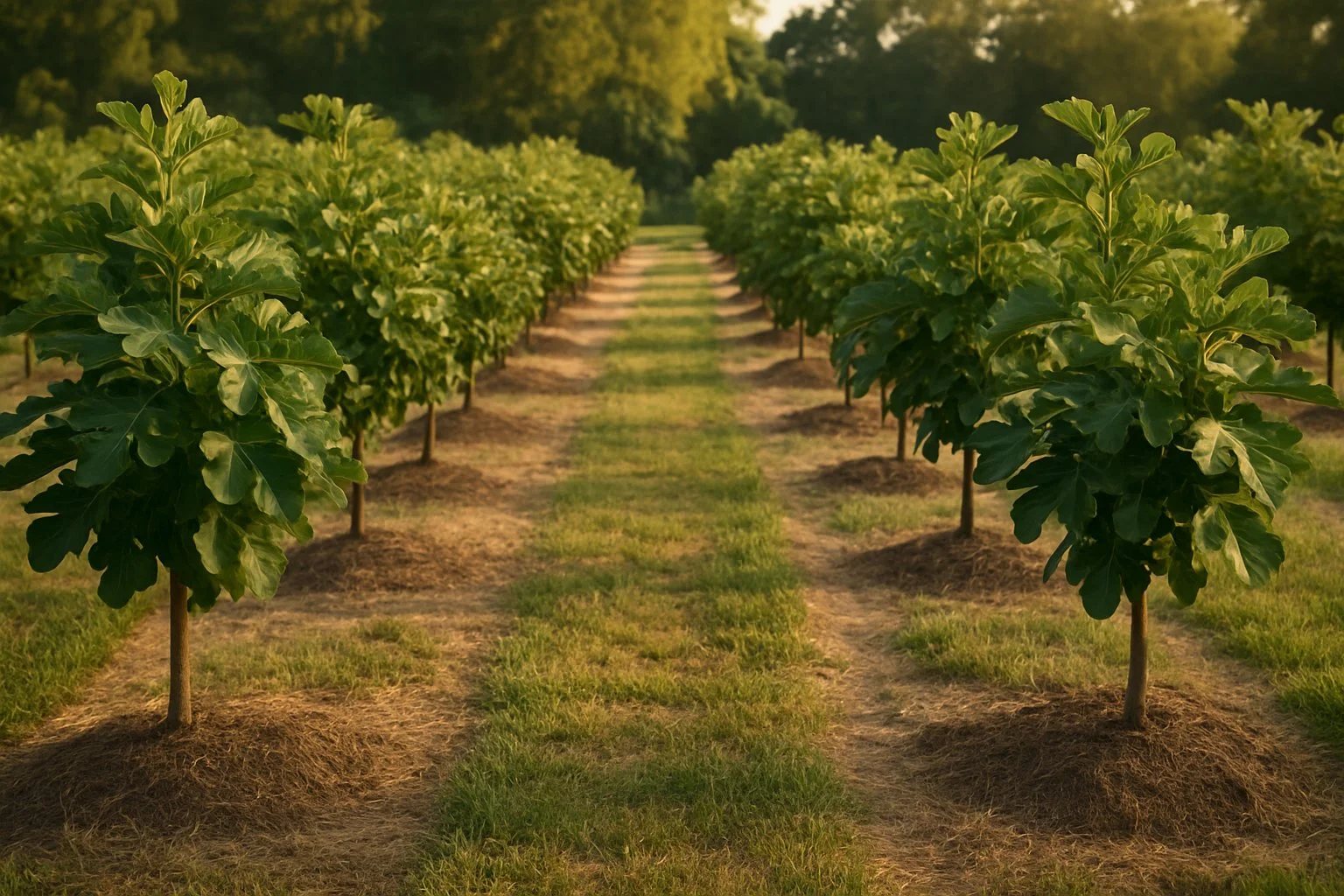
Long-Term Planning for Healthy Trees, Efficient Management, and Consistent Yields in Zone 7b
Introduction
Fig orchard design is not simply about where trees are planted—it is about how the entire system functions over time. Spacing, row orientation, soil preparation, access paths, and winter protection requirements all shape how productive, resilient, and manageable an orchard becomes. In Zone 7b, where figs grow vigorously but face real winter pressure, good design determines not only yield, but longevity.
A well-designed fig orchard supports uniform sunlight, strong airflow, predictable ripening, efficient labor, and repeatable winter protection. When design is done correctly at the beginning, most management challenges become easier—not harder—year after year.
This pillar article establishes the core principles of fig orchard design and spacing. Each section introduces a foundational concept that is explored in depth within the supporting articles linked below.
1. What a Fig Orchard Needs to Thrive
Figs thrive in full sun, warm growing seasons, and well-drained soil, but orchard success depends on more than those basics. At scale, trees must receive uniform light, dry quickly after rain, and have enough space to grow without constant correction. Orchard design must also accommodate irrigation, mulching, pruning, harvest access, and—critically in Zone 7b—winter protection systems.
Design decisions made before planting determine whether the orchard works with the grower or constantly against them.
2. Spacing as a Long-Term Strategy
Tree spacing is one of the most important design choices in a fig orchard. Spacing affects sunlight penetration, airflow, disease pressure, winter survivability, and ease of management. While figs tolerate close planting better than many fruit trees, spacing must reflect the intended training system, not just available land.
Most Zone 7b growers favor bush-form trees kept at manageable height. This approach allows for closer spacing than single-trunk systems while maintaining high productivity and easier winter protection. Spacing decisions should always account for mature canopy size—not first-year growth.
3. Row Orientation, Sunlight, and Airflow
Row orientation determines how sunlight moves through the orchard during the day and how air circulates after rain or heavy dew. Poor orientation leads to shaded zones, uneven ripening, and prolonged leaf wetness.
In Zone 7b, orchard layout should maximize consistent sun exposure while allowing natural air movement through and between rows. Airflow is one of the orchard’s most effective defenses against disease pressure and fruit quality issues.
4. Soil, Drainage, and Orchard Layout
Soil conditions shape how an orchard must be designed. Figs tolerate a wide range of soils but perform poorly in standing water. Drainage, compaction, and organic matter influence planting method, spacing, and row placement.
In many Zone 7b sites, orchard layout must account for clay soils, seasonal saturation, or slopes. Raised rows, contour planting, and soil preparation strategies are design choices—not afterthoughts—and directly affect long-term tree health.
5. Access, Equipment, and Human Movement
An orchard is a working space. Design must allow for mowing, mulching, pruning, harvesting, irrigation maintenance, and winter protection work. Narrow rows and tight turns quickly become liabilities as trees mature.
Access lanes, headlands, and staging areas are essential components of orchard design. An orchard that is easy to move through is easier to maintain and less likely to suffer damage during routine work.
6. Containers and In-Ground Trees in the Same System
Some orchards integrate container-grown figs alongside in-ground plantings. While both can coexist, their needs differ in water management, heat exposure, and harvest timing. Orchard design should recognize these differences and prevent containers from becoming obstacles or stress points within the system.
7. Designing With Winter Protection in Mind
In Zone 7b, winter protection is not optional for consistent fig production. Orchard design must allow for protective structures such as low tunnels, frames, or wraps to be installed efficiently and uniformly.
Straight rows, consistent spacing, and controlled tree height make winter protection scalable rather than exhausting. Design choices that ignore winter realities often require costly correction later.
8. Scaling From Backyard to Small Orchard
Even small orchards benefit from scalable design. Consistent spacing, modular rows, and predictable access paths allow orchards to expand without disruption. Designing with future growth in mind preserves flexibility and prevents redesign.
The Takeaway
Good fig orchard design is quiet, invisible, and powerful. When spacing, orientation, soil preparation, access, and winter protection are planned together, the orchard becomes easier to manage and more productive with each passing year. Design is not about perfection—it is about foresight.
Common Questions About Fig Orchard Design and Tree Spacing
Q: How far apart should fig trees be planted in Zone 7b?
A: Spacing depends on training style. Bush-form figs often perform well at 8–12 feet apart, while single-trunk orchard systems may require wider spacing for airflow and sunlight penetration.
Q: Does tighter spacing reduce fig production?
A: Tighter spacing increases competition for light and nutrients, which can reduce long-term production if pruning and soil management are not carefully maintained.
Q: What is the best row orientation for a fig orchard?
A: North–south row orientation generally provides more even sunlight distribution across the canopy, improving fruit ripening and reducing shaded interior growth.
Q: Should spacing change if winter dieback is common?
A: Yes. In colder microclimates, slightly tighter spacing can help create wind buffering, but airflow must still be preserved to reduce disease pressure.
Q: How does pruning style affect orchard spacing decisions?
A: Aggressive annual pruning allows for tighter spacing, while minimal pruning requires more canopy room to avoid overcrowding and shading.
Q: What spacing works best for backyard fig growers?
A: Backyard growers often benefit from 8–10 feet between trees with consistent structural pruning to balance airflow, sunlight, and ease of harvest.
