Best Winter Protection Materials for Fig Trees
Protecting fig trees through winter isn’t about using more material — it’s about using the right material at the right time. In Zone 7b, winter damage usually comes from a combination of cold temperatures, fluctuating freezes and thaws, and excess moisture rather than extreme cold alone.
This guide ranks the most common fig winter protection materials based on effectiveness, reliability, moisture control, and ease of use, so you can choose what actually works instead of guessing.
What Makes a Winter Protection Material Effective?
Good winter protection materials do three things well. They insulate branches from extreme cold, buffer temperature swings, and shed or manage moisture so wood stays dry. Materials that trap water or collapse under weight often cause more harm than cold itself.
The goal is not to keep fig trees “warm,” but to keep them stable and dry through the winter.
Ranked Winter Protection Materials for Fig Trees
1. Dry Leaves (Oak, Maple, or Mixed Hardwoods)
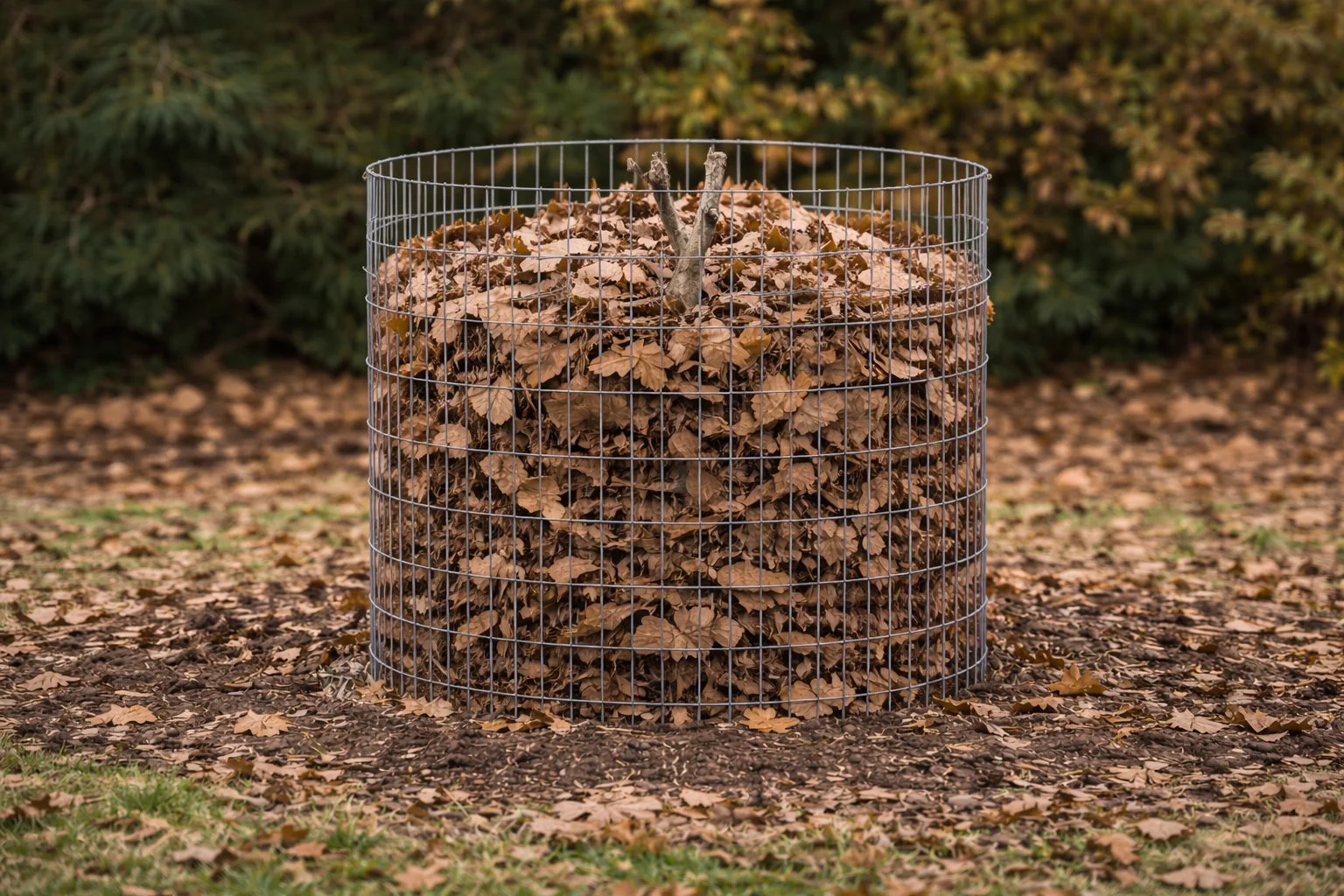
Dry leaves remain the gold standard for fig winter protection in cold climates. When loosely packed, they trap insulating air pockets while allowing moisture to escape. Oak leaves are especially valuable because they resist compaction and break down slowly.
Leaf insulation works best when fully dry at installation and contained within a cage or wrap that prevents wind loss.
Best for: In-ground figs, caged systems, long-term cold protection
Avoid if: Leaves are wet or compacted
2. Wire or Fencing Cages
Cages aren’t insulation by themselves, but they are essential for holding effective insulation in place. Hardware cloth, welded wire, or fencing panels allow airflow while keeping leaves from collapsing.
A well-built cage determines whether leaf insulation succeeds or fails.
Best for: In-ground figs, multi-year protection systems
Avoid if: Cage is too small or collapses under snow load
3. Breathable Fabric (Burlap or Frost Cloth)
Breathable fabrics help contain insulation while allowing moisture to escape. Burlap works especially well when wrapped loosely around caged trees. Frost cloth can add light insulation but should never be used alone for deep winter protection.
These materials work best as outer layers, not primary insulation.
Best for: Wrapping cages, wind protection
Avoid if: Wrapped tightly against branches
4. Straw (With Caution)
Straw insulates well when dry but becomes problematic if it gets wet. It can trap moisture against branches and attract rodents if not managed carefully.
Straw should only be used in well-drained, ventilated systems and never packed tightly.
Best for: Short-term cold snaps
Avoid if: Winter is wet or prolonged
5. Foam Board or Rigid Insulation Panels
Rigid insulation can block wind and moderate temperature swings when used on the outside of a protection system. However, when placed too close to the tree, it can trap moisture and prevent drying.
Used correctly, it can improve performance; used incorrectly, it can cause rot.
Best for: Supplemental outer barriers
Avoid if: Touching branches directly
6. Plastic Sheeting (Last Resort Only)
Plastic blocks moisture but also traps it. If used improperly, it creates condensation and rot. Plastic should never touch branches and must always be vented.
In most cases, plastic causes more problems than it solves.
Best for: Temporary rain shielding
Avoid if: Used as primary wrap
Materials That Commonly Fail
Materials that compact, stay wet, or restrict airflow tend to fail over time. Wet mulch piled against branches, tightly wrapped tarps, and non-breathable coverings often lead to mold, bark damage, or dieback that appears worse than freeze injury.
Matching Materials to Your Fig Tree Type
Young figs, container figs, and mature in-ground trees require different approaches. Mature in-ground figs benefit most from leaf-filled cages, while container figs often perform better with relocation rather than heavy wrapping.
No single material works best for every situation — systems matter more than individual components.
The Takeaway
The best winter protection systems rely on dry, breathable insulation held in place by structure, not airtight wrapping. Choosing the right materials — and avoiding the wrong ones — makes the difference between minor dieback and full branch survival in spring.
For a complete overview of cold-weather strategies, materials, and recovery techniques, see Winter Protection & Dieback Prevention for Fig Trees.
