Callusing Fig Cuttings: Methods, Timing, and Mistakes
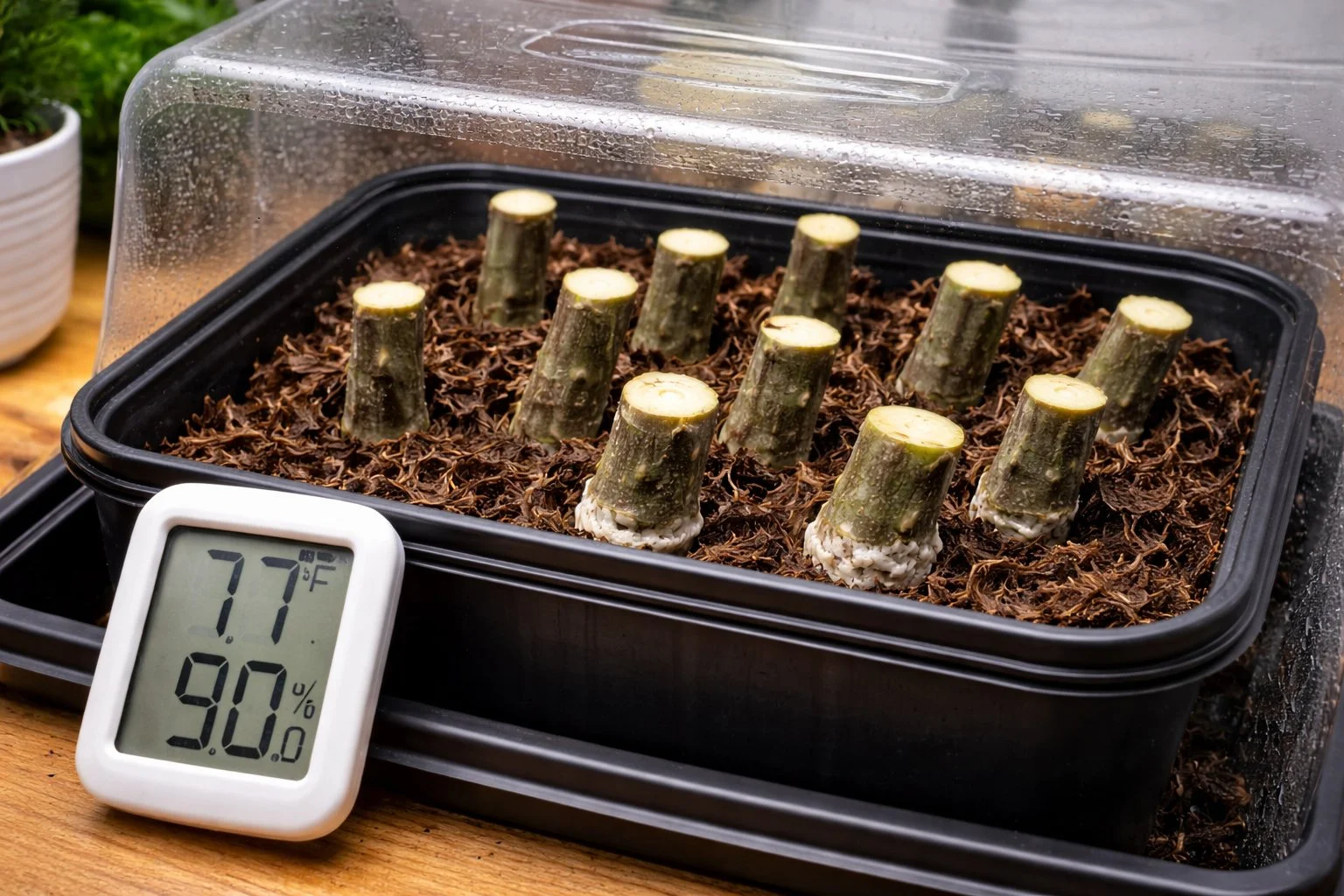
Callusing is the quiet preparatory phase that determines whether a fig cutting will root quickly, slowly, or not at all. While roots receive most of the attention in propagation, callus tissue is what makes rooting possible in the first place. Understanding how callusing works—and how to manage it intentionally—allows growers to dramatically improve success rates while reducing losses caused by rot, dehydration, or premature growth.
In Zone 7b, where propagation often begins indoors during late winter, callusing provides a controlled bridge between dormant storage and active rooting. When done correctly, it shortens rooting time and increases uniformity. When done poorly, it exhausts cuttings before roots ever appear.
What Callus Tissue Is—and Why It Matters
Callus tissue forms when living cells at a cut surface begin dividing to seal and protect the wound. In fig cuttings, this tissue typically develops near the base, where roots will later emerge. Callus is not a root, but it is the biological foundation from which roots form.
Callusing serves two critical purposes. First, it protects the cutting from infection and moisture loss. Second, it signals that the cutting’s internal conditions—temperature, hydration, and stored energy—are suitable for growth. Without healthy callus tissue, root initiation is slow and unreliable.
When Callusing Should Begin
Callusing should begin after dormancy but before full rooting, typically in late winter. For Zone 7b growers, this often means January through early March, depending on indoor conditions and intended rooting timelines.
Cuttings that are still fully dormant will not callus effectively, while cuttings that have already broken dormancy may divert energy toward buds and leaves instead of callus formation. The ideal moment is when cuttings are warmed gently from cold storage but are not exposed to light or rooting media yet.
Temperature: The Primary Driver of Callus Formation
Temperature is the most important factor in callusing. Fig cuttings callus best when the base is held between 70°F and 80°F, while the rest of the cutting remains cooler. This temperature gradient encourages callus formation at the cut surface without triggering top growth.
Many growers achieve this by placing cuttings on heat mats, insulating only the lower portion of the cutting. This mimics natural soil warming in spring, where roots experience warmth before buds break above ground.
Temperatures above 80°F increase the risk of rot and dehydration, while cooler temperatures slow callus development dramatically. Consistency matters more than speed.
Humidity: Balancing Moisture Without Inviting Rot
Callusing requires moisture, but excess humidity is one of the most common causes of failure. The goal is to prevent dehydration without creating standing moisture that encourages fungal growth.
Most callusing setups use damp—not wet—media, such as slightly moist perlite, vermiculite, or paper towels. Cuttings should feel hydrated but never saturated. Free water at the cut surface is a warning sign.
Ventilation is equally important. Completely sealed environments trap moisture and heat, accelerating rot. A small amount of air exchange keeps conditions stable and healthy.
Common Callusing Methods
There is no single correct method for callusing fig cuttings, but all successful approaches share the same principles: warmth at the base, moderate humidity, and darkness.
Some growers place cuttings in plastic bags with lightly damp paper towels and set them on heat mats. Others use shallow containers filled with perlite, keeping the lower ends warm while the tops remain cool. Vertical orientation is preferred, as it maintains natural polarity and reduces confusion later.
Regardless of method, cuttings should be clearly labeled before callusing begins. Once callus forms, handling should be minimal to avoid damage.
How Long Callusing Takes
Under ideal conditions, callus tissue typically appears within 7 to 21 days. Early callus may look like a pale, swollen ring at the base. Healthy callus is firm and smooth, not slimy or discolored.
Callusing is not a race. Allowing callus to mature slightly before rooting improves success, but leaving cuttings in callusing conditions for too long can deplete stored energy. Once callus is established, transitioning to a rooting environment should happen promptly.
Mistakes That Undermine Callusing Success
One of the most common mistakes is starting too early. Callusing cuttings that have not fully exited dormancy often leads to rot or stalled development. Another frequent error is applying heat without monitoring humidity, resulting in desiccation.
Excessive handling is also problematic. Callus tissue is fragile when young. Checking too frequently or rubbing the base can damage developing cells.
Light exposure is another issue. Callusing should occur in darkness. Light encourages bud activity, which competes with callus formation for stored energy.
Finally, impatience leads many growers to push callused cuttings directly into unfavorable rooting conditions. Callus improves rooting potential, but it does not compensate for poor temperature, moisture, or media choices later.
Signs of Successful Callusing
Healthy callused cuttings show:
Firm, pale callus tissue at the base
No odor or discoloration
Buds that remain dormant or only slightly swollen
Bark that stays plump and flexible
Cuttings that turn black, slimy, or shriveled should be discarded. Salvaging weak cuttings rarely succeeds and risks contaminating healthy ones.
Callusing Is a Tool, Not a Requirement
While callusing improves consistency, it is not mandatory for fig propagation. Many growers root cuttings successfully without a dedicated callusing stage. However, in controlled environments—especially indoors during winter—callusing offers predictability and speed.
The decision to callus should match your setup, schedule, and tolerance for monitoring. When conditions are right, it becomes a powerful tool rather than an extra complication.
Integrating Callusing Into the Full Propagation Cycle
Callusing fits between storage and rooting. Cold storage preserves cuttings. Callusing prepares them. Rooting completes the process. Skipping or rushing any stage increases losses later.
Understanding where callusing belongs—and how to manage it deliberately—turns propagation from guesswork into a repeatable system.
For a complete framework covering timing, wood selection, storage, callusing, rooting environments, troubleshooting, and transplanting young figs, see Fig Propagation & Cutting Techniques.
