Heat Mats, Light, and Temperature for Rooting Success
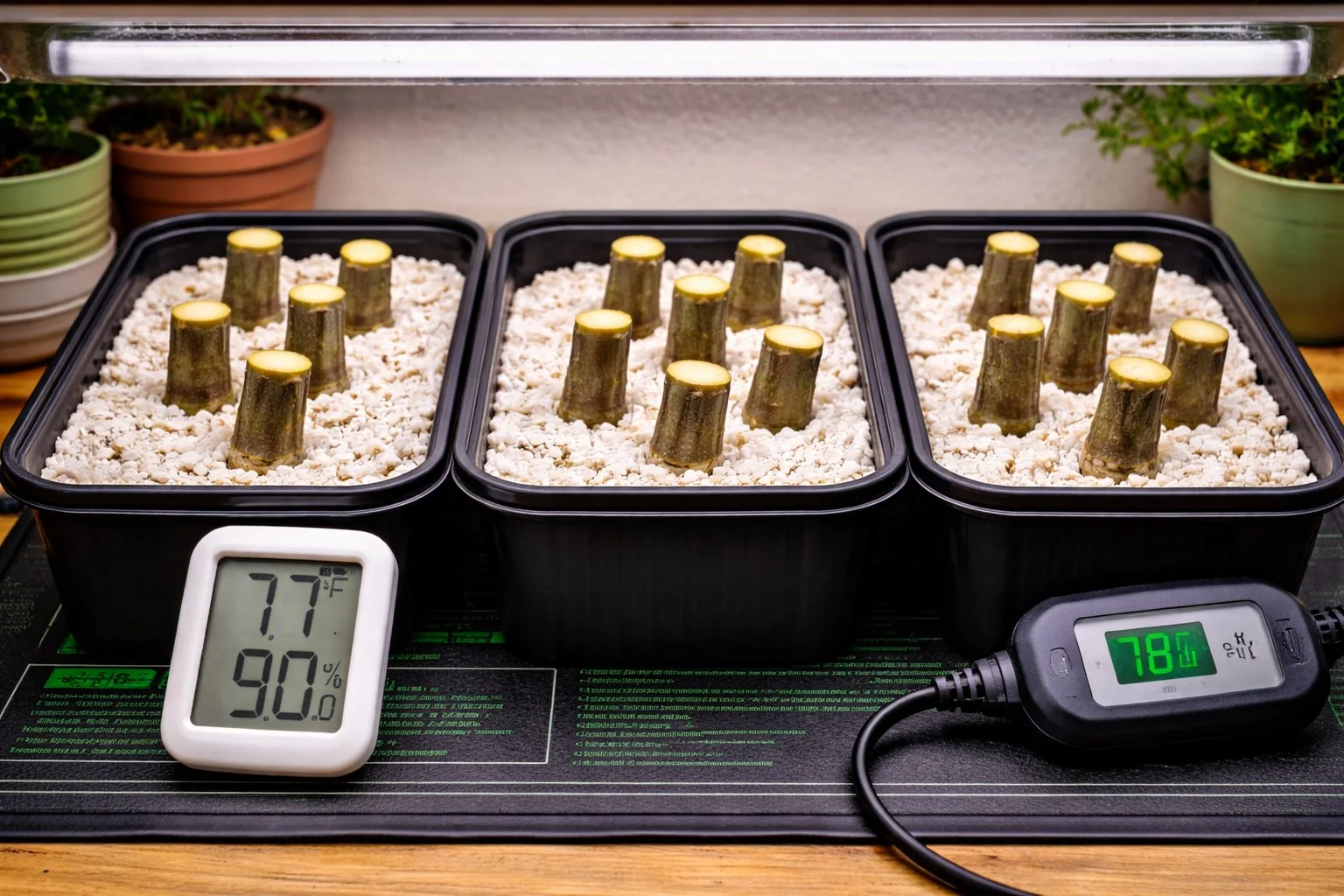
Rooting fig cuttings is less about force and more about precision. While healthy wood and proper storage set the stage, temperature, heat placement, and light exposure determine whether roots form steadily or stall altogether. Many propagation failures trace back not to poor cuttings, but to environments that send mixed signals—too much heat in the wrong place, light at the wrong time, or temperatures that fluctuate outside a narrow window.
In Zone 7b, fig cuttings are commonly rooted indoors during late winter, when ambient conditions are artificial and easily mismanaged. Understanding how heat mats, air temperature, and light interact allows growers to create an environment that favors root formation over leaf growth, reducing losses and shortening the time to establishment.
Why Temperature Drives Rooting More Than Any Other Factor
Temperature controls metabolic activity inside the cutting. When temperatures are too low, cellular processes slow and root initiation is delayed. When temperatures are too high, respiration accelerates, stored energy is depleted, and cuttings collapse before roots can form.
Fig cuttings root best when the base is warm and the top remains cooler. This temperature gradient mimics spring soil conditions, where roots experience warmth first while buds remain dormant. Achieving this balance is the central challenge of indoor propagation.
In most cases, the optimal root-zone temperature for fig cuttings falls between 72°F and 78°F. Within this range, callus tissue transitions smoothly into root formation without triggering excessive top growth.
Heat Mats: When and How to Use Them
Heat mats are one of the most effective tools for rooting fig cuttings when used correctly. Their purpose is not to heat the entire cutting, but to provide gentle, consistent warmth at the base, where roots will emerge.
Placed beneath containers, heat mats raise soil or media temperature without significantly increasing air temperature. This separation is critical. Warming the air encourages bud break and leaf growth, which competes with root formation for stored energy.
Heat mats should be paired with a thermostat whenever possible. Unregulated mats can exceed safe temperatures, especially in insulated environments. Excessive heat accelerates moisture loss and promotes rot.
For Zone 7b growers rooting indoors, heat mats are most useful from January through March, when ambient temperatures are too cool for consistent rooting. As natural temperatures rise, reliance on supplemental heat should decrease.
Air Temperature: Keeping the Top in Check
While root-zone warmth encourages rooting, air temperature must remain controlled. Ideal air temperatures typically range from 60°F to 70°F during the rooting phase. Cooler air slows bud activity and preserves stored energy.
Warm rooms, sunny windows, or enclosed propagation tents often push air temperatures too high. This leads to premature leafing, which places unsustainable demands on cuttings that lack roots. Leafy cuttings frequently wilt and die even when the rooting medium is ideal.
Maintaining cooler air temperatures may require relocating cuttings away from heat sources or windows. Rooting succeeds when roots are encouraged and leaves are delayed.
Light: Less Is More During Rooting
Light is one of the most misunderstood aspects of fig propagation. While mature fig trees thrive in full sun, cuttings do not require light to root. In fact, light during early rooting often harms more than it helps.
During callusing and early rooting, cuttings should be kept in low light or indirect light. Darkness or dim conditions suppress bud growth and allow energy to remain focused on root formation.
Bright light encourages photosynthesis, but without roots, cuttings cannot replace lost moisture. This imbalance leads to dehydration and collapse. Once roots are established, light can be gradually increased.
The transition from low light to brighter conditions should be slow. Sudden exposure shocks developing roots and stresses new growth.
Coordinating Heat, Light, and Moisture
Rooting success depends on coordination. Heat without moisture dries cuttings. Moisture without airflow invites rot. Light without roots causes dehydration. Each factor must support the others.
Heat mats increase evaporation, which means watering practices must adjust accordingly. Media should remain evenly moist, never saturated. Good airflow prevents stagnant humidity from building around cuttings.
Humidity domes or enclosures can help stabilize moisture but must be vented regularly. Completely sealed environments trap heat and moisture, accelerating fungal growth.
Seasonal Adjustments in Zone 7b
Zone 7b presents a unique challenge: winters are cold enough to require indoor propagation, but spring arrives early and unpredictably. As outdoor temperatures rise, indoor conditions can shift rapidly.
Growers should reduce or discontinue heat mats as ambient temperatures approach rooting range. Leaving heat mats on too long leads to overheating and root stress.
Similarly, light levels increase naturally in late winter. Cuttings near windows may receive more light than intended, triggering bud growth prematurely. Monitoring and adjusting placement becomes increasingly important as the season progresses.
Common Mistakes That Undermine Rooting
One common mistake is placing cuttings on heat mats without controlling air temperature. Warm roots paired with warm air push cuttings into leaf growth before roots are ready.
Another mistake is using grow lights too early. While lights are useful after roots form, early exposure diverts energy and increases transpiration.
Overheating is also common. Excessive heat dries media quickly and stresses cuttings. Rooting is a gradual process; faster is not better.
Finally, inconsistent conditions—turning heat mats on and off, moving cuttings frequently, or exposing them to fluctuating temperatures—interrupt root initiation and reduce success rates.
Signs That Conditions Are Correct
When heat, light, and temperature are balanced, cuttings behave predictably. Callus forms evenly. Roots emerge without excessive delay. Buds remain dormant or swell slowly. Cuttings stay firm and hydrated.
This calm, steady progression is the goal. Dramatic changes—rapid leafing, shriveling, or odor—signal imbalance and should prompt immediate adjustment.
Transitioning After Roots Form
Once roots are visible, environmental priorities shift. Light becomes important for photosynthesis, and air temperatures can rise gradually. Heat mats are often no longer necessary once roots establish.
The transition should be gradual. Sudden changes stress young roots and set growth back. Patience at this stage preserves the gains made during rooting.
Creating a Repeatable Rooting Environment
The most successful propagation setups are boring. They are stable, predictable, and monitored regularly. Heat mats are tools, not solutions. Light is introduced deliberately, not automatically. Temperature is managed with intention.
By understanding how these elements interact, growers move beyond trial-and-error and create systems that work year after year.
For a complete framework covering timing, wood selection, storage, callusing, rooting media, troubleshooting, and transplanting young figs, see Fig Propagation & Cutting Techniques.
