Fig Propagation & Cutting Techniques
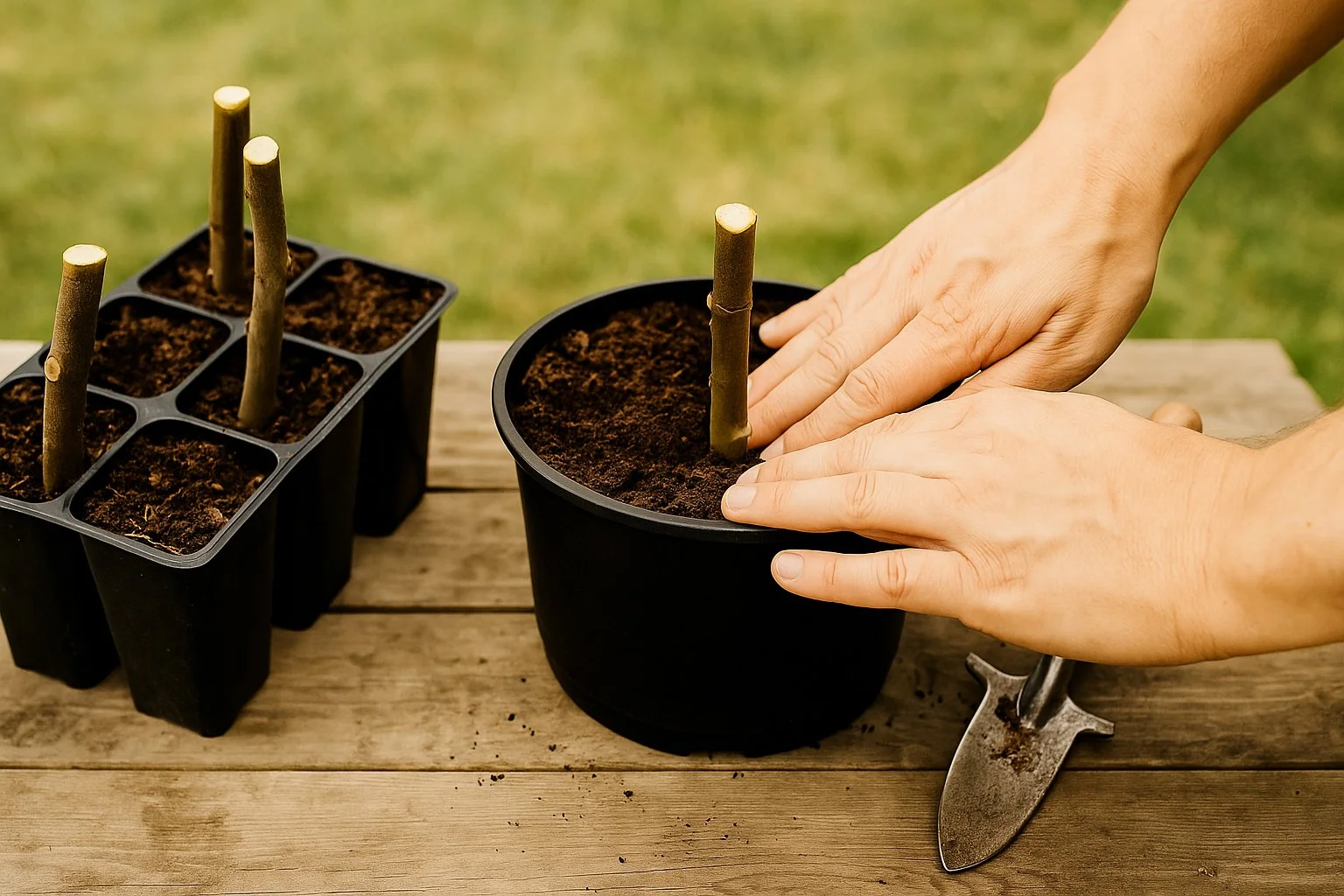
Fig propagation is not a trick—it’s a system. In Zone 7b, consistent propagation depends far less on gadgets and far more on understanding how figs store energy, respond to dormancy, and transition back into growth. When those biological rhythms are respected, propagation becomes predictable and repeatable rather than experimental.
This page is designed as a framework, not a step-by-step manual. Its purpose is to explain why fig propagation succeeds or fails, how the major decisions fit together, and how to build a reliable pipeline from dormant cutting to established young tree. Each stage—timing, wood selection, storage, preparation, rooting environment, and transition—plays a distinct role in overall success.
The detailed “how-to” instructions for each stage are covered in the in-depth guides linked below. This article gives you the mental model to choose the right approach for your space, climate, and goals.
Why Timing Determines Propagation Success
Timing sets the ceiling for propagation success long before rooting media or heat mats come into play. Fig cuttings rely entirely on stored carbohydrates and internal moisture until roots form, and those reserves peak during winter dormancy.
In Zone 7b, cuttings taken during full dormancy consistently outperform those taken at any other time. Dormant wood dehydrates more slowly, stores better, and calluses more predictably once warmed. By contrast, cuttings taken during active growth often leaf out before rooting, exhausting energy reserves and collapsing before roots can form.
When timing is correct, propagation becomes forgiving. When timing is wrong, even excellent technique struggles to compensate.
How Wood Quality Sets the Ceiling for Success
Even perfectly timed cuttings will fail if the wood itself is weak. Propagation is cloning, and any weakness present in the parent wood—poor vigor, disease pressure, stress—carries forward into the cutting.
High-quality fig cuttings come from healthy, one-year-old wood that matured fully during the previous growing season. This wood contains the energy needed to survive storage, callusing, and early rooting. It also produces stronger roots and more balanced growth after establishment.
Selecting good wood is an act of restraint. Fewer high-quality cuttings consistently outperform larger numbers of marginal ones, especially when propagation space and attention are limited.
Reducing Losses Before Rooting Begins
Many propagation failures occur before a cutting ever enters rooting media. Dehydration, contamination, and mechanical damage often undermine success early, only becoming obvious weeks later.
Clean handling, intact bark, and minimal disturbance preserve internal moisture and vascular integrity. Small lapses compound quickly once warmth and humidity are introduced. Propagation systems succeed when stress is removed at each stage rather than managed after it appears.
This early discipline reduces downstream losses and simplifies later stages.
Maintaining Viability Between Cutting and Rooting
In Zone 7b, storage often separates cutting from rooting. Dormant fig cuttings tolerate storage well when moisture and temperature are controlled, allowing growers to root when space and conditions are optimal rather than immediately after pruning.
Proper storage preserves energy and delays bud break. Poor storage accelerates dehydration or triggers premature growth that weakens the cutting before roots can form.
Well-stored cuttings provide flexibility and improve overall success rates across batches.
Designing a Rooting Environment That Works With the Cutting
Rooting success depends on cooperation between the cutting and its environment. Moisture, oxygen, and temperature must remain balanced long enough for callus formation and root initiation to occur.
Overly wet environments invite rot. Dry conditions cause dehydration. Excessive warmth encourages leaf growth before roots are established. Stable, moderate conditions consistently outperform aggressive interventions.
When rooting environments support the cutting’s natural recovery process, results become repeatable rather than variable.
Turning Rooted Cuttings Into Independent Trees
Rooting is not the finish line. Many losses occur during transition, when fragile new roots are exposed to sudden changes in moisture, light, or temperature.
Successful transitions prioritize root development over top growth. Gradual acclimation, appropriate container sizing, and patient watering practices allow young figs to establish before facing stress.
When transition is handled deliberately, rooted cuttings become independent plants capable of training, container culture, or orchard planting.
Building a Repeatable Propagation Pipeline
Propagation becomes powerful when it is predictable. A repeatable pipeline allows growers to plan space, labor, and future plantings with confidence rather than reacting to uncertainty.
In Zone 7b, reliable propagation systems align dormancy, storage, rooting, and transition with seasonal realities. Losses decrease, timelines stabilize, and results improve year after year.
The goal is not maximum speed, but consistent outcomes.
Fig Propagation & Cutting Techniques — In-Depth Guides
Timing & Wood Selection
Storage & Preparation
Rooting Environment
Troubleshooting & Transition
Propagation as a Long-Term Skill
Fig propagation rewards patience, observation, and respect for the plant’s natural rhythms. When approached as a system rather than a shortcut, it becomes one of the most reliable and empowering skills a fig grower can develop.
In Zone 7b, where climate variability shapes outcomes, thoughtful propagation builds resilience, flexibility, and long-term success.
Common Questions About Propagating Fig Trees from Cuttings
Q: When is the best time to take fig cuttings in Zone 7b?
A: Full winter dormancy (late December–early March in Tennessee)—figs store maximum energy then. Dormant wood roots more reliably than active-season cuttings.
Q: How do I select healthy wood for fig cuttings?
A: Choose 1-year-old, pencil-thick wood from vigorous, disease-free trees. Straight, 6–10 inch sections with 3–5 nodes; avoid thin/weak or damaged shoots.
Q: Do fig cuttings need callusing before rooting in Zone 7b?
A: Callusing improves consistency (callus forms in 2–4 weeks at 65–75°F) but not required. Many root directly in bark/perlite—callus reduces rot risk in humid Tennessee springs.
Q: What rooting medium works best for fig cuttings?
A: Bark-based mix or perlite/vermiculite for drainage/oxygen—prevents rot. Avoid heavy soil; keep moist but not wet during rooting (4–8 weeks).
Q: How do I avoid common fig propagation failures?
A: Prevent dehydration (store properly), contamination (clean tools), rot (good drainage), premature bud break (cool storage), or shock (gradual acclimation post-rooting).
Q: How long do fig cuttings take to root in Tennessee?
A: 4–8 weeks with bottom heat (70–75°F) and humidity. Success rate high with dormant wood—transplant when roots fill small pot.
