How to Tell If a Fig Tree Is Overwatered
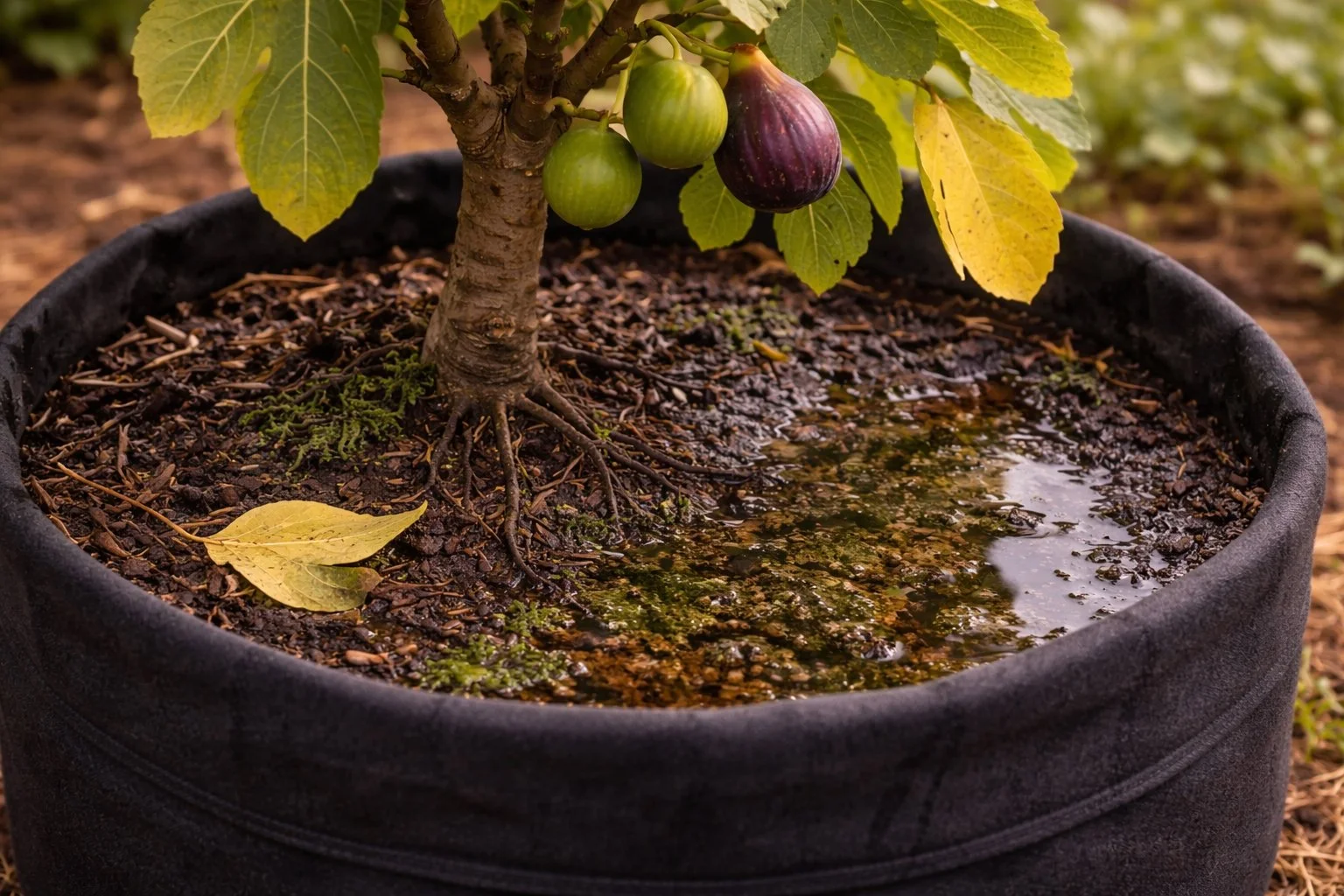
Overwatering is one of the most common—and most misunderstood—problems in fig growing. Because figs tolerate drought better than saturation, excess water often causes more long-term harm than short dry periods. The challenge is that symptoms of overwatering can resemble nutrient deficiencies, disease, or even underwatering, leading growers to compound the problem rather than correct it. Learning to recognize the true signs of excess moisture allows intervention before roots and productivity are compromised.
Fig trees do not need constantly wet soil to thrive. Their roots require oxygen as much as water, and prolonged saturation deprives them of both. When soil remains wet for too long, root function slows, nutrient uptake becomes erratic, and growth loses its natural rhythm.
Why Overwatering Happens So Easily
Overwatering rarely comes from a single heavy watering. It develops gradually through frequent irrigation, poor drainage, or soil that holds moisture longer than expected. Container-grown figs are especially vulnerable because their root systems are confined and drainage problems show up quickly. In-ground figs can also suffer when planted in compacted soil, low spots, or areas with poor subsurface drainage.
Rainy periods often trigger overwatering unintentionally. Growers may continue normal irrigation schedules without accounting for natural precipitation, slowly saturating the root zone. Cooler temperatures worsen the issue by slowing evaporation and root activity, allowing moisture to linger.
Early Visual Signs Above the Soil
One of the earliest signs of overwatering is a subtle loss of vigor. Leaves may appear dull rather than vibrant, and new growth may slow even though water is plentiful. Unlike drought stress, which causes leaves to droop or curl, overwatered figs often maintain leaf firmness while losing overall vitality.
Yellowing leaves are another common indicator, particularly when yellowing begins on older foliage and progresses gradually. This discoloration results from impaired nutrient uptake rather than a true nutrient deficiency. Leaves may drop prematurely, especially during periods when the tree should be actively growing.
Growth Patterns That Signal Excess Water
Overwatered fig trees often produce soft, elongated growth that lacks strength. Shoots may stretch quickly but fail to harden properly, making them more vulnerable to breakage and cold injury later in the season. This growth pattern reflects a stressed root system that cannot regulate water and oxygen efficiently.
Fruit development may also be affected. Figs may swell rapidly and then split, drop, or fail to ripen evenly. While fruit splitting can have multiple causes, chronic overwatering increases internal pressure and reduces skin elasticity, especially during warm weather.
Root-Level Warning Signs
The most serious effects of overwatering occur below the soil line. Roots deprived of oxygen begin to deteriorate, reducing their ability to absorb water even when it is abundant. This creates a confusing situation where the tree shows stress symptoms despite wet soil.
In containers, a sour or stagnant smell from the potting mix is a strong warning sign. Persistent wetness, algae growth on the soil surface, or soil that never dries between waterings all suggest that root health is being compromised. Left uncorrected, this environment can lead to root rot and long-term decline.
How Overwatering Differs from Underwatering
Distinguishing overwatering from underwatering is critical because the solutions are opposite. Underwatered figs typically show wilting, leaf curl, and rapid recovery after irrigation. Overwatered figs decline slowly and do not improve with additional water. In fact, watering often worsens symptoms.
Checking soil moisture below the surface provides clarity. If soil several inches down remains wet for extended periods, especially during cool or overcast weather, overwatering is likely. Roots need time to breathe between irrigations.
Correcting Overwatering Without Causing Shock
The solution to overwatering is not to withhold water completely, but to restore balance. Allowing soil to dry slightly between waterings reintroduces oxygen and encourages root recovery. Improving drainage—by adjusting irrigation frequency, amending soil structure, or correcting container drainage—addresses the underlying problem.
In severe cases, container figs may require repotting into fresh, well-draining media. In-ground trees benefit from reduced irrigation, improved soil aeration, and patience. Recovery is often gradual, but figs respond well once conditions stabilize.
The Takeaway
An overwatered fig tree rarely looks dramatically distressed at first, but the damage accumulates quietly below the surface. Loss of vigor, yellowing leaves, soft growth, and poor fruit performance are all signals that roots are struggling in saturated soil. By learning to recognize these signs early and adjusting watering habits accordingly, growers can restore balance, protect root health, and return fig trees to steady, productive growth.
This article is part of the Irrigation & Water Management for Figs guide.
