How to Tell If a Fig Tree Is Underwatered
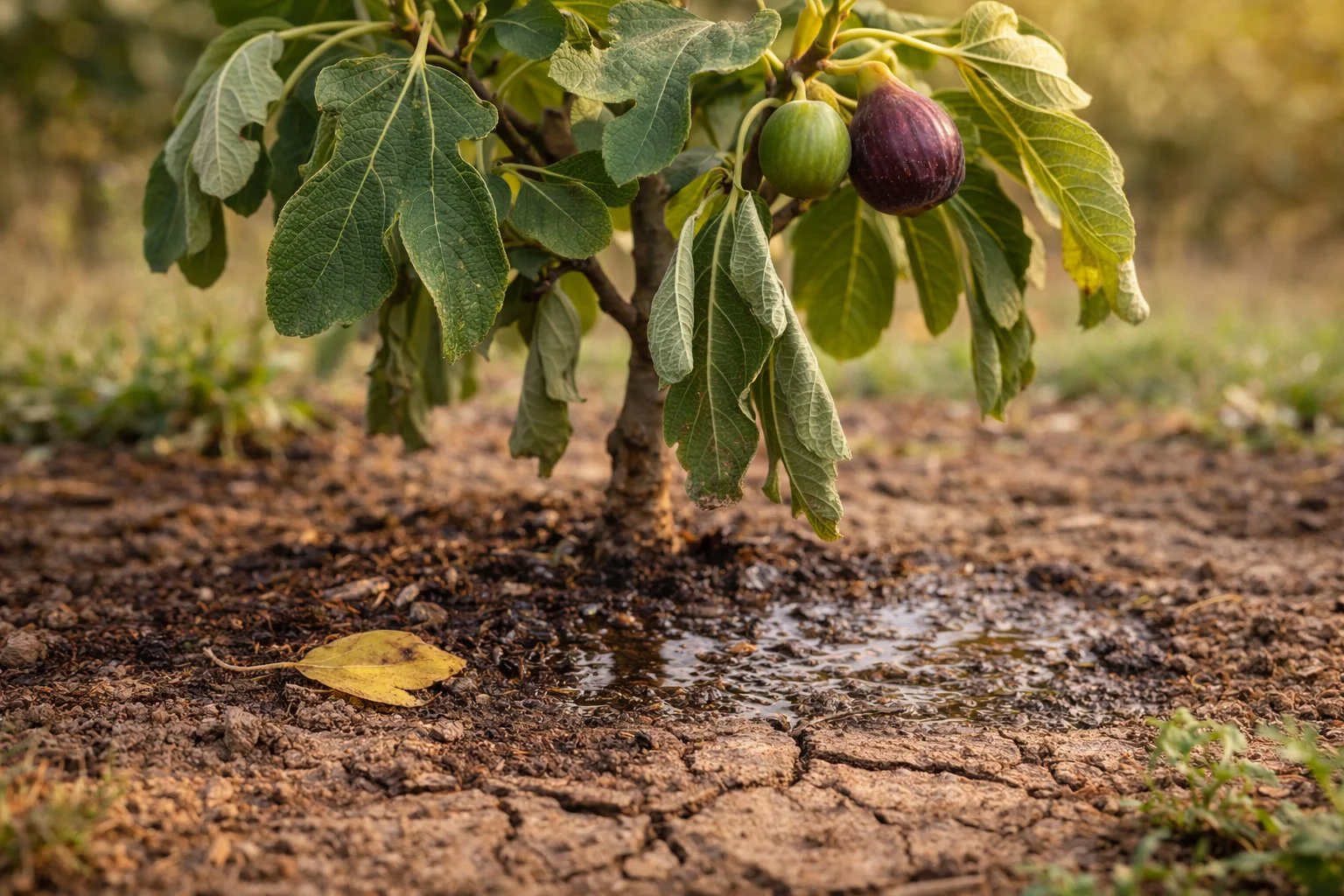
Underwatering is often easier to recognize than overwatering, yet it remains a frequent cause of stress in fig trees—especially during hot weather or in container systems. While figs are naturally drought-tolerant, that tolerance has limits. Prolonged or repeated water shortages interrupt growth, reduce fruit quality, and weaken the tree’s ability to cope with heat and seasonal transitions. Knowing how to distinguish normal drought response from harmful dehydration allows growers to intervene before damage accumulates.
Figs respond quickly to insufficient water because transpiration and fruit development place high demands on moisture availability. When those demands are not met, the tree shifts into a conservation mode that prioritizes survival over growth and fruiting.
Early Signs of Water Stress
The earliest signs of underwatering often appear in the leaves. Foliage may lose turgor, becoming limp or slightly drooped during the warmest part of the day. In mild cases, leaves may recover overnight, signaling temporary stress rather than damage. This daily wilting-and-recovery pattern is an early warning that watering intervals may be too long.
Leaf edges may begin to curl inward as the tree reduces surface area to conserve moisture. Unlike overwatering, which dulls leaf color, underwatered fig leaves often retain their green tone while changing posture.
Progressive Symptoms of Insufficient Water
As water stress continues, leaf symptoms intensify. Leaves may yellow unevenly, scorch along the margins, or drop prematurely. These changes typically begin on older leaves as the tree reallocates limited water to newer growth and developing fruit.
Shoot growth slows noticeably under chronic underwatering. Internodes shorten, and new leaves emerge smaller than normal. This reduction in vegetative growth is a protective response, but it also limits the tree’s capacity to support fruit development later in the season.
Effects on Fruit Development
Fruit is highly sensitive to water availability. Underwatered fig trees often produce smaller figs with thick skins and reduced sweetness. Inconsistent watering—periods of drought followed by heavy irrigation—can cause fruit to crack or drop as internal pressure fluctuates.
In severe cases, the tree may abort fruit entirely. This is not a failure, but a survival strategy. By shedding fruit, the fig conserves resources needed to sustain roots and essential tissues during stress.
Soil Clues That Confirm Underwatering
Visual symptoms should always be paired with soil assessment. Dry soil several inches below the surface confirms that roots are not receiving adequate moisture. In containers, lightweight pots, dry edges pulling away from the container wall, or water running straight through without absorption all indicate insufficient hydration or hydrophobic media.
Underwatering often occurs not because growers water too little at once, but because water fails to reach the full root zone. Shallow or rushed watering encourages surface moisture while deeper roots remain dry.
How Underwatering Differs from Heat Stress
Heat stress and underwatering often overlap, but they are not the same. A fig tree may wilt temporarily during extreme heat even when soil moisture is adequate. The difference lies in recovery. Trees experiencing heat stress rebound quickly in cooler evening temperatures, while underwatered trees remain limp and slow to recover.
Observing both plant behavior and soil conditions prevents misdiagnosis. Adding water to heat-stressed but adequately hydrated trees offers little benefit, while delaying irrigation for truly underwatered trees compounds stress.
Correcting Underwatering Without Causing Shock
Restoring hydration should be done gradually. Deep, thorough watering that penetrates the full root zone is far more effective than frequent light applications. This approach encourages roots to expand and improves long-term drought resilience.
For container figs, rehydrating dry media may require slow, repeated watering to allow absorption. Once moisture balance is restored, adjusting watering frequency prevents recurrence and stabilizes growth.
The Takeaway
Underwatered fig trees communicate clearly through wilting, leaf curl, slowed growth, and reduced fruit quality. While figs tolerate short dry periods, chronic water shortages undermine productivity and resilience. By recognizing early stress signals, confirming soil dryness, and responding with deep, intentional watering, growers can restore balance and support healthy fig growth throughout the season.
This article is part of the Irrigation & Water Management for Figs guide.
