Watering Fig Trees in Containers vs. In-Ground
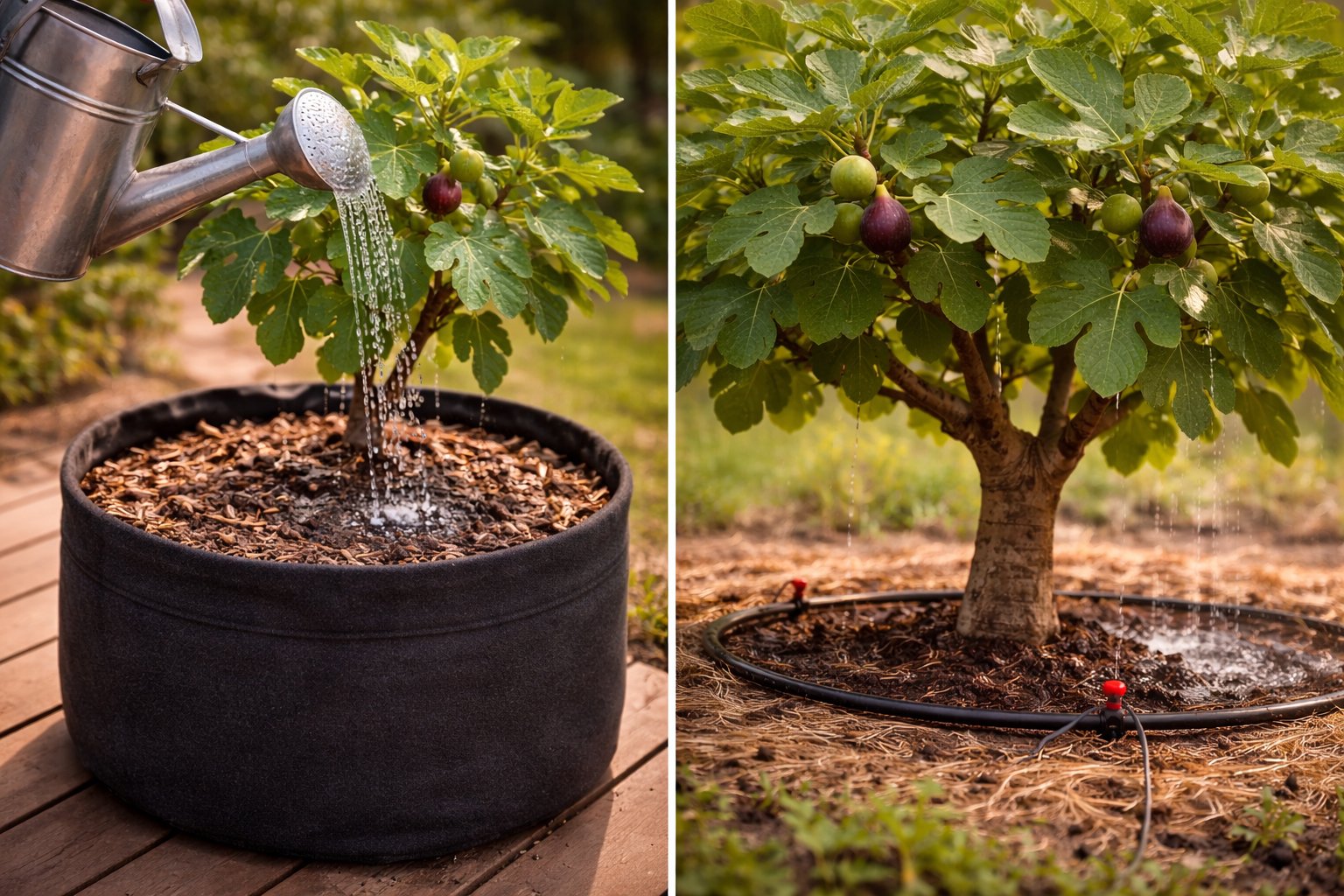
Watering fig trees looks deceptively similar whether they are planted in the ground or grown in containers, but the underlying dynamics are very different. Soil volume, drainage behavior, root temperature, and evaporation rates all change the way water is stored and used. Understanding these differences is essential, because applying in-ground watering habits to container figs—or vice versa—is one of the most common sources of stress and decline.
Both systems can produce excellent figs, but they demand different rhythms. Where in-ground trees rely on soil mass and natural buffering, container figs depend almost entirely on the grower’s decisions. Watering success comes from respecting those structural differences rather than trying to force one method to behave like the other.
How Soil Volume Changes Everything
The most important difference between container-grown and in-ground figs is soil volume. In-ground figs extend roots laterally and vertically, accessing moisture reserves well beyond the visible canopy. This allows them to tolerate brief dry periods without immediate stress. Even when the soil surface appears dry, deeper layers may still supply adequate moisture.
Container figs operate under strict limits. The entire root system exists within a fixed volume of soil, which dries faster, heats more quickly, and offers no reserve beyond the container walls. As a result, container figs experience moisture changes rapidly and respond immediately—sometimes within hours—to both drought and overwatering. This makes attentive watering more critical but also more predictable once the pattern is understood.
Watering Frequency: Flexibility vs. Precision
In-ground figs benefit from deeper, less frequent watering. A thorough soak that penetrates the root zone encourages roots to grow downward and outward, improving long-term stability and drought tolerance. During the growing season, these trees often perform best when watered deeply and then allowed to dry slightly before the next irrigation.
Container figs require a more precise and frequent approach. Because water drains through the container quickly, especially in fabric pots, moisture must be replenished more often. During warm weather, container figs may need watering every one to three days, and sometimes daily during extreme heat. The goal is not constant saturation, but consistent access to moisture without prolonged dryness.
Drainage: Forgiving vs. Unforgiving Systems
In-ground soil, when properly structured, offers a margin of forgiveness. Excess water can move laterally or downward, reducing the risk of root suffocation unless drainage is severely impaired. This buffering effect allows in-ground figs to tolerate occasional overwatering without immediate damage.
Containers are far less forgiving. Poor drainage, compacted media, or blocked drainage holes can quickly lead to waterlogged roots. Oxygen deprivation occurs faster in containers, and root damage follows quickly. For this reason, container figs depend heavily on well-draining media and unobstructed drainage. Water should flow freely through the container with each irrigation.
Temperature and Evaporation Effects
Soil temperature plays a major role in water use. In-ground soil remains relatively stable, warming and cooling slowly as the seasons change. This stability moderates water uptake and reduces stress during temperature swings.
Containers amplify temperature extremes. Sun-exposed pots warm quickly in spring, stimulating early root activity and increasing water demand. In summer, container soil can heat significantly, accelerating evaporation and transpiration. These effects explain why container figs often need water sooner and more frequently than in-ground trees, even when grown side by side.
Responding to Growth and Fruit Development
Both container and in-ground figs increase water use during active growth and fruit development, but the consequences of inconsistency differ. In-ground figs may show subtle signs of stress, such as slowed growth or smaller fruit, before serious problems appear. Container figs, by contrast, can drop fruit, wilt, or stall growth rapidly if watering becomes erratic.
This responsiveness is not a weakness—it is a signal. Container figs provide immediate feedback, allowing growers to fine-tune watering practices quickly. In-ground figs reward patience and consistency, responding more gradually to improvements or mistakes.
Seasonal Adjustments and Dormancy
As fig trees move toward dormancy, watering should be reduced in both systems, but especially for containers. In-ground figs rely on seasonal rainfall and cooling soil to regulate moisture naturally. Container figs remain exposed and require deliberate restraint. Excess water in cool conditions is one of the most common causes of winter root damage in container-grown figs.
During winter storage or protection, container figs should be watered sparingly—just enough to prevent complete drying. In-ground trees typically require no supplemental watering unless conditions are unusually dry.
The Takeaway
Container-grown and in-ground fig trees may look similar above the soil line, but they live in fundamentally different environments below it. In-ground figs thrive on deep, infrequent watering supported by soil mass and natural buffering. Container figs demand closer attention, more frequent watering, and excellent drainage to remain balanced and productive. When watering practices are matched to the system rather than forced into a one-size-fits-all approach, both container and in-ground figs can grow calmly, fruit reliably, and remain healthy for many years.
This article is part of the Irrigation & Water Management for Figs guide.
