Common Fig Pests and When to Ignore Them
Introduction
The sight of insects on a fig tree often triggers immediate concern. Leaves may show chew marks, small insects may cluster on stems, or ants may appear around developing fruit. For many growers, the instinct is to intervene quickly before damage worsens. In reality, most fig pests cause little to no lasting harm, and many are simply passing through. In Zone 7b, where figs grow vigorously and environmental conditions fluctuate throughout the season, learning when to ignore pests is just as important as learning how to manage them.
This article focuses on perspective rather than eradication. Its purpose is to help growers recognize which pests are common and largely harmless, understand why they appear, and develop confidence in letting fig trees handle minor challenges on their own.
Why Fig Trees Tolerate Pests So Well
Fig trees evolved in environments where insect pressure was constant. As a result, they are well adapted to tolerate leaf feeding, sap loss, and superficial damage without significant impact on growth or fruiting. Unlike crops that rely on pristine foliage, figs can lose a surprising amount of leaf area and still photosynthesize effectively. Minor insect activity rarely reduces yield or threatens tree health.
In Zone 7b, this tolerance is especially important. Seasonal stress from heat, humidity, and occasional drought often causes more visible symptoms than insects themselves. When pests appear, they are frequently responding to existing stress rather than creating it.
Insects as Opportunists Rather Than Aggressors
Most insects found on fig trees are opportunistic feeders. They arrive when conditions suit them and move on when they do not. A brief population spike does not indicate infestation, nor does it mean the tree is failing. In many cases, insects are attracted to soft new growth, excess nitrogen, or damaged tissue caused by weather events.
Understanding this behavior reframes how pests are viewed. Rather than enemies to be eliminated, they become indicators of orchard conditions that may need adjustment.
Wood-boring insects deserve special mention because trunk damage can appear far more serious than it actually is. Understanding when internal tunneling threatens structural integrity — and when it remains localized and recoverable — is critical. A detailed diagnostic guide is available in Borers and Trunk Damage: What’s Serious and What’s Not.
Leaf-Feeding Insects and Cosmetic Damage
Chewed leaves are one of the most common concerns among fig growers. Caterpillars, beetles, grasshoppers, and other leaf-feeding insects may remove portions of foliage, leaving ragged edges or holes. While this damage is visually obvious, it is almost always cosmetic. Fig trees routinely replace damaged leaves and continue growing without interruption.
In Zone 7b, leaf feeding often occurs early in the season when growth is vigorous. By mid-summer, trees have already produced sufficient leaf area to support fruit development. Treating leaf feeders rarely improves outcomes and often disrupts beneficial insect populations.
Sap-Feeding Insects and Sticky Residue
Aphids, scale insects, and similar sap feeders occasionally appear on fig trees, particularly on tender new shoots. These insects extract small amounts of sap and may leave behind sticky residue known as honeydew. While the presence of honeydew can attract ants or encourage superficial mold growth, it rarely harms the tree itself.
Sap feeders tend to flourish on trees with lush, nitrogen-rich growth. In these cases, reducing excess fertility and improving airflow often resolves the issue naturally. Healthy fig trees usually outgrow sap-feeding pressure without intervention.
Ants: Symptom, Not Cause
Ants are frequently misidentified as pests in fig orchards. In truth, ants are not damaging the tree directly. They are attracted to honeydew produced by sap-feeding insects or to overripe fruit. Their presence signals another condition rather than constituting a problem on its own.
Attempting to eliminate ants without addressing the underlying attraction rarely succeeds. In many cases, ant activity diminishes on its own as sap feeders decline or fruit is harvested promptly.
Spider Mites and Environmental Stress
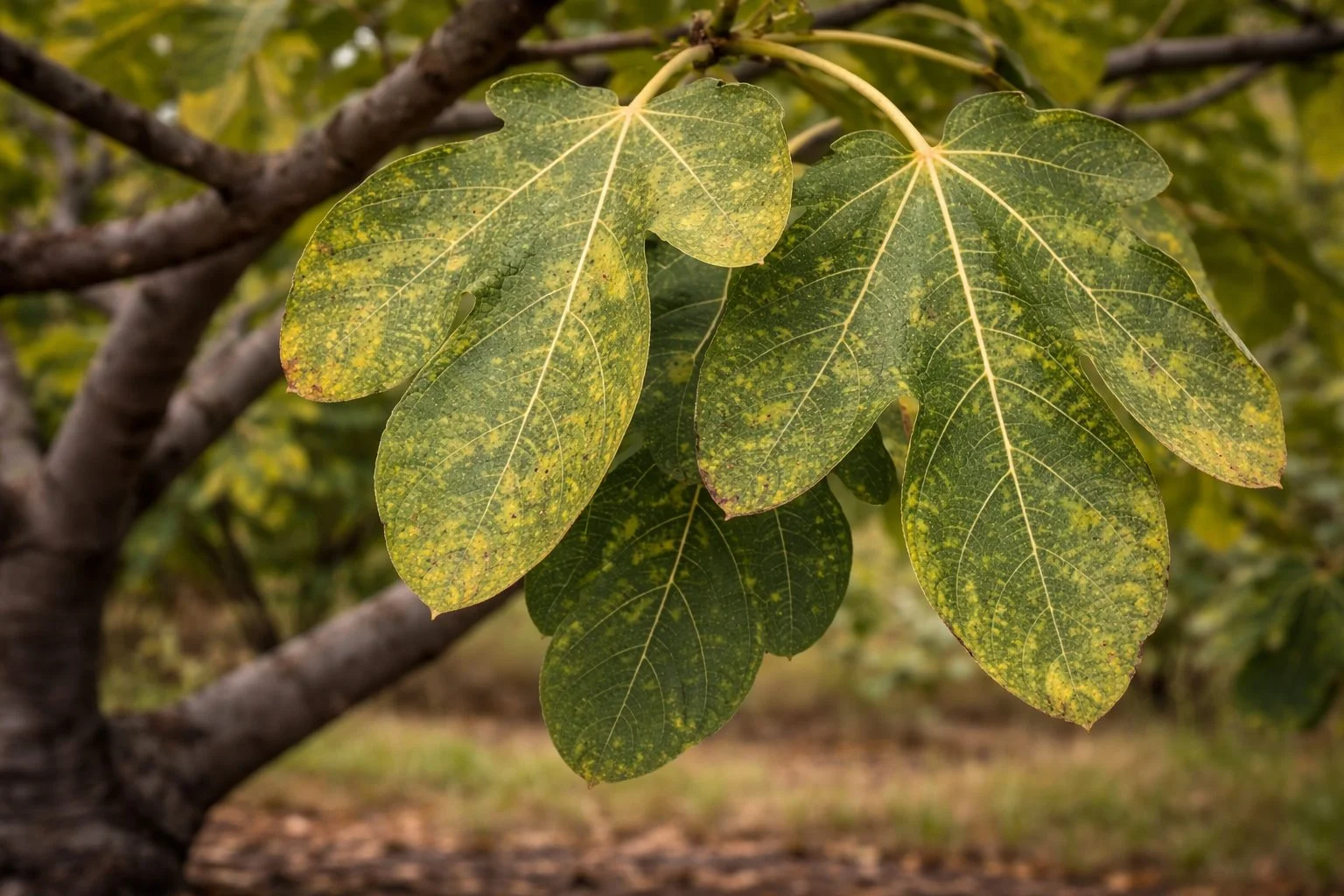
Spider mites are often blamed for leaf discoloration or stippling, especially during hot, dry periods. While mites can damage foliage under severe conditions, they are typically a secondary issue driven by environmental stress. Low humidity, dust, and water stress create favorable conditions for mite populations.
Improving irrigation consistency and reducing plant stress often leads to natural mite decline. Healthy fig trees tolerate minor mite presence without lasting effects.
Fruit-Associated Insects and Timing
Insects that appear on or near fig fruit are often responding to ripening sugars rather than attacking healthy tissue. Overripe or damaged fruit is particularly attractive. Prompt harvest and removal of fallen fruit significantly reduce insect presence without the need for treatment.
In Zone 7b, where figs may ripen quickly during warm weather, harvest timing plays a larger role in pest management than any chemical control.
When Pest Presence Signals a Larger Issue
While most pests can be ignored, persistent or escalating insect pressure sometimes indicates an underlying problem. Trees experiencing chronic stress from poor drainage, root restriction, or nutrient imbalance may attract pests more consistently. In these cases, addressing the root cause restores balance more effectively than targeting insects directly.
Observation over time is key. A one-time appearance rarely matters, while repeated seasonal patterns deserve closer attention.
Beneficial Insects and Natural Balance
Many insects found in fig orchards are predators that help regulate pest populations. Lady beetles, lacewings, parasitic wasps, and other beneficial species often arrive shortly after pests appear. Intervening too quickly can eliminate these allies and prolong pest issues rather than resolving them.
Allowing time for natural balance to assert itself is one of the most effective pest management strategies available.
Why Overreaction Causes More Harm Than Pests
The greatest risk associated with common fig pests is not the insects themselves, but the response they provoke. Unnecessary spraying disrupts beneficial insects, increases tree stress, and can lead to secondary outbreaks. Over time, repeated intervention creates dependence rather than resilience.
Fig trees thrive when allowed to respond naturally to minor challenges. Restraint preserves the orchard ecosystem and reduces long-term maintenance.
Developing Confidence Through Observation
Successful fig growers learn to observe without panic. They notice patterns across seasons, compare affected trees with healthy ones, and consider environmental context before acting. This observational skill develops with experience and leads to fewer interventions and better outcomes.
Ignoring harmless pests is not negligence; it is informed management.
The Takeaway
Most insects found on fig trees are harmless, temporary, or beneficial. In Zone 7b, fig trees are well equipped to tolerate minor pest pressure and recover without intervention. By learning to distinguish cosmetic damage from meaningful impact and by focusing on overall tree health rather than individual insects, growers protect both their trees and their peace of mind. Knowing when to ignore pests is a hallmark of confident fig growing.
This article is part of the complete guide to Pests & Diseases of Fig Trees in Zone 7b.
Related reading:
Fungal Issues vs Environmental Stress in Fig Trees
Organic Pest Management for Fig Orchards
When to Treat — and When to Leave the Tree Alone
