Choosing the Right Site for a Fig Orchard
Introduction
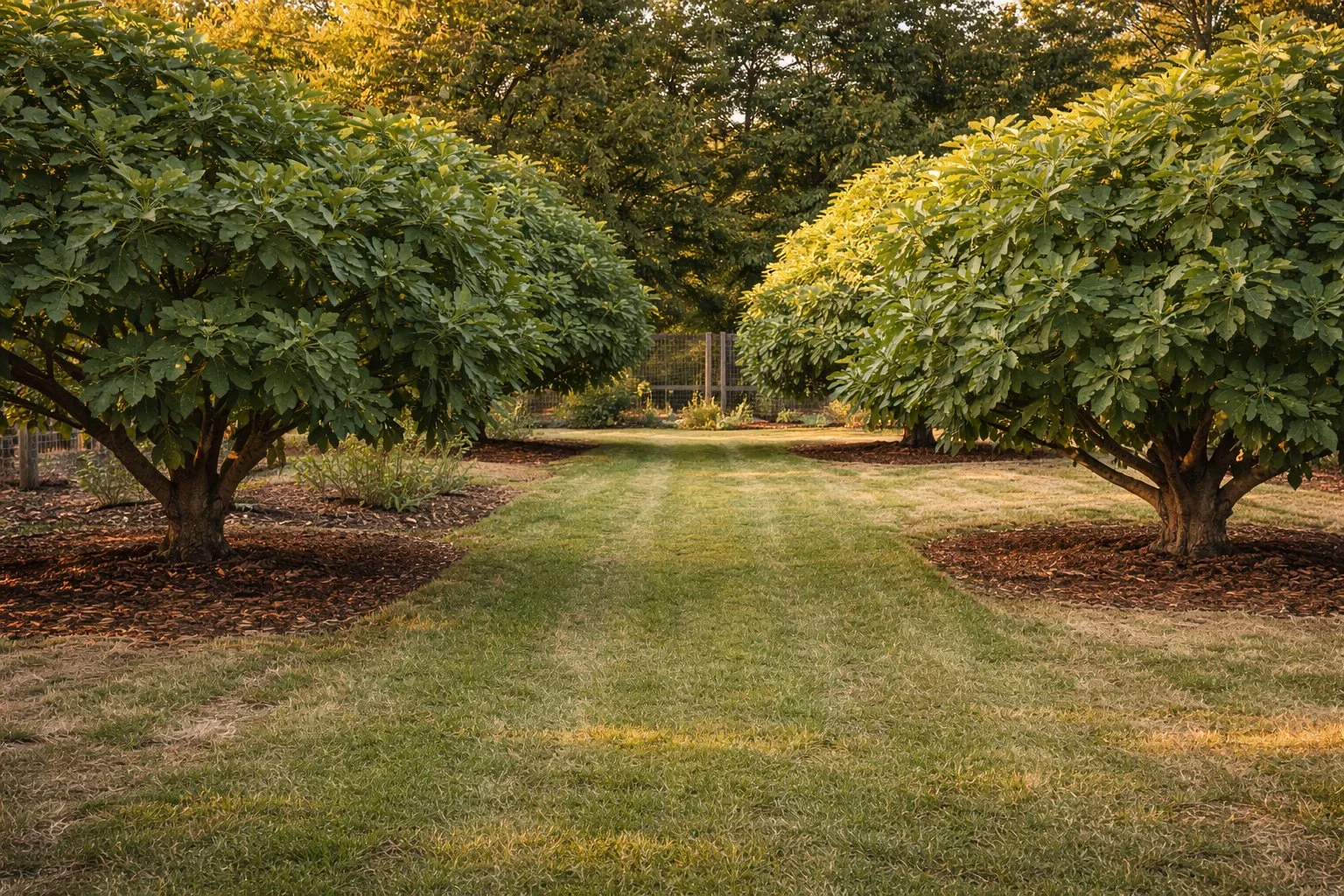
Choosing the right site is the single most important decision in establishing a fig orchard. While figs are adaptable trees, orchard-level success depends on how sunlight, soil, air movement, drainage, and winter exposure interact across the landscape. A well-chosen site simplifies every other management task—spacing, pruning, irrigation, winter protection, and harvest—while a poorly chosen site creates challenges that compound year after year.
This article focuses on evaluating land before trees are planted, helping growers in Zone 7b select sites that support healthy growth, reliable winter survival, and consistent fruit quality.
Sun Exposure: The Non-Negotiable Requirement
Figs require abundant sunlight to produce high-quality fruit. Orchard sites should receive at least eight hours of direct sun during the growing season, with minimal shading from buildings, trees, or terrain. Morning sun is particularly valuable, as it dries foliage early and promotes uniform ripening. Afternoon shade reduces yield and delays maturity, especially in late-season cultivars.
When evaluating a site, observe sun patterns across the entire season, not just at planting time. Summer sun angles differ from spring and fall, and future shading from growing trees must be anticipated.
Airflow and Cold-Air Drainage
Air movement is essential for drying foliage after rain and reducing disease pressure. Gentle, consistent airflow through an orchard lowers humidity and improves overall tree health. Equally important in Zone 7b is cold-air drainage. Cold air behaves like water, settling into low spots during clear winter nights.
Sites on gentle slopes or elevated ground allow cold air to drain away from trees, reducing freeze damage. Low-lying areas, frost pockets, and enclosed basins increase winter injury risk and should be avoided when possible.
Soil Drainage and Root Health
Figs tolerate many soil types but fail in poorly drained conditions. Standing water suffocates roots, weakens trees, and increases winter damage. Before choosing a site, assess how water moves after heavy rain. Areas where water pools or soil remains saturated for days are poor candidates for figs unless raised planting systems are planned.
In clay-dominant Zone 7b soils, slight elevation or mounding dramatically improves long-term tree performance. Drainage quality matters more than soil texture alone.
Soil Depth and Structure
Healthy fig roots require depth, oxygen, and loose structure. Shallow soils over bedrock or compacted layers restrict root development and increase drought stress. Digging test holes reveals soil depth, compaction, and layering. Sites with deep, workable soil allow trees to establish quickly and buffer environmental extremes more effectively.
Organic matter improves structure, but it cannot compensate for severe compaction or shallow profiles.
Wind Exposure and Protection
While figs tolerate summer breezes, they benefit from protection against strong winter winds. Persistent winter winds increase cold injury by stripping heat and drying tissues. Ideal orchard sites balance airflow with shelter—open enough to prevent stagnation, yet protected from direct winter wind corridors.
Natural windbreaks such as hedgerows, tree lines, or terrain features can be assets when positioned far enough away to avoid shading.
Proximity to Water and Infrastructure
An orchard site must support irrigation access, even if figs are drought-tolerant once established. Proximity to water sources simplifies management and ensures consistency during dry periods. Equally important is access for maintenance, harvest, and winter protection materials.
Sites that require long carries, steep climbs, or awkward routing increase labor and reduce efficiency over time.
Evaluating Slope and Orientation
Gentle slopes offer advantages in both drainage and frost protection. South- or southeast-facing slopes warm earlier in spring and promote earlier ripening. Steep slopes complicate access and equipment use, while flat sites may require additional drainage planning.
Orientation influences not only sunlight but also how winter protection systems function, making slope evaluation part of long-term planning.
Avoiding Common Site-Selection Mistakes
Common mistakes include choosing the greenest spot without evaluating drainage, planting in frost pockets for convenience, or underestimating future shading. Another frequent error is selecting sites based on short-term ease rather than long-term manageability.
A good site reduces intervention. A marginal site demands constant correction.
Matching the Site to the Orchard Vision
The “right” site depends on orchard goals. Backyard plantings, mixed container-and-ground systems, and small commercial orchards all place different demands on land. Selecting a site that aligns with intended scale and management style prevents redesign and relocation later.
The Takeaway
Choosing the right site is an investment in simplicity. When sunlight, airflow, drainage, soil depth, and winter exposure align, fig orchards become resilient, productive systems that reward growers for decades. Thoughtful site selection turns fig growing from problem-solving into stewardship.
This article is part of the complete guide to Fig Orchard Design & Spacing.
Related reading:
Fig Tree Spacing: Yield vs Manageability
Row Orientation, Sun Exposure, and Airflow
Soil Preparation Before Planting Figs
