Harvesting from Container vs In-Ground Fig Trees
Introduction
While figs from container-grown and in-ground trees may look similar at harvest, the trees that produce them behave very differently. Root volume, water availability, heat exposure, and growth rhythm all influence ripening speed, fruit texture, and the ideal harvest window. Understanding these differences allows growers to adjust timing and technique, preventing premature picking on one hand and avoidable spoilage on the other.
How Root Volume Shapes Ripening
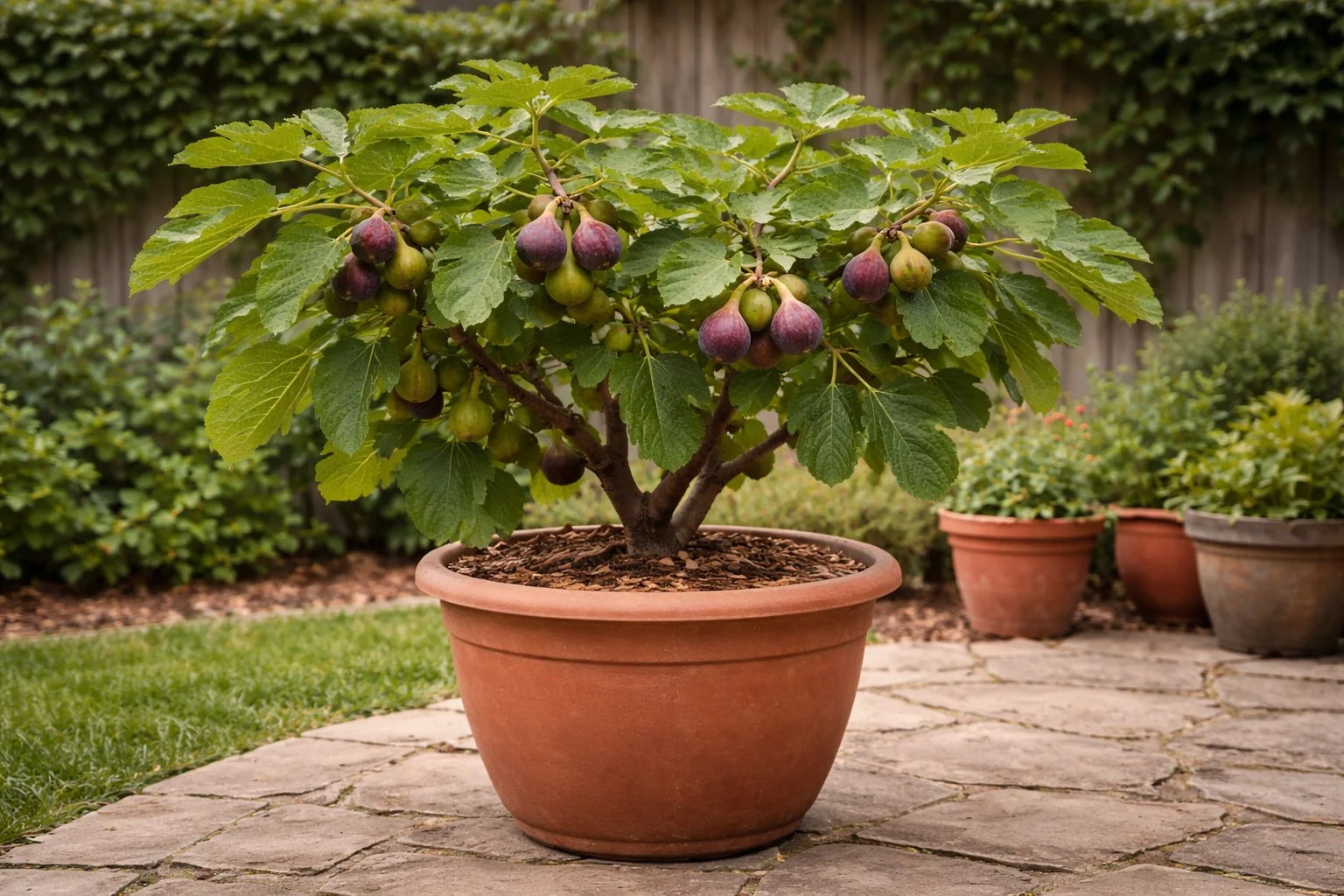
Container trees operate within strict root limits. This constraint often leads to more controlled growth and earlier fruiting, but it also means faster moisture swings. In-ground trees benefit from deeper, broader root systems that buffer changes in temperature and water availability. As a result, container figs may ripen faster—and decline faster—than their in-ground counterparts.
Moisture Management at Harvest
Container figs respond immediately to irrigation and rainfall. A single heavy watering near ripeness can cause rapid softening or splitting. In-ground trees absorb water more gradually, which often produces a wider harvest window. For container trees, reducing late-season irrigation and harvesting slightly earlier helps preserve structure and flavor.
Heat Exposure and Microclimate
Containers heat up more quickly than soil, especially in full sun. Elevated root temperatures accelerate ripening and shorten the peak window. In-ground trees, insulated by soil, experience more stable root-zone temperatures. Growers should monitor container figs closely during heat waves and adjust harvest frequency accordingly.
Fruit Size and Texture Differences
Container figs are often slightly smaller but intensely flavored due to controlled growth. However, their skin and flesh may soften rapidly near peak ripeness. In-ground figs may reach larger size with thicker skin, allowing a slightly longer on-tree hang time before quality declines. These differences influence not just when to harvest, but how gently fruit must be handled.
Harvest Frequency Expectations
Container figs often require more frequent checks—sometimes twice daily during peak season—because ripening accelerates quickly. In-ground trees usually allow for daily harvesting without significant loss. Treating both systems the same leads to missed opportunities or preventable waste.
Harvest Technique Adjustments
Because container figs soften rapidly, they benefit from especially gentle handling. Supporting the fruit fully during removal and avoiding stacking is critical. In-ground figs, while still delicate, are often slightly more forgiving due to firmer texture at peak ripeness.
Weather Response Differences
After rain, container figs may show immediate signs of stress, including splitting or sudden softness. In-ground figs may lag by a day or more. Harvest decisions should account for these timing differences rather than relying on a single orchard-wide schedule.
Scheduling Harvest by Tree Type
Successful growers mentally separate container and in-ground harvest routines. Container trees are checked first, harvested earlier in the day, and often harvested slightly earlier in the ripening window. In-ground trees follow, with more flexibility in timing.
Flavor Trade-Offs
Container figs harvested slightly earlier often maintain excellent flavor while preserving structure. Waiting for full softness can lead to rapid decline. In-ground figs may benefit from an extra day on the tree to maximize sweetness without compromising integrity.
The Takeaway
Container-grown and in-ground fig trees demand different harvest strategies. By adjusting timing, irrigation, and handling based on root environment and heat exposure, growers protect quality and reduce losses. Recognizing these differences turns mixed plantings into an advantage rather than a complication.
This article is part of the complete guide to Harvesting & Post-Harvest Care for Fig Trees.
Related reading:
Harvest Timing for Best Flavor
Preventing Spoilage and Souring on the Tree
Common Harvesting Mistakes Beginners Make
