Why Container Growing Works So Well for Fig Trees
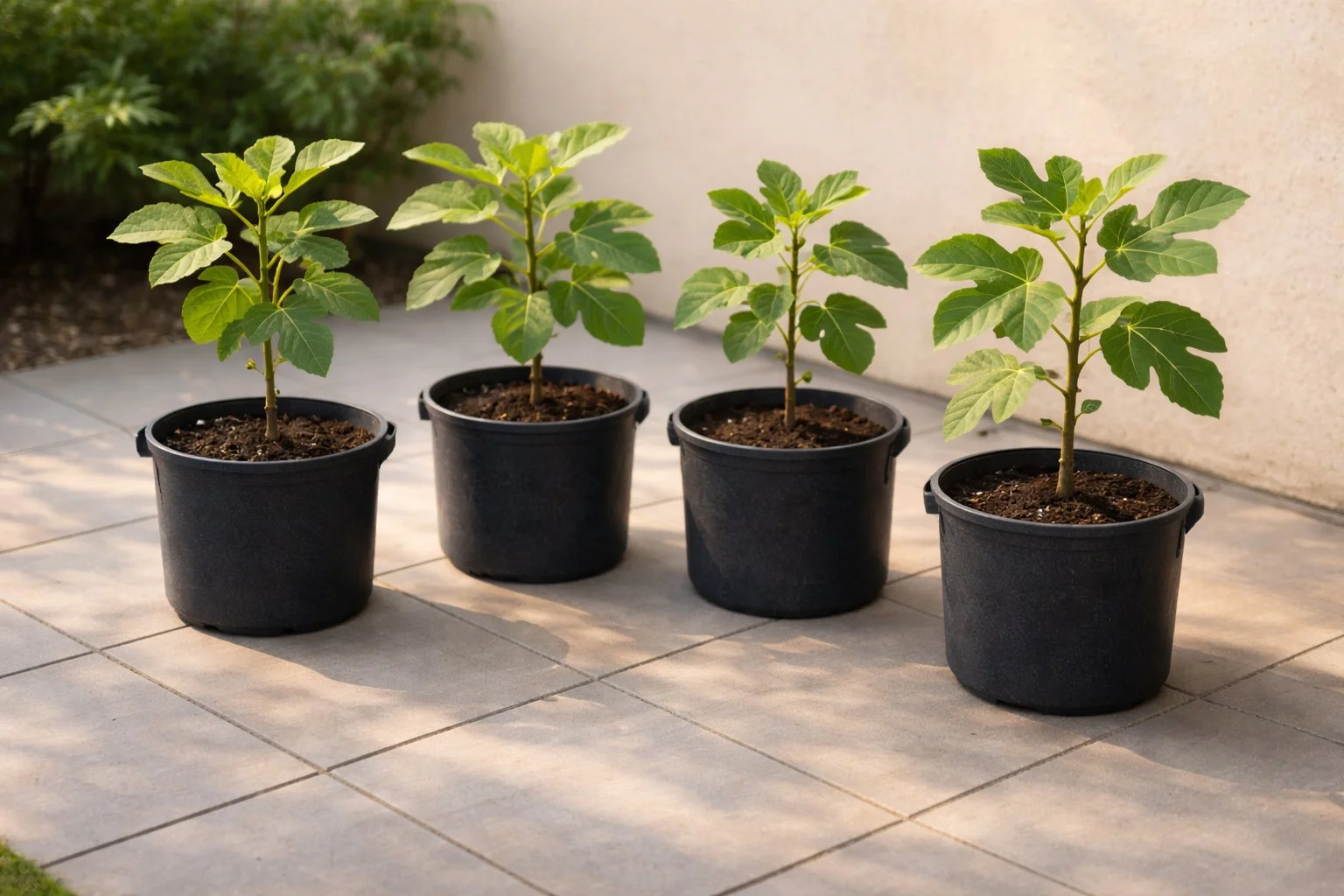
Container growing is often misunderstood as a fallback option—something used when soil is poor or space is limited. In reality, figs respond exceptionally well to container culture when it is used deliberately. For many growers, especially in climates with cold winters or variable soils, containers provide a level of control that is difficult to achieve in the ground.
Figs are naturally vigorous, adaptable trees. That adaptability is precisely why containers work so well. A container environment narrows the range of variables the tree must respond to, allowing growth, fruiting, and winter survival to be managed rather than guessed at.
Controlled Root Growth Encourages Fruiting
One of the defining characteristics of fig trees is their ability to grow rapidly when roots have unrestricted access to fertile soil. In-ground, this often results in excessive vegetative growth at the expense of fruiting, particularly in rich soils or during wet seasons. Containers change that balance.
By limiting root expansion to a defined volume, containers gently restrain excessive shoot growth without stressing the tree. This restraint encourages figs to allocate more energy toward fruit production and ripening rather than endless canopy expansion. When managed properly, root restriction does not weaken the tree—it stabilizes its growth and improves consistency from year to year.
Predictable Soil Conditions and Drainage
Native soil conditions vary widely, even within a small area. Drainage, compaction, organic matter, and microbial activity can differ dramatically from one planting spot to another. Containers eliminate that uncertainty.
A well-designed container mix provides consistent aeration and drainage regardless of weather patterns. Roots remain oxygenated during wet periods and avoid the prolonged saturation that commonly leads to decline in heavy soils. Because the soil environment is known and repeatable, problems become easier to recognize and correct early, before they affect long-term health.
Thermal Responsiveness and Seasonal Control
Container-grown figs respond more quickly to temperature changes than in-ground trees. In spring, containers warm faster than native soil, stimulating earlier root activity and earlier top growth when conditions are favorable. This can translate into a longer effective growing season without forcing premature growth.
In fall and winter, that same responsiveness allows growers to manage dormancy intentionally. Containers can be moved into protected locations to avoid prolonged cold exposure, excessive winter moisture, or damaging freeze–thaw cycles. In climates like Zone 7b, this ability to moderate winter stress often determines whether a tree preserves productive wood or starts over each year.
Precision in Water and Nutrient Management
Water and nutrient management are among the most common sources of fig problems. Containers make both more visible and more controllable. Because the root zone is confined, moisture levels respond quickly to irrigation and weather, allowing growers to adjust practices before stress becomes severe.
Nutrients can also be applied with greater precision. Fertilization in containers affects only the fig tree itself, reducing competition and minimizing unintended excess. While containers require closer observation, they also provide clearer feedback, allowing thoughtful growers to fine-tune care rather than rely on broad assumptions.
Mobility as a Form of Protection
The most practical advantage of container-grown figs is mobility. A container tree can be repositioned in response to changing conditions—moved into sun, out of wind, under cover during extreme weather, or into shelter before damaging freezes.
This flexibility is particularly valuable in colder regions. Preserving above-ground wood through winter often determines whether a fig produces early, abundant fruit or spends the season regrowing structure. Containers provide an additional layer of insurance that in-ground trees simply do not have.
Natural Size Management Without Sacrificing Yield
Container-grown figs tend to remain more compact, which simplifies pruning, harvesting, and general observation. Smaller size does not equate to lower productivity. When growth is balanced and fruiting wood is preserved, container figs frequently produce yields comparable to much larger in-ground trees.
This natural size moderation allows growers to focus on structure and fruit quality rather than constant correction of excessive growth.
Containers as an Intentional Growing System
When viewed correctly, containers are not a limitation but a strategic growing system. They offer control over roots, soil, water, nutrition, temperature exposure, and winter survival—factors that collectively determine fig performance.
For growers willing to observe closely and manage deliberately, container-grown figs often outperform expectations. In challenging climates or uncertain soils, they provide one of the most reliable paths to consistent, high-quality fruit.
For a complete, season-by-season framework that ties soil, watering, pruning, winter protection, and variety choice together, see Growing Fig Trees in Containers.
