Seasonal Movement of Container Fig Trees: When and How to Relocate Without Stress
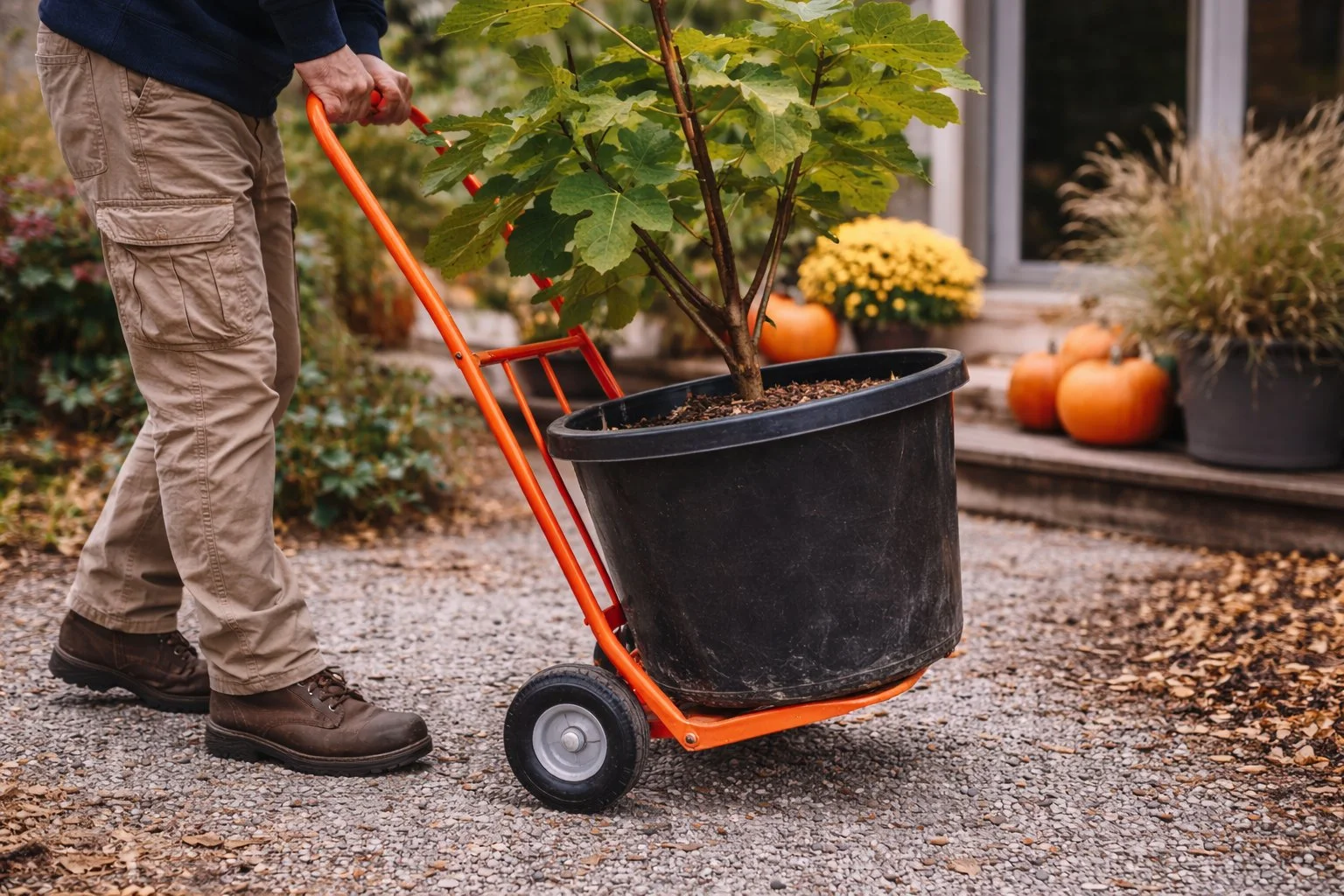
One of the greatest advantages of growing figs in containers is mobility. Unlike in-ground trees, container figs can be repositioned throughout the year to take advantage of microclimates, avoid weather extremes, and extend the growing season. When done correctly, seasonal movement becomes a powerful management tool rather than a source of stress.
This article explains when to move container figs, where to move them, and how to do it safely without interrupting growth or fruit production.
Why Seasonal Movement Matters for Container Figs
Container figs respond quickly to environmental changes. A shift of just a few feet — more sun, less wind, better drainage — can noticeably affect growth and fruiting.
Seasonal movement allows growers to maximize sunlight in spring, reduce heat stress in summer, protect trees during fall transitions, and safely overwinter plants in cold climates like Zone 7b.
Moving Container Figs in Spring
Spring is the most forgiving time to reposition container figs. As temperatures warm and buds break, figs tolerate movement well as long as roots are not disturbed.
Early spring placement should prioritize maximum sun exposure and wind protection, helping trees wake up evenly and push strong new growth. Moving too late, after vigorous leaf expansion, increases the risk of temporary wilting.
Summer Adjustments: Microclimate Over Mobility
During summer, container figs should generally stay put once fruit is set. Frequent movement during peak heat can disrupt water balance and cause fruit drop.
However, strategic relocation during heat waves — such as shifting pots away from reflective surfaces or into partial afternoon shade — can significantly reduce stress without harming productivity. Summer moves should be minimal, purposeful, and done early in the day.
Fall Transitions and Pre-Dormancy Placement
Fall is a critical transition period. As growth slows, container figs should be moved gradually toward their overwintering location. Abrupt changes from full sun to shade can confuse dormancy signals and delay leaf drop.
Position containers where they receive good airflow and natural cooling, allowing the tree to harden off properly before winter protection begins.
Winter Movement and Overwintering Strategy
In cold climates, winter movement is often necessary. Container figs may be relocated to unheated garages, sheds, crawl spaces, or protected outdoor areas.
The key is timing. Figs should be fully dormant before being moved into protected storage. Moving too early can encourage weak growth; moving too late risks freeze damage to roots.
Once dormant, figs tolerate relocation well as long as temperatures remain stable and the soil stays barely moist.
How to Move Large or Heavy Containers Safely
Improper handling causes more damage than relocation itself. Large containers should be moved using dollies, hand trucks, or rolling platforms designed to keep pots level.
Dragging containers across hard surfaces can crack pots, shear roots, and compact soil. Always lift or roll — never tip aggressively or drop.
Reducing Stress After Relocation
After any move, monitor moisture closely. Changes in sun and wind exposure alter drying rates, often more than expected. Resume normal care once the fig shows stable leaf posture and growth.
Avoid fertilizing immediately after major relocations, especially during warm weather. Let the tree settle before pushing new growth.
The Takeaway
Seasonal movement is not a nuisance — it is a strategic advantage of container fig growing. By moving figs intentionally and at the right times, growers can improve growth, protect roots, and extend productivity year after year without increasing inputs or risk.
For a complete, season-by-season framework that ties soil, watering, pruning, winter protection, and variety choice together, see Growing Fig Trees in Containers.
