Grow Figs in Containers: Zone 7b Tennessee Tips for Big Yields
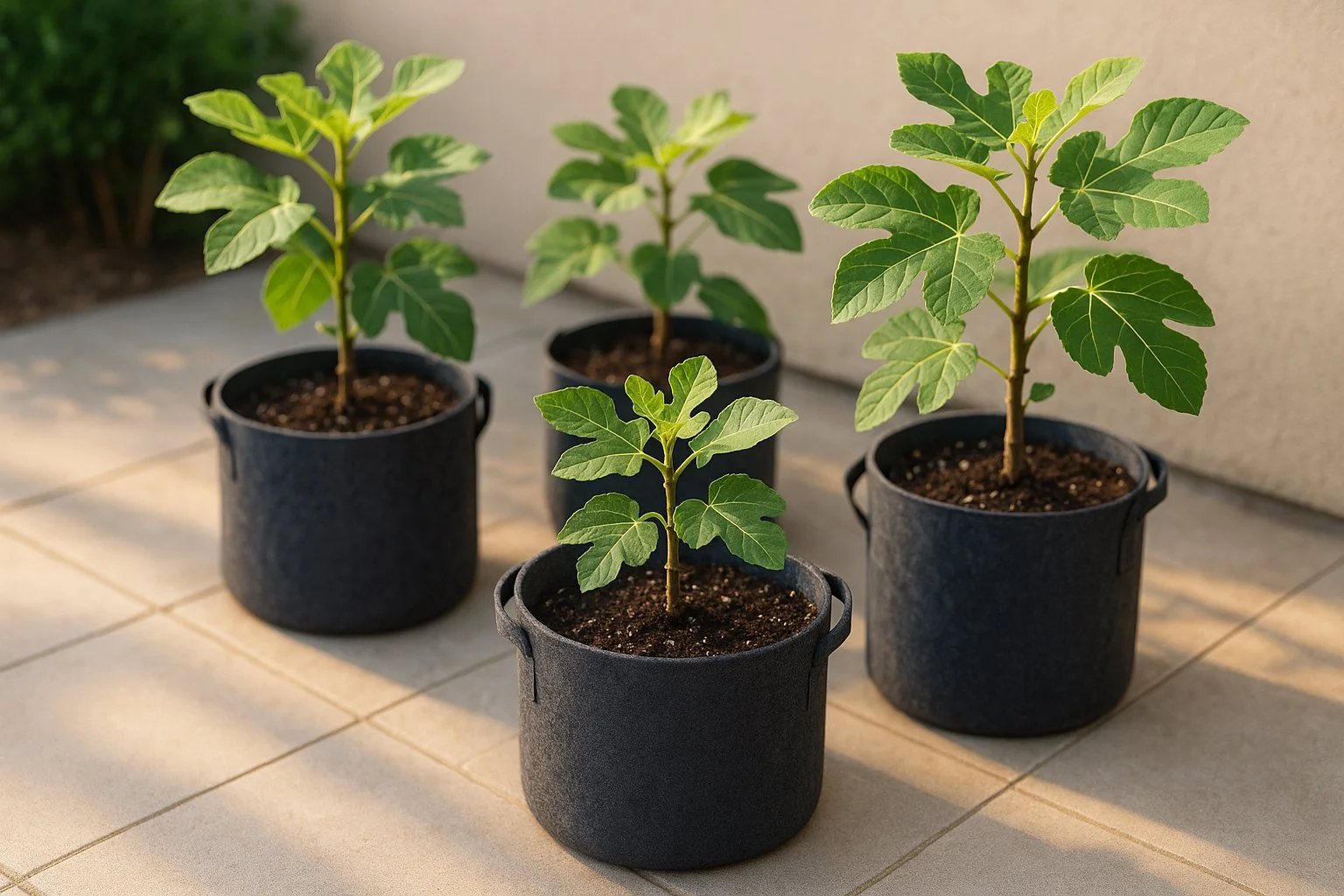
🌿 Growing Figs in Containers — On-Page Guide
Jump to a Section
The Importance of the Right Soil: How Soilless Media Transforms Root Health
How to Water Container Figs: Understanding Moisture, Root Behavior, and Daily Rhythm in Grow Bags
Fertilizing Container Figs: How Nutrition Flows Through Bark-Based Media and Shapes Growth
Root Pruning & Up-Potting: How Container Figs Mature, Expand, and Stay Productive Over Time
Sunlight, Heat, and Microclimates: How Containers Let You Shape the Fig’s Environment With Precision
Winter Protection for Container Figs: How Mobility and Microclimates Transform Survival in Zone 7b
Managing Root-Bound Trees: When Tight Roots Help and When They Hurt
How Fertilization Changes in Containers Compared to Ground-Grown Trees
Choosing the Best Container Materials for Long-Term Fig Growth
Managing Nutrition in Containers — Feeding for Steady Growth Without Excess
Seasonal Care — How Container Figs Evolve Through Spring, Summer, Fall, and Winter
Pruning and Structural Training — Shaping Container Figs for Strength, Sunlight, and Manageability
Fertilizing Container Figs — How to Feed for Strength, Balance, and Clean Fruit
Variety Performance — Choosing Figs That Excel in Containers
How to Grow High-Performance Container Figs with Professional Precision in Zone 7b
Growing figs in containers offers a level of control and flexibility that few other fruit crops can match. For many growers in Zone 7b, it is not only a practical technique but a strategic one—allowing figs to thrive despite unpredictable rainfall, heavy clay soils, inconsistent winter lows, and the microclimates typical of Tennessee’s rolling terrain. Container figs warm earlier in spring, respond quickly to careful feeding, and often fruit sooner than their in-ground counterparts. But success depends on understanding how container ecology differs from the orchard floor. Soil behaves differently. Water moves differently. Roots grow and age differently. And because the grower becomes the sole steward of fertility and structure, container figs require an intentional system rather than casual care.
This guide brings together the principles behind container-grown fig trees and how containers change root biology, how soilless media drives vigor, how watering and feeding shape fruit quality, and how seasonal management protects the tree from heat and cold. Container growing becomes not a compromise but a high-performance option when each part of the system supports the next.
If you’re new to container growing, start here to understand why containers are such an effective growing system for fig trees. Why Container Growing Works So Well for Fig Trees
Why Growing Figs in Containers Works So Well in Zone 7b
Figs respond to warmth, oxygen, and stable moisture, three elements containers naturally enhance when properly managed. A container warms earlier than native soil in spring, signaling roots to wake up and push new growth while in-ground trees still wait for the earth to rise above 55°F. Soilless mixes, especially bark-based media, maintain oxygen at the root surface even when moist, preventing compaction and root suffocation. And because the grower regulates every drop of water, the tree never sits in heavy clay or fluctuates between drought and saturation.
This precision is the greatest advantage: containers remove variables. They remove poor drainage, nematodes, and unpredictable soil chemistry. They allow figs to flourish on patios, gravel pads, porches, or low tunnels that provide early heat and late-season protection. And they allow growers to move young or high-value varieties into protected winter spaces, preserving wood and ensuring reliable crops year after year.
Yet containers also introduce responsibilities. Soil nutrients do not regenerate naturally. Water evaporates rapidly on hot afternoons. Roots eventually circle and compress unless pruned. What nature balances in the ground, the grower must balance in a pot.
The Importance of the Right Soil: How Soilless Media Transforms Root Health
Success with container figs begins with a medium designed for trees rather than vegetables or bedding plants. Native soil, bagged garden soil, and compost hold too much water and collapse into anaerobic mass, suffocating fig roots. A bark-based mix—light, airy, and resilient—creates the ideal root environment. Bark fines provide structure, perlite preserves pore space, and peat or coir holds moisture without smothering the tree.
In this environment, roots grow thick, white, and vigorous. They explore every layer of the container, storing carbohydrates early in the season and supporting rapid top growth. The difference between a fig in heavy soil and one in a professional soilless mix is dramatic: one struggles to dry out evenly, while the other breathes, drinks, and thrives.
Container figs are, at their core, a root-management crop. A well-oxygenated medium keeps the tree productive for years, while a poorly chosen mix shortens its lifespan and limits its yield.
How to Water Container Figs: Understanding Moisture, Root Behavior, and Daily Rhythm in Grow Bags
One of the first questions every grower eventually asks is, “How much water does a fig in a grow bag actually need?” It sounds like a simple, measurable task—one gallon, two gallons, half a gallon per day—but container growing is much more dynamic than that. The relationship between water, oxygen, temperature, and bark-based media shifts constantly throughout the day, and learning to read those shifts is the difference between a fig that merely survives and one that produces heavy, early crops in Zone 7b.
Container figs behave differently from in-ground trees because the root system is fully enclosed in a finite volume of media. That media heats and cools more quickly, dries from the sides as well as the top, and holds or sheds moisture depending on age, composition, and airflow. When a grower understands how water moves through a fabric pot, watering stops being guesswork and becomes a steady rhythm—predictable, gentle, and highly productive.
In warm southern climates, a young fig in a one-gallon or two-gallon bag may drink only a half gallon of water on a mild day but will double that intake the moment temperatures rise above ninety degrees. As figs move into five- and seven-gallon bags—the sizes most nurseries use when preparing orchard-ready trees—their need increases proportionally because root mass, canopy size, and evaporation all accelerate at the same time. A well-managed fig in a seven-gallon fabric pot may require a gallon or more every summer day, and on days when heat reflects off gravel, concrete, or the side of a building, that need can quietly jump by thirty to fifty percent.
Once a fig occupies a ten-, fifteen-, or even twenty-gallon container, the rhythm becomes more stable. Larger volumes buffer moisture loss, and the root zone cools more slowly, creating a gentler daily cycle. Even then, a mature fruiting fig can easily use two to three gallons per day in midsummer because every swelling fig is a reservoir of water drawn directly from the container media. When growers see their trees drooping in late afternoon despite a morning watering, it’s not a sign of distress so much as a sign of active metabolism—the tree is moving water into fruit faster than the media can release it.
Rather than focusing on a strict schedule, the grower learns to recognize how the media feels and how the tree carries itself. A fabric pot that feels unexpectedly light when lifted, a surface that transitions from evenly moist to dry two inches down, or a tree whose leaves lose their waxy sheen are all early signals that the moisture curve is dropping below the optimal range. These cues show up long before the tree suffers real stress, and responding at this moment—while the tree still holds its posture—keeps growth steady and fruit development consistent.
Overwatering reveals itself just as clearly, though in more subtle ways. A pot that stays heavy for multiple days, a faint sourness in the media, or a tree that slows its growth despite warm temperatures suggests the roots are losing access to oxygen. Because bark-based mixes drain rapidly, true overwatering is rare; it occurs not from quantity but from frequency—small, repeated waterings that never allow the upper layers to breathe. Understanding these small calibrations is what separates experienced growers from beginners.
Watering slowly is essential. When water hits the surface too quickly, it channels down the sides of the pot, leaving the central root mass completely dry. A fig that appears “watered” may in fact have received nothing more than a superficial rinse. The most reliable method is a deliberate, two-stage watering: the grower moistens the surface gently, waits a moment for the bark fragments to absorb the first pass, and then returns to deliver the full volume. This simple pause allows the media to accept water evenly, pulling it into the center rather than shedding it out the bottom.
Drip irrigation refines this process further. A slow, steady trickle gives the media time to absorb moisture uniformly and eliminates the dramatic wet-dry swings that lead to fruit splitting or souring. In nursery and orchard settings, drip systems create remarkable consistency—every tree receives the same volume at the same rate, and the grower can adjust for heat, wind, or sudden storms with a single timer dial.
Container size determines how quickly water moves through the root zone. Small bags, especially one- and two-gallon sizes, dry rapidly because the roots occupy nearly the entire volume. These are perfect for propagation and early establishment but require close attention during hot spells. Five- and seven-gallon bags create a more stable environment and are ideal for growing trees to planting size. Once the tree moves into ten- or fifteen-gallon bags, a beautiful balance emerges: the container retains enough moisture to support large crops but drains well enough to prevent stagnation. For long-term container culture—patio figs, tunnel figs, and showcase trees—twenty-gallon bags provide the most forgiving water cycle, maintaining steady moisture while offering ample oxygen throughout the profile.
Zone 7b intensifies the container watering challenge because of how quickly heat accumulates in southern summers. A fabric pot sitting on black plastic, gravel, or concrete can become significantly warmer than a pot resting on mulch or soil, and warmer root zones dry out rapidly even when the canopy looks stable. Trees against a building wall may dry faster on one side; trees in partial shade may remain moist hours longer. Every orchard eventually becomes a map of microclimates, and watering is never identical from one row—or even one pot—to the next.
A grower who pays attention to how heat reflects, how wind dries the surface, and how roots cool overnight develops a watering rhythm that feels almost intuitive. Morning becomes the anchor point, establishing baseline moisture for the day. Afternoon becomes the assessment period, not necessarily to water again, but to read the tree’s body language. Evening invites restraint; water applied too late keeps the media cool and wet through the night, a condition figs tolerate but do not prefer.
In midsummer, most growers find that a deep morning watering supports vigorous growth, clean leaves, and steady fruit swelling. On the hottest days, especially for trees in smaller bags, an additional light watering may be necessary in late afternoon, not to saturate the pot but to ease the heat load. What matters most is consistency—sharp wet-dry cycles lead to fruit cracking, souring, and stress, whereas even moisture produces figs of beautiful clarity and sweetness.
Over time, watering becomes less about strict measurement and more about observation, habit, and understanding the living rhythm of the tree. A well-watered container fig stands with confidence, its leaves relaxed, its fruit swelling evenly, its media fragrant and oxygen-rich. When a grower learns to support that rhythm, container figs reward them with growth and productivity unmatched by almost any other orchard method.
Fertilizing Container Figs: How Nutrition Flows Through Bark-Based Media and Shapes Growth
The next question every grower naturally faces is how to feed a fig growing in a container. With in-ground trees, nutrition comes from soil structure, microbial life, and organic matter that accumulates gradually over years. But container figs live in an environment that is entirely artificial—lightweight, bark-based, fast-draining, and constantly in motion. Everything the tree receives is deliberately introduced by the grower, and because the media has no long-term nutrient reserves, fertilizing becomes less of a seasonal event and more of an ongoing conversation between the tree and its environment.
Container figs do not ask for rich soil. What they require is steady, moderate nutrition delivered in a form the bark media can hold and release at a predictable rhythm. Bark-based mixes have wonderful aeration, allowing roots to breathe deeply, but they do not bind nutrients the way clay or loam does. Fertilizer passes through quickly unless it is provided slowly and regularly. When growers understand this, the feeding schedule becomes both simple and effective—light, consistent nutrition from spring until late summer, adjusted as the tree moves through its growth phases.
The root system of a container-grown fig is extremely active. As soon as temperatures warm in spring, new feeder roots begin exploring every pore of the media, searching for moisture and dissolved nutrients. Because the container environment is oxygen-rich, these roots develop quickly and respond almost immediately to changes in fertility. A lightly fertilized tree shows growth within days; an overfed tree responds just as quickly, producing overly lush shoots that become prone to splitting, souring, or attracting insects. The grower’s role is to create a gentle upward curve—steady nutrition that encourages strong wood, well-structured leaves, and fruit that swells without becoming watery.
Fertilizing begins softly in early spring, even before the first flush of leaves. As soon as buds begin to swell, the media should contain a mild baseline of nutrients that supports early root expansion. Through late spring and into early summer, a fig’s demand increases dramatically. This is the season of rapid shoot growth, canopy building, and early fruit set—the period when nutrients shape the tree’s architecture for the rest of the year. By midsummer, as fruit begins to size and ripen, fertilizer should shift from supporting growth to supporting stability. Too much nitrogen at this stage makes figs watery and encourages splitting during summer storms. The rhythm gradually tapers as fall approaches, allowing the tree to harden its wood and prepare for winter rest.
Liquid fertilizers and slow-release granules serve different, complementary purposes. Slow-release fertilizers provide the foundation—a steady baseline of nutrition that dissolves gradually with heat and moisture. This keeps the tree stable even if watering fluctuates or summer heat accelerates growth. Liquid feeds, by contrast, offer precision. They allow the grower to respond instantly to weather changes, heavy fruit loads, or rapid root growth. When applied thoughtfully, liquid feeding becomes a way to “fine-tune” the tree, nudging it gently rather than pushing it forcefully.
The size of the grow bag determines how quickly nutrients move through the media. A one-gallon or two-gallon bag, often used for first-year trees, flushes nutrients rapidly and requires more frequent, smaller feedings to maintain equilibrium. Five- and seven-gallon pots provide moderate stability and are excellent for growers who want predictable results without constant monitoring. Larger containers, especially those above ten gallons, create a nutrient reservoir within the bark media, allowing fertilizer to break down more slowly and protecting the tree from sudden changes.
The tree itself is the most reliable indicator of its nutritional needs. Leaves that grow smaller with each new flush, internodes that shorten prematurely, or a canopy that loses its glossy texture suggest the media is running low. Conversely, leaves that become oversized, overly soft, or unnaturally bright green reveal that the tree is receiving more nitrogen than it can balance. Fruit behavior is equally revealing. Figs that swell rapidly but lack flavor may be overfed; figs that remain small, firm, and slow to ripen often need a nutritional nudge.
In Zone 7b, where heat accelerates metabolism, container figs cycle through nutrients faster than in cooler climates. A grower who pays attention to subtle changes—leaf thickness, sweetness of the fruit, vigor of late-season growth—will always know when to adjust the feeding rhythm. Over time, fertilizing transforms from a technical task into an instinct, and once that instinct develops, the results become unmistakable: stronger wood, more stable crops, and fruit that ripens with richness and clarity.
Root Pruning & Up-Potting: How Container Figs Mature, Expand, and Stay Productive Over Time
Every container fig reaches a moment when the grower must decide whether the tree is ready for more space or whether it should be guided into a more disciplined root system. Figs are vigorous by nature, sending their roots outward in tight spirals as they search for moisture and oxygen. Inside a container, that ambition quickly fills every inch of available media. When the pot becomes crowded, the fig does not slow down gracefully—it tightens, compresses, and begins growing with a strained kind of urgency that eventually affects the canopy, fruit quality, and overall health.
Recognizing this shift—and knowing how to respond—is one of the most important skills in container fig culture.
A young fig, during its first or second season in a grow bag, grows with an open exuberance. The roots move freely through the bark-based mix, pushing energy upward into new shoots, broad leaves, and the early buds that will become fruit. As long as the media retains its airy structure, growth remains balanced. But eventually, a critical moment arrives when the root system forms a dense network that resists water flow and begins to circle the walls of the pot. At first, the signs are subtle: watering becomes more frequent, growth loses a bit of its spring, and the media seems to dry unevenly from day to day. With time, the tree begins to show its discomfort through shortened internodes, smaller leaves, and a canopy that looks overworked rather than vigorous.
At this stage, the grower has two choices. One path is up-potting, giving the tree more space to grow and more media to renew the oxygen and moisture balance. Up-potting works best in early spring, just before the tree enters its most active growth phase. The new container should offer enough room to expand without overwhelming the root system. A jump from a one-gallon to a five-gallon bag is too abrupt; from one to three, or from three to seven, creates a sensible progression. When the tree feels the fresh media around its root ball, it immediately responds by extending fine feeder roots, restoring hydration, and pushing out new growth that feels stronger, healthier, and more proportioned.
The other path is root pruning, a technique that respects the limitations of container culture and maintains a mature tree in a fixed volume of media year after year. Root pruning is not harsh when done correctly. It simply removes the outer mat of circling roots—those that no longer contribute to the tree’s structural or hydraulic strength—and invites the inner root system to regrow into refreshed media. The process is surprisingly rejuvenating: once the compacted roots are trimmed and the tree is settled back into replenished bark mix, the canopy often bursts into renewed vigor as if the tree had been allowed to breathe again. This method works beautifully for growers who prefer to keep trees manageable and uniform, especially when space, tunnel structures, or orchard layout depend on consistent container sizes.
Choosing between up-potting and root pruning depends on the grower’s long-term vision. If the goal is to build a collection of larger container figs that behave like small trees—broad canopies, high yield, and deep rooting—then a steady progression through larger sizes is ideal. But if the goal is to maintain a curated orchard of compact, stable, predictable trees, especially in a Zone 7b climate where winter protection must be applied efficiently, root pruning offers extraordinary control. It keeps the tree youthful, maintains its responsiveness to fertilization and watering, and prevents the gnarled stagnation that often occurs when containers are allowed to remain root-bound for too long.
What matters most is recognizing when the tree is speaking. A container fig that drinks water too quickly, dries unevenly, or appears heavy and compacted at the base is asking for intervention. A tree that grows leggy or unbalanced after an up-potting may be telling you that the jump was too large. And a tree that settles beautifully into a refreshed container after root pruning affirms the wisdom of a grower who listens not just to schedules or rules, but to the quiet signals that emerge from the roots themselves.
Over the years, this cycle—growth, assessment, renewal—becomes the heartbeat of container cultivation. A well-managed container fig can live for decades, producing fruit with a clarity of flavor rarely matched by in-ground trees. Root management is the secret behind that longevity. It keeps the tree in a state of youthful efficiency, allowing it to perform year after year with the same grace and vigor it showed in its early seasons.
Sunlight, Heat, and Microclimates: How Containers Let You Shape the Fig’s Environment With Precision
One of the greatest advantages of growing figs in containers is the power to control the environment—something in-ground trees rarely allow. In Zone 7b, where summers can be blisteringly hot and winters unpredictable, container cultivation gives the grower the ability to respond to the weather rather than endure it. A container fig can be moved, shaded, exposed, protected, elevated, or cooled depending on what the tree needs at each stage of its growth. This mobility turns a simple patio or orchard row into a collection of finely tuned microclimates, each capable of coaxing the very best performance from a fig tree.
Figs love sunlight, and most varieties reach peak productivity with eight or more hours of direct sun each day. But sunlight is not simply about intensity—it is about timing, angle, and heat. A morning sun that warms the leaves gently is different from the high afternoon sun that bakes the soil surface. Containers heat differently than ground soil, and growers quickly learn how the interplay between sun and root temperature influences growth. A fig sitting on concrete in full afternoon exposure may experience root-zone temperatures thirty degrees warmer than one sitting on mulch or grass. When the roots overheat, the tree slows down, the canopy droops, and fruit development stalls. When the roots remain cool and oxygenated, the same tree grows with a calm, efficient rhythm that produces far better fruit.
This is where microclimate control becomes a powerful tool. A container fig placed on the east or southeast side of a home receives abundant morning light without the punishing late-afternoon heat, encouraging steady growth and strong fruit development. A tree positioned near the corner of a barn may enjoy reflected warmth in spring—just enough to break bud a few days earlier—yet remain protected from cold winds sweeping in from the west. A tree kept on raised benches benefits from cooler root temperatures in July and August, while another positioned near a gravel path might receive just enough reflected heat to finish a late-season cultivar before the first frost.
These small differences matter. A grower in Zone 7b quickly learns that not all sunlight is equal. The intensity of July sun can be both a blessing for fruit sweetness and a burden for container roots. Moving trees slightly—sometimes by only a few feet—can shift a struggling plant into one that suddenly thrives. This flexibility also allows for tailored environments: darker, berry-type figs often want more heat to express their richest flavors, whereas honey-type figs prefer slightly gentler conditions to prevent souring.
Shade, too, can be used intentionally. A tree recovering from root pruning may prefer light morning sun and filtered afternoon light until new feeder roots establish. A newly transplanted tree can rest in dappled shade for a week before transitioning into full sun. The ability to adjust light exposure gives container-grown figs a gentler, more controlled childhood, preventing the shock and variability that often affect young in-ground trees.
Winter microclimates play an equally important role. A container fig placed against a south-facing wall may experience nighttime temperatures that are five to ten degrees warmer than the surrounding area. This small shift can determine whether the tree enters winter fully hardened or holds onto tender new shoots that cold damage would otherwise destroy. In late fall, a grower can intentionally move containers under overhangs or near insulated structures to shield them from early frosts. And in spring, relocating containers to warmer zones of the property can accelerate bud break without exposing them to damaging winds.
These techniques may seem subtle at first, but they are the foundation of advanced container culture. Microclimate management turns every fig into a curated experience—one where the grower reads the weather, reads the tree, and adjusts the environment with the ease of moving a pot by a few inches or a few yards. With time, this becomes instinctive. You begin to see where the sun falls at different hours, where heat reflects from stone walls, where air drains downhill after a cool night, and how each tree responds to those patterns.
Container growing, in its highest form, is not about limitation—it is about precision. It gives the grower the ability to craft mini-environments tailored to each cultivar’s temperament. This is why some of the best-tasting figs in cooler climates come not from the ground, but from containers managed with care and attention.
Winter Protection for Container Figs: How Mobility and Microclimates Transform Survival in Zone 7b
Winter is where container-grown figs reveal both their weakness and their remarkable strength. Unlike in-ground trees, whose roots are insulated by the earth, container figs sit fully exposed to ambient temperatures. A single night in the low teens can injure or kill fine feeder roots, and an extended hard freeze can penetrate the root ball entirely. Yet at the same time, a container fig is the only fig you can pick up and move—a freedom that turns winter from a threat into a carefully managed phase of the growing cycle.
In Zone 7b, the key to winter success is understanding that a container fig experiences cold very differently from its in-ground counterpart. The soil in a grow bag or pot cools far more quickly, loses heat more readily, and lacks the thermal mass that would normally stabilize a root system. This is why a fig that might survive 10°F in the ground could be damaged at 20°F in a container. Knowing this, growers adopt strategies that treat winter not as a passive season but as an active period of preparation and protection.
For most growers, the shift toward winter protection begins in late fall, as the nights cool and the tree begins to harden. Reducing nitrogen, slowing watering, and allowing the tree to gently enter dormancy ensures that the wood becomes firm, lignified, and cold-ready. At this stage, the container’s location matters enormously. A tree left in the open will experience rapid temperature swings; a tree moved against a south-facing wall, under the eaves of a porch, or into a sheltered courtyard transitions into dormancy with far less stress. These microclimates, created through simple repositioning, may determine whether the tree wakes in spring ready to grow—or weakened and hesitant.
Once dormancy arrives, the real advantage of containers becomes clear. Every cold-sensitive fig, every prized cultivar, every tree you cannot bear to lose can simply be relocated to a protected site. Some growers use unheated garages, others use sheds, outbuildings, crawlspaces, or even the sheltered corner of a barn. The goal is not warmth, but stability. A dormant fig kept between 25°F and 45°F rests comfortably all winter. It neither wakes too early nor risks deep-freeze injury. In these conditions, a fig may require only a cup or two of water once a month, just enough to prevent the root ball from becoming bone dry.
For growers without indoor space, winter protection still remains entirely achievable. Containers can be grouped together against a building and surrounded with leaves, straw, pine needles, or wood chips. The mass of these natural materials creates insulation, keeping the root zone far warmer than the air above. A tarp or frost cloth draped overhead—but not sealing the pots inside plastic—sheds rain and snow while allowing air circulation. Even simple steps, such as elevating pots off concrete or wind-prone locations, can significantly improve winter survival.
Some growers take a hybrid approach, moving only the most sensitive varieties indoors while leaving hardy types outside with insulation. Others rotate containers into temporary cold frames, unheated greenhouses, or under low plastic tunnels designed for orchard use. The flexibility of container figs allows for a tailored strategy—one based on cultivar, available space, and the severity of the approaching winter.
Regardless of the method, timing is crucial. Bringing containers into warmth too early will break dormancy and trigger tender new growth long before the last frost date. Likewise, leaving them fully exposed too late risks losing a year’s progress to a single Arctic blast. The rhythm of winter protection becomes a kind of choreography: moving, watching, adjusting, and anticipating the weather’s next move.
But beneath all the technique and planning lies a simple truth: container figs give the grower control. They allow you to preserve rare varieties that would never survive a Tennessee winter outdoors. They let you create a boutique collection on a patio, a deck, or a courtyard—each tree protected, each one nurtured, each one positioned for success. Winter becomes not a battle, but a carefully negotiated truce, one where knowledge, timing, and mobility converge to safeguard the orchard until spring returns.
Choosing the Right Soil Mix for Container Figs: Why Structure, Drainage, and Oxygen Matter
If watering is the heartbeat of a container fig, then soil is its entire circulatory system. The root zone inside a pot is a closed universe—far smaller, far hotter, and far more vulnerable than anything a fig would experience in the ground. In this confined space, soil must do everything at once: drain quickly, hold just enough moisture, deliver nutrients, allow air to reach the roots, and resist breaking down under pressure. A soil that fails at any of these tasks will eventually limit growth, no matter how well the tree is fertilized or watered.
For most growers, the first surprise is that potting soil, in the traditional sense, is rarely ideal for figs. Many commercial mixes are too fine, too peat-heavy, or too prone to compaction. When these materials stay wet too long, they suffocate roots; when they dry, they shrink away from the pot, causing water to bypass the root ball entirely. A frustrated grower then waters more heavily, believing the tree is dry, only to worsen the oxygen-poor environment below. This cycle is the most common cause of slow growth, yellowing leaves, and root rot in container figs.
Figs thrive in a very different kind of medium—one that mimics the loose, airy, bark-forward mixes used in professional nurseries. These mixes rely on structure rather than moisture retention, using coarse particles to maintain open pathways for air. Pine bark fines, perlite, coarse sand, and aged bark materials create a matrix that holds moisture without ever becoming stagnant. In this environment, roots grow with vigor, branching densely and exploring every corner of the container. The tree above responds with stronger shoots, healthier leaves, and earlier fruiting.
The beauty of these bark-based mixes lies not only in their aeration but also in their stability. While peat-heavy soils collapse and compact over time, bark mixes resist breakdown, retaining their structure for years. This matters enormously for figs, which prefer to establish a long-term root system in a medium that does not smother them by the second season. A stable mix also allows for deeper watering without the fear of saturation—something that gives the grower far greater control during the hottest weeks of a Tennessee summer.
In Zone 7b, where humidity runs high and container surfaces heat rapidly, a well-draining mix becomes even more essential. Soil temperatures regularly reach levels that would stress in-ground trees, and the only protection a container fig has is the aeration beneath its feet. When oxygen is abundant and water moves freely through the root ball, the tree remains resilient even when exposed to intense sunlight or rapid heat buildup. Conversely, a compacted or overly wet medium can turn a scorching afternoon into a fight for survival.
Choosing the right soil is, at heart, a philosophy of growing figs in containers. It is the recognition that these trees, though tough in the ground, are delicate when confined. They demand air as much as water, drainage as much as fertility, and a structure that supports—not smothers—their roots. Once a grower experiences the difference a professional-grade mix makes, there is no going back. The tree becomes stronger, the watering becomes easier, the fruit becomes larger, and the entire container system begins to operate as an integrated, predictable environment rather than a guessing game.
Ultimately, soil is not an afterthought; it is the foundation. And for a container fig, a well-chosen mix is the single greatest gift you can give it—one that determines not just this season’s growth, but the next decade of its life.
Choosing the Right Container Size for Every Stage of Growth
Selecting the proper container size for a fig tree is as important as choosing the soil that fills it. Containers define the boundaries of the root system, and in doing so, they shape the entire character of the tree—its vigor, its productivity, its thirst, and even the rhythm of its growth through the seasons. A fig in a container is always negotiating with its environment, and the size of that pot determines how freely the tree can expand or how firmly it is kept in check. Understanding this relationship allows the grower to guide the tree rather than restrain it, encouraging strong roots without encouraging chaos.
Use container size as a control dial: smaller pots build roots faster, mid-size pots build structure, and larger pots stabilize moisture for heavy crops.
Stage: Rooted Cutting / Starter (1–2 gal)
Optimizing for: fast root fill + warm media
Up-pot when: dries very fast; roots show at drain points
Stage: First Full Season (3–5 gal)
Optimizing for: balanced vigor without staying wet
Up-pot when: watering frequency spikes; growth slows mid-summer
Stage: Build-to-Fruiting (7–10 gal)
Optimizing for: canopy structure + consistent fruit set
Up-pot when: afternoon wilt despite proper morning watering
Stage: Long-Term Patio / Tunnel Tree (15–25 gal)
Optimizing for: moisture stability + crop quality
Up-pot when: fruit load rises but media dries unevenly
Stage: Keep Same Pot (Maintenance)
Optimizing for: size control + reliability
Up-pot when: roots circle densely; water channels down sides
Young figs begin life best in smaller containers, not larger ones. A one-year-old tree placed immediately into an oversized pot often struggles because its roots are suspended in too much soil that stays wet for too long. The tree senses this and responds cautiously, slowing its growth until the root system can occupy more space. In contrast, a modestly sized container—something between one and three gallons—gives the young tree a defined zone it can quickly fill. As the roots explore the boundaries of this smaller space, the tree gains confidence, sending out new buds, extending shoots, and building the sturdy framework it will rely on later.
As the tree matures, its relationship with the container shifts. By the second or third year, a fig often becomes limited by a small pot, not because it cannot survive, but because its roots begin circling the edges, searching for space to expand. This is the moment when stepping up to a larger container offers immediate benefit. A seven- or ten-gallon pot provides both volume and depth, inviting the tree to anchor itself more securely. In this environment, the fig can stretch into a more productive phase, developing thicker wood, longer internodes, and a canopy capable of supporting heavier fruit loads. The tree becomes visually different—more robust, more confident—and the grower sees the shift in both leaf size and fruit quality.
Larger containers, in the range of fifteen to twenty-five gallons, offer yet another transformation. These vessels grant the tree semi-permanent room, enough to mimic the stability of growing in the ground while maintaining the convenience and control of container culture. In these larger pots, figs develop expansive feeder root networks that pull water efficiently and respond gracefully to Tennessee’s summer heat. They hold moisture longer, buffer against temperature swings, and provide the tree with a sense of permanence. Many growers treat this size as the final home for a mature container fig because it balances power with manageability. The tree has room to breathe but not so much room that it becomes unmanageable or top-heavy.
Yet even within these larger containers, a fig’s vigor must be guided. More volume does not automatically mean better growth; it simply creates the potential. Without thoughtful pruning, proper watering, and good fertility, a fig in a twenty-five-gallon pot can become unruly, producing vegetative growth at the expense of fruit. The container’s size must always be viewed as part of a larger system—one that includes the grower’s intentions. Are you growing for maximum fruit, or for compact ornamental beauty? Do you plan to overwinter the pot indoors or protect it outdoors in a group? Each decision affects which container size makes the most sense.
Container size also influences winter survival. In Zone 7b, a larger volume of soil provides greater insulation against cold snaps, reducing the risk of root injury when temperatures drop below freezing. Smaller pots, though easy to move, lose heat quickly and may require clustering, wrapping, or garage storage. The choice between portability and protection is one every grower must weigh, especially for their most treasured or slow-growing cultivars.
Ultimately, the right container size is a dynamic choice, one that evolves as the tree matures. A fig grows best when matched to a pot that fits its stage of life—small enough to support early root establishment, large enough to power fruiting, and stable enough to withstand the demands of Tennessee’s climate. When growers approach container size as a living decision rather than a fixed rule, their trees thrive, their fruit improves, and the entire container orchard becomes a more predictable and joyful system to manage.
Managing Root-Bound Trees: When Tight Roots Help and When They Hurt
Every container fig eventually reaches a point where its roots touch the edges of the pot, circle the sides, and begin weaving themselves into a dense network. This moment—when the tree becomes root-bound—is often misunderstood. Some growers fear it immediately, believing that a constricted root system harms the tree, while others embrace it fully, claiming that figs fruit better when their roots are “tight.” Both perspectives contain truth, and the art of container growing lies in understanding when root restriction enhances performance and when it becomes a liability.
In the early years, a slight degree of root binding can indeed help a fig shift from vegetative growth to a more productive mindset. In a moderately snug container, the tree feels the boundary of its environment and begins directing more resources toward fruit rather than endless canopy expansion. The branches thicken, the internodes shorten, and the tree settles into a compact, well-behaved structure. Many of the best container figs—especially productive types like Hardy Chicago, Improved Celeste, LSU Purple, and Violette de Bordeaux—enter their most fruitful phase when their roots are comfortably filling the container without yet becoming stressed.
But this balance is delicate. As seasons pass, the root ball can transition from “helpfully snug” to “harmfully constricted” without warning. A severely root-bound fig begins showing subtle signs long before the grower notices the true extent of the problem. Water begins running straight through the pot instead of soaking in. Leaves wilt only hours after watering because the roots can no longer hold moisture. The tree may appear stunted—producing small leaves, thin shoots, or weak fruit that cannot fully size up. Eventually, the roots form tight spirals that reduce oxygen exchange, limit nutrient uptake, and make the tree increasingly vulnerable to heat stress, fungal issues, and premature fruit drop.
Understanding these signals is the key to intervention. A tree that is fruiting well but drying quickly between waterings may simply need more frequent irrigation. But a tree that wilts repeatedly despite adequate moisture, or one whose soil lifts from the pot walls as a single hardened mass, is asking for help. At this stage, root restriction is no longer encouraging productivity; it is suffocating the tree. The solution is a thoughtful root renovation—an opportunity to renew vigor while preserving the structure the tree has spent years developing.
Root renovation begins by gently removing the tree from its container and examining the outer layer of the root ball. Healthy roots appear tan or white and firm, while stressed roots may look dark, brittle, or tightly coiled. Using a clean, sharp knife or pruning saw, the grower trims away a small portion of the circling roots, loosening the remainder by hand. This opens the root ball, allowing new feeder roots to expand into fresh soil. The tree is then either repotted into the same container—now refreshed—or stepped up slightly into a larger vessel with clean, airy medium. Within weeks, new growth emerges, and the tree resumes normal vigor.
What surprises many growers is that a root-bound fig often recovers more quickly and more dramatically than a ground-grown tree experiencing stress. Container figs respond with impressive resilience because they are accustomed to living within boundaries. Once given renewed space and oxygen, the tree behaves as if it has been released from compression—sending out strong shoots, deepening its leaf color, and often improving fruit size and quality during the next ripening cycle.
This rhythm—tightening, loosening, renewing—is a natural part of long-term container culture. Rather than fearing root binding, successful growers learn to read it as a conversation between tree and container. A slightly constrained root system encourages productivity, while an overly constrained one signals the moment for intervention. When this balance is maintained, container figs remain elegant, vigorous, and highly fruitful year after year, even in the demanding heat and humidity of Zone 7b.
How Fertilization Changes in Containers Compared to Ground-Grown Trees
Growing figs in containers transforms the way a tree receives and processes nutrients. In the ground, a fig spreads its roots widely, exploring pockets of organic matter, tapping into deeper moisture, and moderating its own nutrition through natural soil buffering. But a container-grown tree lives within a closed system—a finite volume of substrate with no ability to search beyond the walls of its pot. Because of this, fertilization becomes both more powerful and more dangerous. Every nutrient you apply matters more, and every mistake reveals itself faster.
Container figs rely entirely on the grower for their nutrient supply, and the most important shift to understand is that container media is not soil. Bark-based mixes do not store nutrients the way clay or loam do. They drain quickly, release nutrients gradually, and break down over time, changing their structure from spring to fall. This means fertilization must be steady, balanced, and predictable. Too little, and the tree exhausts the available nitrogen early in the season and stalls. Too much, and tender new growth appears lush but vulnerable—an invitation for mites, scale, and splitting fruit in the heat of summer.
Most fertilizer errors begin with the assumption that container trees need heavy feeding because they are restricted. In reality, a fig in a pot prefers moderation. It needs nutrition in a smooth, continuous supply rather than in bursts. A gentle, sustained regimen allows the tree to develop thick, well-lignified shoots that support next year’s fruiting wood. Quick-release fertilizers, unless used sparingly, can create growth spurts that the tree cannot sustain under the intense sunlight and heat of Zone 7b. Slow, deep feeding produces strong, compact trees with excellent fruit quality.
Organic fertilizers behave differently in containers than in the ground. Materials like composted manure, worm castings, or granular organic blends are slow to break down in bark-dominant mixes because microbes work differently without true soil structure. As a result, organic fertilizers provide a mild, steady background feed—ideal for maintaining health but rarely adequate on their own for vigorous fruiting. Many growers pair organic matter with a controlled-release fertilizer, allowing the tree to receive a dependable nitrogen supply throughout the season. This hybrid approach mimics the stable fertility of healthy soil while preserving the precision only containers allow.
The timing of fertilization also shifts in containers. Ground-grown figs are typically fertilized once or twice early in the season, but container figs require a more thoughtful schedule. The first feeding of spring wakes the tree gently, supporting leaf expansion and early shoot development. A second, mid-season application carries the tree through fruiting, ensuring that developing figs have enough energy to size up and ripen. By late July or early August, fertilization tapers or stops entirely. This pause allows the tree to harden off new growth before winter, reducing the risk of cold damage—even for trees that will be overwintered indoors or protected in shelters.
Salt accumulation is a concern unique to containers. Every fertilizer, organic or synthetic, introduces some degree of soluble minerals. Over time, these salts can accumulate in the medium, causing leaf burn, stunted growth, or weakened roots. Periodic “flushing” of the container—watering deeply until excess drains freely—is essential in hot climates where evaporation is high. This simple practice restores balance within the soil, refreshes oxygen flow around the roots, and prevents buildup that would otherwise shorten the productive life of the pot.
Fertilization in containers is ultimately an exercise in understanding limits. The tree has no ability to correct our mistakes, no underground reservoir of nutrients, no interaction with native soil organisms. Instead, it thrives entirely on the rhythm we establish—steady, moderate feeding, balanced with careful observation of the tree’s response. When this rhythm is right, container-grown figs display extraordinary vigor and produce fruit of remarkable quality, rivaling or even exceeding ground-grown trees. The key is remembering that every handful of fertilizer shapes the entire growing environment and that consistency, not quantity, is what anchors long-term success.
Choosing the Best Container Materials for Long-Term Fig Growth
Selecting the right container is more than a matter of convenience or appearance; it is one of the foundational decisions that determines how well a fig tree will grow over the next five to ten years. Containers influence how the roots breathe, how water drains, how quickly the soil heats in summer, and how easily the tree can be managed during repotting or winter storage. Each material—fabric, plastic, clay, and specialized grow bags—creates a distinct microenvironment for the roots, and understanding these subtle differences allows you to match the container to your climate, your management style, and the specific growth habits of your trees.
Fabric pots, often called grow bags, have surged in popularity because they offer exceptional airflow and prevent root circling through a process known as air pruning. As roots reach the breathable sides of the container, they stop elongating and branch instead, creating a dense, fibrous root system that is ideal for container culture. In Zone 7b, the added airflow keeps the medium cooler during high heat, reducing stress during July and August. Yet this same breathability causes water to evaporate quickly, requiring more attentive irrigation—especially for young trees. Grow bags are light, easy to move, and resilient, but they demand frequent watering and benefit from mulching to stabilize moisture.
Plastic nursery pots offer a different set of strengths. They conserve moisture far more effectively than fabric pots, making them ideal for growers who prefer a steadier watering rhythm or for orchards where dozens of container figs must be managed efficiently. Their smooth sides encourage root circling unless the tree is repotted on schedule, but their durability, affordability, and predictable moisture retention make them a staple in both hobbyist and professional settings. In Zone 7b’s intense summer heat, dark-colored plastic can warm the root zone significantly, which figs tolerate well but young trees may find challenging without adequate shade or irrigation.
Clay and terracotta containers bring a timeless aesthetic and superb temperature regulation, offering cooler root zones through natural transpiration. These containers breathe slowly, allowing moisture to escape through their walls, which helps prevent overwatering. But their weight, fragility, and reduced insulation in winter make them a less practical choice for large-scale or production-oriented growers. Still, for decorative patios or showpiece trees, clay pots provide a stable, breathable environment that complements the steady, controlled growth figs display when roots are kept cool.
Commercial-grade reinforced grow bags occupy a middle ground between fabric and plastic. They retain moisture better than standard fabric pots but still allow some degree of air pruning. Their lighter weight makes them ideal for overwintering systems where trees must be moved indoors or into protected structures. Some come with built-in handles, making them especially useful for older growers or anyone shifting trees between seasonal locations. In Zone 7b, these bags shine because they moderate root-zone temperature swings while still offering much of the airflow that figs appreciate in summer.
The best container for your orchard ultimately depends on your goals. If rapid early growth and vigorous fibrous root systems are the priority, fabric pots excel. If long-term structural stability and predictable moisture retention matter most, plastic nursery pots offer unmatched practicality. For beauty and tradition, clay remains a classic. And for growers who need portability above all else—particularly when developing a winter-protection workflow—reinforced grow bags bring a balance of function and flexibility.
What matters most is recognizing that the container is not simply a vessel; it is an extension of the tree’s root biology. A fig in a well-matched container grows with clarity and purpose, responding predictably to water, fertilizer, and sunlight. The right container creates a controlled environment where even a small tree can produce fruit of remarkable quality, year after year. By choosing your containers thoughtfully, you give each fig the foundation it needs to thrive, regardless of whether it grows on a patio, a deck, a nursery line, or a small production orchard.
How to Transition Figs Into Larger Containers Over Time (The Repotting Strategy That Builds Strong, Productive Trees)
Repotting a container-grown fig is not simply a matter of placing a small tree into a bigger pot; it is a deliberate developmental sequence that shapes the structure, vigor, and eventual productivity of the plant. Each transition gives the roots new space, new nutrients, and a new architecture to grow into. When done correctly, repotting becomes one of the most powerful tools a grower has to control size, stimulate fruiting, and maintain a healthy root system over the lifespan of the tree.
A young fig begins its life in a relatively modest container not because it lacks potential, but because restricted space encourages the development of a dense, fibrous root system. Starting too large too soon invites slow, uneven growth as water lingers in unused soil pockets, creating a risk of rot. By contrast, a smaller early container keeps the root system warm, active, and contained—conditions figs naturally favor. In Zone 7b, where spring nights can remain cool well into April, this warmth helps young trees establish quickly.
As the first growing season unfolds, the tree signals when it is ready for more space. You may notice roots circling the bottom drainage holes, or the medium drying out far more quickly than it did the month before. When the tree begins to anchor itself firmly and the top growth starts pushing vigorously upward, it is time to step up. But stepping up does not mean jumping dramatically in size. Instead, the container should increase gradually—often two to three gallons at a time—so that the roots can chase new territory without leaving unused soil to stagnate.
Each repotting becomes an opportunity to evaluate root health. A vigorous fig will have creamy white to light-tan roots that smell earthy and clean. Any dark, mushy, or sour-smelling roots should be trimmed away, allowing the tree to redirect energy into fresh, healthy growth. Over time, these periodic root inspections prevent the chronic decline that often afflicts container figs left untouched for too many years. Repotting also refreshes the growing medium, replacing exhausted bark mix with a fresh, aerated substrate that restores drainage and nutrient balance.
By the time a container fig reaches its third or fourth year, the transitions become less frequent. The tree settles into its long-term home—usually a 10-, 15-, or 20-gallon container—where it will remain for several seasons. Even then, it benefits from occasional root-pruning and soil refreshing, much like a bonsai that must be renewed to maintain health and vigor. Figs respond to this process exceptionally well; their roots rebound quickly and their canopy often flushes with renewed vitality after repotting.
Seasonal timing matters as well. Early spring, just before buds swell, is the ideal moment to repot. The tree awakens into fresh soil with rising temperatures and lengthening daylight, allowing it to heal and expand without the stress of midsummer heat. In Zone 7b, this window often falls between late March and mid-April, though dormant trees in protected structures can be repotted even sooner. Mid-summer repotting is possible in emergencies, but should be approached cautiously, as heat and drought place additional demands on a stressed root system.
The long-term goal of this repotting strategy is stability: a mature tree growing in a container matched perfectly to its size, root mass, and production potential. Such a tree is easier to water, easier to fertilize, and far more predictable in its crop. And because the container environment becomes increasingly consistent year after year, the fruit quality often surpasses that of in-ground trees, especially during wet summers when soil-grown figs struggle to control moisture and flavor.
Repotting is not a chore; it is a rhythm—one that mirrors the natural growth cycles of the fig. When you guide a tree through these transitions intentionally, with an eye toward long-term structure, you create a container fig that is balanced, vigorous, and capable of producing exceptional fruit in a remarkably small footprint.
Managing Nutrition in Containers — Feeding for Steady Growth Without Excess
Feeding a container-grown fig is a different art from fertilizing a tree in the ground. In native soil, nutrients are buffered by clay, organic matter, wildlife, microbes, and rain; in a pot, everything is magnified and immediate. The tree relies entirely on you for its nutrition, and the balance you create determines whether the fig grows with quiet confidence or bursts into unruly foliage at the expense of fruit. Feeding a fig in a container is not about providing more—it is about providing rhythm, consistency, and a form that the tree can absorb without stress.
At its core, a container behaves like a closed ecosystem. The bark-based mixes we use are wonderfully aerated and drain quickly, but they do not hold nutrients for long. With every watering, minerals are washed downward and eventually out the drainage holes. What remains must be replenished through intentional feeding. The fig, for its part, thrives on steady, moderate nutrition. It wants enough nitrogen to maintain leaf health, enough potassium to build strong fruit, and enough trace minerals to support sugar formation and cellular resilience. When any of these elements swings out of range—too rich, too poor, too sudden—the tree responds immediately.
The key to container nutrition is understanding that figs prefer gradual nourishment, not feast-or-famine cycles. When fertilizer is applied too heavily at once, the tree responds with an exuberant flush of soft, succulent growth—beautiful at a glance, but vulnerable to spider mites, splitting, and nutrient imbalances. When fertilizer is applied too lightly or infrequently, the tree stalls, leaves pale, and fruiting slows. What the fig wants is a middle path: a slow, reliable release of minerals that mirrors the steady decay of organic matter in a natural forest floor.
This is why controlled-release fertilizers have become the gold standard in container fig production. Their timed-release coatings allow nutrients to become available gradually with temperature and moisture, creating a gentle, predictable feeding curve. A well-chosen controlled-release formula provides the foundation for the entire growing season, setting the tree on stable footing as it pushes roots, branches, and fruit. Supplementing with small, measured doses of liquid feed during peak growth can provide additional support without overwhelming the system, but the controlled-release component remains the anchor.
Calcium and magnesium, often overlooked, play an equally important role in container culture. Calcium strengthens cell walls, helping figs resist splitting and fungal stress, while magnesium supports chlorophyll production and overall vigor. Bark-based media can become depleted in these elements over time, especially after heavy summer watering. Providing a gentle calcium-magnesium supplement every few weeks ensures that the tree maintains strong internal structure even as it grows rapidly in warm weather.
The age and size of the container also influence nutrition. Young trees in small pots exhaust nutrients quickly and may require more frequent monitoring. Mature trees in 15–20 gallon containers, with expansive root systems and high fruit loads, often benefit from a generous spring application followed by light midseason adjustments. Matching the feeding strategy to the developmental stage of the tree is essential; no fertilizer schedule is one-size-fits-all.
As summer unfolds in Zone 7b, the fig faces heat, humidity, sudden storms, and shifts in watering frequency. A stable nutritional environment cushions the tree against these fluctuations. Leaves remain thick and glossy rather than thin and stressed. Fruit forms evenly, swelling without splitting. Growth remains balanced, not lopsided or overly vegetative. When nutrition is steady, the tree becomes graceful rather than chaotic, productive rather than erratic.
Feeding a container fig is, in the end, an exercise in attentive stewardship. You are not pouring nutrients into a pot; you are maintaining a living system that depends on your rhythm. A well-fed fig rewards that rhythm with consistent crops, sturdy growth, and an ease of management that converts the challenges of container growing into a pleasure.
Seasonal Care — How Container Figs Evolve Through Spring, Summer, Fall, and Winter
A container-grown fig is not a static object; it is a living organism passing through distinct seasons, each one asking something different of the grower. When you understand how a fig behaves month by month, you begin to anticipate its needs rather than react to its stresses. The rhythm of the seasons becomes a quiet conversation between you and the tree, a pattern that brings both stability and abundance.
Spring is the season of awakening, and for container figs, this awakening is unmistakable. As temperatures rise and daylight lengthens, buds begin to swell and the tree shifts from winter dormancy into a state of rapid metabolic expansion. The roots, warmed by the sun hitting the container walls, surge into activity long before in-ground trees feel the same signal. This early root activation is one of the great advantages of container growing—it accelerates the entire growing season. Your role in spring is to guide this awakening gently: watering begins lightly and increases as leaves unfold; fertilizer is introduced at a measured pace; pruning is finalized to set the structure for the year. Every action in spring is a preparation for the vigorous months ahead.
As the tree moves into summer, the container becomes both its strength and its vulnerability. Warm ambient temperatures heat the potting mix quickly, stimulating growth and fruit development. The fig, in its prime season, responds with enthusiasm—pushing out lush foliage, setting fruit, and drawing heavily on water, nutrients, and root space. This is the period when daily observation matters most. Containers dry out faster than soil, especially in the heat of a Tennessee July, and the tree’s needs can shift from morning to evening. The goal during summer is not merely to keep the tree alive, but to keep its internal environment steady. When moisture, nutrition, and sunlight remain consistent, fruit ripens evenly and the tree maintains a calm, balanced growth pattern. When conditions fluctuate, the tree becomes erratic, inviting stress, splitting, mites, or nutrient imbalances. Summer rewards attention; every small adjustment pays dividends in harvest quality.
Fall brings a gentle slowing. As nights cool and days shorten, the tree begins to withdraw energy from its leaves and focus inward. Fruit that formed during late summer completes its ripening, though at a more leisurely pace. Water needs decrease significantly, and this is where many growers make mistakes—continuing summer watering patterns when the tree no longer requires them. In fall, the goal shifts from acceleration to consolidation. You allow the tree to harden off gradually, reducing water, tapering fertilizer, and helping the wood mature enough to handle the winter ahead. A container fig allowed to grow soft, lush tissue in late fall is more vulnerable to damage, whereas a tree guided thoughtfully into dormancy becomes sturdy and resilient. Fall is a season of transition, one that gently ushers the fig toward rest.
Winter arrives with clarity. A container fig in Zone 7b will enter full dormancy, shedding its leaves and settling into a quiet metabolic state. The container environment changes dramatically now—the soil remains colder for longer periods, water evaporates slowly, and the roots face exposure to freeze–thaw cycles that in-ground figs escape. Protection becomes a matter of both insulation and moderation. Some growers move their containers into unheated garages, sheds, or sheltered porches; others wrap the containers and let them rest outdoors. Watering becomes minimal, yet not absent; even dormant roots require a small reserve of moisture to avoid desiccation. Above all, winter is the season of preservation, where the goal is not growth but safeguarding the promise of spring.
The beauty of container growing lies in this seasonal rhythm. Unlike in-ground orchards, where soil buffers and microclimates dull the extremes, container figs respond quickly and honestly to each shift in temperature, light, and care. They teach you to watch closely, to adjust gently, and to understand the tree as a living partner rather than a project. When you follow the seasons with intention, the container fig becomes one of the most expressive and rewarding plants you can grow—vibrant in summer, fruitful in fall, restful in winter, and always eager to rise again with the first warm breeze of spring.
Pruning and Structural Training — Shaping Container Figs for Strength, Sunlight, and Manageability
Pruning a container fig is not a cosmetic task; it is an act of architectural intention. In a confined root environment, every branch matters, every angle affects airflow, and every decision you make about structure influences the tree’s ability to fruit reliably year after year. Container figs respond to pruning more immediately than in-ground trees because their energy reserves are concentrated, their root space is finite, and their environment shifts far more rapidly with the seasons. When you shape a container fig, you are not merely removing wood—you are building a framework that determines how the tree breathes, how it moves in wind, how it carries fruit, and how easily you can manage it.
The foundation of good container pruning begins with understanding the natural impulses of the fig tree. Figs are apically dominant, meaning the highest point of growth tends to control the energy flow. If left unchecked, a container fig quickly becomes tall, leggy, and poorly lit in the interior. This leads to sparse fruiting wood and branches that stretch weakly toward the light. Pruning redirects this energy, encouraging the tree to branch lower and distribute its resources more evenly. When you remove the apical tip or shorten an overly ambitious shoot, the tree responds by pushing new buds lower down, creating a fuller, more accessible canopy. This controlled branching is what makes container trees so productive despite their small size.
Training is equally important. A good container fig should have a balanced shape—open enough for light to penetrate, yet dense enough to support a strong crop. The goal is a structure that invites sunlight into the canopy while keeping the overall silhouette compact and stable. Many growers favor a low multi-stem form in containers because it resists wind, accommodates limited root volume, and allows fruit to develop closer to the warm microclimate around the pot. A single-trunk form can work beautifully as well, especially when space is tight, but it requires more careful height management. In either case, the trained form should feel intentional, not accidental, with each branch positioned to contribute to airflow, strength, and productivity.
One of the most important principles in pruning container figs is the renewal of fruiting wood. Figs bear on new growth that arises from last year’s shoots. If a branch becomes old, unproductive, or shaded, it stops pulling its weight. Removing older wood and stimulating fresh growth revitalizes the tree each spring, improving both fruit size and consistency. This is where pruning becomes a conversation with the tree: you are asking it to rebuild, to push new shoots, to keep the canopy young and efficient. The tree, in turn, responds with vigor, especially when supported by consistent water and nutrition.
Height control is an ongoing practice, not a one-time event. A container fig allowed to stretch beyond six or seven feet becomes difficult to manage, difficult to protect in winter, and difficult to harvest from safely. By cutting back overly tall leaders in late winter or early spring, you maintain a manageable profile that fits your space and aligns with the growth capacity of the container. This keeps the tree accessible and prevents the kind of top-heavy growth that leads to tipping, root stress, or structural imbalance. A well-pruned container fig should feel anchored—stable at its base, open in its center, and full of young, fruiting shoots along its midsection.
Pruning also plays a crucial role in disease prevention. Dense, unpruned canopies invite humidity, spider mites, and fungal pressure, especially in a climate like Zone 7b where summer heat amplifies every microenvironment. By thinning crowded branches and allowing air to flow through the canopy, you create a climate inside the tree that discourages pests and reduces the conditions that lead to souring or rust. A well-pruned container fig is not only more productive; it is healthier, cleaner, and more resilient.
Above all, pruning a container fig teaches a grower to think in terms of years rather than weeks. The cuts you make today shape the fruit you will pick next season. The structure you build now becomes the backbone of your tree for years to come. When you approach pruning with intention, the tree repays you with beauty, balance, and abundant fruit—an evolving masterpiece shaped by your hands and its own natural intelligence.
Fertilizing Container Figs — How to Feed for Strength, Balance, and Clean Fruit
Feeding a container-grown fig is fundamentally different from feeding an in-ground tree. In the earth, nutrients diffuse slowly, moderated by microbial life and vast volumes of soil. In a container, however, the tree lives in a closed ecosystem where water and fertilizer move rapidly, salts accumulate easily, and the balance between growth and overgrowth is far more delicate. A container fig must be nourished deliberately, with the understanding that every handful of fertilizer shapes its architecture, its vigor, and the purity of its fruit.
The heart of container nutrition lies in recognizing how quickly a fig exhausts the nutrients within even a high-quality substrate. Bark-based mixes—ideal for drainage and root health—provide almost no inherent fertility. A newly potted fig will surge with energy from its stored carbohydrates, but by early summer, it depends entirely on what you provide. This is why container figs grow with such precision: the grower becomes the soil. A thoughtful, measured feeding program produces strong stems, clean foliage, and fruit with depth and sweetness. Heavy-handed fertilization, by contrast, encourages soft tissue, susceptibility to pests, and late-season growth that never fully hardens for winter.
Good feeding begins in early spring when the first flush of leaves unfurls. At this moment, the tree’s hunger is highest. A balanced, moderate-strength fertilizer supports the development of sturdy shoots and a generous canopy without pushing the tree into the kind of lush, overstimulated growth that container figs often display. Liquid fertilizers work particularly well during this period because they deliver nutrients evenly and allow fine adjustments as the season unfolds. When used thoughtfully, they give the grower remarkable control over the tree’s pace and posture.
As summer approaches and the tree shifts its focus toward fruit development, the nutritional emphasis subtly changes. A container fig still needs nitrogen for leafy growth, but too much at this stage draws resources into stems at the expense of sugars in the fruit. Moving toward a formulation with stronger potassium support strengthens cell walls, deepens flavor, and prepares the tree to withstand heat, wind, and the occasional dry cycle. In the container environment—where roots feel every fluctuation—this balance between vegetative drive and fruit maturity is one of the most important parts of the craft.
Fertilization must always be paired with attentive watering. In a container, water acts not only as hydration but as the transport system through which every nutrient enters the plant. If the tree is watered inconsistently, or if the medium dries too deeply between irrigations, nutrients move unevenly, causing tip burn, leaf distortion, or patches of pale, unbalanced growth. A well-watered tree distributes its nutrition smoothly, and the result is visible in the quality of the fruit: firmer skins, richer interiors, and fewer problems with splitting or souring.
By late summer, a shift occurs that experienced growers learn to anticipate. The goal becomes not growth, but protection. A container fig heading into fall should be firm, steady, and fully matured—not rushing out new shoots that frost will inevitably destroy. This means tapering nitrogen while maintaining gentle potassium support, allowing tissues to harden and bud wood to prepare for winter. The fig transitions from an engine of expansion to a quiet reservoir of strength, and nutrition plays a central role in that process.
Salt accumulation is one of the silent challenges of container culture. Every feeding, even organic options, leaves behind mineral residues. Over months, these salts can concentrate along the edges of the pot, where moisture evaporates, or deeper within the root zone, where roots are most active. If not flushed, these salts compromise root function and lead to slow, subtle decline. This is why container figs benefit from periodic deep watering that allows excess nutrients to wash through the medium. When done well, this single practice can restore vigor to a tree that seemed inexplicably fatigued.
Fertilizing container figs is therefore less about rigid schedules and more about listening to the tree—reading the color of the leaves, the thickness of the stems, the firmness of the fruit, and the pace of growth. Each fig speaks through its posture. With consistent attention and well-timed feeding, a container fig becomes one of the most responsive and rewarding fruit trees a grower can tend, capable of producing extraordinary fruit even in modest spaces.
Variety Performance — Choosing Figs That Excel in Containers
Not every fig variety thrives in a container, and understanding this distinction can save growers years of frustration. Some figs adapt effortlessly to the confined root environment of a pot, maintaining compact architecture, steady productivity, and reliable fruit quality even when space is limited. Others, however, respond to confinement with erratic growth, sprawling canopies, or fruit that refuses to ripen on schedule. Choosing the right varieties is one of the quiet secrets behind outstanding container production.
Container growing naturally favors figs with controlled vigor. These are the cultivars that build dense, balanced canopies rather than long, wandering branches. Varieties like Celeste, Improved Celeste, Hardy Chicago, and Violette de Bordeaux are almost purpose-built for container life. They stay compact without constant intervention, carry their fruit close to the main branches, and reward attentive growers with crops that ripen reliably even in unpredictable summers. Their growth habit makes them easy to prune into tidy shapes—a critical trait when every inch of vertical and lateral space matters.
Equally important is ripening time. A fig confined to a container warms early in spring and pushes growth aggressively, but the reduced soil volume also means the tree feels stress more quickly. Early- to mid-season varieties perform best under these conditions. They mature their fruit while the tree is still in a steady rhythm of growth and hydration, long before the heat of late August or the unpredictability of September storms introduce complications. When a container fig grows later varieties, the fruit may swell and soften beautifully, only to stall as fall approaches. Choosing cultivars bred or proven for early ripening prevents these disappointments.
Humidity tolerance is another factor that reveals itself sharply in container culture. Because pots can dry out quickly and rehydrate just as fast, fruit skins must withstand fluctuating moisture levels without splitting. LSU varieties—especially Champagne, Tiger, and O’Rourke—handle this pressure impressively. They were developed for the Gulf South, where thunderstorms, heat waves, and sudden humidity shifts are the norm. Their adaptability makes them superb candidates for container growers in Zone 7b, where daily summer conditions can swing dramatically.
Flavor, of course, remains the heart of variety choice. Containers often enhance flavor by concentrating nutrients and allowing the grower precise control over irrigation. Berry-type figs such as Adriatic JH or Strawberry Verte can perform beautifully when grown in larger pots and given preserved wood from year to year. Their fruit develops depth and complexity that rivals in-ground performance. But they demand skilled management: consistent watering, thoughtful pruning, and enough winter preservation to ensure they begin the season with fruiting wood already in place. For growers willing to provide this structure, containers become a platform for producing elite-quality figs.
Some varieties, however, resist the container environment entirely. Large, sprawling cultivars like Brown Turkey or Kadota can become unbalanced, sending long whips of growth that overwhelm the pot and sap energy from fruiting. They are better suited to orchards where their natural vigor is an asset rather than a liability. Even so, skilled growers occasionally tame these varieties in containers with frequent root pruning and assertive summer shaping—but this is a labor-intensive path compared to choosing varieties naturally inclined toward compact growth.
The best container orchards ultimately blend reliability with pleasure. A collection that includes a few dependable workhorses—Hardy Chicago, Improved Celeste, Violette de Bordeaux—creates a stable foundation. Adding one or two more demanding, high-flavor varieties turns the collection into a source of seasonal delight, offering fruit that rewards the grower for careful handling and thoughtful design. This balance between predictable performance and exceptional quality embodies the promise of container fig growing: a system where every pot becomes an experiment, every tree a study, and every harvest a reflection of the grower’s hands.
When chosen wisely, container-friendly fig varieties do not merely tolerate confinement—they excel in it. They bring the orchard onto the porch, the deck, or the greenhouse bench, reminding the grower that with the right cultivar and attentive care, remarkable fruit can emerge from even the most modest space.
Why Container Growing Belongs in Every Zone 7b Orchard
Container growing is often viewed as a beginner method or a compromise for growers without land, but in truth it is one of the most versatile, strategic, and forward-thinking approaches any Zone 7b orchardist can adopt. Even large orchards benefit from a small fleet of container trees, because pots offer capabilities the open ground simply cannot match. They give the grower the ability to refine genetics, safeguard valuable cultivars, and shape production with a precision that is impossible when roots are buried permanently in the soil.
A container is, above all, a controlled ecosystem. Every variable that influences a fig’s performance—soil composition, moisture rhythm, temperature, fertility—can be finely tuned to the needs of each cultivar. This degree of customization allows a grower to handle delicate varieties with confidence, especially the prized berry and Adriatic types that sometimes hesitate in the unpredictable patterns of Tennessee summers. In a pot, these figs warm earlier, respond more quickly to sunlight, and ripen on a schedule that reflects the grower’s intention rather than the whims of the weather. When you are attempting to evaluate a rare cultivar or understand the personality of a newly acquired fig, a container is the perfect laboratory.
Container growing also becomes a powerful insurance policy for Zone 7b winters. Even with tunnels, wraps, and careful orchard design, some seasons push the limits of what a fig can endure. A sudden polar front or an early freeze can undo years of careful training on a single night. Container trees, however, move easily under cover. They can winter in garages, sheds, temperature-controlled rooms, or lean-tos—a freedom that eliminates the uncertainty of outdoor exposure. For growers building a collection of rare or slow-to-mature cultivars, this mobility offers peace of mind no in-ground system can match.
But perhaps the most underrated strength of container growing is its scalability. A single tree can become a test subject for a larger orchard plan. You can monitor how a variety responds to humidity, heat, fertilizer, and pruning long before committing valuable orchard space. You can identify which cultivars deserve permanent planting and which are better suited to porch harvests or seasonal displays. Containers let you prototype your orchard in miniature—observing performance, fruit timing, and disease pressure at a glance. Many commercial orchards use this strategy quietly, cycling cultivars through container trials before selecting permanent in-ground lines.
Container trees also integrate elegantly into daily life in ways orchard trees cannot. They can be moved to maximize sunlight, placed near patios to enjoy ripening fruit, or grouped to create seasonal displays of foliage and fruit. Their portability allows the grower to chase microclimates—warming a fig early in spring by placing it against a south wall, or easing late-summer stress by shifting it into dappled shade. In a world where climate patterns shift unpredictably from year to year, this flexibility becomes an asset with real production value.
Even in a fully built orchard system, containers offer ongoing utility. They allow you to maintain backup genetics of your most important varieties, ensuring continuity in case a hard winter damages an in-ground tree. They serve as propagation stock for cuttings, providing a reliable source of scion wood grown under optimal conditions. And they can extend the harvest season, bringing earlier ripening from potted trees that wake sooner in the spring and later-season fruit from those that can be sheltered from early frost.
For Zone 7b growers—where heat, humidity, cold snaps, and unpredictable fall weather all shape production—container growing represents not a concession, but an expansion of possibility. It gives you the means to explore flavors you might otherwise miss, to secure varieties that need more protection, and to build a collection that evolves with your property and your skill. In every sense, containers make a fig orchard more adaptable, more resilient, and more personally expressive.
That is why container growing deserves a place in every Zone 7b orchard. It empowers the grower, protects the trees, and widens the horizon of what is possible—allowing figs of every type, from the humble Celeste to the elite Col de Dame, to show their full potential under your care.
Common Questions About Growing Figs in Containers
Q: How often should container fig trees be watered?
A: In spring and fall, water when the top 1–2 inches of soil feel dry. In hot summer weather, container figs often need daily watering because the media dries faster than garden soil. Always aim to fully moisten the root zone rather than just wet the surface.
Q: What size pot is best for container figs?
A: Young figs start well in 3–5 gallon containers, but mature trees perform best in larger pots — generally 15–25 gallons — where the soil holds moisture longer and roots have room to grow. Bigger containers also buffer heat and cold better.
Q: Do container figs need special soil?
A: Yes. Use a bark-based, well-draining mix rather than regular garden soil. This prevents compaction, improves oxygen flow to roots, and reduces the risk of root rot — a common issue with heavy soils.
Q: Can container figs survive winter in Zone 7b?
A: They can, but containers expose roots to cold more rapidly than in-ground trees. Winter protection strategies — such as moving pots near insulated walls, grouping them together, or sheltering them under cover — improve survival and reduce winter dieback.
In-Depth Container Fig Tree Guides
• Seasonal Movement of Container Fig Trees: When and How to Relocate Without Stress
• Managing Heat Stress in Container Fig Trees
• Drainage, Pot Feet, and Elevation: Preventing Root Rot in Container Figs
• Managing Root Pruning and Repotting for Long-Term Container Fig Health
• Best Fig Varieties for Container Growing in Zone 7b
• Overwintering Container Fig Trees in Cold Climates (Zone 7b)
• Pruning and Size Control for Container-Grown Fig Trees
• Fertilizing Fig Trees in Containers: Timing, Rates, and Common Mistakes
• Watering Container Figs Without Root Rot or Stress
• Best Soil Mixes for Container-Grown Fig Trees
• Choosing the Right Container Size and Material for Fig Trees
• Why Container Growing Works So Well for Fig Trees
