Choosing the Right Container Size and Material for Fig Trees
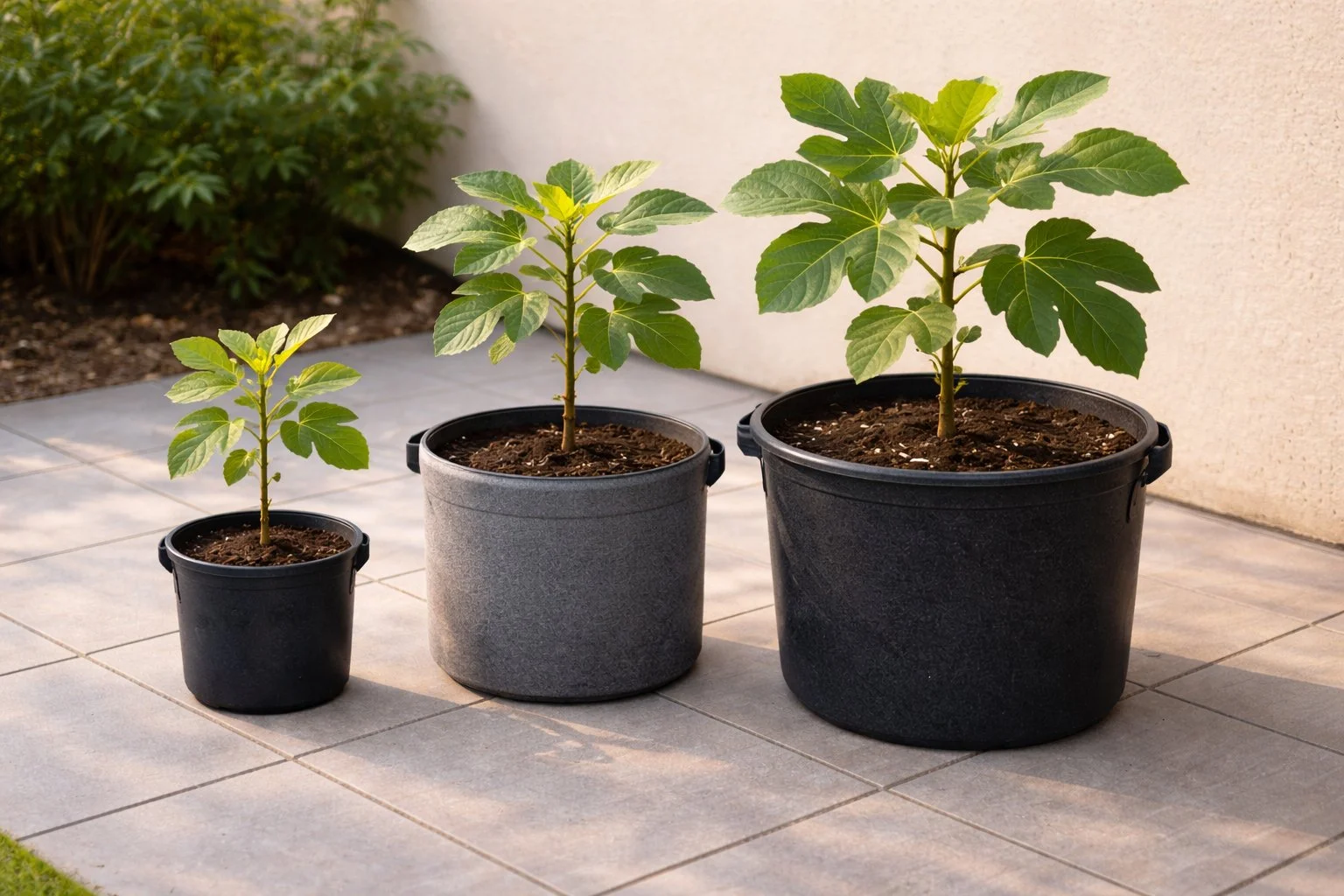
Container choice has a long-term influence on how a fig tree grows, fruits, and survives seasonal stress. While it is tempting to focus on appearance or convenience, container size and material determine root health, moisture stability, and the margin for error a grower has during extreme weather. A well-chosen container supports steady growth and predictable performance, while a poor choice can limit productivity regardless of how well the tree is otherwise cared for.
For container-grown figs, the goal is not simply to hold soil. The container becomes the tree’s entire rooting environment, shaping growth patterns year after year.
Why Container Size Matters More Than Most Factors
Fig trees tolerate root restriction well, but they do not thrive when roots are repeatedly cramped or stressed. Containers that are too small dry out rapidly, fluctuate in temperature, and force roots into tight circling patterns that reduce uptake efficiency. These conditions often lead to stalled growth, fruit drop, or weak flushes that never fully mature.
A container with sufficient volume provides a buffer. It holds moisture longer, moderates temperature swings, and allows roots to branch naturally without constant confinement. This stability supports consistent leaf development and fruit set, particularly during summer heat when water demand is high. While larger containers require more space and soil, they reward that investment with resilience and reliability.
Matching Container Size to Tree Stage
Young fig cuttings and recently rooted plants benefit from smaller containers that encourage rapid root establishment. However, figs outgrow undersized pots quickly. Leaving a tree in a small container beyond its productive stage often results in declining vigor and unpredictable fruiting.
As a fig matures, container size should increase in measured steps. Gradual up-potting allows roots to colonize fresh media without being overwhelmed by excess moisture. Once a fig reaches its long-term container size, further increases are rarely necessary if pruning, nutrition, and watering are managed intentionally.
Material Choices and Their Practical Effects
Container material influences moisture retention, insulation, and durability. Plastic nursery pots are lightweight, inexpensive, and easy to move, making them a practical choice for many growers. They retain moisture well and are forgiving during hot weather, though they offer limited insulation in winter.
Fabric containers provide excellent drainage and air exchange, which can reduce root circling and encourage fibrous root systems. However, they dry more quickly and require closer attention to watering, particularly during extended heat. In colder climates, their lack of insulation can increase root-zone exposure to freezing temperatures unless additional protection is provided.
Decorative ceramic or clay pots offer aesthetic appeal but come with tradeoffs. They are heavier, more prone to cracking in freeze–thaw cycles, and often have limited drainage. When used, they require careful placement and consistent moisture management to avoid stress.
Drainage Is Non-Negotiable
Regardless of size or material, drainage determines whether a container succeeds. Fig roots require oxygen as much as moisture. Containers with insufficient drainage trap water, leading to root decline even when watering practices appear reasonable.
A single small drainage hole is rarely adequate for larger containers. Multiple, unobstructed openings allow excess water to escape and air to enter the root zone. Elevating containers slightly off the ground further improves drainage and prevents water from pooling beneath the pot.
Stability, Weight, and Wind Exposure
As figs grow, their canopies become top-heavy, especially during fruiting. Lightweight containers may tip or shift in strong winds, stressing roots and damaging developing fruit. Container size and weight should be considered in relation to placement and exposure.
Larger containers naturally provide greater stability, while lighter pots may require additional support or sheltered locations. This consideration becomes more important as trees mature and produce heavier crops.
Choosing for Long-Term Use, Not Short-Term Convenience
Many container problems arise from choices made early for convenience rather than longevity. Selecting a container that can support several years of growth reduces the need for frequent repotting and minimizes stress during transitions.
A practical container is one that balances volume, durability, and manageability. It should support healthy roots, allow precise water and nutrient control, and withstand seasonal movement and weather without failure.
Container Choice Sets the Ceiling for Performance
While pruning, fertilization, and watering all influence fig performance, container choice establishes the framework within which those practices operate. A well-sized, well-drained container made from an appropriate material gives the grower room to manage variables effectively. A poor container limits that flexibility from the start.
Thoughtful container selection is not about perfection. It is about creating a stable environment that allows fig trees to express their natural productivity under controlled conditions.
In the next supporting article, we will examine soil mixes for container-grown figs, focusing on drainage, aeration, and long-term root health rather than short-term convenience.
For a complete, season-by-season framework that ties soil, watering, pruning, winter protection, and variety choice together, see Growing Fig Trees in Containers.
