Can You Prune Fig Trees in Summer? Pros, Cons, & Techniques
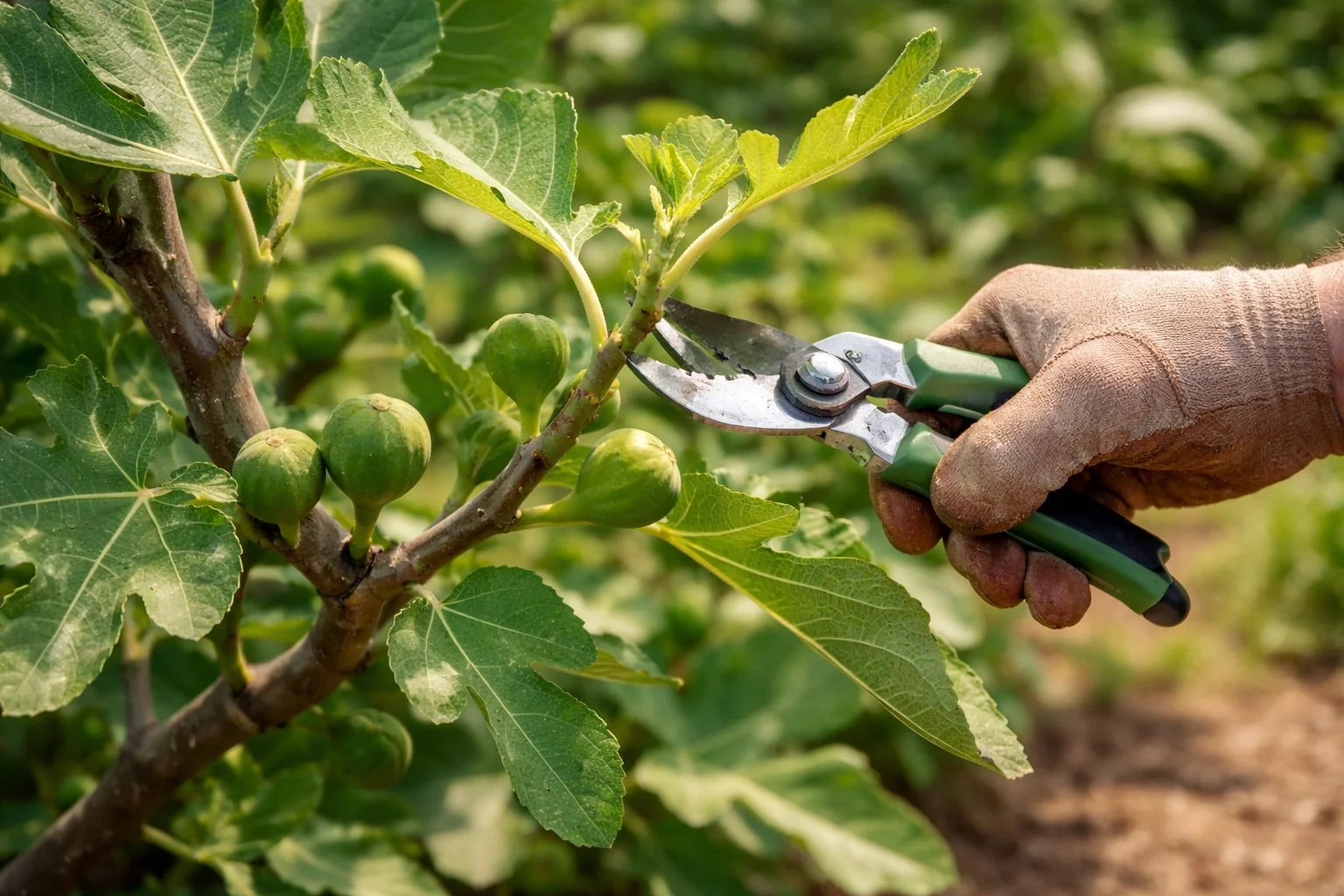
Summer pruning often feels counterintuitive to fig growers. Traditional advice emphasizes dormant-season pruning, leading many to assume that cutting during active growth is harmful or counterproductive. In reality, summer pruning can be a valuable tool when used thoughtfully and sparingly. The key lies in understanding how figs respond to pruning at different points in the growing season and using summer cuts to refine structure rather than force change.
Figs are vigorous plants that respond quickly to warmth and light. During summer, sap flow is strong, and the tree actively allocates resources toward growth and fruit development. Pruning at this time does not carry the same regenerative surge seen in dormant pruning, but it does influence how energy is distributed within the canopy. Properly applied, summer pruning can calm excessive vigor, improve light penetration, and redirect resources toward fruit rather than unchecked shoot extension.
One of the primary advantages of summer pruning is precision. By midseason, the tree clearly reveals which shoots are productive and which are simply consuming space. Vertical shoots that threaten height control, inward-growing branches that shade fruiting wood, and water sprouts that disrupt structure are easily identified. Removing these selectively during summer reduces crowding and improves airflow without provoking a flush of replacement growth. This makes summer pruning especially useful for maintaining form in well-established trees.
Timing within the summer matters greatly. Early summer pruning, shortly after the first flush of growth, can stimulate moderate regrowth and should be approached conservatively. Late summer pruning, closer to fruit maturation, carries less risk of stimulating new shoots but must be done carefully to avoid reducing leaf area needed for ripening. In Zone 7b, midsummer is often the most stable window, allowing corrective cuts without compromising fruit quality or winter hardiness.
There are, however, clear limitations to summer pruning. Heavy structural cuts made during active growth can weaken the tree, reduce carbohydrate reserves, and expose wood to sunburn. Removing large limbs or resetting framework is best reserved for late winter or early spring, when the tree is dormant and better able to redistribute energy. Summer pruning is a refinement tool, not a replacement for foundational pruning.
Technique is central to successful summer pruning. Cuts should be small, targeted, and purposeful. Removing entire shoots back to their origin is often preferable to heading cuts, which can stimulate multiple replacements. Preserving outward-facing laterals and productive wood maintains balance while eliminating excess. Each cut should improve light, airflow, or structural clarity, rather than simply reducing size.
Environmental context also shapes the effectiveness of summer pruning. In container-grown figs, summer pruning helps prevent top-heavy growth and keeps trees within manageable proportions. In orchard settings, it can reduce wind resistance and improve spray penetration where needed. In hot climates or during drought, pruning should be minimized to avoid stressing the tree or reducing shade for fruit.
Summer pruning is most successful when viewed as part of a larger annual rhythm. Dormant-season pruning establishes structure, while summer pruning fine-tunes it. Used together, these approaches create a calm, predictable growth pattern that supports both yield and manageability. When summer cuts are limited, intentional, and responsive to the tree’s behavior, they enhance performance rather than disrupt it.
Ultimately, the question is not whether you can prune fig trees in summer, but whether you understand why and when to do so. With restraint and clarity of purpose, summer pruning becomes a subtle but powerful tool—one that helps figs remain productive, balanced, and well-adapted to the grower’s space and climate.
For a complete, season-by-season approach to shaping healthy, productive fig trees, see Pruning & Training for Structure and Yield.
