How to Prune a Fig Tree After Winter Damage
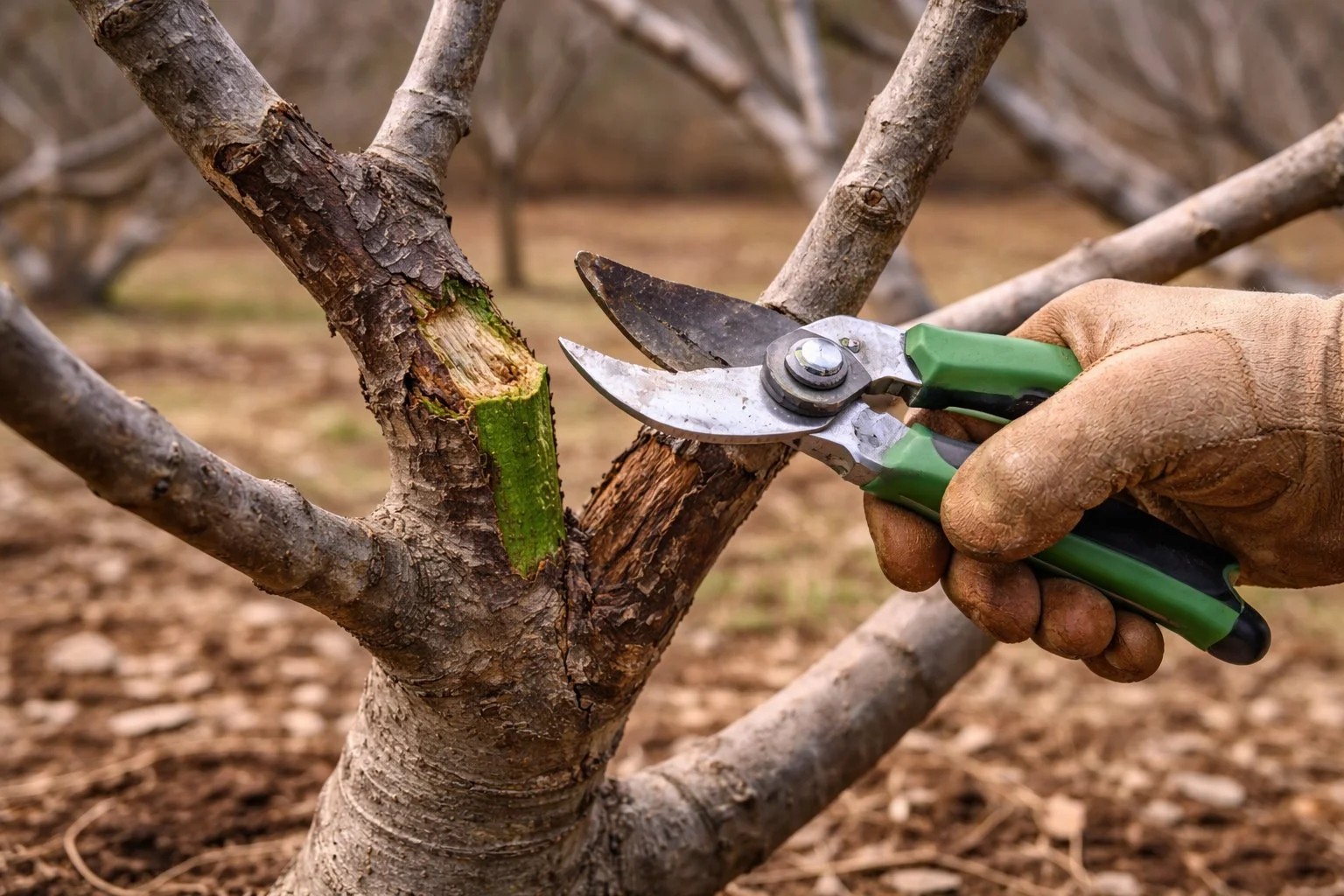
Winter damage is one of the defining moments in fig tree care, especially in climates like Zone 7b where cold intensity varies from year to year. A fig that emerges from winter with dead tips, split bark, or delayed growth can tempt a grower into immediate, aggressive pruning. Yet the most successful recoveries come from restraint, observation, and an understanding of how figs reveal survival over time. Pruning after winter damage is not about restoring appearance quickly—it is about restoring function, balance, and future productivity.
Figs respond to cold injury differently than many other fruit trees. Their wood is soft and water-rich, and damage often progresses internally before becoming visible. A branch that appears lifeless in early spring may still contain living tissue capable of pushing growth weeks later. This delayed response is why premature pruning is one of the most common mistakes after a hard winter. Cutting too early can remove viable fruiting wood and force the tree to restart from lower, less productive growth points.
Timing is therefore the first and most important decision. Pruning for winter damage should wait until the tree has clearly begun to break dormancy. In Zone 7b, this usually means allowing several weeks of warming temperatures and watching for bud swell or early leaf emergence. The tree itself will mark the boundary between living and dead wood far more accurately than any calendar date. Once growth begins, the distinction becomes obvious: living wood supports swelling buds, flexible bark, and internal moisture, while dead wood remains brittle, dry, and unresponsive.
As recovery begins, pruning should proceed methodically and conservatively. Dead tips are removed first, cutting back only to the point where healthy tissue is confirmed. Cuts should be clean and deliberate, positioned just above outward-facing buds or lateral branches to encourage balanced regrowth. When entire branches are lost, the goal is not to replace them immediately with rapid vertical growth, but to select a limited number of strong shoots that can rebuild structure without overwhelming the tree’s root system. This selective approach prevents the chaotic thicket of weak stems that often follows overcorrection.
Winter damage often reveals deeper structural issues that were previously hidden. Branches that were marginally placed, poorly angled, or overly tall may suffer the greatest losses. Rather than viewing this as a setback, experienced growers treat winter injury as an opportunity to refine form. Removing damaged wood allows the tree to be reset at a more manageable height, with improved airflow and stronger scaffold development. In this way, winter damage can actually accelerate long-term improvement when handled thoughtfully.
Nutrition and watering after pruning must also be approached with care. Once live growth resumes, light feeding supports recovery, but excessive nitrogen encourages soft, elongated shoots that are vulnerable to future cold. Balanced nutrition, paired with consistent but moderate watering, allows the tree to rebuild strength without sacrificing wood quality. The aim is steady, resilient growth rather than rapid replacement of lost canopy.
Patience remains the defining trait of successful post-winter pruning. A fig tree that appears severely damaged in early spring may surprise the grower with vigorous recovery by early summer. Even trees that die back to the base can reestablish productive frameworks within a single season when pruned with intention. The fig’s ability to regenerate is remarkable, but only when the grower resists the urge to rush the process.
Pruning after winter damage is ultimately an exercise in listening. The tree communicates its condition through bud behavior, growth patterns, and response to cuts. When those signals guide decisions, the result is not just recovery, but renewal. A fig that is pruned correctly after winter injury often returns stronger, more balanced, and better prepared for the seasons ahead—proof that thoughtful intervention, not forceful correction, is the foundation of long-term success.
For a complete, season-by-season approach to shaping healthy, productive fig trees, see Pruning & Training for Structure and Yield.
