Fig Rust: Causes, Prevention, and Treatment
Introduction
Fig rust is one of the most frequently reported fig diseases in Zone 7b, and also one of the most misunderstood. The appearance of yellow spots on leaves, followed by browning and eventual leaf drop, often leads growers to assume that their tree is in serious trouble. In reality, fig rust is usually a cosmetic, seasonal condition that reflects environmental circumstances more than tree health. While it can look alarming, fig rust rarely threatens the long-term survival or productivity of a fig tree.
This article explains what fig rust is, why it appears so commonly in humid climates, how to distinguish it from more serious problems, and when treatment is warranted. Just as importantly, it clarifies when fig rust should simply be observed and allowed to resolve on its own.
What Fig Rust Actually Is
Fig rust is a fungal leaf disease that affects fig trees during warm, humid conditions. It primarily targets foliage rather than wood, roots, or fruit. The fungus interferes with leaf tissue, causing discoloration and, in more pronounced cases, premature leaf drop. Because leaves are the most visible part of the tree, rust symptoms often feel more serious than they truly are.
In Zone 7b, fig rust is not an indication of poor care or failing trees. It is a predictable response to environmental conditions that favor fungal growth, particularly during extended periods of humidity and warmth.
Why Fig Rust Is So Common in Zone 7b
The climate characteristics that allow figs to grow well in Zone 7b also create ideal conditions for fig rust. Warm temperatures, frequent summer rainfall, heavy morning dew, and high humidity combine to keep leaves wet for extended periods. When airflow is limited by dense canopies or close spacing, moisture persists even longer.
Fig rust thrives under these conditions. Its prevalence does not mean that the orchard is unhealthy, only that the environment temporarily favors fungal activity.
How Fig Rust Develops Over the Season
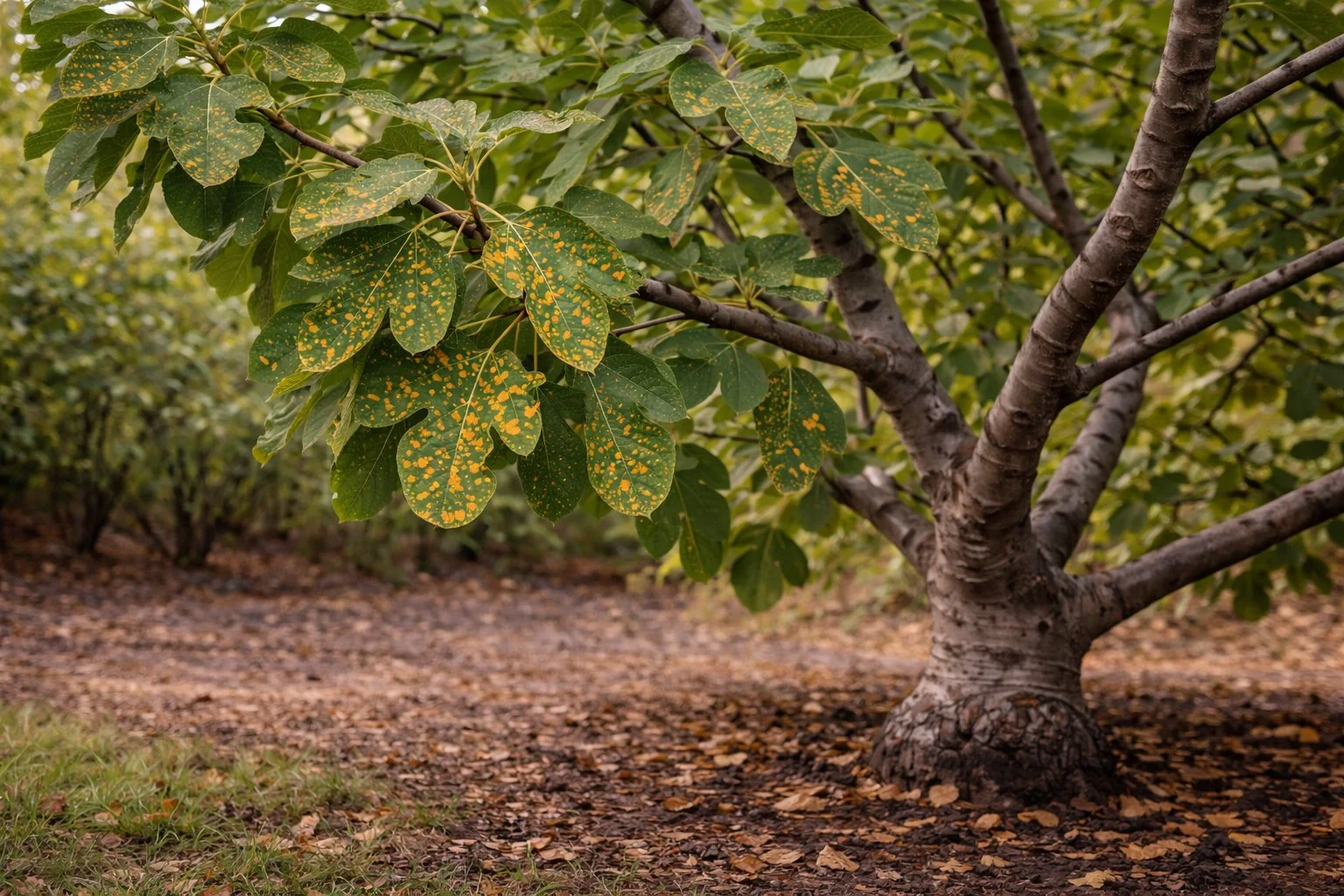
Fig rust typically appears after the canopy has fully developed and weather conditions become consistently warm and humid. Early symptoms often begin on lower or older leaves, which are more shaded and slower to dry. Small yellow spots form on the upper surface of the leaf, while the underside may show darker discoloration as the disease progresses.
As the season advances, affected leaves may yellow, brown, and drop. This leaf loss often occurs late enough in the season that it has little impact on fruit ripening or overall tree vigor.
Cosmetic Impact Versus Functional Impact
One of the most important distinctions to understand about fig rust is that it is usually cosmetic rather than functional. While affected leaves may drop, fig trees generally maintain sufficient leaf area to complete fruit development and store energy for the following season. Late-season defoliation caused by rust rarely compromises winter survival or next year’s growth.
This resilience is a defining characteristic of fig trees and a key reason why fig rust seldom requires aggressive intervention.
Differentiating Fig Rust from Other Problems
Fig rust is sometimes confused with nutrient deficiencies, drought stress, or other leaf diseases. The timing of symptom appearance provides valuable clues. Rust tends to emerge during periods of sustained humidity and warmth rather than during dry or cool conditions. It also follows a fairly consistent pattern year to year, appearing under similar weather circumstances.
If leaf discoloration appears early in the season, spreads rapidly, or affects new growth disproportionately, other causes should be considered. Persistent or unusual symptoms warrant closer evaluation beyond rust alone.
The Role of Airflow and Orchard Design
Airflow plays a decisive role in fig rust severity. Trees planted too closely together or allowed to develop dense canopies retain moisture longer after rain or dew. This prolonged leaf wetness creates ideal conditions for fungal growth. In contrast, well-spaced trees with open structure often experience milder rust symptoms or none at all.
This is why fig rust is best understood as a design and environment issue rather than a disease to be “cured.”
Why Fig Rust Rarely Requires Treatment
In most cases, fig rust resolves naturally as weather patterns change. Cooler temperatures, reduced humidity, and seasonal leaf drop all limit the fungus’s ability to persist. Even when rust appears severe, fig trees typically rebound the following season without intervention.
Treating fig rust aggressively often produces little benefit while introducing unnecessary stress to the tree and surrounding ecosystem. Because the disease is largely a leaf issue, treatment does not improve already-affected foliage and rarely alters the course of the season.
When Fig Rust May Justify Intervention
There are limited circumstances where fig rust may warrant attention beyond observation. Repeated early-season defoliation that weakens trees year after year, rust affecting young or recently transplanted trees with limited reserves, or rust combined with other stress factors may justify corrective action. In such cases, the focus should remain on improving growing conditions rather than eliminating the fungus itself.
Even then, restraint is essential. The goal is to support the tree, not to eradicate every trace of disease.
Preventative Strategies That Actually Work
Prevention of fig rust is structural and cultural, not chemical. Improving airflow through spacing and pruning, avoiding overhead irrigation, and maintaining general orchard hygiene reduce the duration of leaf wetness and limit disease expression. These measures address the conditions that allow rust to flourish rather than reacting to symptoms after they appear.
In Zone 7b, prevention does not eliminate rust entirely, but it often reduces its severity to a purely cosmetic issue.
The Emotional Trap of Fig Rust
Fig rust triggers anxiety because it is highly visible. Yellowing leaves and premature drop create the impression of decline, even when the tree remains healthy. Understanding the seasonal and cosmetic nature of fig rust helps growers avoid unnecessary worry and intervention.
Confidence comes from recognizing patterns over time rather than reacting to individual seasons.
Long-Term Perspective on Fig Rust
Many experienced fig growers in Zone 7b observe fig rust annually and consider it a normal part of the growing cycle. Trees that show rust one year often perform just as well the next. Over time, growers learn that fig rust is more a reflection of weather than management.
This long-term perspective transforms fig rust from a problem into a predictable event.
The Takeaway
Fig rust is a common, climate-driven leaf disease that rarely threatens fig trees in Zone 7b. While its symptoms can appear dramatic, they are usually cosmetic and self-limiting. Understanding when fig rust matters and when it does not allows growers to respond calmly, avoid unnecessary treatment, and focus on orchard design and overall tree health. In most cases, fig rust is something to observe, not fight.
This article is part of the complete guide to Pests & Diseases of Fig Trees in Zone 7b.
Related reading:
Fungal Issues vs Environmental Stress in Fig Trees
Preventative Orchard Hygiene Practices
When to Treat — and When to Leave the Tree Alone
