How to Fertilize Fig Trees in Containers Without Burning Roots
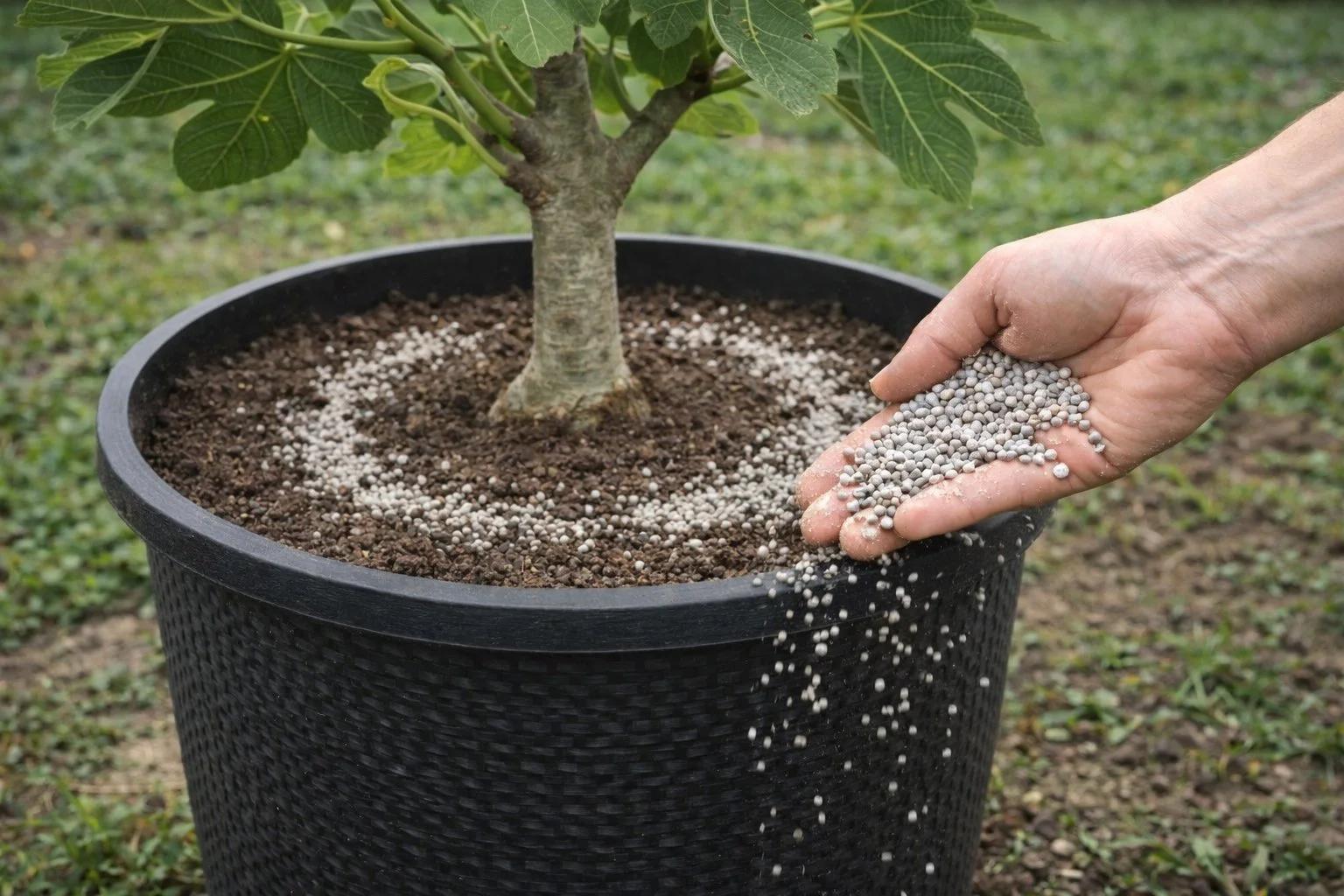
Fertilizing container-grown fig trees requires a different mindset than fertilizing in-ground trees. Containers magnify every decision. Nutrients are concentrated, water movement is rapid, and roots have nowhere to escape excess salts or poorly timed applications. What helps an in-ground fig may quickly harm a container fig if applied the same way.
The goal of container fertilization is not maximum growth, but stable, proportional growth that matches the limits of the pot.
Why Container Roots Are More Vulnerable
In containers, fig roots occupy nearly the entire soil volume. There is no buffering zone where excess nutrients can dissipate. When fertilizer is applied too heavily or too often, salts accumulate quickly around active roots. This leads to root burn, stalled growth, leaf edge scorch, and sudden decline that often surprises growers.
Unlike drought stress, fertilizer damage does not always recover quickly. Once fine roots are burned, water uptake suffers, compounding the problem even if fertilization stops.
Timing Matters More Than Quantity
Most container fertilizer damage occurs because feeding continues too late into the season or begins before roots are active. Fig roots wake slowly in spring, even when top growth appears eager. Fertilizing before roots are fully functioning leads to nutrient buildup instead of uptake.
The safest window for container fertilization is early to mid-season, when growth is steady and temperatures support active root metabolism. As summer progresses, feeding should taper rather than intensify. Late-season fertilization encourages soft growth that struggles to harden before fall.
Why Dilution Beats Strength
Container figs respond better to gentle, diluted feeding than to concentrated applications. Lower concentrations applied thoughtfully reduce salt stress and allow roots to absorb nutrients efficiently. Strong doses, even when applied infrequently, overwhelm the limited soil environment.
This is why container figs often perform better with steady, modest nutrition rather than aggressive feeding schedules. Slow, predictable availability produces healthier roots and more controlled canopy growth.
Watering and Fertilization Are Linked
Fertilizer does not act independently of water. In containers, improper watering magnifies fertilizer problems. Dry soil concentrates salts. Saturated soil limits oxygen and root function. Both conditions increase the risk of nutrient injury.
Fertilization should always follow thorough watering, never precede it. Moist soil allows nutrients to disperse evenly and reduces direct contact with sensitive root tissue.
Recognizing Early Signs of Root Burn
Root burn often appears first at the leaf margins. Browning edges, curling leaves, sudden yellowing, or stalled growth shortly after feeding are common warning signs. These symptoms are frequently mistaken for deficiency, leading to further fertilization that worsens the damage.
When container figs decline after feeding, the correct response is restraint, not correction.
Recovery After Fertilizer Damage
If root burn is suspected, the most effective response is leaching. Thorough watering flushes excess salts from the container and restores a safer root environment. Fertilization should pause until new growth resumes and the tree stabilizes.
In severe cases, repotting into fresh soil may be necessary, but this should be done only when temperatures support recovery.
Matching Fertilization to Container Size
Smaller containers require lighter feeding than large pots. As fig trees grow and containers increase in size, nutrient demand rises gradually, not suddenly. Feeding schedules should scale with root volume rather than canopy appearance alone.
A tree that looks large above ground may still have a limited root system below.
The Takeaway
Fertilizing fig trees in containers is an exercise in restraint and timing. Diluted nutrition, applied only when roots are active and soil is properly moist, supports steady growth without burning sensitive roots. When fertilization respects the limits of the container, figs grow predictably, recover well from pruning, and remain productive without stress.
For a complete, season-by-season guide to feeding fig trees correctly, see our full fertilization guide here.
