Fertilization & Soil Nutrition for Figs
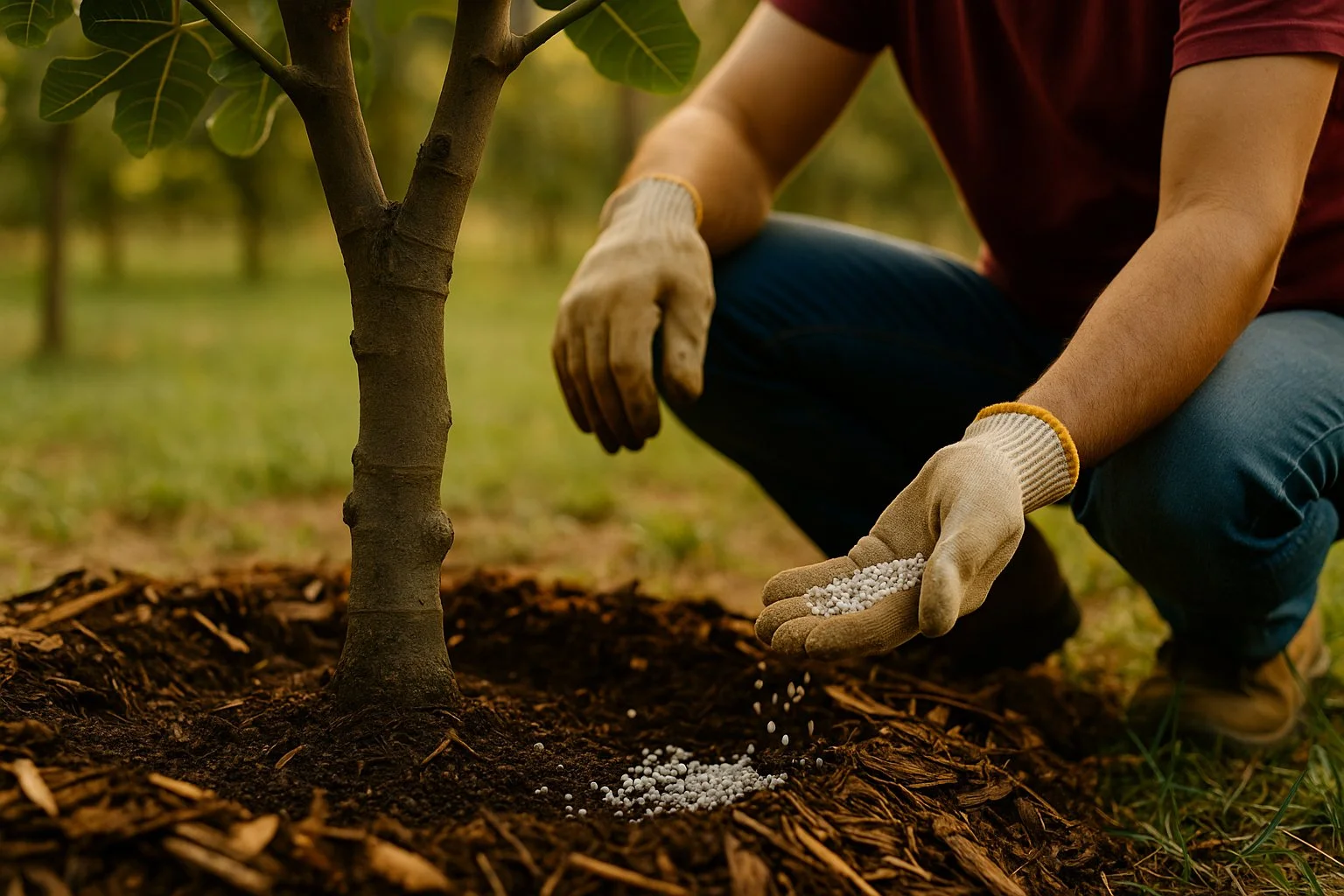
Fertilization & Soil Nutrition for Figs
How to Build Stronger Roots, Faster Growth, and Higher Yields Through Proper Feeding and Soil Management in Zone 7b
Figs have a reputation for being “low-fertilizer trees,” but that idea applies mostly to the ancient fig groves of the Mediterranean—trees rooted in deep, mineral-rich soils that slowly release nutrients year-round. In modern orchards, and especially in nursery production, conditions are entirely different. Containers dry rapidly, bark-based mixes contain almost no natural fertility, and controlled orchard soils rarely mimic the balanced environments where figs evolved.
For professional-quality fig production, fertilization is not optional; it is one of the primary engines of growth. A well-designed nutrition program produces broader leaves, thicker stems, more stable fruit set, better winter survival, and significantly faster establishment—factors especially important in Zone 7b, where growing seasons are long but winter freeze events demand resilient, well-fed trees. Understanding how figs absorb and use nutrients allows you to design a feeding strategy that supports predictable, vigorous growth whether your trees grow in containers or in the ground.
1. Understanding Fig Nutrient Needs (The Physiology Behind Fertilization)
Fig trees follow a predictable annual rhythm. In early spring, the tree channels its energy into vegetative expansion—new shoots, new leaves, and vigorous root growth. During this phase, nitrogen plays a critical role. Adequate nitrogen produces strong shoot extension, which forms the framework that will carry your year’s main crop. Too little nitrogen leads to slow, stunted growth; too much produces soft, lanky shoots that break easily and delay fruit ripening.
As spring transitions to early summer, figs shift from building structure to initiating fruit. At this stage, potassium becomes essential. Potassium strengthens stems, increases fruit size, and improves sugar accumulation. Orchard trees exposed to heat, drought, or wind rely heavily on potassium for stress tolerance.
Phosphorus, while often over-hyped in home gardening circles, quietly supports root development and overall plant metabolism. In most Southern soils, phosphorus is rarely deficient, but in nursery mixes made from composted bark or coconut coir, it can be limited. Figs also depend on a range of secondary nutrients—calcium, magnesium, sulfur—and micronutrients including boron, iron, manganese, and zinc. These rarely steal attention, but deficiencies in them lead to pale leaves, weak tissue strength, and overall reduced vigor.
The foundation of a reliable nutrition program is understanding these seasonal needs and matching fertilizer type and timing to the tree’s physiological changes.
2. The Foundation: Soil Structure and Drainage
Even perfect fertilization cannot overcome poor soil structure. Healthy fig roots require both moisture and oxygen. When soil becomes compacted or waterlogged, oxygen declines, nutrient uptake slows, and the tree begins to show signs of stress that resemble nutrient deficiencies—even when nutrients are present.
In Zone 7b, many native soils are heavy clay. Although rich in minerals, clay restricts drainage and compacts easily. Amending planting sites with compost, composted bark, coarse sand, or pine fines increases pore space and allows water to move naturally through the soil. Looser soils warm earlier in spring, support deeper root penetration, and increase the availability of minerals already present in the ground.
In containers, soil structure is entirely engineered. Bark-based mixes are ideal for figs because they drain quickly and provide air to the root zone—but they contain almost no natural nutrients. This is why container-grown figs always require consistent, structured feeding.
3. Fertilization Strategies for Container-Grown Figs
Container figs behave more like annual crops than orchard trees. Water flushes nutrients out quickly, and roots rely entirely on you for replenishment. For this reason, feeding must be steady and predictable.
In early spring, use a balanced fertilizer—often a liquid blend such as 20-20-20 or 15-5-30—to initiate vigorous shoot growth. Liquid fertilizers work quickly, giving trees an early push that forms the framework for the season’s fruit. By mid-season, as fruit begins to size, shift to blends higher in potassium to strengthen stems and improve fruit quality.
Toward late summer, nitrogen should taper off. Continued high nitrogen at this stage produces soft green tissue that winter injury easily destroys—especially important in Zone 7b. Potassium remains helpful into early fall because it supports tissue maturation and enhances freeze resistance.
Nurseries often feed lightly every week or use slow-release coated granules that activate with warmth and moisture. The key is consistency. Irregular feeding leads to yellow leaves, growth stalls, and weak fruiting. Predictable nutrition keeps container figs vigorous and resilient.
4. Fertilization Strategies for In-Ground Figs in Zone 7b
In-ground figs benefit from a slower, steadier nutrient environment. Soil microbes interact with organic matter to release nutrients gradually, and minerals stored in the soil buffer against sudden shortages. However, even orchard figs respond dramatically to structured fertilization.
In spring, a moderate dose of nitrogen stimulates strong new shoots. These shoots are the carriers of your main crop, so early-season growth is essential. By May or June, switch to a balanced fertilizer or one slightly higher in potassium to support leaf density and fruit development.
By mid-summer, most growers taper nitrogen off entirely. This shift allows wood to harden before winter and helps prevent late-season growth that dies back when temperatures drop. Organic mulches—such as leaves, compost, or wood chips—play a powerful long-term role in soil fertility by feeding soil microbes, improving water retention, stabilizing soil temperature, and slowly adding nutrients over time.
In Zone 7b, mulching is especially valuable because it buffers both summer heat and winter cold, creating a more forgiving root environment year-round.
5. Diagnosing Nutrient Deficiencies
Figs communicate their nutritional needs clearly once you learn the signals. Pale leaves often indicate nitrogen shortage. Yellowing between veins, especially on older leaves, suggests magnesium deficiency; yellow new growth with green veins points to iron issues. Leaf-edge burn or curling often reflects potassium deficiency, while distorted new leaves may flag calcium problems.
Because many deficiency symptoms resemble environmental stress, diagnosis requires evaluating soil moisture, drainage, and pH alongside visible cues. A tree growing in compacted or waterlogged soil may display symptoms that no fertilizer can correct.
6. Soil pH and Its Effect on Nutrition
Soil pH controls nutrient availability. Figs prefer a pH around 6.0–6.5, a range where most nutrients remain accessible. In soils that are too alkaline, iron and micronutrients become difficult for roots to absorb, leading to chlorosis. In overly acidic soils, phosphorus becomes less available.
Containers shift pH quickly over the season as fertilizers accumulate salts. Repotting or refreshing part of the mix each year prevents pH drift and keeps nutrients accessible.
7. Organic vs. Synthetic Fertilizers for Figs
Both organic and synthetic fertilizers can be excellent tools when matched to the growing environment.
Organic fertilizers release nutrients gradually, supporting soil biology and improving long-term structure. They shine in orchard production, where microbial activity is high and trees benefit from slow, steady nutrient release. Compost, worm castings, fish emulsion, and feather meal all contribute to healthy soil ecosystems.
Synthetic fertilizers—liquid feeds, water-soluble powders, and coated time-release granules—offer precision and speed. They are ideal in containers, where rapid adjustments are often needed, and where predictable results matter. Most advanced growers use a hybrid approach: synthetic fertilizers early in the season for rapid growth and organics later for stability and soil health.
8. How Fertilization Affects Winter Hardiness
This is where nutrition directly intersects with your Zone 7b climate. Trees fed too heavily with nitrogen late in the season produce soft, immature growth that freezes easily. By contrast, trees given balanced potassium and allowed to taper nitrogen enter winter with stronger, denser tissue that resists freezing and recovers more quickly from dieback.
A well-fertilized tree is not just bigger—it is more resilient. Proper nutrition strengthens buds, thickens bark, and supports the tree’s ability to push vigorous spring growth after cold events.
9. Building a Year-Round Nutrition Plan (Nursery + Orchard)
Professional fig operations rely on predictable, calendar-based nutrition programs. In spring, nitrogen supports shoot development and orchard establishment. As summer arrives, potassium enhances fruit quality and strengthens wood. By late season, feeding settles into maintenance mode as trees prepare for winter. Micronutrients fill in gaps throughout the year, and container trees receive consistent, measured feeding to match their rapid growth cycles.
With a clear yearly plan, your fig operation becomes more consistent, more efficient, and more productive—building stronger trees, higher yields, and better winter survival year after year.
Supporting Articles
Do Fig Trees Really Need Fertilizer? When, Why, and How Much
Understanding N-P-K for Fig Trees: What Each Nutrient Actually Does
How to Fertilize Fig Trees in Containers Without Burning Roots
Fertilizing In-Ground Fig Trees in Zone 7b: Timing and Rates
Yellow Leaves on Fig Trees: Nutrient Problem or Water Issue?
When to Stop Fertilizing Fig Trees Before Winter (And Why It Matters)
Organic vs Synthetic Fertilizers for Fig Trees: Which Is Better?
