Liquid vs Slow-Release Fertilizers for Container Figs
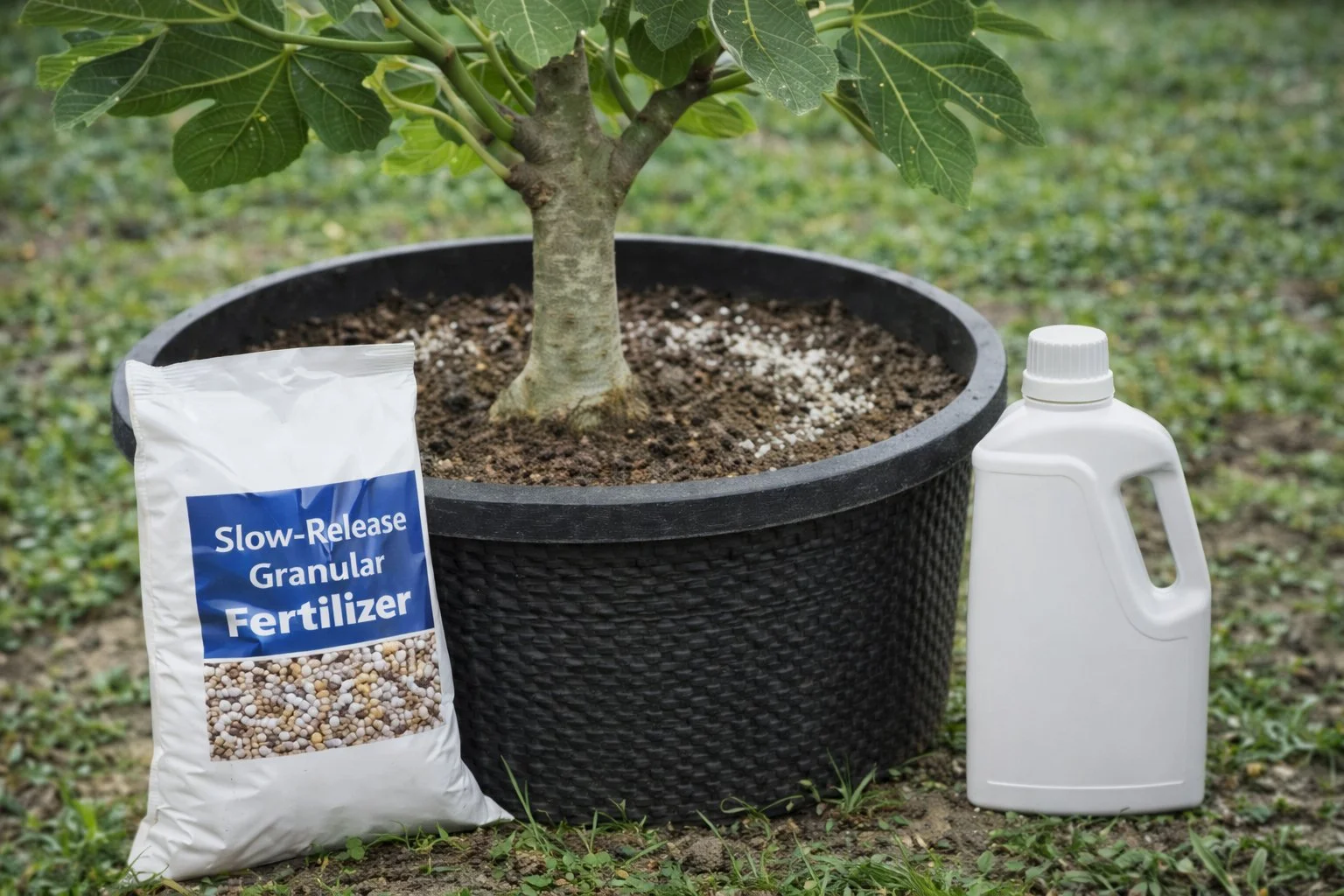
Container-grown fig trees respond quickly to fertilization, which makes the choice between liquid and slow-release fertilizers especially important. Both approaches can work, but they influence growth patterns in very different ways. Understanding how each behaves in a container environment allows growers to choose the method that supports stability rather than swings between surge and stress.
For container figs, consistency matters more than speed.
How Liquid Fertilizers Behave in Containers
Liquid fertilizers deliver nutrients immediately. Once applied, they move rapidly through the soil profile and become available to roots almost at once. This makes them useful when a container fig needs targeted support, such as early-season growth initiation or recovery after pruning.
The same immediacy that makes liquid feeding effective also makes it risky. In containers, nutrients that are not taken up quickly are either flushed out with watering or accumulate as salts if watering is inconsistent. Repeated liquid feeding can easily push nitrogen levels too high, leading to fast, soft growth that destabilizes the tree and reduces fruiting balance.
Liquid fertilizers reward attentiveness. They work best when applied sparingly, at low concentration, and only during periods of steady root activity.
How Slow-Release Fertilizers Behave in Containers
Slow-release fertilizers are designed to provide nutrients gradually over time. In containers, this controlled release can create a more stable nutrient environment, reducing the risk of sudden growth surges or fertilizer burn.
Because nutrients are metered out slowly, roots absorb what they need without being overwhelmed. This often results in shorter internodes, sturdier shoots, and more proportional canopy development. For many container figs, this steadiness aligns better with the goal of controlled, long-term growth.
However, slow-release fertilizers are not entirely passive. Temperature, moisture, and microbial activity influence how quickly nutrients are released. In warm containers, especially those exposed to sun, release rates may increase faster than expected.
Growth Control vs Growth Response
Liquid fertilizers emphasize response. They are useful when a grower wants to nudge growth temporarily or address a short-term limitation. Slow-release fertilizers emphasize control. They shape growth quietly over weeks or months without dramatic spikes.
Container figs tend to benefit more from control than response. Excess vigor is rarely the problem; imbalance is. Fertilization that reinforces steady growth usually produces better fruiting wood and fewer corrective pruning decisions later.
Root Health and Salt Accumulation
Salt buildup is a central concern in containers. Liquid fertilizers contribute more readily to salt accumulation, especially when watering is inconsistent or drainage is marginal. Slow-release fertilizers generally produce lower salt concentration at any given moment, reducing stress on fine roots.
Regardless of fertilizer type, periodic thorough watering to flush the container remains essential. No fertilizer choice can compensate for poor drainage or irregular moisture.
Seasonal Timing Matters for Both
Both liquid and slow-release fertilizers must respect the growing season. Early-season feeding supports canopy development and fruit initiation. Late-season feeding, especially with nitrogen-heavy formulations, delays hardening and increases winter vulnerability.
Slow-release products applied too late may continue feeding into fall. Liquid fertilizers applied late create the same problem more abruptly. In either case, fertilization should taper as the season progresses rather than intensify.
Combining Approaches Carefully
Some growers combine slow-release fertilizers for baseline nutrition with occasional diluted liquid feeding when growth clearly warrants it. This approach can work when applied thoughtfully, but it requires restraint. The container environment does not forgive redundancy.
When in doubt, less intervention usually produces better results.
The Takeaway
Liquid and slow-release fertilizers both have a place in container fig care, but they serve different purposes. Liquid fertilizers create rapid responses and require close attention. Slow-release fertilizers promote stability and proportional growth over time. For most container figs, steady, controlled nutrition produces healthier roots, more manageable canopies, and better long-term performance than fast, reactive feeding.
For a complete, season-by-season guide to feeding fig trees correctly, see our full fertilization guide here.
