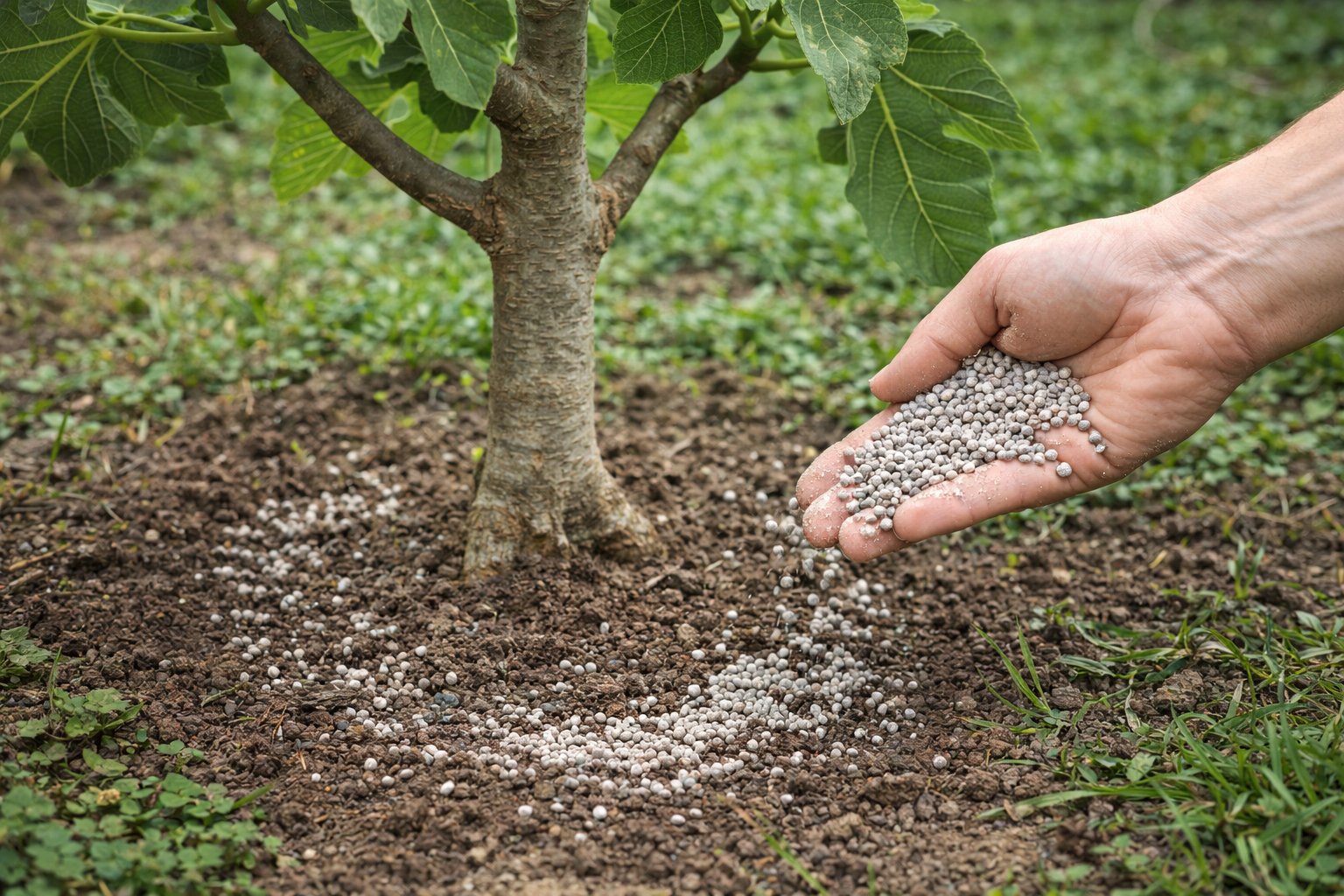
Fertilizer labels reduce plant nutrition to three numbers, but fig trees do not experience nutrients as abstractions. Nitrogen, phosphorus, and potassium each influence fig growth in very different ways, and misunderstanding their roles is one of the most common causes of excessive growth, poor fruiting, and winter damage. Understanding what N-P-K actually does inside a fig tree allows fertilization to become intentional rather than reactive.
For figs, balance matters far more than abundance.
Nitrogen: The Driver of Vegetative Growth
Nitrogen is the nutrient most closely tied to visible growth. It fuels leaf production, shoot extension, and overall canopy expansion. When nitrogen is available, fig trees respond quickly, often producing long, vigorous shoots with large leaves.
In moderation, nitrogen supports healthy early-season growth and helps trees recover after pruning or winter dieback. In excess, it becomes a liability. Overfed figs grow tall and soft, delay fruiting, and fail to harden wood before winter. This late, tender growth is especially vulnerable to cold damage in Zone 7b and similar climates.
Most nitrogen-related problems in figs come not from deficiency, but from overapplication.
Phosphorus: Root Development and Energy Transfer
Phosphorus plays a quieter role than nitrogen, but it is no less important. It supports root development, energy transfer, and early establishment. Young fig trees benefit from adequate phosphorus as they build root systems and stabilize after planting.
Unlike nitrogen, phosphorus does not drive dramatic top growth. Deficiencies are uncommon in established in-ground figs but can appear in containers or very poor soils. When phosphorus is lacking, trees may struggle to establish, show weak early growth, or fail to rebound after stress.
Because phosphorus moves slowly in soil, excessive application offers little benefit and can accumulate unnecessarily. For figs, “enough” is sufficient — more is rarely helpful.
Potassium: Stress Tolerance and Fruit Quality
Potassium influences how fig trees manage water, resist stress, and support fruit development. It plays a role in cell strength, disease resistance, and the movement of sugars within the plant. Adequate potassium helps figs tolerate heat, drought, and pruning stress while supporting clean, well-formed fruit.
When potassium is deficient, figs may show weak stems, marginal leaf scorch, poor fruit quality, or increased susceptibility to stress-related problems. These symptoms are more common in container-grown figs, where nutrients are easily depleted through watering.
Potassium does not stimulate growth the way nitrogen does, but it strengthens what the tree already has.
Why Balanced Ratios Matter for Figs
Many fertilizers marketed for fruit trees emphasize high nitrogen, but figs rarely benefit from aggressive ratios. Excess nitrogen paired with low potassium creates fast growth without structural strength or fruiting balance. This imbalance often leads to lush foliage and disappointing harvests.
Balanced or modest formulations encourage steady growth, controlled vigor, and better seasonal transitions. Figs perform best when nutrition supports structure first and fruit second, rather than pushing growth indiscriminately.
Containers Amplify N-P-K Effects
In containers, the effects of N-P-K are magnified. Nutrients are limited, mobile, and quickly exhausted. Too much nitrogen shows up immediately as weak, top-heavy growth. Too little potassium reduces stress tolerance just when containers heat up or dry out.
Because container figs respond rapidly, they serve as a clear illustration of how each nutrient affects growth. This responsiveness makes thoughtful balance even more important.
Interpreting Fertilizer Labels with Figs in Mind
The numbers on a fertilizer label describe nutrient percentages, not suitability. A high first number means strong nitrogen emphasis, not better performance. For figs, lower and more balanced ratios usually align better with long-term goals.
Rather than chasing specific numbers, it is more useful to understand what growth behavior each nutrient promotes and adjust accordingly.
The Takeaway
Nitrogen drives growth, phosphorus supports roots and energy movement, and potassium strengthens stress tolerance and fruit quality. In fig trees, excess nitrogen causes far more problems than deficiencies of phosphorus or potassium. Balanced nutrition produces controlled growth, reliable fruiting, and wood that hardens properly before winter. Understanding what N-P-K actually does allows fertilization to guide figs gently — not push them out of balance.
For a complete, season-by-season guide to feeding fig trees correctly, see our full fertilization guide here.
