Organic vs Synthetic Fertilizers for Fig Trees: Which Is Better?
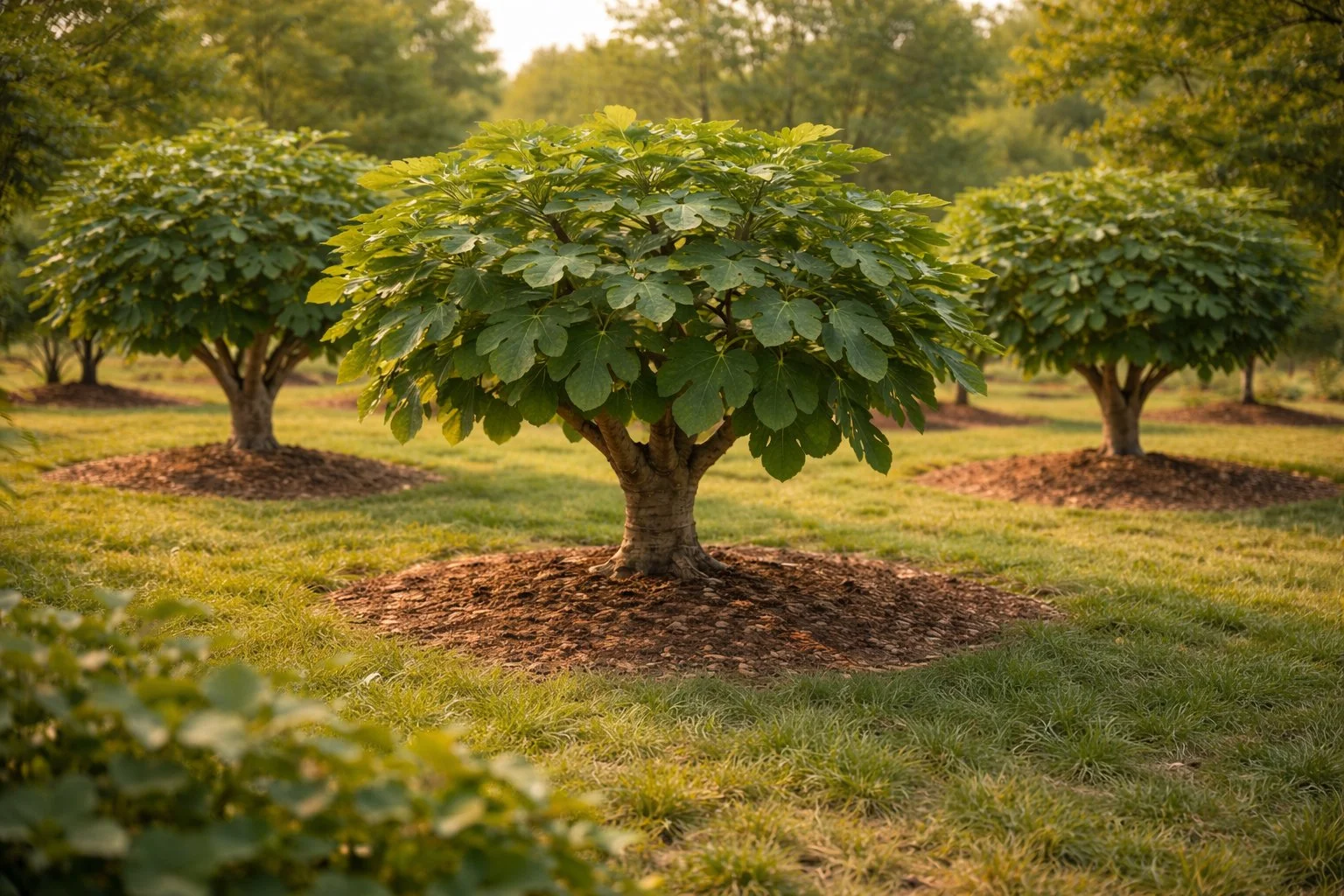
Few topics in fig growing generate stronger opinions than fertilizer choice. Organic and synthetic fertilizers are often framed as opposing philosophies, but for fig trees, the distinction matters less than how nutrients are delivered, timed, and absorbed. Both approaches can support healthy growth when used correctly, and both can cause problems when applied without restraint.
The better question is not which type is “right,” but which approach aligns with the tree’s needs, the growing system, and the grower’s management style.
How Organic Fertilizers Affect Fig Trees
Organic fertilizers rely on biological processes to release nutrients. Microorganisms break down organic matter into plant-available forms over time. This gradual release tends to support steady growth rather than rapid surges, which aligns well with fig trees’ preference for controlled vigor.
In in-ground plantings with active soil life, organic inputs often integrate smoothly into the existing nutrient cycle. Mulches, composts, and slow organic amendments improve soil structure while feeding the tree indirectly. This dual benefit makes organic approaches especially effective for long-term orchard health.
However, organic fertilizers are not inert. Release rates vary with temperature, moisture, and microbial activity. In warm conditions, nutrients may become available faster than expected, while cool soils can delay release beyond the window when the tree can use them.
How Synthetic Fertilizers Affect Fig Trees
Synthetic fertilizers deliver nutrients in immediately available forms. This precision can be useful when a fig tree needs targeted support, such as recovery after pruning or correction of a clear deficiency. Because nutrient content is predictable, application rates can be adjusted more precisely.
The same immediacy that makes synthetic fertilizers effective also increases the risk of overapplication. Figs respond quickly to excess nitrogen with excessive vegetative growth, delayed dormancy, and reduced fruiting balance. In containers, synthetic fertilizers can accumulate as salts if watering and drainage are imperfect.
Synthetic fertilizers demand restraint and timing. Used sparingly, they can be helpful tools. Used aggressively, they create long-term problems.
Containers Change the Equation
In containers, the distinction between organic and synthetic matters less than nutrient concentration and release speed. Limited soil volume amplifies mistakes. Organic fertilizers may still release nutrients too quickly under warm conditions, while synthetic fertilizers can burn roots if applied too heavily.
Container figs generally benefit from lower concentrations, regardless of fertilizer type. Stability matters more than ideology.
Growth Control vs Growth Forcing
Organic fertilizers tend to encourage controlled growth by releasing nutrients in response to biological activity. Synthetic fertilizers tend to force growth by making nutrients immediately available. For figs, controlled growth almost always produces better long-term results.
Excess vigor leads to more pruning, weaker fruiting wood, and increased winter vulnerability. Fertilization should support structure and balance, not chase size.
Soil Health vs Short-Term Correction
Organic fertilizers contribute to soil health over time by improving structure, microbial diversity, and moisture retention. These benefits compound year after year. Synthetic fertilizers do not improve soil structure, but they can correct short-term limitations quickly when used carefully.
In many cases, a combination of approaches works best: organic inputs for baseline soil health, with minimal synthetic support only when clearly needed.
Seasonal Timing Matters More Than Fertilizer Type
Regardless of fertilizer choice, seasonal timing determines success. Early-season nutrition supports growth and fruiting. Late-season feeding — organic or synthetic — delays hardening and increases winter damage risk.
No fertilizer type can override seasonal biology without consequences.
The Takeaway
Organic and synthetic fertilizers are tools, not identities. Fig trees respond best to thoughtful, restrained nutrition that supports steady growth and timely dormancy. When fertilizer choice serves the tree’s biology rather than a rigid philosophy, figs remain healthier, more productive, and easier to manage over the long term.
For a complete, season-by-season guide to feeding fig trees correctly, see our full fertilization guide here.
