Common Fig Propagation Failures and How to Avoid Them
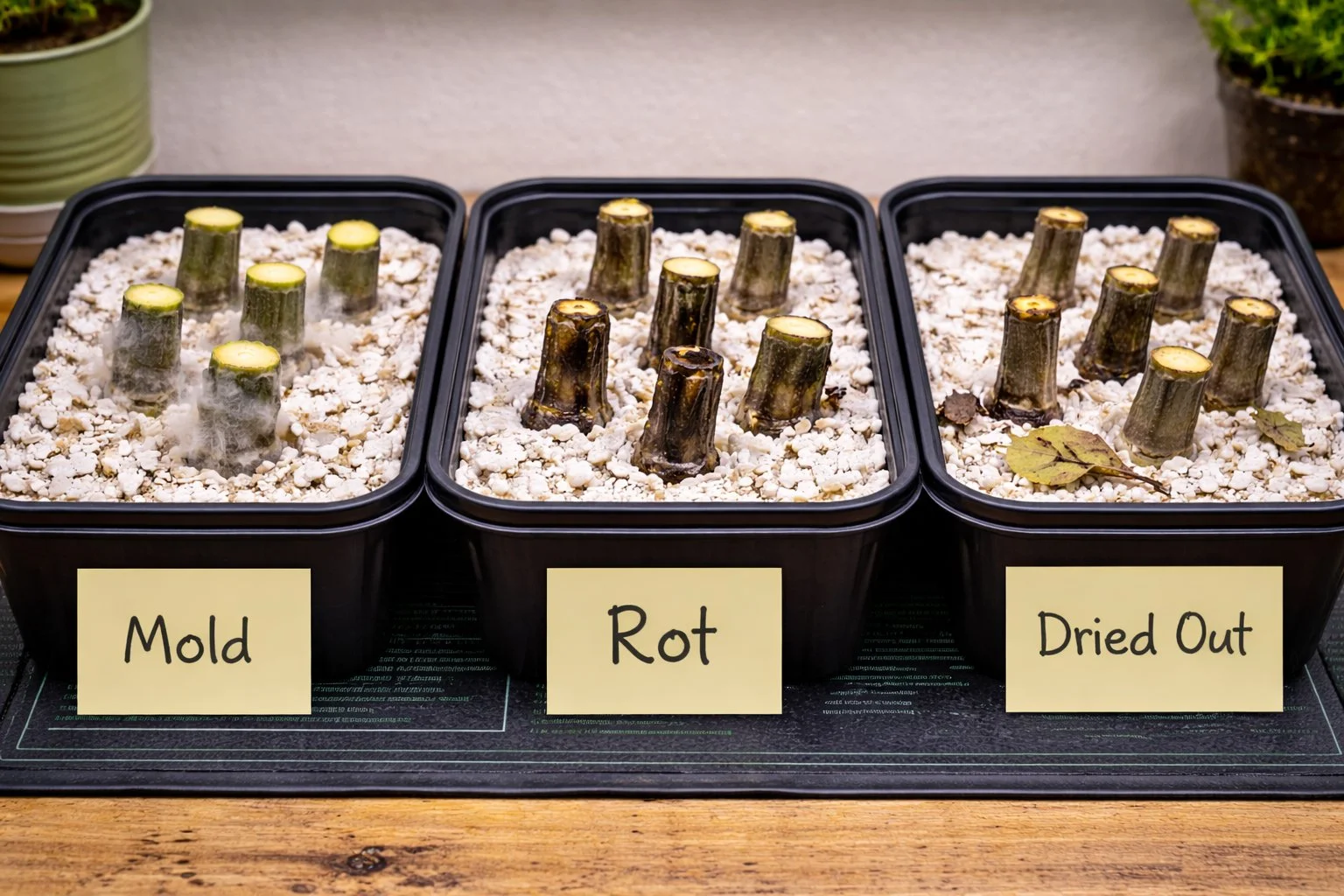
Most fig propagation failures are not mysterious. They result from a small number of predictable mistakes that compound over time. Understanding these failure points—and how to prevent them—turns propagation from a frustrating gamble into a repeatable process. In Zone 7b, where propagation often occurs indoors under artificial conditions, small missteps have outsized consequences.
Successful propagation is less about discovering secret techniques and more about removing sources of stress at each stage. When timing, storage, callusing, rooting media, temperature, and moisture are aligned, fig cuttings tend to root reliably. When even one element is off, failure becomes likely.
Failure Begins Before the Cutting Is Taken
Many failures originate at harvest. Cuttings taken from weak, diseased, or overly vigorous growth rarely recover. Soft green wood dehydrates quickly, while old, brittle wood calluses poorly. Choosing poor material sets a ceiling on success before propagation even begins.
Timing errors also matter. Cuttings taken before full dormancy often lack sufficient stored energy. Those taken after sap flow resumes bleed excessively and struggle to form callus. Starting with healthy, dormant wood remains the single most reliable preventive step.
Dehydration: The Silent Killer
Dehydration is one of the most common and least recognized causes of failure. Fig cuttings lose moisture through exposed ends and bark long before roots can replace it. Once internal moisture drops below a threshold, recovery is unlikely—even if conditions later improve.
Dehydration often occurs during storage, callusing, or early rooting when humidity is too low. It is also accelerated by excessive heat or airflow. Cuttings that feel light, shriveled, or brittle are already compromised.
Preventing dehydration requires consistent, moderate humidity and careful monitoring. Media should remain evenly moist, and storage materials should never be allowed to dry completely.
Rot and Fungal Losses
At the opposite extreme, excessive moisture causes rot. Standing water, saturated media, or sealed environments create anaerobic conditions that favor fungal growth. Rot often begins at the base of the cutting, where oxygen demand is highest.
Warm temperatures accelerate this process. Heat mats without proper ventilation are a common culprit. Once rot sets in, it spreads quickly and contaminates nearby cuttings.
Clean tools, fresh media, and proper airflow dramatically reduce fungal losses. If mold appears, affected cuttings should be removed immediately.
Premature Leaf Growth
Few mistakes undermine propagation as quickly as allowing cuttings to leaf out before roots form. Leaves increase transpiration and energy demand. Without roots, cuttings cannot sustain this load and often collapse.
Premature leafing is usually triggered by excessive light or warm air temperatures. Bright windows, grow lights, or warm rooms send the wrong signal at the wrong time.
Keeping air temperatures cool and light levels low during early rooting delays bud break and preserves stored energy for root formation.
Temperature Imbalance
Rooting requires warmth at the base, but many setups heat the entire cutting instead. Warm air paired with warm media accelerates top growth while exhausting reserves.
Conversely, cold root zones slow callus and root formation even if air temperatures are ideal. This mismatch leads to stalled cuttings that neither grow nor die, eventually failing weeks later.
Balanced temperature gradients—warm roots, cool tops—remain essential for success.
Overhandling and Impatience
Propagation invites constant checking. Unfortunately, frequent handling damages delicate callus tissue and interrupts root initiation. Each time a cutting is disturbed, microscopic root initials are broken.
Impatience also leads to premature transplanting. Moving cuttings before roots are well established sets them back and increases losses.
Successful growers intervene less, not more. Once conditions are set correctly, the best action is often observation rather than adjustment.
Inconsistent Conditions
Consistency matters more than perfection. Fluctuating temperatures, irregular watering, and frequent relocation disrupt root formation. Cuttings respond poorly to changing signals.
Stable environments allow gradual progress. Sudden shifts—turning heat mats on and off, moving cuttings between rooms, or changing light exposure—create stress.
Choose a setup you can maintain consistently, even if it is not ideal.
Labeling and Organization Errors
While not biological, organizational mistakes contribute to perceived failure. Unlabeled cuttings lead to confusion, delayed transplanting, or improper care. Mixing varieties with different vigor or timing requirements complicates management.
Clear labeling and grouping reduce mistakes and improve outcomes, especially when working with multiple batches.
Salvaging Weak Cuttings: When to Let Go
Attempting to rescue weak cuttings often wastes time and resources. Cuttings that are shriveled, blackened, or foul-smelling rarely recover. Removing them promptly protects healthy cuttings from contamination.
Propagation success improves when growers accept small losses early rather than chasing unlikely recoveries.
Failure as Feedback
Propagation failures are data. Each loss points to an imbalance—too much heat, too little moisture, poor airflow, or improper timing. Recording conditions and outcomes accelerates learning.
Over time, patterns emerge. Growers who pay attention to these patterns improve quickly, often reaching high success rates within a single season.
Building a Reliable Propagation System
Reliable propagation systems are built by eliminating stress points one by one. Healthy wood, proper timing, controlled storage, intentional callusing, appropriate media, balanced temperature, and patience work together.
When failures decrease, propagation becomes predictable rather than experimental.
For a complete framework covering timing, wood selection, storage, callusing, rooting environments, troubleshooting, and transplanting young figs, see Fig Propagation & Cutting Techniques.
