Transitioning Rooted Fig Cuttings to Pots or the Ground
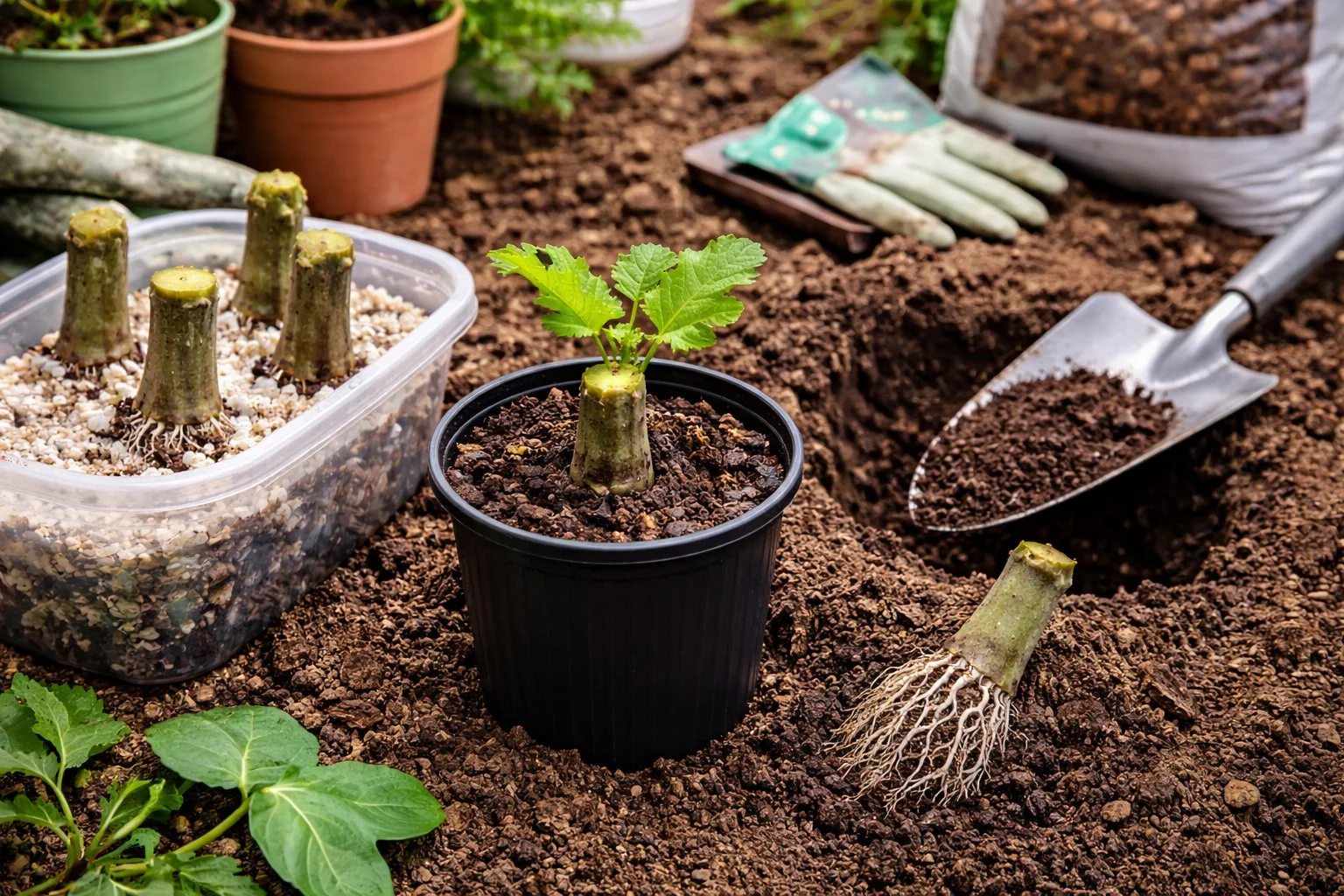
The transition from rooted cutting to an independent fig plant is the most overlooked stage of propagation—and one of the most consequential. Many cuttings that root successfully are lost not during callusing or early rooting, but during the weeks that follow, when fragile new roots are exposed to stress, poor timing, or abrupt environmental changes. Understanding how and when to transition rooted cuttings protects the investment made in earlier stages and sets young figs up for long-term health.
In Zone 7b, where seasonal shifts can be sharp and unpredictable, the transition phase requires restraint and planning. Rooted cuttings are not yet resilient trees. They are developing systems that must be supported carefully before being asked to perform.
Knowing When a Cutting Is Truly Ready
A cutting is ready to transition only when roots are functional, not merely present. White root tips or a small callus with a few root initials is not enough. Healthy rooted cuttings show multiple roots that are several inches long, evenly distributed, and capable of supporting moisture uptake.
Above ground, buds may swell or produce small leaves, but excessive top growth is not a requirement for readiness. In fact, modest top growth paired with strong root development is preferable. Leaves can be sacrificed temporarily; roots cannot.
Attempting to transplant too early is one of the most common causes of setback. Cuttings moved prematurely often stall, wilt, or die because their root systems cannot support sudden changes in moisture or temperature.
Choosing the Right First Container
For most fig cuttings, the first container should be small and proportionate to the root system. Oversized containers hold excess moisture and increase the risk of root rot. A modest pot encourages roots to colonize the available space quickly, improving oxygen exchange and stability.
Containers with excellent drainage are essential. Multiple drainage holes and a well-structured potting mix reduce waterlogging during this sensitive stage. Transparent or semi-transparent containers can be helpful for monitoring root development, but they should be protected from light exposure that can damage roots.
Selecting a Transition Potting Mix
Transition mixes differ from rooting media. While rooting media emphasize airflow and minimal nutrients, transition mixes must balance drainage with gentle nutrition. Young roots need access to nutrients, but excessive fertility at this stage can burn delicate tissues.
A light, well-draining potting mix amended with coarse materials such as bark fines or perlite works well. The goal is to support gradual root expansion without compacting or saturating.
Avoid heavy garden soil or compost-rich mixes during the initial transition. These materials retain too much moisture and increase stress on young roots.
Handling Roots With Care
Roots formed during propagation are brittle and easily damaged. Handling should be minimal and deliberate. When removing a cutting from its rooting medium, avoid shaking or washing roots aggressively. Media that release cleanly reduce damage and improve survival.
When positioning the cutting in its new container, roots should be spread gently, not forced downward or bent sharply. Backfill loosely, allowing media to settle naturally around roots rather than compacting it by hand.
Watering after transplant should be thorough but gentle, settling the media without creating standing water.
Managing Water During the Transition Phase
Water management is the most critical factor after transplanting. Newly transitioned cuttings require consistent moisture, but their limited root systems cannot tolerate saturation.
Allow the surface of the potting mix to dry slightly between waterings, but never let the root zone dry completely. Frequent light watering is often safer than infrequent deep watering during the first weeks.
Environmental conditions matter. Warm temperatures and airflow increase water demand, while cool, still conditions slow drying. Monitoring weight and moisture levels helps prevent extremes.
Light Exposure: Gradual Acclimation Is Key
Rooted cuttings transitioning from low-light propagation environments should not be exposed immediately to full sun. Sudden increases in light intensity cause leaf scorch, dehydration, and stress.
Begin with bright indirect light or filtered sun. Over one to two weeks, gradually increase exposure as roots strengthen and leaves adapt. This hardening process allows the plant to regulate transpiration more effectively.
Indoor-grown cuttings moved outdoors should be protected from wind and direct midday sun initially. Gentle conditions build resilience.
Temperature and Airflow Considerations
Young fig plants prefer stable, moderate temperatures during the transition phase. Extreme heat or cold slows root establishment and increases stress. In Zone 7b, spring temperature swings can be significant, making timing important.
Airflow should be gentle. Stagnant air encourages disease, while strong drafts increase dehydration. Balanced airflow supports healthy transpiration without overwhelming young roots.
Transitioning to Larger Containers or the Ground
Whether a rooted cutting should remain in a container or be planted in the ground depends on timing, plant size, and climate.
In Zone 7b, planting directly into the ground is safest after the risk of frost has passed and when the cutting has had time to establish in a container. Young figs planted too early often suffer cold damage or stall.
Container-grown figs can remain in pots for their first growing season, allowing roots to develop before facing outdoor stress. This approach offers flexibility and higher survival rates.
When planting into the ground, site selection, soil preparation, and spacing become critical. Young figs benefit from well-drained soil, protection from wind, and consistent moisture during establishment.
Recognizing and Managing Transplant Shock
Some degree of transplant shock is normal. Temporary leaf droop, slowed growth, or minor leaf drop may occur. The key is preventing prolonged stress.
Healthy cuttings recover within weeks. Persistent wilting, yellowing, or stem collapse signals a deeper problem, often related to overwatering or root damage.
Patience and observation matter more than intervention. Avoid fertilizing immediately after transplant. Allow roots to establish before introducing additional inputs.
Fertilization Timing After Transition
Fertilization should be delayed until new growth indicates active root function. Light feeding with a balanced, diluted fertilizer can begin once the plant shows steady growth.
Overfeeding early is a common mistake. Young roots are sensitive, and excess nutrients can cause burn or disrupt root development. Slow, steady nutrition supports long-term vigor.
Building Strength Before Asking for Growth
The first goal after transition is root expansion, not rapid top growth. Encouraging slow, balanced development produces stronger plants that handle future stress better.
Allowing a young fig to establish thoroughly during its first season pays dividends in resilience, productivity, and winter survival.
Completing the Propagation Cycle
Transitioning rooted cuttings successfully completes the propagation process. Each stage—timing, wood selection, storage, callusing, rooting, and transition—builds on the previous one. Skipping or rushing the final step undermines all that came before.
When managed deliberately, the transition phase turns fragile cuttings into independent fig trees ready for training, container growing, or orchard planting.
For a complete framework covering timing, wood selection, storage, callusing, rooting environments, troubleshooting, and transplanting young figs, see Fig Propagation & Cutting Techniques.
