Selecting Healthy Wood: What Makes a Good Fig Cutting
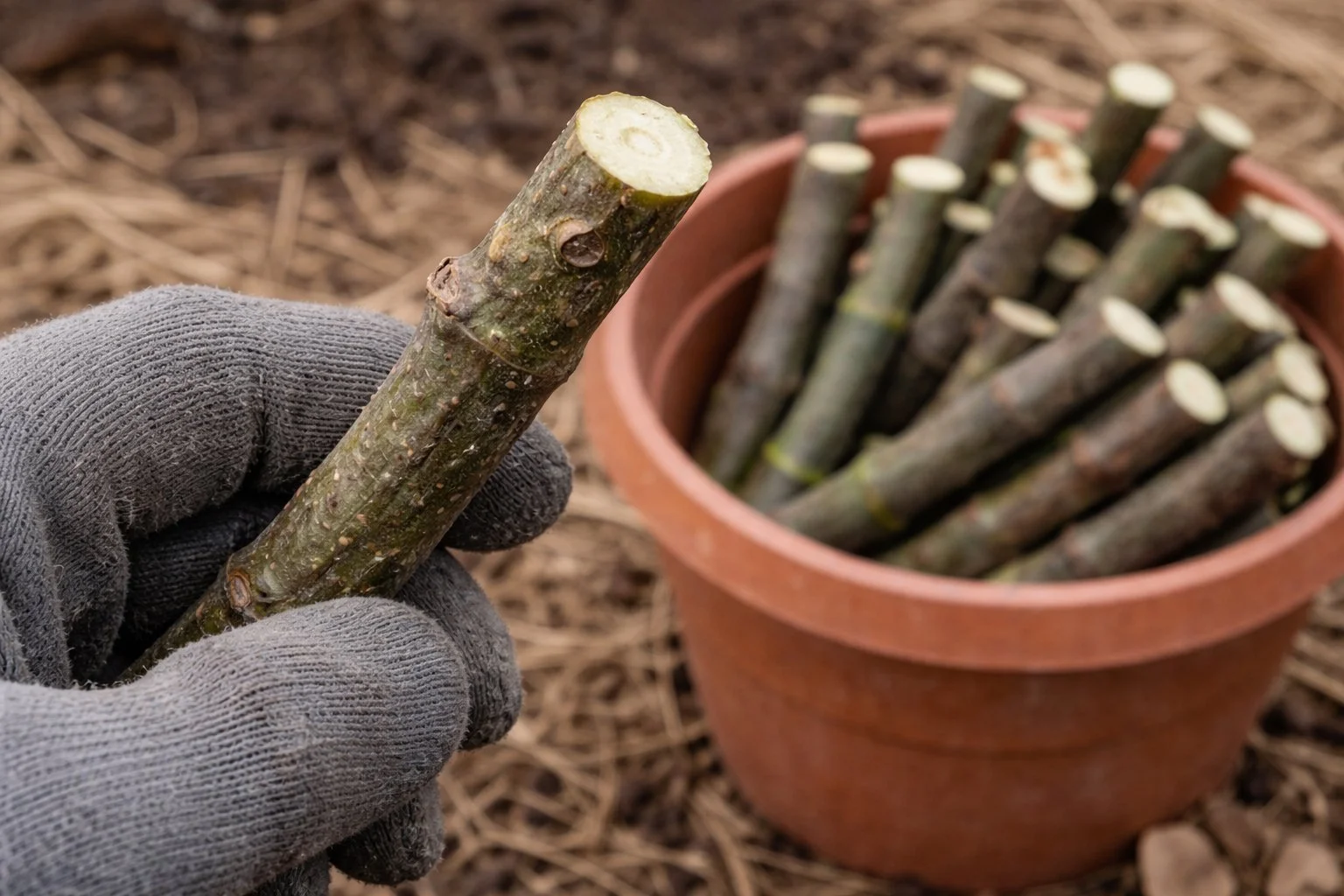
Successful fig propagation begins long before rooting media, heat mats, or humidity domes come into play. It begins with wood selection. Even perfectly timed cuttings will struggle if the wood itself lacks stored energy, structural integrity, or disease resistance. Conversely, a well-chosen cutting often roots successfully under less-than-ideal conditions because it carries the internal resources needed to survive the rooting process.
In Zone 7b, where figs experience seasonal cold stress and variable growth patterns, choosing the right wood is especially important. Healthy wood not only improves rooting success but also determines the vigor, structure, and resilience of the resulting tree for years to come.
Why Wood Quality Determines Propagation Success
Fig cuttings are entirely dependent on the reserves stored within the wood until roots form. These reserves—primarily carbohydrates and moisture—fuel callus formation, bud survival, and early root growth. Poor-quality wood exhausts these reserves quickly, leading to dehydration, rot, or collapse before roots can establish.
Healthy wood, by contrast, provides a buffer. It allows the cutting to tolerate minor mistakes in moisture, temperature, or timing. This margin of safety is what separates consistent propagation from unpredictable outcomes.
Selecting good wood does not require advanced tools, but it does require observation, restraint, and a clear understanding of what the tree is telling you.
The Ideal Age of Fig Wood for Cuttings
The best fig cuttings are taken from one-year-old wood. This wood formed during the most recent growing season and has since hardened and matured during dormancy. It strikes the ideal balance between vigor and stability.
One-year-old wood is firm but not brittle. It contains abundant stored energy and responds predictably to callusing and rooting. Older wood may still root, but success rates decline as tissue becomes denser and less responsive. Very young, soft wood lacks the reserves needed to survive the rooting phase.
In practical terms, ideal cutting wood often comes from the outer portions of the canopy, where the previous season’s growth extended and hardened before winter.
Visual Cues of Healthy Fig Wood
Healthy fig wood has a uniform appearance. The bark should be smooth, intact, and free of cracks or lesions. Color varies by cultivar but is typically consistent along the length of the cutting.
Nodes should be well-defined and evenly spaced. Internodes that are extremely long may indicate excessive vigor or shade growth, while very short internodes can signal stress or nutrient imbalance.
When lightly scratched with a fingernail, healthy wood reveals green tissue beneath the bark. Brown or gray tissue suggests dead or compromised wood and should be avoided.
Diameter Matters More Than Length
While many growers focus on cutting length, diameter is a better indicator of quality. Cuttings roughly the thickness of a pencil to a marker tend to perform best. This size range provides enough stored energy without excessive woody density.
Very thin cuttings dry out quickly and struggle to sustain buds. Overly thick cuttings can be slow to callus and root, particularly in cooler conditions.
Length can be adjusted later. Energy density cannot.
Bud Quality and Orientation
Healthy fig cuttings have plump, intact buds that are neither shriveled nor prematurely swollen. Buds should sit flush against the stem and show no signs of mold, damage, or insect activity.
Bud orientation matters during later planting, but during selection the focus should be on viability. Cuttings with damaged or missing buds are less likely to produce balanced growth even if roots form.
Choosing wood with multiple healthy nodes increases flexibility later, allowing growers to adjust planting depth or prune excess growth without sacrificing vigor.
Avoiding Diseased or Stressed Wood
Propagation should never be used to “rescue” weak wood. Cuttings taken from diseased, heavily stressed, or declining trees often carry hidden problems that surface during rooting.
Signs to avoid include discoloration, cankers, unusual swelling, or persistent leaf disease from the previous season. Wood from trees that suffered severe drought stress or heavy pest pressure may also perform poorly.
Propagation is a form of cloning. Any weakness present in the parent wood is likely to persist in the cutting.
Understanding Growth Position on the Tree
Not all wood on a fig tree is equally suitable for propagation. Strong lateral shoots and well-exposed outer growth typically outperform shaded interior shoots or weak water sprouts.
Wood grown in good light tends to be denser, with better carbohydrate storage. Shaded wood often appears elongated and pale, reflecting lower energy reserves.
When pruning, take a moment to evaluate where the wood grew, not just how it looks after removal.
The Role of Winter Dieback in Wood Selection
In Zone 7b, winter dieback provides valuable information. Wood that survives winter intact is often more resilient and better adapted to local conditions. Selecting cuttings from this wood can improve long-term hardiness.
Conversely, wood that consistently dies back may be less suitable for propagation unless the goal is experimentation or evaluation.
Using winter survival as a selection criterion aligns propagation with climate reality rather than idealized expectations.
Timing and Wood Selection Work Together
Wood selection cannot be separated from timing. Even excellent wood loses viability if taken too early or too late. Dormant wood retains moisture and energy more effectively, making selection easier and outcomes more predictable.
Selecting wood during winter pruning allows growers to evaluate structure, health, and vigor without the distraction of leaves or active growth.
This synergy between timing and selection simplifies propagation planning.
Preparing Cuttings Without Damaging the Wood
Once selected, wood should be handled gently. Clean, sharp tools reduce tissue damage and lower the risk of infection. Cuts should be clean and deliberate.
Avoid crushing or splitting the stem during cutting. Damaged vascular tissue impairs moisture movement and increases rot risk.
Label cuttings immediately if working with multiple cultivars. Confusion later often leads to unnecessary handling and stress.
Quantity Versus Quality
It is tempting to take many cuttings “just in case.” However, focusing on fewer, higher-quality cuttings often yields better results and reduces workload.
Each cutting requires space, monitoring, and care. Selecting only the best wood improves efficiency and success rates across the entire propagation process.
Propagation rewards selectivity.
Learning From Failed Cuttings
When cuttings fail, wood quality is often the root cause. Reviewing failed cuttings for signs of dehydration, rot, or bud collapse can reveal selection mistakes.
Over time, growers develop an intuitive sense for good wood. This intuition is built through observation, not shortcuts.
Failures are feedback, not wasted effort.
Wood Selection Shapes the Future Tree
The structure and vigor of a fig tree begin with the cutting. Strong wood produces stronger roots, more balanced growth, and better response to training and pruning.
Choosing good wood is an investment in the tree’s entire lifespan. It determines not only whether the cutting roots, but how well the tree performs for decades.
Building a Repeatable Selection Habit
Consistency in wood selection leads to consistency in results. Developing a simple checklist—age, diameter, bud health, disease-free status—turns selection into a habit rather than a guess.
This habit compounds over time, improving every propagation cycle.
Selection Is the Quiet Foundation of Propagation
The most successful fig propagators are not those with the most equipment, but those who understand their trees. Selecting healthy wood aligns propagation with the fig’s natural rhythms and strengths.
For a complete framework covering timing, wood selection, storage, callusing, rooting environments, troubleshooting, and transplanting young figs, see Fig Propagation & Cutting Techniques.
