First-Year Pruning: What (Not) to Cut on Young Fig Trees
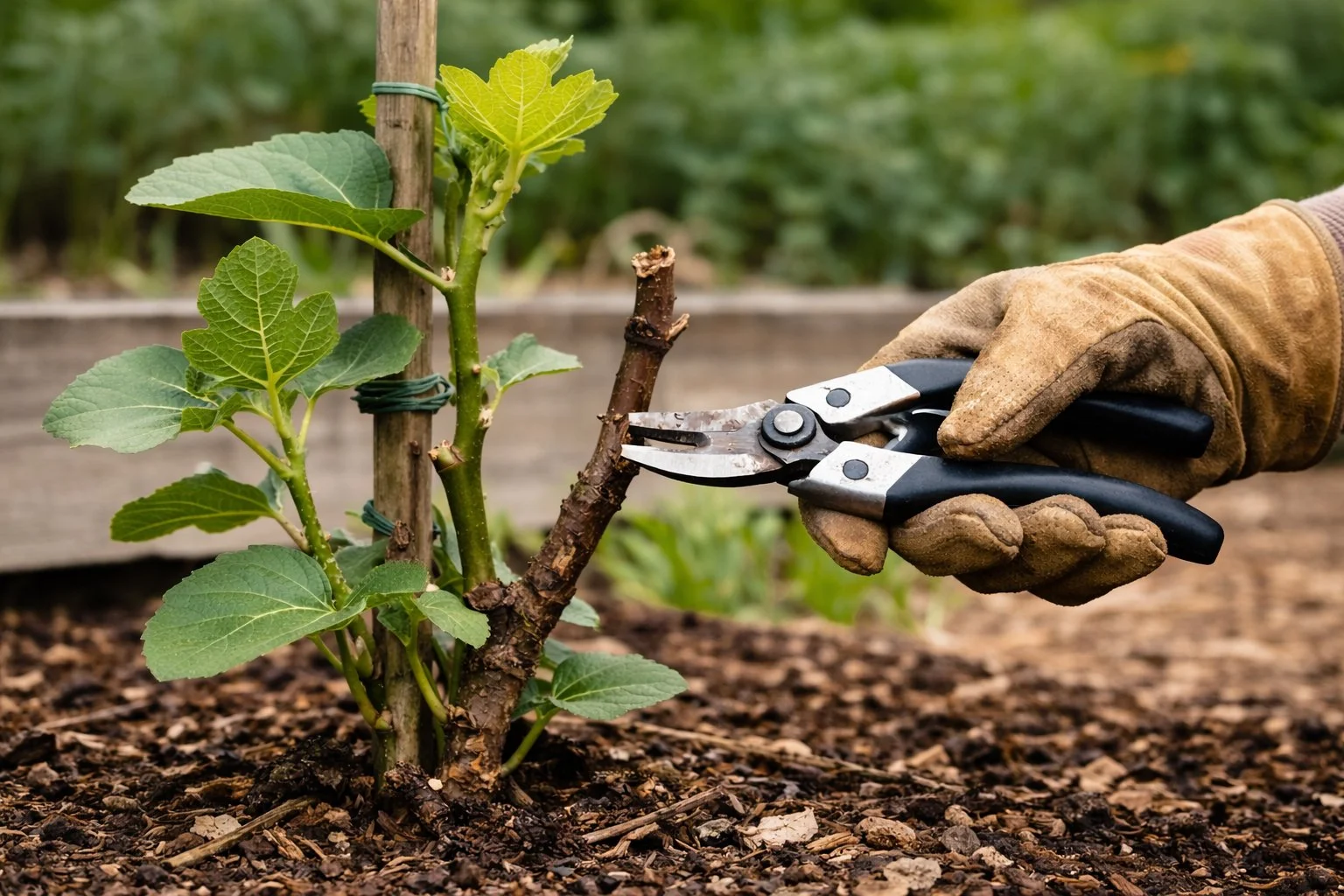
One of the most common mistakes new fig growers make is pruning too aggressively during the first year. A young fig tree’s primary job in its initial season is not fruit production or perfect form—it is root establishment, energy capture, and adaptation to its site. Understanding what not to cut during this stage is just as important as knowing when to intervene later.
In Zone 7b, where winter dieback often plays a defining role in long-term structure, restraint during the first year frequently leads to stronger, more resilient trees in years two and three.
Why First-Year Pruning Is Different
Young fig trees are still allocating energy toward building roots, strengthening vascular pathways, and establishing balance between above-ground growth and underground reserves. Heavy pruning during this stage can slow establishment, delay vigor, and reduce the tree’s ability to rebound from cold damage in future seasons.
Unlike mature figs, first-year trees have limited stored energy. Every healthy leaf and shoot contributes directly to photosynthesis and root development. Removing too much growth early can unintentionally weaken the tree rather than improve its structure.
What You Should Not Cut in Year One
In most cases, first-year figs should be left largely untouched. Healthy upright shoots—even when they appear crowded—are helping the tree build strength. Minor crossing branches that are not causing injury rarely require removal, and fast-growing extension growth during summer is a sign of successful establishment, not a problem to correct.
A young fig tree does not need to look tidy. It needs to grow.
Cutting branches simply because they look awkward or unbalanced often does more harm than good at this stage.
When Light Pruning Is Appropriate
There are limited situations where minimal pruning is justified during the first year. Broken or damaged wood from planting, transport, or storms should be removed to prevent disease entry. Clearly dead tissue, confirmed with a scratch test, should also be cut back to healthy wood. In rare cases, severe structural issues—such as two leaders rubbing and actively injuring each other—may require correction.
Even in these situations, cuts should be conservative and limited strictly to what is necessary to prevent damage. First-year pruning should never aim to shape the tree aggressively.
Training Without Cutting
Training during the first year is more about guidance than removal. Gently tying shoots to stakes, spreading branches with soft ties to improve angles, or allowing multiple shoots to develop helps influence future structure without sacrificing leaf area.
This approach preserves the tree’s energy-producing capacity while still setting the stage for better form later.
What to Expect by the End of the First Year
A healthy first-year fig may look tall, bushy, uneven, or asymmetrical by season’s end. This is normal and should not be corrected prematurely. The real success markers are strong growth, healthy leaves, and a developing root system—not symmetry.
Major structural decisions are best delayed until the first dormant season or even the second year, when the tree’s cold response, vigor, and natural growth habit are easier to evaluate.
Takeaway
First-year pruning is primarily about restraint. By limiting cuts, preserving leaf area, and allowing young fig trees to establish fully, growers in Zone 7b set the foundation for stronger recovery, better structure, and more reliable fruiting in the years that follow.
For a complete framework on pruning methods, timing, training systems, and long-term structure, see Pruning & Training Fig Trees in Zone 7b.
