Pruning Young Fig Trees in Their First Three Years (Zone 7b)
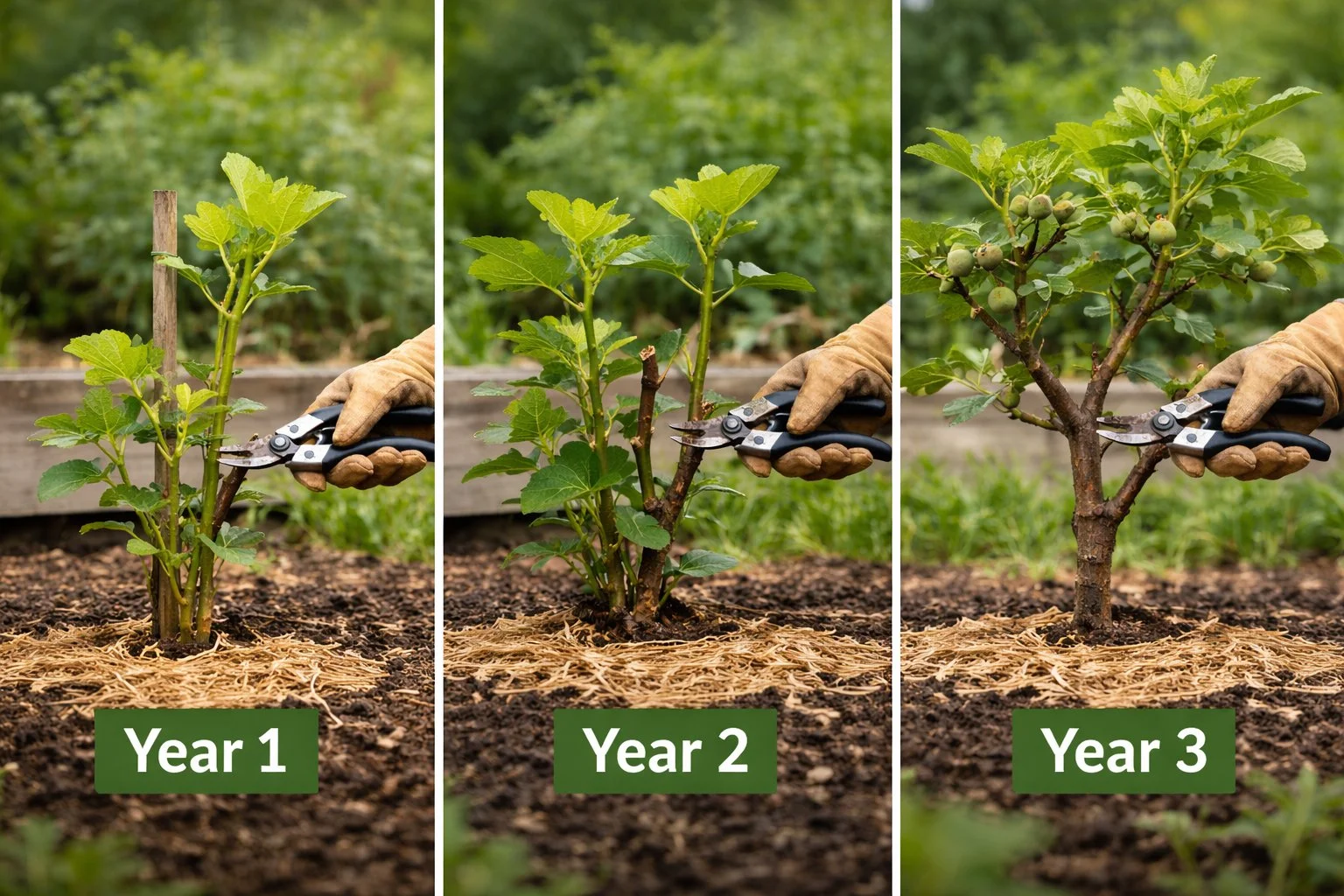
Pruning young fig trees is less about control and more about timing. In Zone 7b, where winter dieback, variable spring conditions, and compressed ripening windows all influence growth, early pruning decisions shape how a fig tree performs for decades. Understanding how pruning priorities change from year one through year three helps growers avoid common mistakes that delay fruiting and weaken structure.
This article explains how pruning should evolve during a fig tree’s first three years so that growth, recovery, and productivity stay in balance.
Year One: Establishment Comes First
During the first year, a fig tree’s priority is root development and energy capture. Pruning should be minimal and limited to removing broken, damaged, or clearly dead wood. Healthy shoots—even if they appear awkward or crowded—should be left intact to maximize photosynthesis and establish strong reserves.
In Zone 7b, where young figs often experience partial or complete winter dieback, preserving as much healthy growth as possible during the first season improves recovery and resilience the following year.
Year Two: Observation and Gentle Structure
By the second year, fig trees begin to reveal their natural growth habits. Spring regrowth after winter dieback shows how quickly the variety rebounds and where its strongest shoots emerge. Pruning at this stage should focus on selection, not reduction.
Removing weak, poorly positioned, or inward-growing shoots early in the season helps concentrate energy into a manageable framework. However, heavy pruning should still be avoided. The goal is to guide structure while allowing the tree to continue building strength.
Fruit may appear during year two, but harvests are often light and inconsistent. Pruning decisions should support future productivity rather than chase immediate yield.
Year Three: Defining the Framework
The third year is often when young fig trees transition from establishment to meaningful production. By now, the tree’s response to winter, pruning, and site conditions is clearer. Structural decisions made at this stage tend to persist for the life of the tree.
Pruning in year three can be more deliberate. Selecting primary scaffolds, managing height, and removing excess shoots helps create a balanced structure that supports consistent ripening. Still, restraint remains important—over-pruning can reset the tree and delay harvests, especially after winter dieback.
How Winter Dieback Influences Early Pruning
In Zone 7b, winter dieback is a recurring factor during a fig tree’s early years. Young trees may lose significant wood one or more winters in a row. Pruning strategies must account for this reality.
Rather than forcing a rigid form too early, allowing some flexibility in structure ensures that the tree can adapt when cold damage occurs. Pruning should support recovery, not fight it.
Avoiding the Most Common Early-Year Mistakes
Many growers prune too aggressively in the first three years, attempting to control size or force fruiting before the tree is ready. Others hesitate entirely, allowing dense, tangled growth that later requires severe correction.
The most successful approach balances patience with intention—removing only what interferes with strength, structure, or health.
When to Shift Toward Maintenance Pruning
By the end of the third growing season, most fig trees are ready to transition into a maintenance pruning routine. At this point, the framework is largely established, winter response is predictable, and pruning decisions can focus more on ripening timing, size control, and long-term productivity.
Rushing this transition often leads to setbacks that take years to correct.
Takeaway
Pruning young fig trees during their first three years is about timing, observation, and restraint. By prioritizing establishment in year one, gentle structure in year two, and defined framework in year three, growers in Zone 7b set the stage for resilient trees and consistent harvests. Thoughtful early pruning pays dividends for the life of the fig.
For a complete framework on pruning methods, timing, training systems, and size control, see Pruning & Training Fig Trees in Zone 7b.
