How to Tell When Figs Are Truly Ripe
Introduction
Knowing exactly when a fig is ripe is the most important harvesting skill a grower can develop—and the one most often misunderstood. Unlike many fruits, figs do not continue ripening after they are picked. Flavor, sweetness, aroma, and texture must all fully develop on the tree. Harvesting too early locks the fruit into blandness; harvesting too late risks splitting, souring, or collapse. This guide focuses on the practical, repeatable signs that indicate true ripeness, helping growers harvest confidently and consistently in Zone 7b.
Ripeness Begins on the Tree, Not After
A fig’s ripening process is entirely tree-dependent. Sugars accumulate, pulp expands, and aromatic compounds develop only while the fruit remains attached. Once removed, no additional sweetness or complexity forms. This is why color alone is an unreliable indicator. Many first-time growers assume a fig that looks “big enough” or “dark enough” is ready—yet true ripeness involves structural and sensory changes that go far beyond appearance.
The Neck Test: One of the Most Reliable Indicators
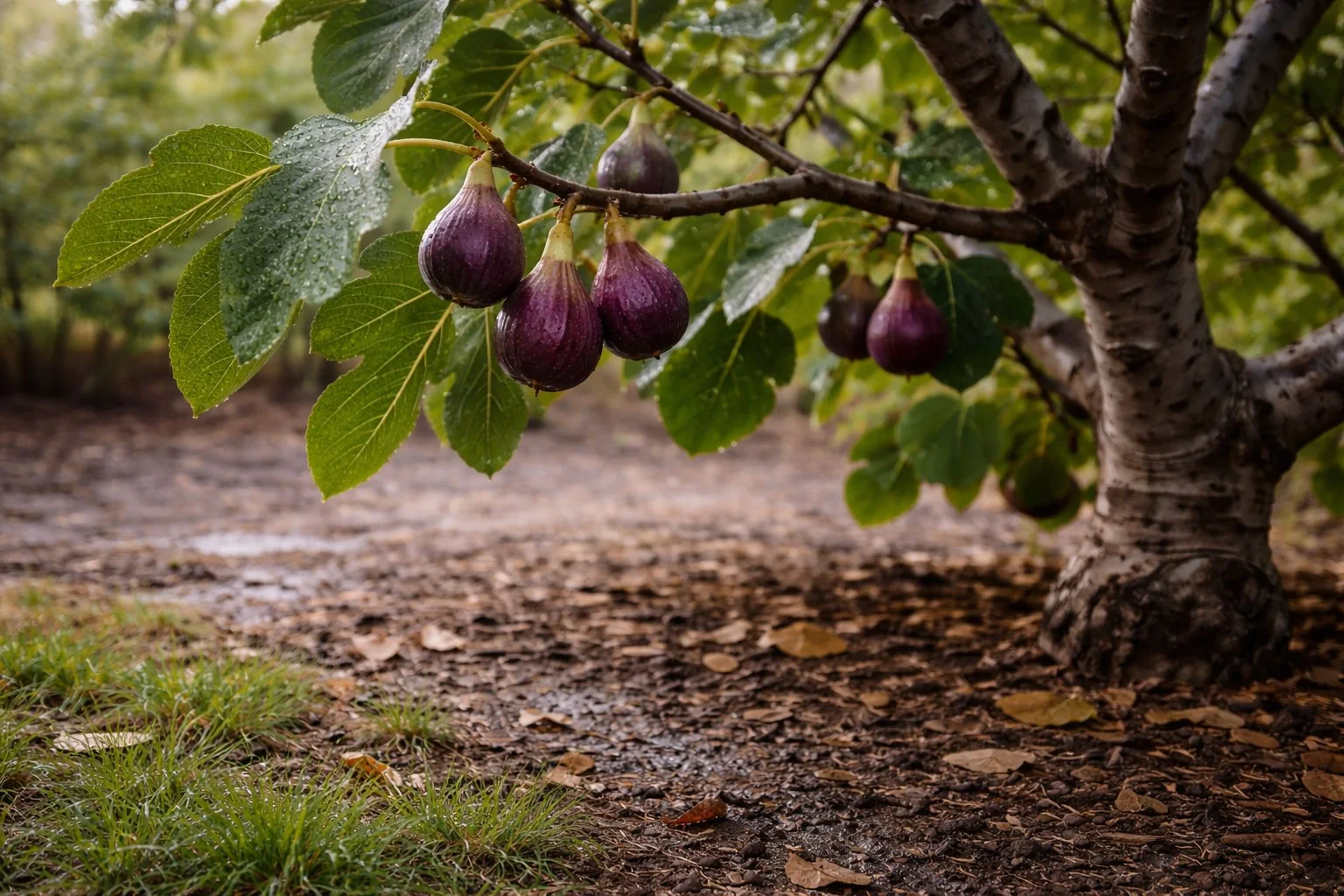
As a fig approaches full ripeness, the neck—the narrow section where the fruit meets the stem—softens noticeably. A ripe fig will droop downward instead of standing upright. This bend occurs because internal pressure increases as sugars and moisture accumulate, weakening the supporting tissues. If the neck remains stiff and the fig points skyward, the fruit is not yet ready, regardless of size or color.
Softness Without Mushiness
A ripe fig yields gently when cradled in the palm. It should feel soft but still cohesive, not watery or collapsing. Overripe figs feel fragile and may leak sap or split under minimal pressure. Under-ripe figs feel firm, rubbery, or hollow. Learning this tactile balance is one of the fastest ways growers gain confidence, especially when combined with other signs.
Weight Tells the Truth
Ripe figs feel surprisingly heavy for their size. As sugars and moisture increase, the fruit becomes denser. Unripe figs often feel light or empty by comparison. This difference becomes obvious once you have handled several figs from the same tree over a few days.
Aroma: The Final Confirmation
A fully ripe fig produces a noticeable sweet aroma, often described as honeyed, fruity, or floral depending on the cultivar. This scent is absent in unripe fruit and faint or fermented in overripe fruit. Smell is particularly helpful for varieties that do not change color dramatically as they ripen.
Visual Cues That Support—But Do Not Decide
Color change can support ripeness assessment but should never be the sole factor. Dark varieties deepen in tone, while green or yellow varieties may show translucence rather than dramatic color shift. Some figs produce a small drop of honey-colored nectar at the ostiole, signaling active sugar movement. While helpful, this “honey drop” is not required for ripeness and should be considered supplemental evidence, not a rule.
Variety Matters More Than Beginners Expect
Each fig variety expresses ripeness differently. Adriatic and honey types soften dramatically without darkening. Some cultivars droop early and slowly sweeten; others remain upright until the final day. Learning your specific cultivars is essential, especially in a mixed orchard. Keeping simple notes during harvest season accelerates this learning curve.
Daily Checking Beats Calendar Harvesting
In Zone 7b, figs often move from nearly ripe to fully ripe within 24 hours during warm, humid weather. Checking trees daily—sometimes twice daily during peak season—prevents both premature picking and losses from splitting or souring. Morning checks are ideal, as fruit is cooler, firmer, and easier to evaluate accurately.
Common Mistakes When Judging Ripeness
Many growers harvest too early out of impatience or fear of loss. Others wait too long, hoping for extra sweetness that never arrives. Squeezing fruit, pulling instead of lifting, and relying on size alone all lead to disappointment. True ripeness is a convergence of signs, not a single cue.
The Confidence Curve
Every fig grower experiences a learning curve, but ripeness recognition improves quickly with hands-on experience. After a single season of attentive harvesting, most growers develop a reliable internal sense of timing. By the second season, harvest decisions feel intuitive rather than uncertain.
The Takeaway
A truly ripe fig announces itself through softness, weight, droop, aroma, and timing—not through guesswork. By learning to read these signs together, growers harvest at peak flavor, protect fruit quality, and fully enjoy the reward of their orchard.
This article is part of the complete guide to Harvesting & Post-Harvest Care for Fig Trees.
Common Questions About Knowing When Figs Are Ripe
Q: How do I know when a fig is truly ripe on the tree?
A: Look for multiple signs: neck softens and droops (key indicator), fruit feels heavy/soft but not mushy, releases sweet aroma when close, and may show nectar drop at eye. Taste test one—full sweetness only develops on-tree. In Zone 7b Tennessee, check daily during warm/humid spells as figs can go from almost-ripe to perfect in 24 hours.
Q: Does fig color tell me when it's ripe?
A: Color helps but isn't reliable alone—dark varieties deepen, green/yellow show translucence, but some (like Adriatic) stay light even when fully ripe. Rely on neck drop, softness, and weight over color to avoid picking bland or overripe fruit.
Q: Why do ripe figs feel heavier?
A: Heavy weight signals full sugar/moisture accumulation inside—unripe figs feel light/hollow. Cradle gently; a ripe one surprises with density without being fragile.
Q: How do different fig varieties show ripeness in Zone 7b?
A: Hardy Chicago and Celeste soften quickly with neck drop and strong aroma; some honey types stay upright longer before drooping. Learn your varieties—note observations yearly for your Tennessee orchard conditions.
Q: What mistakes do beginners make when harvesting figs?
A: Picking too early (bland taste), waiting too long (souring/splitting), squeezing hard (bruising), or relying only on size/color. Harvest by lifting gently (don't pull), and check mornings when cooler/firmer.
