Winter Watering: When It Matters and When It Doesn’t for Fig Trees
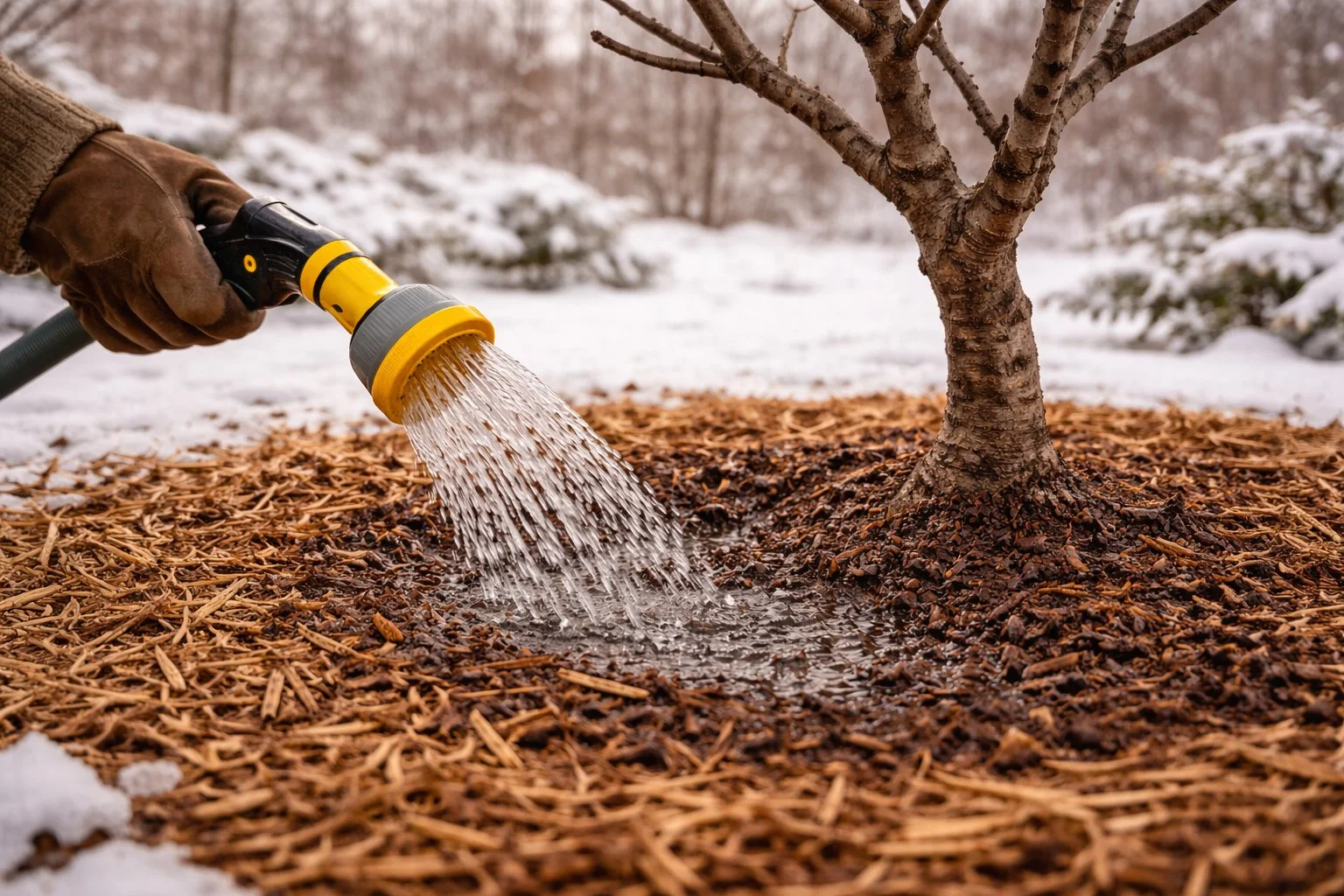
Winter watering is one of the most misunderstood aspects of fig care. Many growers assume dormant trees either need no water at all or, conversely, that regular winter watering protects them from cold damage. In reality, fig trees in dormancy have very low water requirements, and unnecessary irrigation during winter can do more harm than good.
In Zone 7b, where winters are cool with periodic freezes but not continuously frozen soil, knowing when winter watering is beneficial—and when it should be avoided—helps protect root health and supports strong spring recovery.
What Happens to Fig Trees During Dormancy
As fig trees enter dormancy, growth slows and eventually stops. Leaves drop, metabolic activity decreases, and water uptake falls dramatically. Roots remain alive, but they function at a much lower level than during the growing season.
Because transpiration is minimal and evaporation rates are low, soil moisture persists much longer in winter than in summer. This means that irrigation schedules appropriate for warm months are almost always excessive during dormancy.
When Winter Watering Is Usually Unnecessary
In most Zone 7b winters, natural precipitation provides sufficient moisture for dormant fig trees. Cool temperatures reduce evaporation, and soils remain moist for extended periods. Under these conditions, additional watering offers no benefit and may increase the risk of root problems.
Overwatering during winter can lead to saturated soil, reduced oxygen availability, and root damage—especially in heavy or poorly drained soils. Wet roots combined with cold temperatures are far more vulnerable to injury than roots in well-drained, moderately moist soil.
For both in-ground and container figs, routine winter watering should be avoided unless specific conditions indicate otherwise.
Situations Where Winter Watering Does Matter
There are limited scenarios in which winter watering becomes important. Extended dry periods with little precipitation, particularly when soils are well-drained or sandy, can allow root zones to dry excessively. In these cases, a single deep watering may prevent root desiccation.
Container-grown figs are more susceptible to drying during winter, especially when protected under cover or stored in unheated structures where rainfall cannot reach the soil. Containers exposed to drying winds may also lose moisture faster than in-ground soil.
In these situations, occasional watering—just enough to rehydrate the root zone—supports root viability without creating saturated conditions.
How to Water Safely During Winter
When winter watering is needed, it should be done sparingly and deliberately. The goal is to moisten the soil, not saturate it. For in-ground trees, a slow, deep watering during a dry spell is sufficient. For containers, watering should restore moisture evenly throughout the pot without leaving standing water.
Watering should be avoided immediately before hard freezes. Wet soil holds cold longer, increasing the risk of freeze damage to roots. If irrigation is necessary, it is best done during a period of milder winter weather when soils can drain and equilibrate before temperatures drop.
The Role of Mulch in Winter Moisture Management
Mulch significantly reduces the need for winter watering. A thick organic mulch layer insulates the soil, moderates temperature fluctuations, and helps retain moisture during dry periods. Mulched root zones dry far more slowly than exposed soil, making additional irrigation rarely necessary.
For container figs, mulching the soil surface helps stabilize moisture and reduces evaporation, particularly when containers are stored in protected but unheated spaces.
Common Winter Watering Mistakes
One of the most common mistakes is continuing fall watering schedules into winter. Dormant trees do not require frequent irrigation, and excess water increases the risk of root rot and cold injury.
Another mistake is assuming that dry surface soil indicates dry conditions at depth. In winter, soil beneath the surface often remains adequately moist even when the top layer appears dry. Checking moisture several inches below the surface provides a more accurate assessment.
How Winter Watering Affects Spring Recovery
Proper winter moisture management supports healthy spring growth. Roots that remain alive but not waterlogged emerge from dormancy ready to resume function as temperatures rise. Trees that experience winter root damage due to excessive moisture often leaf out weakly and recover slowly.
Balanced winter conditions—neither excessively dry nor overly wet—set the stage for strong shoot growth and fruit development in the following season.
Winter Watering for Container vs In-Ground Figs
In-ground figs rarely require winter watering in Zone 7b unless conditions are unusually dry. Containers, however, should be monitored more closely. Protected containers may need occasional moisture, but watering should remain infrequent and minimal.
The guiding principle is restraint. When in doubt, it is usually safer to delay watering than to apply it unnecessarily.
Why Less Is More in Winter
Unlike the growing season, winter is not a time to optimize growth or fruiting. It is a time to protect roots and allow the tree to rest. Providing just enough moisture to prevent desiccation—while avoiding saturation—preserves root health and reduces the risk of winter injury.
Understanding when winter watering matters, and when it does not, completes a balanced irrigation strategy for fig trees.
Related Guides in This Series
Winter moisture decisions are part of the full system described in Irrigation & Water Management for Figs. You may also find these guides helpful:
