How to Train a Young Fig Tree into an Open Vase Shape
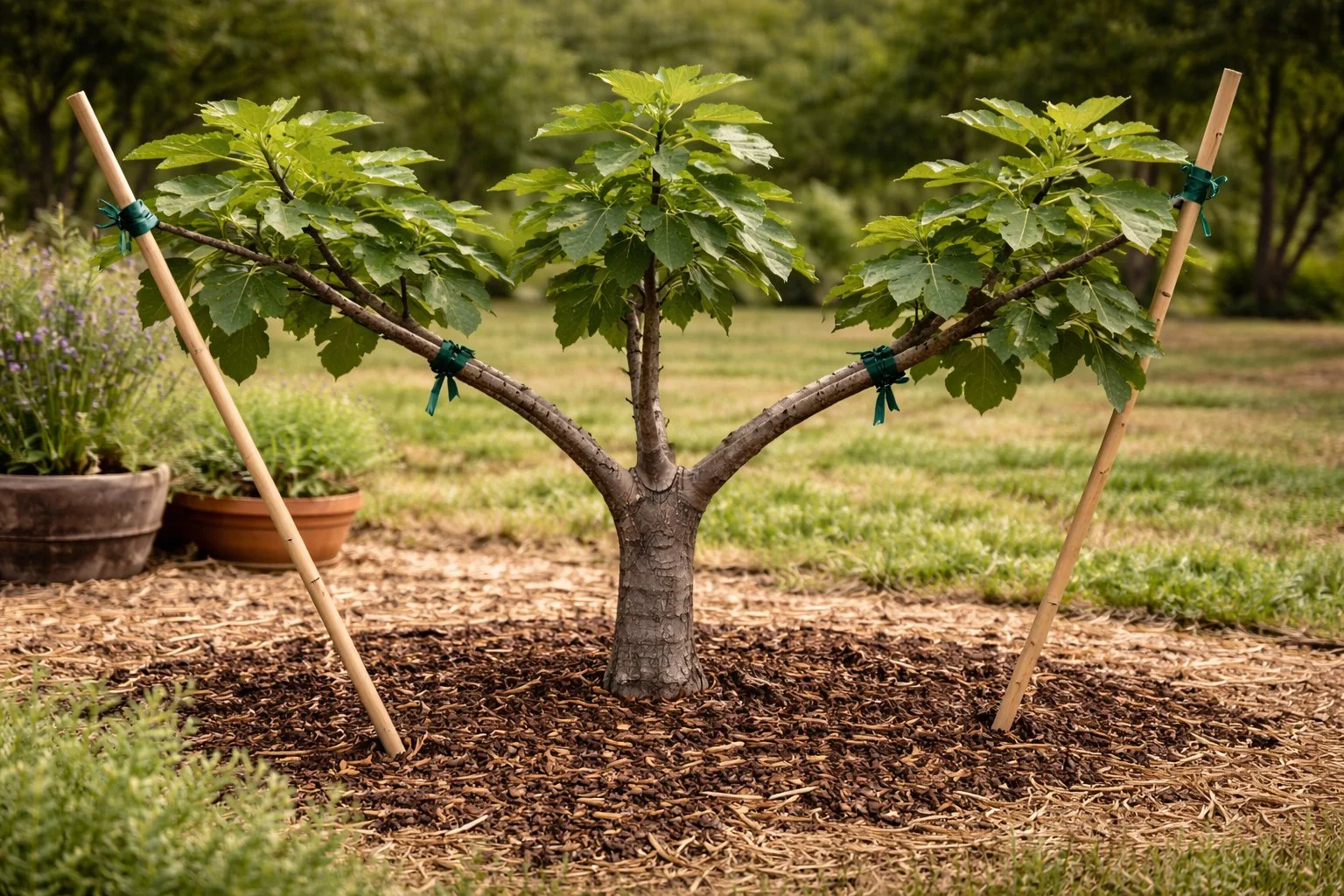
Training a young fig tree into an open vase shape is one of the most effective ways to balance vigor, fruit production, and long-term manageability. This form—sometimes called an open center—creates a structure where light, air, and energy are distributed evenly throughout the canopy. For figs, which naturally push vigorous vertical growth, early training into an open vase establishes order without fighting the tree’s instincts. When done correctly, this approach produces a strong framework that supports reliable fruiting and simplifies care for decades.
The open vase shape begins with an understanding of how figs grow. Young figs tend to send multiple upright shoots from the base, each competing for dominance. Left unchecked, this results in a crowded interior and tall, whip-like growth that shades fruiting wood. Training redirects that energy outward rather than upward, encouraging the tree to build a broad, balanced canopy with productive lateral branches. This structure improves sunlight penetration, reduces disease pressure, and allows fruit to ripen more evenly across the tree.
Timing plays a central role in successful training. The most important decisions are made in the tree’s first and second growing seasons, when wood is still flexible and responsive. Initial structural pruning is best done in late winter or early spring, just before active growth begins. At this stage, the goal is not to reduce size aggressively, but to select the framework that will guide all future growth. Waiting too long allows vertical dominance to establish itself, making later corrections more disruptive.
The process begins by selecting three to five well-spaced shoots that emerge from the lower portion of the tree. These will become the primary scaffolds. Ideal candidates grow outward at gentle angles rather than straight up and are spaced evenly around the trunk or crown. All other competing shoots—especially those growing inward or directly upward—are removed early. This early clarity allows the chosen scaffolds to thicken, strengthen, and assume their role without constant competition.
As the tree grows, the vase shape is reinforced through subtle guidance rather than heavy cutting. Each scaffold is encouraged to branch outward, creating a bowl-like form with an open center. Interior shoots that shade the middle are removed, while outward-facing buds and laterals are preserved. This selective approach keeps the canopy open without triggering excessive regrowth. The tree responds by distributing energy across multiple fruiting sites rather than pouring it into vertical extension.
One of the most common mistakes in vase training is over-pruning. Removing too much wood at once can provoke a surge of vigorous, upright shoots that undo the structure you’re trying to create. Instead, corrections should be incremental, made over successive seasons. Figs tolerate pruning well, but they respond best when changes are gradual and intentional. Each cut should serve the larger goal of maintaining openness, balance, and strength.
Environmental factors also influence training decisions. In colder climates, scaffolds should be kept lower to the ground, making winter protection easier and preserving fruiting wood during harsh seasons. In warmer or more sheltered sites, the vase can be slightly taller without compromising productivity. Container-grown figs benefit particularly from vase training, as the structure keeps growth compact and accessible while preventing top-heavy imbalance.
Over time, the open vase shape becomes largely self-maintaining. Once the framework is established, annual pruning focuses on renewal rather than restructuring. Older fruiting wood is gradually replaced, crowded areas are thinned, and the open center is preserved. The tree’s energy is directed toward fruit production instead of structural conflict, resulting in consistent yields and healthier growth.
Training a fig into an open vase shape is an investment in the future. The early years require attention and thoughtful decision-making, but the payoff is a tree that works with you rather than against you. With a clear structure in place, pruning becomes intuitive, harvest becomes easier, and the fig settles into a rhythm that rewards both patience and care.
For a complete, season-by-season approach to shaping healthy, productive fig trees, see Pruning & Training for Structure and Yield.
