Multi-Trunk vs. Single-Trunk Figs: Which Is Better?
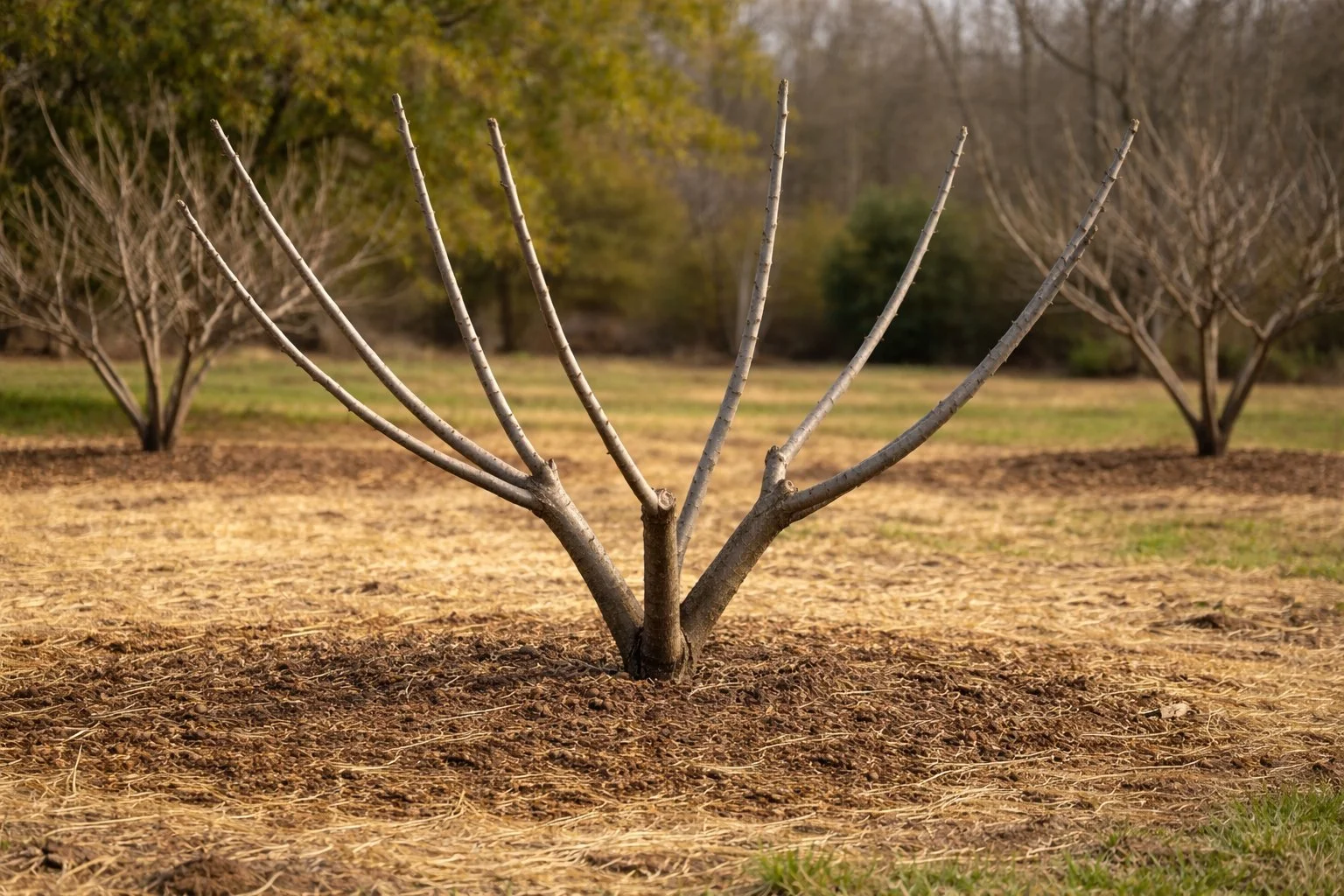
One of the earliest and most consequential decisions a fig grower makes is whether to allow a tree to develop as a multi-trunk bush or train it into a single-trunk form. This choice shapes not only the tree’s appearance, but also its resilience, productivity, and long-term management. In climates like Zone 7b, where winter injury is a recurring variable, the decision becomes even more significant. Neither form is inherently superior; each carries advantages and trade-offs that must be matched to climate, space, and the grower’s goals.
Figs are naturally inclined toward multi-trunk growth. When planted, they often send up several shoots from the base, each capable of becoming a primary stem. This habit evolved as a survival strategy, allowing the tree to recover quickly from damage by replacing lost wood. In colder regions, this resilience is one of the strongest arguments for maintaining multiple trunks. If winter kills one or two stems, others often survive, preserving at least part of the canopy and reducing the need for full structural rebuilds in spring.
Single-trunk figs, by contrast, emphasize structure and accessibility. Training a fig to one main stem creates a tree-like form with a clear scaffold system above. This structure simplifies pruning, harvesting, and airflow management. It also encourages stronger wood development along the primary trunk, which can support heavier fruit loads once established. In protected locations or milder climates, single-trunk figs often perform beautifully, offering predictable shape and efficient use of space.
Cold exposure, however, shifts the balance. A single trunk concentrates risk. If that trunk suffers severe freeze damage, the entire above-ground structure may be lost in one winter. Recovery is still possible—figs are forgiving—but the tree effectively resets, delaying production. Multi-trunk figs distribute that risk across several stems, making them inherently more forgiving in regions where winter outcomes are uncertain. For growers prioritizing consistent yields year after year, this redundancy can be invaluable.
Management style also influences the decision. Multi-trunk figs require more frequent thinning to prevent overcrowding. Without intervention, they can become dense, tangled, and difficult to manage. Single-trunk trees demand discipline early in training but often require less corrective pruning once their framework is established. Growers who prefer minimal annual intervention may favor single-trunk forms, while those comfortable with selective pruning may appreciate the adaptability of multi-trunk trees.
Container growing introduces another layer of consideration. In pots and grow bags, single-trunk figs are easier to control and transport. They respond well to height management and maintain balance within confined root volumes. Multi-trunk container figs can become top-heavy and harder to stabilize, especially as stems age and thicken. For this reason, container growers often favor a simplified structure, even in colder climates, pairing it with winter mobility rather than redundancy.
There is also a middle ground. Many experienced growers allow a fig to begin as a multi-trunk plant, then gradually reduce it to two or three dominant stems. This hybrid approach preserves some winter insurance while maintaining order and accessibility. Over time, weaker or poorly placed trunks are removed, leaving a balanced structure that combines resilience with control.
Ultimately, the best form is the one that aligns with the realities of your site. In exposed orchards, multi-trunk figs offer insurance against unpredictable winters. In sheltered gardens, espaliered settings, or containers, single-trunk forms provide elegance and efficiency. The fig is remarkably adaptable, and its willingness to regenerate allows growers to revise their decision as conditions change.
Choosing between multi-trunk and single-trunk figs is not about following a rule, but about understanding how structure interacts with climate, management, and long-term goals. When that understanding guides the decision, the tree becomes easier to care for, more reliable in production, and better suited to the environment in which it grows.
For a complete, season-by-season approach to shaping healthy, productive fig trees, see Pruning & Training for Structure and Yield.
