Bush vs. Single Trunk vs. Espalier: Which Fig Training System Works Best?
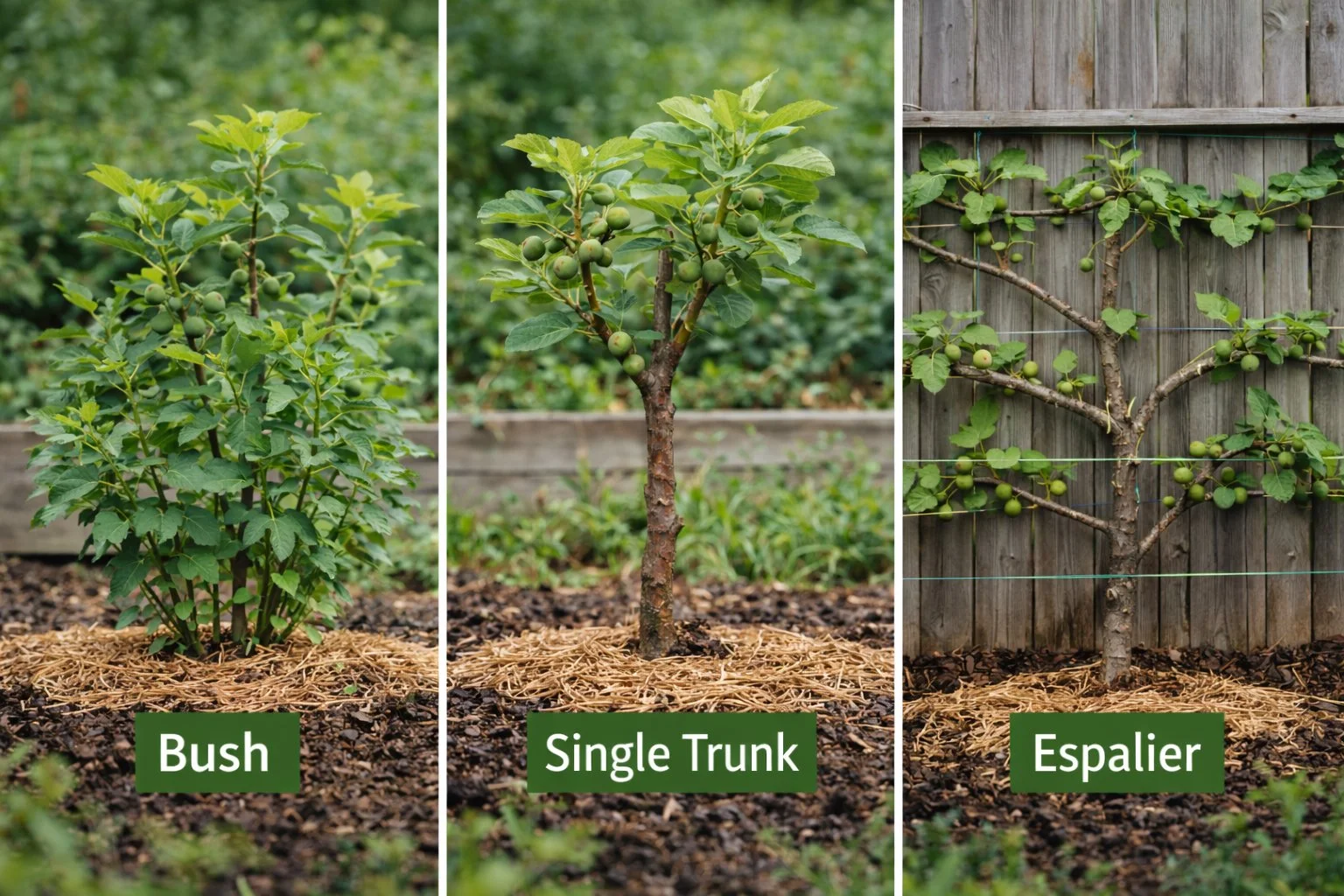
Choosing a training system for a fig tree is less about following strict rules and more about matching the tree to your space, climate, and long-term goals. In Zone 7b, where winter dieback is possible and fig growth can be vigorous, the most successful system is the one that balances resilience, manageability, and productivity for your specific situation.
This article compares the three most common fig training systems—bush form, single trunk, and espalier—to help growers understand how each performs under Zone 7b conditions and when one approach makes more sense than another.
Understanding Training Systems in a Cold-Variable Climate
Training systems influence how a fig tree responds to cold, how easily it can be pruned, and how consistently it produces fruit. In warmer climates, many systems perform similarly. In Zone 7b, however, winter injury, regrowth timing, and structural recovery play a much larger role in long-term success.
The right training choice reduces stress on the tree and on the grower.
Bush Form: The Most Forgiving Option
Bush-trained figs grow with multiple stems emerging from the base rather than relying on a single trunk. This form is common in colder regions because it offers built-in redundancy. If one stem is damaged by cold, others often survive or regrow quickly.
In Zone 7b, bush form excels at recovery after winter dieback. The ability to selectively thin stems allows growers to manage size and structure over time without risking total loss. While bush-trained figs can become dense if neglected, regular pruning maintains airflow and light penetration.
This system is well suited for in-ground figs, growers who prioritize resilience, and anyone seeking a flexible, low-stress approach.
Single Trunk: Clean Structure with Higher Risk
Single-trunk figs are trained to grow like small trees, with one dominant stem supporting the canopy. This form creates a clean, open structure that is easy to access and visually appealing. It also simplifies mowing and maintenance beneath the tree.
However, in Zone 7b, the single-trunk system carries more risk. Severe cold damage to the trunk can mean losing years of structure in one winter. Maintaining this form requires consistent structural pruning and, often, some level of winter protection or favorable microclimate.
Single-trunk training works best in protected sites, containers, or locations where winter damage is minimized and the grower is comfortable managing risk.
Espalier: Precision and Space Efficiency
Espalier training guides fig branches along a wall, fence, or trellis in a flat, controlled plane. This system offers excellent space efficiency and makes pruning and harvesting very accessible. When placed against south- or west-facing walls, espalier figs can also benefit from additional heat retention.
In Zone 7b, espalier can be highly effective, but it demands planning and regular attention. Because the structure is intentional and exposed, missed pruning or neglected training can quickly lead to problems. Initial setup is more involved, but the payoff can be substantial in small or constrained spaces.
Espalier is best suited for growers who enjoy hands-on management and want maximum control in limited areas.
Which System Produces the Most Fruit?
No training system guarantees higher yields on its own. Fruit production depends far more on light exposure, pruning quality, ripening timing, and overall tree health than on whether a fig is trained as a bush, tree, or espalier.
In Zone 7b, bush-trained figs often provide the most consistent long-term production because they recover quickly from cold damage. Espalier systems can also be very productive when space efficiency and added warmth improve ripening reliability.
Changing Training Systems Over Time
Fig training systems are not permanent decisions. Many successful figs begin as bushes and are later refined into more structured forms once their growth habits and winter response are better understood. Starting with a flexible system allows growers to observe how a variety behaves before committing to a higher-risk structure.
In Zone 7b, delaying specialization often leads to better outcomes.
Takeaway
The best fig training system is the one that fits your climate, space, and management style. Bush form offers resilience and forgiveness, single trunk provides structure with added risk, and espalier delivers precision in tight spaces. Understanding how each system behaves in Zone 7b allows growers to choose confidently and adapt as their trees mature.
For a complete framework on pruning methods, timing, training systems, and size control, see Pruning & Training Fig Trees in Zone 7b.
Common Questions About Fig Tree Training Systems (Bush vs Single Trunk vs Espalier)
Q: Which fig training system is best for Zone 7b winters?
A: In Zone 7b, a low bush or multi-stem form is often safest because it is easier to protect and recover after winter dieback. Single trunks can work in protected microclimates but are harder to rebuild if damaged.
Q: Does a bush-form fig produce less fruit than a single trunk?
A: Not necessarily. Bush forms can produce heavily if managed with structured pruning. Yield differences usually reflect sunlight, pruning strategy, and spacing rather than trunk count alone.
Q: When does a single-trunk fig tree make sense?
A: Single-trunk systems work well in mild climates, organized orchards, or where under-canopy access and airflow are priorities. They require more winter protection in colder regions.
Q: Is espalier a practical option for fig trees?
A: Yes. Espalier works especially well against a warm wall or fence where reflected heat improves ripening. It requires consistent pruning but fits narrow spaces effectively.
Q: Which fig training style is easiest to protect in winter?
A: Low, multi-stem bush forms are generally easiest to wrap, mulch, or cover. Taller single trunks are harder to insulate completely in cold snaps.
Q: Will training style affect fruit ripening time?
A: Training can influence ripening indirectly through sunlight exposure and pruning intensity. Open, well-lit structures typically produce more consistent ripening than crowded canopies.
Q: Can I change a fig tree from bush form to single trunk later?
A: Yes, but it takes structured pruning over multiple seasons. Early decisions are easier to manage, but figs are resilient and adaptable to reshaping.
