Yellow Leaves on Fig Trees: Nutrient Problem or Water Issue?
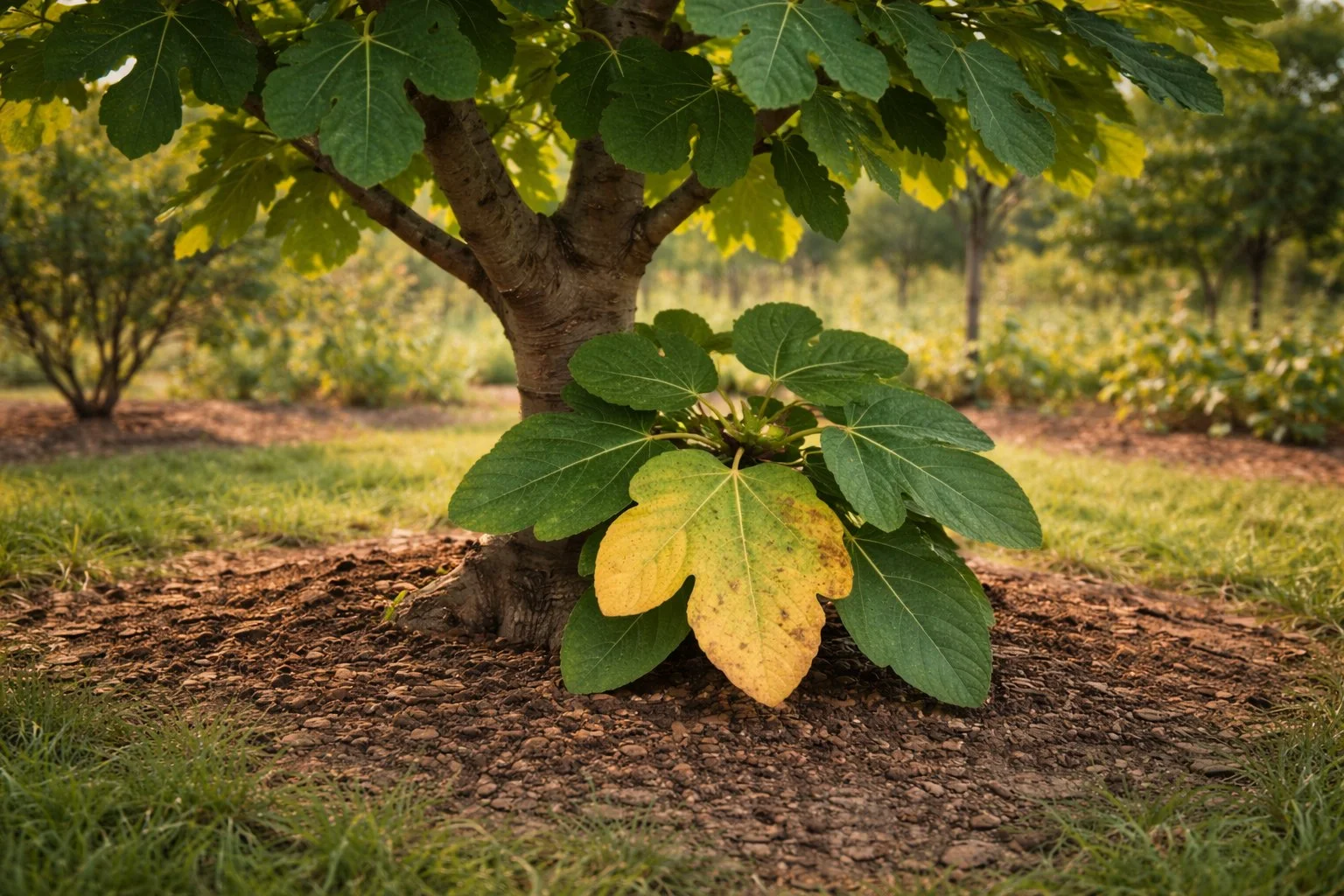
Yellow leaves on fig trees often trigger an immediate response: fertilizer. But in many cases, nutrition is not the real problem. Water stress, root conditions, and seasonal timing cause yellowing far more often than true nutrient deficiency. Distinguishing between these causes prevents unnecessary feeding and helps correct the issue without compounding stress.
For figs, yellow leaves are a signal — not a diagnosis.
Why Yellowing Is Easy to Misread
Fig trees naturally shed older leaves, especially during periods of stress or transition. This normal behavior can look alarming when it happens suddenly or unevenly. Because nitrogen deficiency is commonly associated with yellowing, growers often assume feeding is required, even when the root cause lies elsewhere.
The key is to observe where, when, and how yellowing appears.
Yellowing Caused by Water Stress
Water-related yellowing is extremely common. Both overwatering and underwatering disrupt nutrient uptake, even when nutrients are present in the soil. Roots deprived of oxygen or moisture cannot absorb what the tree needs, leading to chlorosis that mimics deficiency.
Overwatered figs often show yellowing alongside slowed growth, soft stems, or leaf drop despite moist soil. Underwatered figs may yellow during heat stress, with leaves dropping quickly once stress exceeds tolerance.
In both cases, adding fertilizer worsens the problem by increasing salt concentration around already stressed roots.
Nutrient-Related Yellowing Looks Different
True nutrient-related yellowing usually develops gradually and follows recognizable patterns. Nitrogen deficiency tends to affect older leaves first, producing pale, uniform yellowing while new growth remains smaller and lighter than normal. Potassium deficiency may show marginal yellowing or scorch during stress periods.
When nutrition is the cause, yellowing persists despite good watering and favorable conditions. Growth remains weak even when soil moisture is appropriate.
Location and Pattern Matter
Uniform yellowing across the tree suggests a systemic issue, while patchy yellowing often points to root or moisture problems. Yellowing limited to lower leaves may reflect natural aging rather than deficiency. Yellowing on new growth raises different concerns than yellowing on older foliage.
Patterns provide far more information than color alone.
Seasonal Timing Provides Clues
Yellowing early in the growing season may reflect cool soil temperatures or delayed root activity rather than deficiency. Late-season yellowing often signals normal preparation for dormancy, especially after fruiting.
Interpreting yellow leaves without considering the season frequently leads to unnecessary intervention.
Root Health Comes First
Roots govern everything. Compacted soil, poor drainage, root-bound containers, or damaged roots interrupt nutrient uptake regardless of soil fertility. In these cases, correcting root conditions resolves yellowing without additional feeding.
Improving drainage, adjusting watering habits, or repotting often produces faster recovery than fertilizer.
When Fertilizer Is Actually Warranted
If yellowing persists during active growth, appears primarily on older leaves, and coincides with reduced vigor despite proper watering, nutrition may be part of the issue. Even then, light, targeted feeding is safer than aggressive correction.
Figs respond best to subtle adjustments rather than drastic measures.
The Takeaway
Yellow leaves on fig trees are more often caused by water stress or root conditions than true nutrient deficiency. Observing patterns, timing, and overall growth behavior prevents unnecessary fertilization and protects root health. When water management is corrected first, many yellowing problems resolve on their own.
For a complete, season-by-season guide to feeding fig trees correctly, see our full fertilization guide here.
