Preventing Fruit Drop and Splitting with Consistent Watering
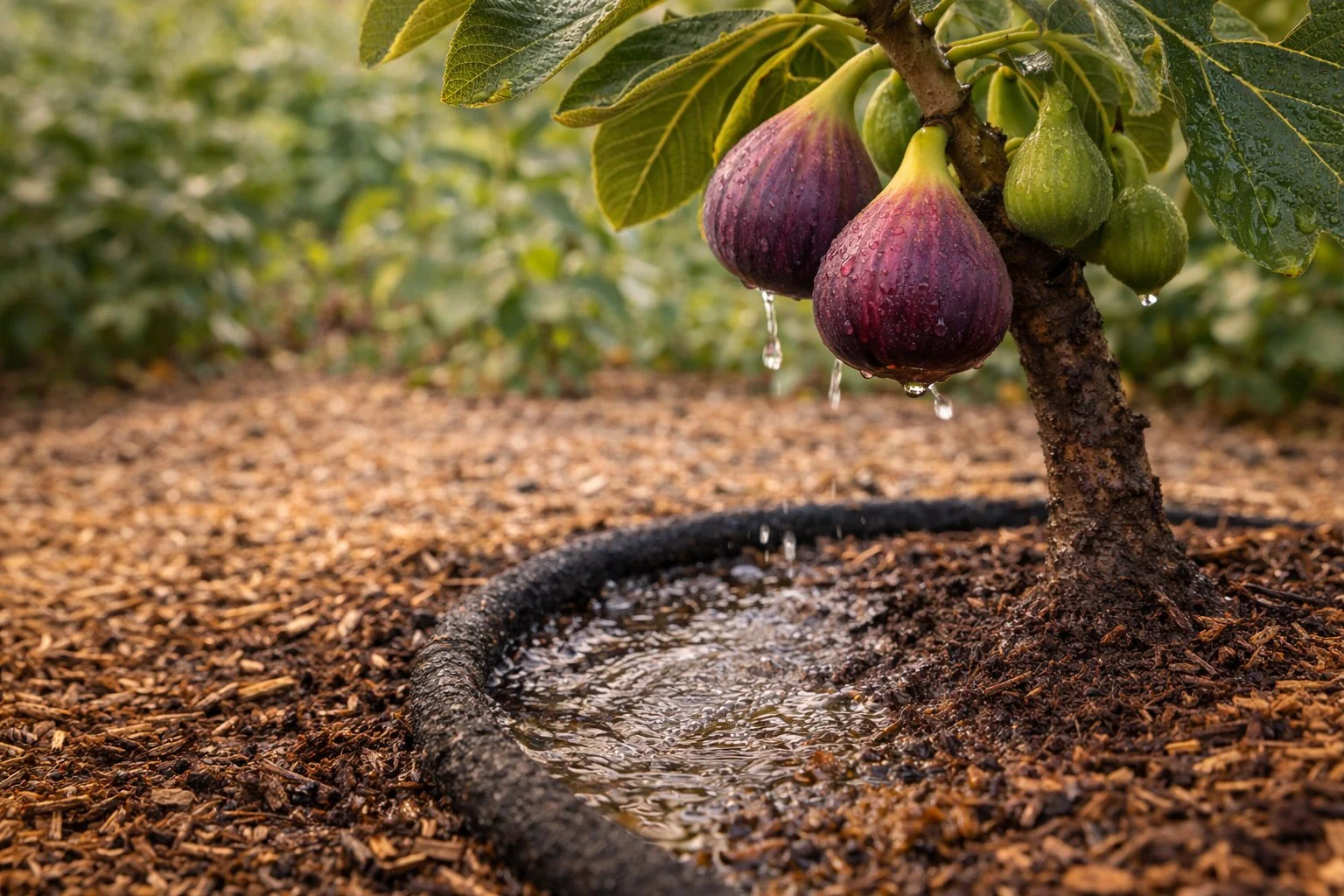
Fruit drop and splitting are two of the most frustrating problems fig growers face, especially when trees appear otherwise healthy. These issues are often blamed on weather, insects, or variety choice, but in most cases the underlying cause is inconsistent water availability. Figs are highly responsive to changes in moisture, and even short disruptions during critical stages of fruit development can trigger losses.
In Zone 7b, where rainfall can arrive suddenly after long dry periods, understanding how water consistency affects fruit development is essential for reliable harvests.
How Water Influences Fig Fruit Development
As figs develop, they rely on a steady supply of water to support cell expansion within the fruit. When moisture is consistent, fruit enlarges gradually, skins stretch evenly, and internal pressure remains stable. When water becomes limited, growth slows and tissues tighten. If abundant water suddenly returns, the fruit absorbs moisture rapidly, often faster than the skin can expand.
This imbalance is the root cause of both splitting and drop. The tree responds defensively to sudden stress changes, either shedding fruit or producing figs that crack before ripening.
Why Fruit Drop Occurs
Fruit drop is commonly triggered by water stress during early or mid-stage fruit development. When moisture becomes insufficient, the tree prioritizes survival over reproduction. Hormonal signals shift, and developing fruit is shed to reduce demand on the root system.
Even brief drought stress can initiate this process. Once fruit drop begins, it often continues for several days, even after watering resumes. Consistent irrigation before stress develops is far more effective than corrective watering after fruit drop starts.
Why Fig Fruit Splits
Splitting typically occurs later in the season as fruit nears ripeness. After a period of dryness, heavy irrigation or rainfall causes a rapid influx of water into the fruit. Internal pressure increases faster than the skin can accommodate, leading to cracks along the fruit surface.
Split fruit is more vulnerable to insects, souring, and rot, often becoming unusable within hours. Preventing splitting depends on maintaining even moisture throughout the ripening period rather than reacting to dry spells with heavy watering.
How Inconsistent Watering Creates Risk
Inconsistent watering patterns—cycles of drying and soaking—are far more damaging than modest, steady moisture levels. Shallow or irregular watering encourages surface roots that respond quickly to drying, amplifying stress during hot weather. Sudden corrective watering then floods the root zone, creating abrupt moisture swings.
This pattern is especially common in container-grown figs and in-ground trees watered infrequently but heavily without mulch.
Strategies for Maintaining Consistent Moisture
Consistency begins with understanding baseline water needs and adjusting irrigation frequency before stress develops. For container figs, this often means daily watering during summer, with adjustments during extreme heat. For in-ground trees, deep watering at regular intervals during dry periods maintains stable soil moisture.
Mulching plays a critical role by slowing evaporation and buffering soil moisture fluctuations. Organic mulch allows water to infiltrate evenly and reduces the impact of sudden rainfall or irrigation events.
Irrigation systems such as drip irrigation further improve consistency by delivering water slowly and predictably to the root zone.
Managing Rainfall and Irrigation Together
Rainfall cannot be controlled, but its impact can be managed. When extended dry weather is followed by forecasted rain, maintaining adequate soil moisture beforehand reduces the shock of sudden saturation. Soil that is already moderately moist absorbs rain more evenly than soil that is completely dry.
After heavy rain, irrigation should be reduced or paused until soil moisture stabilizes. Overcorrection—adding more water simply because it is “watering day”—often worsens splitting and drop.
Recognizing Early Warning Signs
Early signs of moisture instability often appear before fruit damage becomes obvious. Slight fruit softening, slowed enlargement, or leaf drooping during heat indicate rising stress. Adjusting irrigation promptly at this stage can prevent losses later.
Once splitting or fruit drop begins, damage control is limited. Prevention through steady watering remains the most effective approach.
Why Consistency Matters More Than Volume
Large volumes of water applied infrequently do not compensate for periods of dryness. Fig trees respond better to moderate amounts of water delivered consistently than to extremes. Stable moisture supports balanced growth, uniform fruit development, and higher-quality harvests.
By prioritizing consistency over correction, growers dramatically reduce fruit drop and splitting, even during challenging weather conditions.
Related Guides in This Series
Fruit quality is directly tied to irrigation strategy, which is covered in Irrigation & Water Management for Figs. You may also find these guides helpful:
