Drought Stress and Recovery in Fig Trees
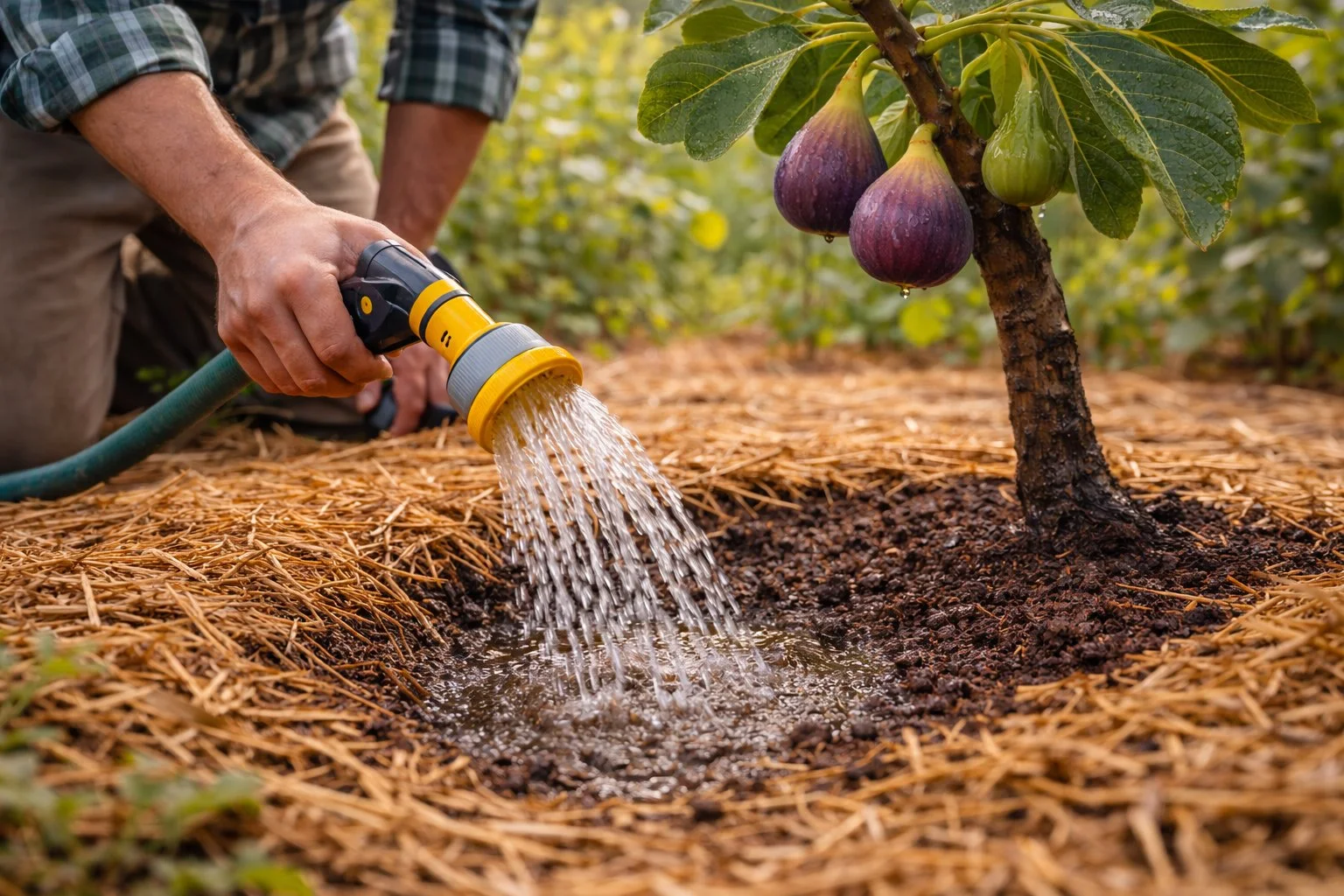
Drought stress is one of the most misunderstood challenges in fig growing. Because figs are often described as drought tolerant, growers sometimes underestimate how quickly water shortages affect growth, fruiting, and long-term tree health. While fig trees can survive periods of dryness, survival does not mean normal function. Drought-stressed figs behave differently, recover slowly, and often carry the effects of stress well beyond the dry period itself.
In Zone 7b, extended dry spells frequently occur during the hottest part of the growing season, making drought stress a recurring risk. Understanding how figs respond to drought—and how to support recovery without creating new problems—is essential for maintaining productive trees.
What Drought Stress Does to Fig Trees
When water becomes limited, fig trees shift into a conservation mode. Stomata close to reduce moisture loss, growth slows, and the tree reallocates resources away from fruit production and shoot extension. These internal changes may not be immediately visible, but they affect nearly every aspect of tree performance.
Prolonged drought reduces photosynthesis, limits nutrient uptake, and weakens developing tissues. Fruit growth often stalls or stops altogether, and developing figs may drop as the tree prioritizes survival. Even after water becomes available again, recovery is not instantaneous. Root systems require time to regain full function.
Recognizing Early Signs of Drought Stress
Early drought stress often appears subtly. Leaves may lose firmness during the hottest part of the day, recovering partially overnight. New shoot growth slows, and internodes shorten. In containers, soil may dry rapidly and pull away from the sides of the pot.
As stress intensifies, leaf edges may scorch, older leaves may yellow and drop, and fruit may fall prematurely. At this stage, the tree is no longer simply conserving water—it is experiencing physiological damage that will take time to repair.
Recognizing these early signals allows growers to intervene before long-term harm occurs.
Why Drought Stress Persists After Water Returns
One of the most frustrating aspects of drought stress is delayed recovery. Even after irrigation resumes, trees may continue to show slowed growth or fruit loss. This occurs because drought damages fine feeder roots, which are responsible for most water and nutrient absorption.
When water returns suddenly, remaining roots may be unable to absorb moisture efficiently. This creates a temporary imbalance where soil appears moist, but the tree still behaves as if water is limited. Recovery requires the regeneration of functional roots, a process that unfolds over weeks rather than days.
How to Rewater After Drought Without Causing Damage
Correcting drought stress requires restraint. The instinct to heavily saturate dry soil often leads to new problems, including root suffocation, fruit splitting, and nutrient imbalances. Instead, rewatering should be gradual and controlled.
For in-ground trees, deep watering spaced over several days allows moisture to penetrate evenly without flooding damaged roots. For container figs, repeated thorough waterings spaced apart help rehydrate the root zone while maintaining oxygen availability.
The goal is to restore steady moisture, not to compensate for lost time with excess water.
Supporting Root Recovery
Healthy recovery from drought depends on restoring root function. Maintaining consistent moisture without saturation encourages new root growth. Mulching plays a critical role by reducing evaporation and stabilizing soil temperature, creating a more favorable environment for root regeneration.
Avoid fertilizing immediately after severe drought. Damaged roots are less capable of absorbing nutrients, and added fertilizer may increase stress rather than relieve it. Once normal growth resumes, feeding can be gradually reintroduced.
Drought Stress in Container vs In-Ground Figs
Container figs experience drought stress more quickly and more severely than in-ground trees. Limited soil volume and elevated root-zone temperatures accelerate drying. Recovery also tends to be faster in containers if managed carefully, but mistakes—such as overwatering—are equally amplified.
In-ground figs may take longer to show stress but often experience deeper root damage during extended drought. Their recovery may be slower, emphasizing the importance of early intervention and consistent irrigation.
Preventing Future Drought Stress
Prevention is always easier than recovery. Regular monitoring of soil moisture, timely irrigation during dry spells, and the use of mulch dramatically reduce drought risk. Irrigation systems that deliver steady, predictable moisture help eliminate the cycles of drying and soaking that exacerbate stress.
Developing a proactive watering routine ensures that trees never reach the threshold where recovery becomes difficult.
Long-Term Effects of Repeated Drought Stress
Repeated drought episodes weaken fig trees over time. Growth becomes irregular, fruit quality declines, and susceptibility to pests and disease increases. Trees that experience chronic stress often enter winter in a weakened state, increasing the risk of cold injury and slow spring recovery.
Consistent water management throughout the growing season supports not only immediate performance but long-term resilience.
Related Guides in This Series
This recovery guide fits within the broader framework of Irrigation & Water Management for Figs. You may also find these guides helpful:
