How Much Water Do Fig Trees Really Need?
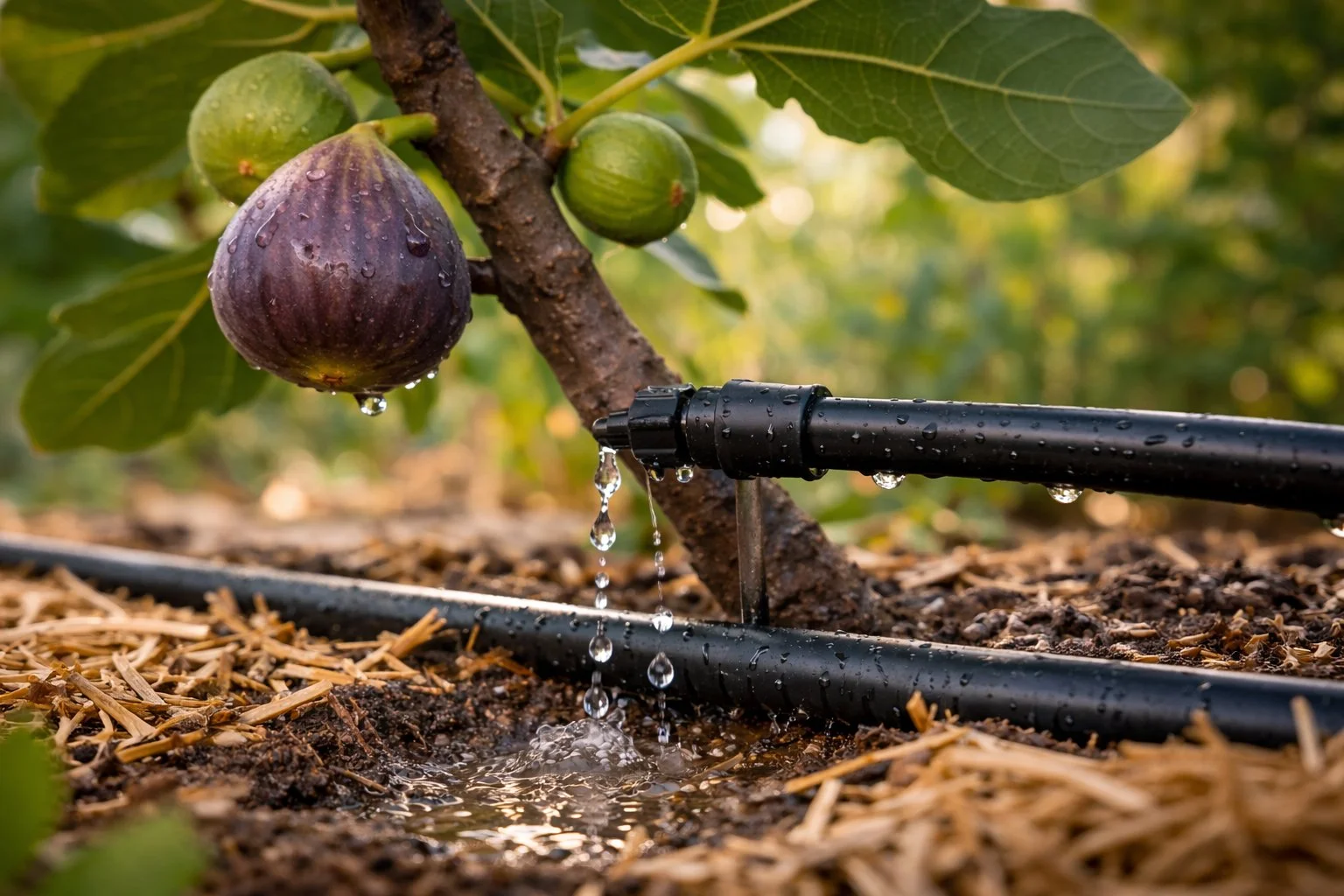
One of the most common mistakes fig growers make is assuming that because figs tolerate drought, they require very little water. While figs are indeed resilient trees, water tolerance is not the same as optimal water management. A fig tree that survives on minimal moisture behaves very differently from one that receives consistent, well-timed irrigation. Growth rate, fruit size, sweetness, and even long-term tree health are all directly influenced by how much water the tree receives and when it receives it.
In Zone 7b, where rainfall patterns are unpredictable and summer heat can be intense, understanding actual fig water needs removes guesswork and prevents many of the stress-related problems growers encounter.
Water Needs Depend on Root Environment
The amount of water a fig tree needs cannot be reduced to a single number. Instead, it depends on where the roots live. Container-grown figs and in-ground figs experience fundamentally different moisture dynamics, even when growing side by side.
In the ground, fig roots can explore a wide soil volume and access deeper moisture reserves. In containers, roots are confined to a limited space that dries far more quickly. This means container figs require more frequent watering, while in-ground figs benefit from deeper, less frequent irrigation.
Understanding this distinction is the foundation of proper fig watering.
Water Requirements for Container-Grown Fig Trees
Container figs have the highest and most demanding water needs. During active growth, especially in summer, containers can dry out within hours under hot, sunny conditions. Bark-based potting mixes drain rapidly and provide excellent oxygen to roots, but they also retain little water.
In early spring, container figs typically need watering every two to three days. As temperatures rise into summer, daily watering becomes normal, and during extreme heat, watering twice in one day may be necessary. Fall brings a gradual reduction in demand as growth slows and evaporation decreases.
Each watering should fully saturate the root zone until water drains freely from the bottom of the container. This ensures even moisture distribution and flushes accumulated fertilizer salts that can damage roots. Shallow or partial watering leads to uneven root development and increases stress.
A container fig that consistently receives adequate water will maintain firm leaves, steady shoot growth, and strong fruit retention. When water is insufficient, the tree responds quickly with drooping foliage, slowed growth, and premature fruit drop.
Water Requirements for In-Ground Fig Trees
In-ground figs require less frequent watering, but consistency remains critical—especially for young trees and during fruit development. Newly planted figs depend on regular irrigation while their root systems establish. During the first one to two years, deep watering during dry periods encourages roots to grow downward and outward, creating a more resilient tree.
Once established, in-ground figs can tolerate moderate drought, but tolerance does not mean immunity. Extended dry spells during summer often lead to reduced fruit size, stalled growth, and increased fruit drop. Deep watering every one to two weeks during drought conditions supports uniform fruit development and helps maintain tree health.
Unlike containers, in-ground figs should not be watered lightly and often. Instead, irrigation should soak the soil deeply, allowing moisture to penetrate the root zone before drying gradually between waterings.
Seasonal Changes in Water Demand
Fig water needs change significantly throughout the growing season. In spring, trees require steady moisture to support rapid shoot elongation and leaf expansion. During this phase, under-watering slows canopy development and delays fruiting potential.
Summer brings the highest water demand. Heat, evaporation, and active fruit growth combine to increase moisture needs dramatically. This is the season when inconsistent watering causes the most problems, including fruit drop and splitting.
In fall, water requirements gradually decrease as temperatures cool and growth slows. Irrigation should taper rather than stop abruptly, allowing tissues to harden properly before winter dormancy. During winter, dormant fig trees require very little water, though an occasional deep watering during prolonged dry periods prevents root desiccation.
Why Consistent Watering Matters More Than Quantity
Many fig problems arise not from how much water is applied over time, but from how unevenly it is delivered. Trees exposed to repeated cycles of drought followed by heavy watering experience internal stress that disrupts growth and fruit development.
Consistent moisture supports stable internal pressure within the tree, allowing fruit to expand evenly and remain attached until maturity. When moisture fluctuates, the tree responds defensively, shedding fruit or producing smaller, lower-quality figs.
The goal of irrigation is not saturation, but stability.
Signs That a Fig Tree Is Not Getting Enough Water
A fig tree that needs more water will often show early warning signs before serious damage occurs. Leaves may lose firmness and droop during the heat of the day. New growth slows, leaves may appear smaller than normal, and fruit may drop prematurely. In containers, the soil surface may pull away from the sides of the pot, indicating severe drying.
Responding early with deeper, more consistent watering prevents long-term stress and preserves fruit quality.
How This Fits into a Complete Watering Strategy
Understanding how much water fig trees need is the foundation for every other irrigation decision. It informs how often you water, which irrigation method you choose, how you use mulch, and how you respond to drought or excessive rainfall. Once baseline water needs are clear, diagnosing overwatering versus underwatering becomes far easier, and irrigation systems can be tailored to support consistent growth rather than reactive problem-solving.
Related Guides in This Series
This article is part of the complete guide to Irrigation & Water Management for Figs. You may also find these guides helpful:
