Watering Container Figs in Summer Heat
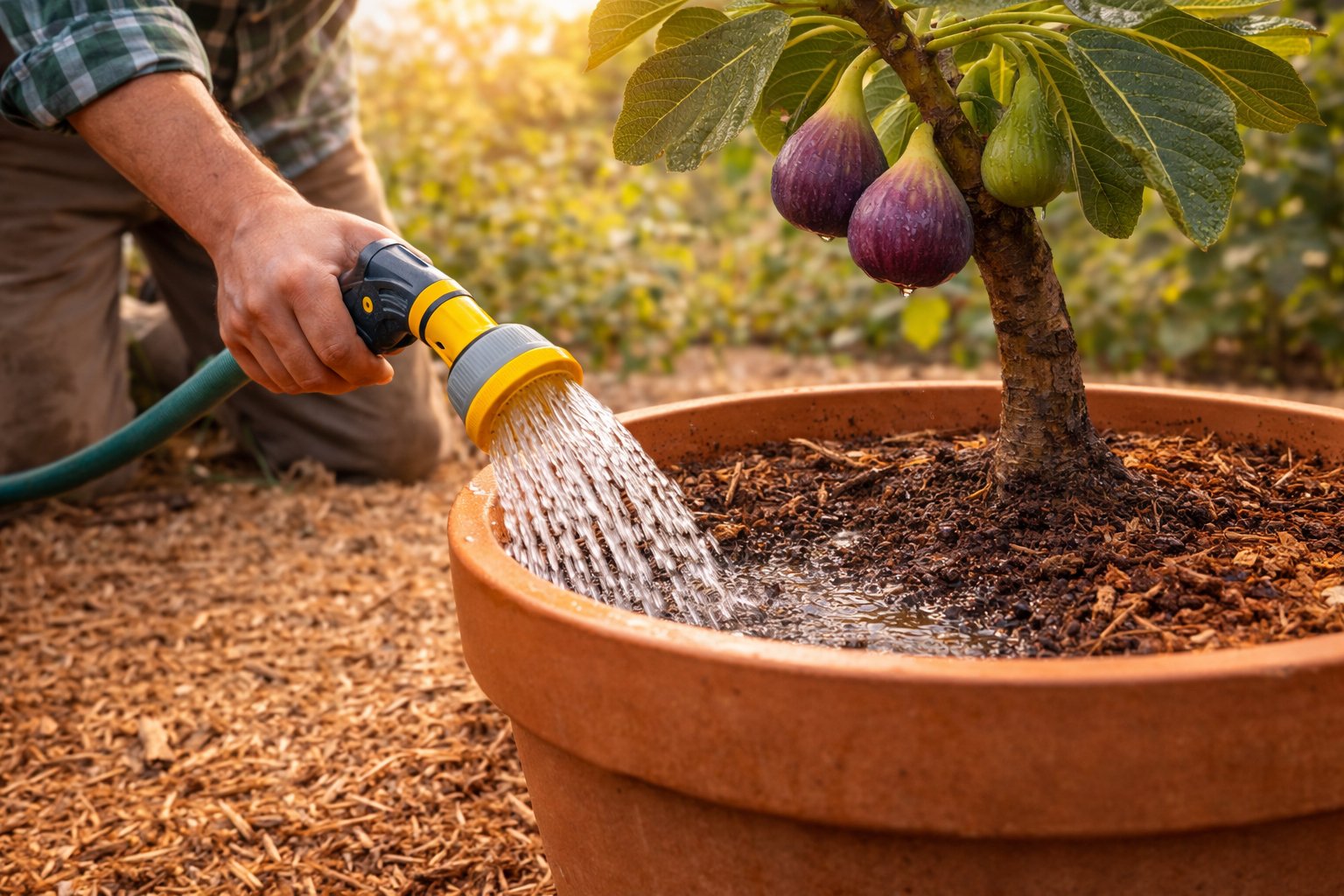
Container-grown fig trees face their greatest challenge during summer heat. While figs tolerate warmth well, containers create a restricted root environment that heats up quickly and loses moisture far faster than in-ground soil. In Zone 7b, prolonged heat waves combined with high sun exposure can push container figs into stress within hours if watering is inconsistent.
Understanding how containers behave in summer—and adjusting watering practices accordingly—is essential for maintaining healthy growth, preventing fruit loss, and avoiding root damage.
Why Containers Dry Out So Quickly
Containers expose roots to conditions they would never experience in the ground. Sun heats the container walls, accelerating evaporation and raising root-zone temperatures. Bark-based potting mixes drain rapidly, which protects roots from suffocation but provides little water storage during hot weather.
As temperatures rise, water loss occurs through three pathways at once: evaporation from the soil surface, transpiration through leaves, and heat transfer through the container itself. This combination explains why container figs that appear well-watered in the morning may be severely stressed by afternoon.
How Much and How Often to Water in Summer
During mild summer conditions, container figs often require daily watering. During heat waves, especially when temperatures exceed the mid-90s°F, twice-daily watering may be necessary. The goal is not to keep the soil constantly wet, but to prevent the root zone from drying completely between waterings.
Each watering should fully saturate the container until water drains freely from the bottom. Partial watering that only wets the surface leads to shallow rooting and increases vulnerability to heat stress. Consistent, thorough watering supports stable growth and helps prevent fruit drop during ripening.
For a complete overview of soil structure, pot sizing, and seasonal movement, see our guide to Growing Figs in Containers in Zone 7b.
Timing Watering for Heat Management
Watering timing matters as much as volume. Morning watering is essential, as it prepares the tree for the day’s heat and reduces stress during peak temperatures. On extremely hot days, a second watering in late afternoon may be necessary to restore moisture lost during the day.
Night watering should be avoided when possible. While it may seem helpful, prolonged nighttime moisture keeps roots cool and wet for extended periods, increasing the risk of fungal issues and root stress.
Recognizing Heat Stress in Container Figs
Heat stress often appears suddenly. Leaves may droop dramatically in the afternoon, even when soil appears moist. In early stages, leaves recover overnight. As stress increases, leaf edges may scorch, new growth slows, and fruit may drop prematurely.
It is important to distinguish between heat stress and underwatering. Heat-stressed trees may still have adequate soil moisture but cannot absorb water fast enough to keep up with transpiration. In these cases, improving watering timing, shading containers, or reducing afternoon sun exposure may be more effective than simply adding more water.
Managing Containers to Reduce Water Stress
Container choice and placement play a major role in summer water management. Dark plastic pots absorb more heat than light-colored containers. Elevating containers slightly improves airflow and drainage, while grouping pots together can reduce exposure to direct sun on container walls.
Temporary afternoon shade during extreme heat can dramatically reduce water demand without compromising overall growth. Mulching the surface of container soil helps slow evaporation and moderates temperature fluctuations at the root zone.
Avoiding Overwatering While Meeting High Demand
High water demand increases the risk of overwatering if drainage is poor. Containers must have unobstructed drainage holes, and water should never pool at the bottom. If containers remain heavy and wet for long periods, watering frequency should be adjusted even during hot weather.
Healthy container watering strikes a balance: frequent enough to prevent drying, but not so constant that oxygen is excluded from the root zone.
How Summer Watering Influences Fruit Quality
Consistent summer watering directly affects fruit size, texture, and sweetness. Water stress during ripening often leads to fruit drop, uneven sizing, and reduced flavor. Conversely, sudden heavy watering after dryness can cause fruit splitting.
Maintaining stable moisture throughout summer supports steady fruit expansion and improves overall harvest quality.
Related Guides in This Series
Container watering behaves differently than in-ground figs, as explained in Irrigation & Water Management for Figs. You may also find these guides helpful:
