Drip Irrigation vs Hand Watering for Figs
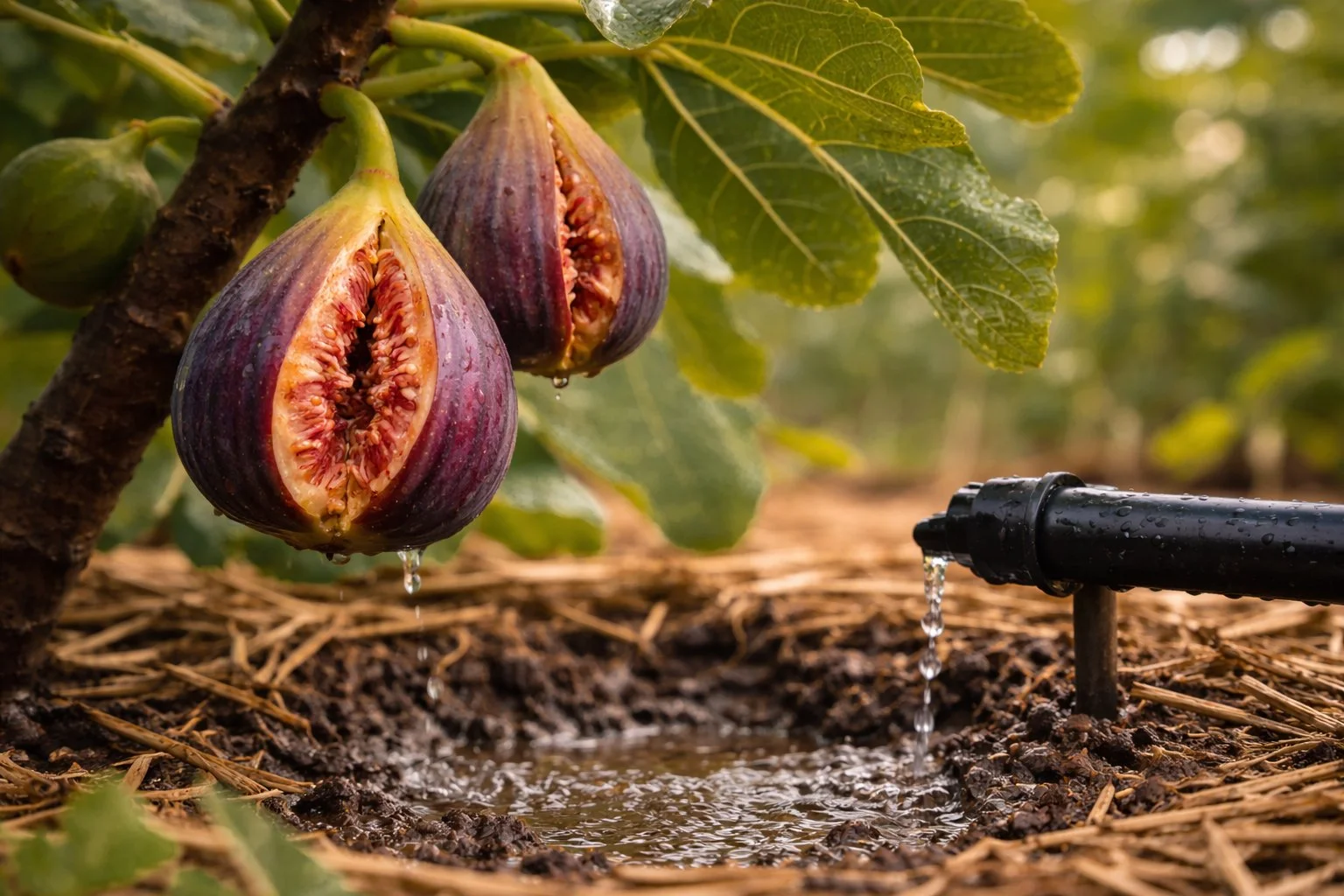
Choosing between drip irrigation and hand watering is less about convenience and more about consistency. Both methods can grow healthy fig trees, but they behave very differently in how water is delivered, how roots respond, and how reliably moisture is maintained over time. In Zone 7b—where rainfall can be unpredictable and summer heat intense—the method you choose often determines whether water management is proactive or reactive.
Understanding the strengths and limitations of each approach allows growers to match their watering method to tree age, planting style, and scale of operation.
What Fig Trees Actually Need from a Watering Method
Regardless of delivery method, fig trees respond best to irrigation that provides slow, even moisture to the root zone without saturating the soil. Roots require oxygen as much as water, and systems that alternate between extreme dryness and saturation consistently produce weaker growth and poorer fruit quality.
An effective watering method supports deep root development, minimizes evaporation, and delivers moisture predictably during critical growth and fruiting periods. The difference between drip irrigation and hand watering lies in how reliably those goals are achieved.
Drip Irrigation: Consistency and Precision
Drip irrigation delivers water slowly and directly to the soil near the root zone. Low-flow emitters apply moisture at a rate the soil can absorb, reducing runoff and evaporation. For in-ground fig trees, this creates a stable moisture profile that encourages roots to grow deeper and wider over time.
One of the greatest advantages of drip irrigation is consistency. When paired with timers, drip systems deliver water on a regular schedule, reducing the risk of stress caused by missed or delayed watering. Because foliage remains dry, disease pressure is also lower compared to overhead methods.
Drip irrigation works especially well for orchards, larger plantings, and growers managing multiple trees. Once properly set up, it reduces daily labor while maintaining predictable water delivery.
Limitations of Drip Irrigation
Despite its advantages, drip irrigation is not entirely hands-off. Emitters can clog, lines can shift, and system settings may need seasonal adjustment. Drip systems also rely on the assumption that emitters are placed correctly relative to the expanding root zone. As fig trees mature, irrigation placement may need to be adjusted to avoid concentrating roots too narrowly.
In container production, drip irrigation can work, but it requires careful calibration. Containers dry faster than in-ground soil, and fixed emitters may not deliver sufficient water during extreme heat unless closely monitored.
Hand Watering: Flexibility and Observation
Hand watering remains a viable method for fig growers, particularly those managing a small number of trees or container-grown figs. Its greatest strength is flexibility. Growers can respond immediately to changing weather, tree appearance, and soil conditions.
Hand watering encourages close observation. Subtle signs of stress, growth changes, or drainage problems are often noticed sooner when watering is done manually. For container figs, hand watering allows precise control over saturation and drainage, especially during periods of rapid drying.
When done correctly, hand watering can produce excellent results.
Limitations of Hand Watering
The primary weakness of hand watering is inconsistency. Human schedules change, weather interrupts routines, and missed waterings often occur during the hottest, most critical periods. Shallow or rushed watering is common and leads to uneven moisture distribution and surface-root dependency.
Hand watering also becomes impractical as the number of trees increases. For in-ground figs, inconsistent hand watering often results in alternating drought stress and overcorrection, increasing the risk of fruit drop and splitting.
Comparing Root Response and Tree Performance
Trees watered consistently—regardless of method—develop stronger root systems and more stable growth patterns. However, drip irrigation generally produces more uniform soil moisture, especially for in-ground trees, leading to steadier shoot growth and improved fruit quality.
Hand-watered trees can perform equally well when irrigation is deep and consistent, but performance becomes highly dependent on the grower’s diligence. Variability in timing and volume often shows up first in fruit development, where uneven moisture leads to size variation and drop.
Which Method Works Best for Containers vs In-Ground Trees
For in-ground figs, drip irrigation is usually the superior long-term solution. It supports deep rooting, reduces labor, and maintains consistent moisture during fruiting. Hand watering may work during establishment but becomes less reliable as trees mature.
For container figs, hand watering often remains preferable, particularly during summer heat when containers may need daily or twice-daily attention. Drip systems can be used successfully with containers, but they require careful tuning and frequent monitoring to prevent under-delivery.
Using Both Methods Together
Many successful growers use a hybrid approach. Drip irrigation provides a reliable baseline for in-ground trees, while hand watering supplements during heat waves or extended dry periods. Containers may rely primarily on hand watering with occasional automated assistance during absences.
Combining methods allows flexibility without sacrificing consistency.
Choosing the Right Method for Your Fig Operation
The best irrigation method is the one that delivers consistent moisture with the least disruption. Small plantings, containers, and hands-on growers may prefer hand watering. Larger orchards, busy schedules, or long-term plantings benefit from drip irrigation.
What matters most is not the method itself, but how reliably it meets the tree’s water needs throughout the season.
Related Guides in This Series
This article expands on the principles outlined in Irrigation & Water Management for Figs. You may also find these guides helpful:
