How to Espalier a Fig Tree on a Wall or Fence
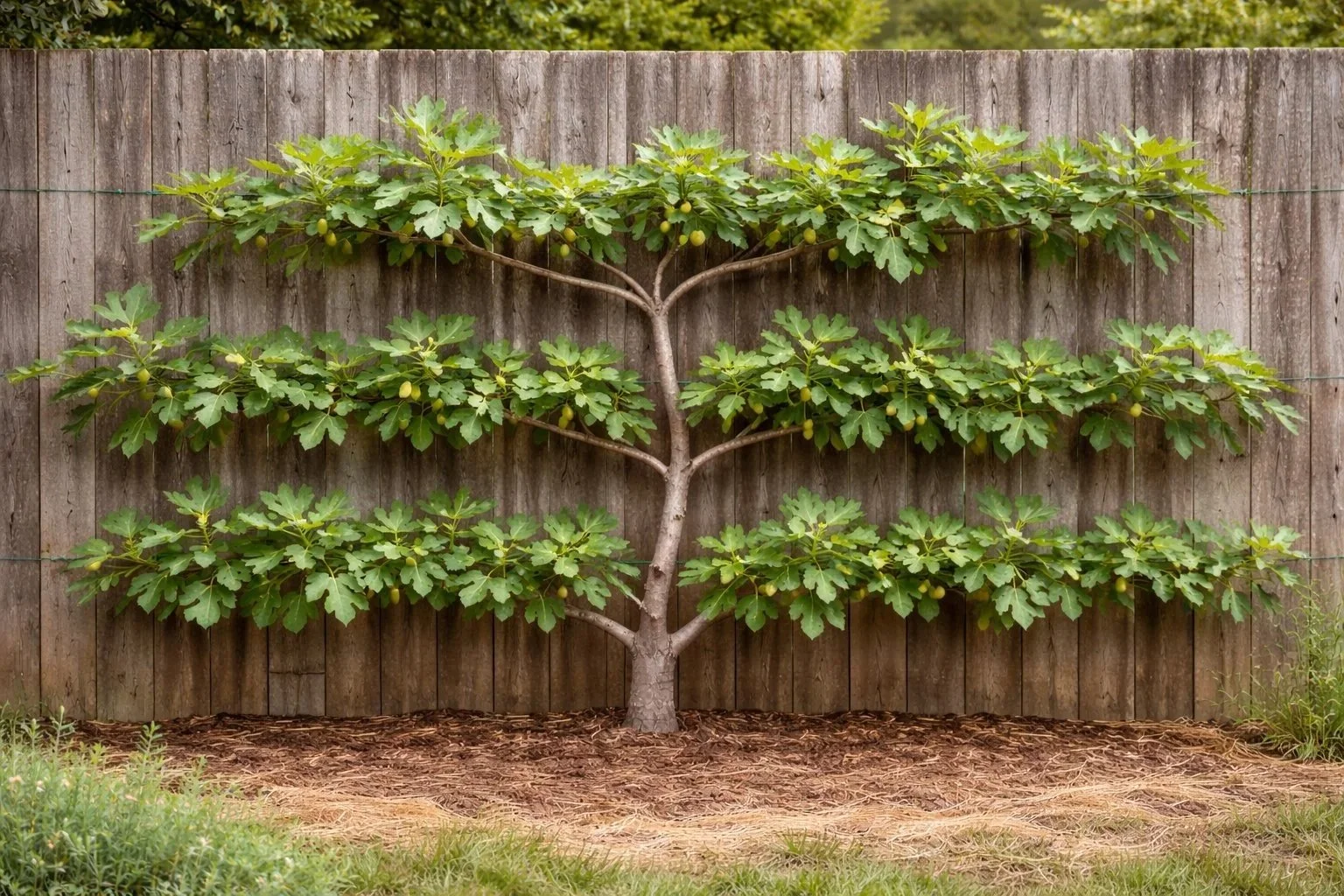
Espaliering a fig tree is both a practical training method and a deliberate design choice. When trained flat against a wall or fence, a fig becomes easier to manage, easier to protect in winter, and often more productive in limited spaces. This approach transforms a naturally vigorous, free-form tree into a disciplined structure that responds predictably to light, warmth, and pruning. When done correctly, espaliered figs combine elegance with efficiency, turning vertical surfaces into productive growing zones.
Figs are particularly well suited to espalier because of their flexible young wood and strong response to training. Unlike rigid fruit trees, figs tolerate repeated bending and directional guidance without losing vigor. When trained early, shoots can be shaped horizontally or diagonally, creating fruiting wood that receives consistent sunlight. Walls and fences also act as thermal buffers, absorbing heat during the day and releasing it slowly at night—an advantage that becomes especially valuable in Zone 7b.
Successful espalier begins with thoughtful site selection. A south- or southwest-facing wall provides the greatest heat gain and light exposure, but even east-facing walls can be productive when managed carefully. The supporting structure should be sturdy enough to hold wires or trellises and allow for air circulation between the wall and the tree. Planting the fig slightly away from the surface prevents moisture accumulation and gives roots space to establish without restriction.
Training starts when the fig is young and its wood is supple. In the first year, the focus is on establishing a strong central leader or a small number of primary arms. These are gradually guided along horizontal wires or supports, forming the framework that defines the espalier pattern. Competing shoots are removed early, allowing energy to concentrate into the selected branches. As growth continues, new laterals are trained outward while excess vertical growth is pruned back, reinforcing the flat, two-dimensional structure.
Pruning plays a continuous role in maintaining an espaliered fig. Winter pruning sets the framework and removes unwanted wood, while summer pruning refines shape and controls vigor. Because espalier restricts natural growth habits, restraint is essential. Over-pruning can provoke aggressive regrowth that disrupts the design. Instead, incremental adjustments keep the tree balanced and responsive. Each cut should support the intended pattern rather than fight the tree’s instincts.
Winter management is one of the greatest advantages of espalier. Trees trained flat against a wall are far easier to protect than free-standing figs. Wrapping, insulating, or covering an espaliered fig requires less material and effort, and the wall itself moderates temperature extremes. In colder winters, entire frameworks can be shielded efficiently, preserving fruiting wood that would be difficult to protect on a large, upright tree.
Espaliered figs are particularly well suited to small gardens, courtyards, and container-adjacent plantings. They allow growers to maximize production in constrained spaces while maintaining aesthetic appeal. Fruit is easy to monitor, harvest, and protect from birds, and the tree’s disciplined form simplifies long-term care. With patience, espalier becomes less of a technique and more of a collaboration between grower and tree.
Over time, an espaliered fig develops a rhythm that rewards consistency. Its growth becomes measured, its fruiting reliable, and its presence architectural. The wall or fence becomes more than a support—it becomes part of the growing system itself. For growers willing to guide rather than dominate, espalier offers one of the most refined and effective ways to grow figs, blending form, function, and productivity into a single living structure.
For a complete, season-by-season approach to shaping healthy, productive fig trees, see Pruning & Training for Structure and Yield.
