Best Soil Mixes for Container-Grown Fig Trees (Drainage, Aeration & Root Health Explained)
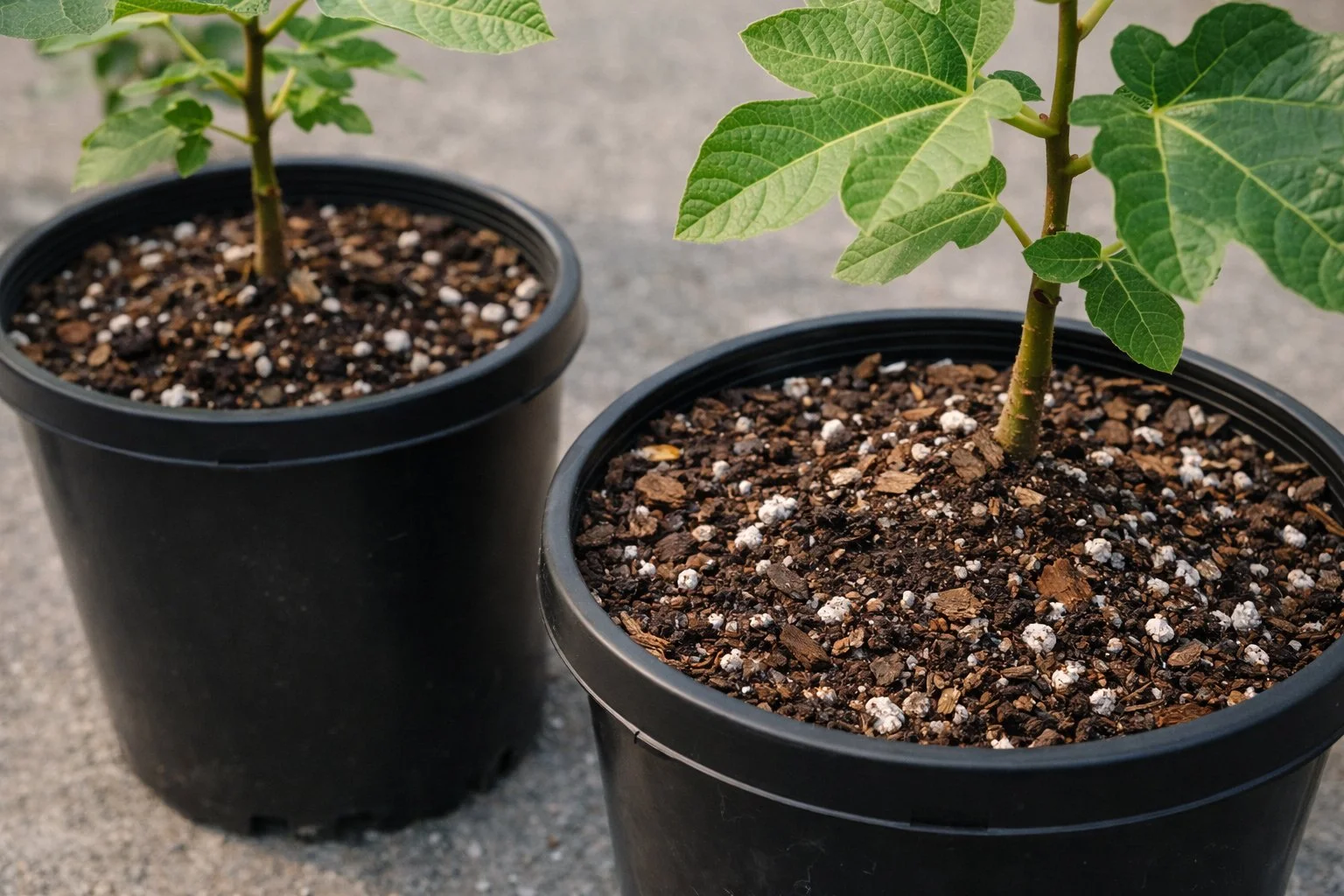
Soil is the foundation of container fig success. In a pot, there is no surrounding earth to buffer mistakes, correct drainage problems, or absorb excess water and nutrients. Everything the tree experiences—moisture, oxygen, temperature, and nutrition—passes through the soil mix. For this reason, soil choice matters more in containers than it ever does in the ground.
Many container fig problems that appear to be caused by watering, fertilization, or even disease can be traced back to the soil itself. A well-designed mix supports healthy roots and steady growth over multiple seasons, while a poor mix quietly undermines the tree regardless of how attentive the grower may be.
Why Standard Potting Soil Falls Short
Most bagged potting soils are designed for short-term ornamental use, not long-lived fruit trees. They tend to rely heavily on peat or composted material that holds water well initially but compresses and breaks down over time. As this happens, air spaces collapse, drainage slows, and roots are left in a constantly saturated environment.
Fig roots are tolerant of brief wet conditions, but they decline quickly when oxygen is limited. In containers, this decline often shows up as weak growth, yellowing leaves, stalled fruit development, or sudden dieback following periods of rain. The issue is not that the tree received too much water, but that the soil was unable to release it.
The Importance of Air, Not Just Drainage
Good container soil is often described as “well-draining,” but drainage alone is only part of the picture. Equally important is sustained aeration. Roots require consistent access to oxygen, even between waterings. A soil mix that drains quickly but collapses when wet still creates stress over time.
This is why long-term container mixes rely on coarse, stable components that resist breakdown. These materials maintain air pockets throughout the pot, allowing roots to breathe while still holding enough moisture to support growth between irrigations.
Bark-Based Mixes as a Long-Term Solution
Bark-based mixes have become the standard for many professional nurseries because they provide durable structure. Pine bark fines or similar materials create a rigid framework that resists compaction, even after repeated watering and seasonal temperature changes.
When properly sized, bark particles allow excess water to move freely through the container while retaining moisture on their surfaces. This balance supports healthy root branching and reduces the risk of anaerobic conditions. Over time, bark breaks down slowly, making it far more suitable for multi-year container growing than peat-heavy blends.
Supplemental Components and Balance
While bark forms the backbone of a good fig container mix, it is rarely used alone. Inert materials such as perlite can improve drainage and lighten the mix, while small amounts of compost or peat can help retain moisture and nutrients when used judiciously.
The goal is balance rather than complexity. Too many fine particles increase water retention and reduce airflow, while overly coarse mixes may dry too quickly during summer heat. A well-balanced soil holds moisture evenly, drains freely, and remains structurally stable across seasons.
Soil Behavior Changes Over Time
Even the best container mix evolves. Organic components slowly decompose, root systems expand, and watering patterns change as the tree matures. This natural progression is why container figs benefit from periodic evaluation rather than constant intervention.
When soil begins to stay wet longer than expected or growth slows despite proper care, the issue may be structural rather than nutritional. Recognizing when a mix has reached the end of its useful life allows for timely correction through repotting or root pruning, rather than reactive troubleshooting.
Matching Soil to Container and Climate
Soil choice should reflect container size, material, and local climate. Larger containers dry more slowly and may tolerate slightly finer mixes, while smaller or fabric containers often require coarser blends to prevent rapid saturation. In humid or rainy climates, drainage becomes even more critical, whereas arid regions may benefit from modest increases in water-holding components.
There is no single perfect recipe. The best soil mix is one that performs consistently under the grower’s specific conditions and management style.
Soil as a Living System, Not a Product
Successful container soil is not a brand name or a bag off the shelf. It is a functional system that supports roots, responds predictably to water, and remains stable over time. When soil structure is right, many other aspects of fig care become simpler and more forgiving.
By prioritizing aeration, durability, and balance, growers create an environment where container-grown figs can thrive year after year without constant correction.
For a deeper look at managing moisture once the soil is in place, continue to Growing Fig Trees in Containers, or move on to the next supporting article, where we will explore watering container figs without root rot or stress.
Common Questions About Soil Mixes for Container-Grown Fig Trees
Q: What type of soil works best for container-grown fig trees?
A: Container-grown figs perform best in a fast-draining, bark-based mix that allows oxygen to reach the roots. Heavy garden soil holds too much moisture and increases the risk of root rot.
Q: Why is drainage more important than nutrient content in container figs?
A: Roots require oxygen as much as water. Poor drainage suffocates roots, while nutrients can be supplemented through controlled fertilization.
Q: Is perlite necessary in a fig potting mix?
A: Perlite improves aeration and prevents compaction, especially in humid climates. While not mandatory, it significantly reduces the risk of waterlogging in containers.
Q: "Can I use garden soil in a pot for fig trees?
A: No. Garden soil compacts in containers and restricts airflow. Container mixes must stay structurally loose to support healthy root development.
Q: How often should container fig soil be refreshed?
A: Most container mixes benefit from refreshing every 1–2 years. Over time, organic components break down and reduce drainage efficiency.
Q: Does soil mix affect fruit production in container figs?
A: Yes. Stable moisture balance and oxygen availability directly influence root health, which affects growth vigor, fruit size, and ripening consistency.
Q: What is the most common soil mistake for container-grown figs?
A: Using dense, moisture-retentive soil that stays wet too long. Most container fig failures are oxygen-related root problems rather than nutrient deficiencies.
