Managing Root Pruning and Repotting for Long-Term Container Fig Health
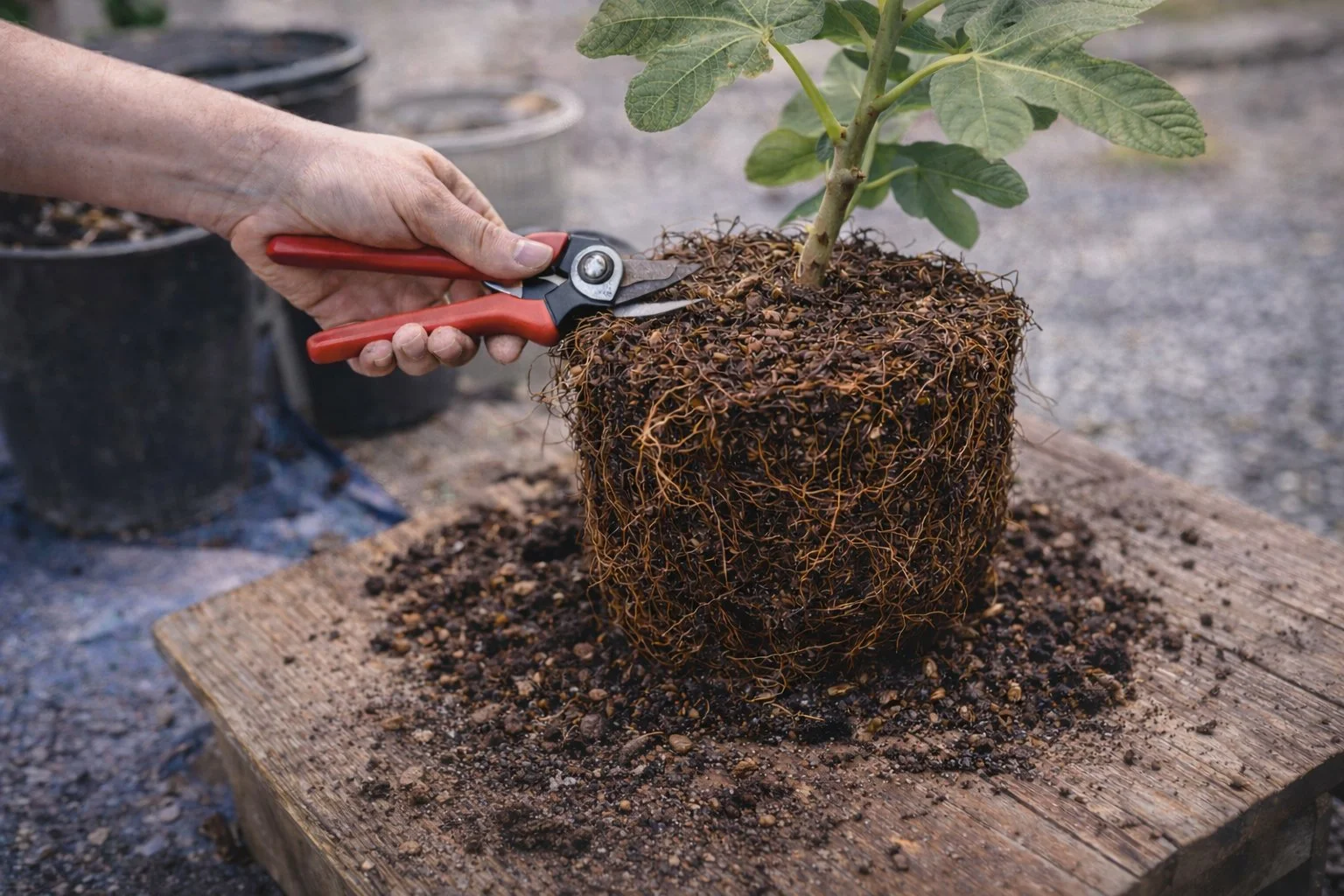
Growing figs in containers isn’t just about soil, water, and fertilizer. Over time, root management becomes the single most important factor in keeping container figs productive, compact, and healthy year after year. Without intentional root pruning and periodic repotting, even the best-cared-for fig will slowly decline.
This guide explains when, why, and how to root prune and repot container figs so they continue producing high-quality fruit without becoming root-bound or stressed.
Why Root Pruning Matters for Container Figs
Unlike in-ground figs, container figs live in a fixed volume of soil. As roots circle the pot, they begin competing with themselves for water, nutrients, and oxygen. Over time, this leads to slower growth, smaller leaves, reduced fruit set, and increased susceptibility to stress.
Root pruning resets the tree’s underground structure, encouraging fresh feeder roots and restoring balance between roots and top growth. When done correctly, it actually extends the productive lifespan of a container fig rather than harming it.
Signs Your Fig Needs Root Pruning or Repotting
Most container figs benefit from root work every two to three years, but some show symptoms earlier. Common warning signs include reduced vigor despite proper feeding, water running straight through the pot, dense circling roots visible at drainage holes, and declining fruit size or quantity.
If a fig dries out unusually fast even with frequent watering, that is often a sign the roots have filled the container and displaced usable soil.
Best Time of Year to Root Prune Figs
The safest and most effective time to root prune container figs is late winter to very early spring, just before buds begin to swell. At this stage, the tree is still dormant, carbohydrate reserves are high, and stress is minimized.
Avoid root pruning during active growth or fruiting, as this can cause shock, leaf drop, or fruit loss. If emergency repotting is needed during the growing season, limit root disturbance as much as possible.
How to Root Prune a Container Fig (Step-by-Step)
Begin by gently removing the fig from its container. If the root ball is tightly bound, tapping the pot or slicing along the inside edge can help release it. Once exposed, inspect the root mass.
Using clean, sharp pruners or a knife, remove approximately 15–25% of the root mass, focusing on thick circling roots around the perimeter and bottom. Avoid tearing roots; clean cuts heal faster and reduce stress.
After pruning, loosen the remaining root ball slightly to encourage outward growth. This step helps prevent new roots from immediately circling again.
Repotting vs. Returning to the Same Container
After root pruning, you have two good options. The fig can be returned to the same container with fresh soil, which helps maintain size control. This approach works well for figs you intentionally keep compact for patios or protected overwintering.
Alternatively, the fig can be moved up one container size only if increased canopy size or yield is desired. Jumping multiple pot sizes at once often leads to excessive vegetative growth at the expense of fruit.
In both cases, always use fresh, well-draining fig-appropriate soil to replace what was removed.
Aftercare Following Root Pruning
Once repotted, water thoroughly to settle the soil and eliminate air pockets. Keep the fig protected from strong wind and direct sun for the first week if temperatures are warm.
Resume normal watering once new growth begins. Fertilization should be delayed until leaves are fully expanded to avoid pushing top growth before the roots re-establish.
How Root Pruning Improves Fruit Production
Proper root pruning restores the balance between roots and canopy, which directly influences fruiting. Figs with controlled root systems tend to produce more consistent crops, better fruit sizing, and fewer stress-related drops.
Long-term container figs that receive periodic root pruning often outperform neglected plants that are simply upsized into larger and larger pots.
The Takeaway
Root pruning isn’t a last-resort fix — it’s a planned maintenance practice that keeps container figs healthy, productive, and manageable for many years. When done at the right time and in moderation, it becomes one of the most powerful tools in successful container fig growing.
For a complete, season-by-season framework that ties soil, watering, pruning, winter protection, and variety choice together, see Growing Fig Trees in Containers.
